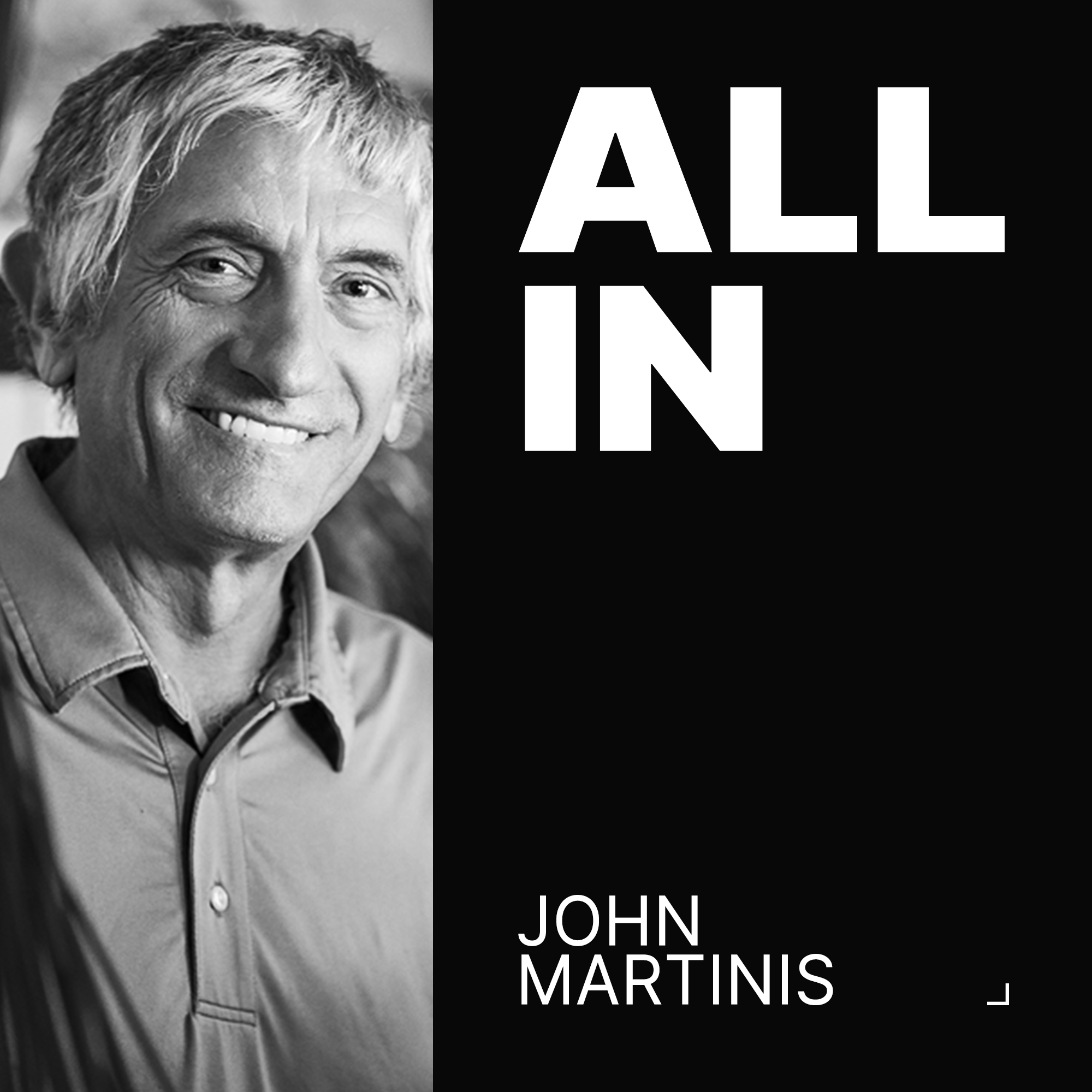
本集简介
双语字幕
仅展示文本字幕,不包含中文音频;想边听边看,请使用 Bayt 播客 App。
欢迎今天到来。我非常激动能进行这次全方位访谈,与本周诺贝尔奖得主、2025年诺贝尔物理学奖获得者约翰·马丁内斯对话。约翰,欢迎参加全方位访谈。
Welcome today. I'm very excited for this all in interview with this week's Nobel laureate, winner of the Nobel Prize in Physics in 2025, John Martinez. John, welcome to the all in interview.
是的,感谢邀请。我对这次谈话感到非常兴奋,也很乐意向大家解释这个奖项的意义所在。
Yeah. Thanks for inviting me. I'm quite excited about this this talk and, you know, love to explain to people about, you know, what this prize is all about.
各位观众,好了亲爱的朋友们。我认为这又是一次精彩的讨论。人们喜爱这些访谈,我能听他讲上好几个小时。
All of you. All right, besties. I think that was another epic discussion. People love the interviews. I could hear him talk for hours.
绝对精彩。我们刚才完美解答了大家的问题。我们正在提供确凿数据来支撑你们的观点。大家觉得如何?这很有趣吧。
Absolutely. We crushed your questions a minute. We are giving people ground truth data to underwrite your own opinion. What'd guys think? That was fun.
太棒了。我正在和各位交流。要知道诺贝尔奖是最负盛名的荣誉,特别是在物理学领域,我认为这是能获得的最高认可。你的名字将载入史册,即将到来的颁奖典礼对你来说会是难以置信的时刻。
That was great. I'm doing all of you. Well, the Nobel Prize is the most prestigious honor and particularly in physics that I think can be awarded. You're in the record books. It's gonna be an incredible ceremony coming up for you.
或许我们可以回溯你的成长历程。我很想听听,你是在哪里长大的?最初是如何对物理学产生兴趣的?
Maybe we could go back to the beginning in your history. I'd love to hear a little bit about, you know, where'd you grow up and how'd you get started with your interest in physics?
嗯,我是在加利福尼亚州圣佩德罗长大的,可以说整个童年都在那里度过。我父亲是消防员,母亲是家庭主妇照顾我们。这些年来,我一直对科学技术很感兴趣。我想特别提到的是,我父亲虽然没受过高中教育,但非常聪明。他总是在车库里捣鼓各种建造项目。
Well, so I I grew up in San Pedro, California and, you know, grew up there my whole time. My my father is a fireman, and my mom stayed at home, took care of us. And, you know, through the years, I was always interested in science, technology. I'm gonna say one of the things is, you know, my dad, you know, actually didn't have a high school education but very smart person. He was always building things in the garage, various projects.
我从小就知道如何制作东西,这也让我理解事物运作的原理,你知道,就是一种经验主义的视角。对物理运作方式的看法。所以高中时我选了物理课,结果非常喜欢,因为它背后有数学原理和概念,对我来说很有道理。我彻底爱上了这门学科。后来去了加州大学伯克利分校,在那里表现不错,也非常享受学习过程。
So I grew up kind of knowing how to build things which also kind of tells you how things work, you know, kind of empirical view, you know Yeah. A view of how physics works. So when I took physics in high school, I actually loved it because there was actually some math behind it and concepts and really made sense to me. And I just really fell in love with the subject. Then went to UC Berkeley and did pretty well there and enjoyed it, enjoyed it a lot.
在伯克利的大四那年,我上了约翰·克拉克的课,他是我的导师,我了解到他正在研究量子力学和电子器件这些领域。这对我来说听起来非常有趣。我想我可能预见到某些东西会有发展前景,于是开始跟着他做研究生阶段的工作。
And then in my senior year at UC Berkeley, I had a class from John Clark, was my adviser, and found out what he was doing. He was just starting to look at these quantum mechanics and electrical devices stuff. And it sounded really interesting for me. I guess I have, you know, I guess I could see maybe when something maybe would take off. So I started to to do the graduate school work with him.
你去伯克利读的研究生。
You went to Berkeley for graduate school.
我去了格特鲁德读了个糟糕的学校,这本不该去的。
I went to Gertrude for a badger school, which you're not supposed to do.
我本科最初在加州大学读的是物理和数学。
I was originally a physics and math undergrad at Cal.
好的。
Okay.
后来我换了专业,最终拿到了天体物理学的学位。有门高年级数学课真的让我对数学专业失去了兴趣——那些没完没了的证明快把我逼疯了。
I changed my major later and and actually got my degree in astrophysics. There was some upper division math class that really turned me off to math as a major. There were just so many proofs, it drove me nuts.
对,对。
Right, right.
物理一直都很令人兴奋,但我更喜欢在太空实验室工作,实际上我是在劳伦斯伯克利实验室工作的。
And then physics was always exciting, but I liked working in the astro lab and I worked actually at Lawrence Berkeley Lab.
哦,好的,嗯。
Oh, okay, yeah.
但你后来留在伯克利读研究生了,对吧?
But then you stayed at Berkeley and went to grad school, right?
是的,留在伯克利读研。我们在研究生阶段几年后开始了这个项目,具体日期我记不清了。有趣的是,这个问题实际上是由安东尼·莱格特教授提出的,他因氦三物理获得了2003年的诺贝尔奖。
Yeah, stayed at Berkeley, went to grad We started this project a couple years into grad school, I forget the exact date. And what was interesting is this was a question that was actually posed by Professor Anthony Leggett who won the Nobel Prize for, you know, helium three physics in I think 2003.
是超流体吗?
Was that superfluid?
超流体氦三。对,没错。
Superfluid helium three. Yeah. That's right.
他展示了如果将氦-3冷却到足够低的温度,它几乎会呈现出这种具有新特性的物理行为,包括其运动方式和工作原理。
So he showed like if you put helium three cold enough, it kind of almost has this new sort of characteristics with the physics and how it moves and how it works.
它具有超流体行为,但由于氦-3更复杂的原子核结构,其行为也极为复杂。这一现象被发现后,人们花了不少时间才搞明白。而他帮助发展了这个理论,因此非常有名,是个极其聪明的人。尽管他因此获得了诺贝尔奖,但氦-3物理现在研究得并不多。
Well, it has this superfluid behavior but it has a very complicated behavior because of the more complicated nuclei of the helium-three. This had been discovered and people worked for a while to figure that out. And he, you know, helped develop the theory for that. So he was quite well known, very very smart person. And although he won the Nobel Prize for that, okay, there's not much helium three physics going on.
但引发我们实验的问题在于——这是个巨大的领域——宏观物体是否遵循量子力学行为?比如这个宏观物体可能是个小球,在我们的实验中是个包含数十亿电子和原子的电路。那么这些集体运动是否具有量子力学特性?
But for the question that led to our experiment, okay, there's a huge field. And the question was, do macroscopic objects behave quantum mechanically? Okay? And this is a macroscopic object, might be a small ball, in our case it's an electrical circuit with billions of electrons in it, billions of atom. And is the collective motion of, say, the ball quantum mechanical.
想象你把球扔向墙壁,它会反弹回来。但如果墙壁足够薄,球足够轻,根据量子力学定律,它偶尔会隧穿过去。所以——
Now, you know, if you think about throwing a ball against the wall, it's going to bounce off. But if you make the wall thin enough and the ball light enough, it'll then every once in a while tunnel through because of the, you know, laws of quantum mechanics. So
等等。我们暂停一下这个点,我觉得非常值得深入讨论。
Hold on. Let's just pause on that for a second. I think that's really worth spending a moment on.
是的。非常好。
Yeah. No. Great.
当我们讨论量子力学时,在原子尺度或更小的粒子层面,谈论其相对位置、能量或运动时,必须用概率来描述事物可能出现的位置。这正是二十世纪初对量子力学的核心理解——事物存在和运动的概率性。它不像我们抛球那样具有确定性,在极小尺度下,事物会变得非常模糊...
So when we talk about quantum mechanics, when we talk about the relative position or energy or movement of a particle at the atomic scale as small as an atom or smaller than an atom, we have to use kind of probabilities to describe where things are going to be. That was what was really kind of understanding of quantum mechanics in the early twentieth century, right, is that there's Yeah. And probability of things being where they are and moving as they're moving. There it's not, like like, deterministic like we can see with the ball that we throw around. When you get very, very small, things get very fuzzy and it's very
确实很难真正深入思考。关键点在于,虽然可能是偶然发现,但极为重要的是,量子力学是为了研究微小事物——电子、原子等基本构成要素而发展起来的理论。如果你观察一个原子,它由电子和原子核组成。在经典理论中,它们相互吸引并会结合在一起。这样原子基本上就没有大小可言了。
hard to really upon think about. The key idea here, maybe by accident, but it's very important, quantum mechanics was developed for the theory of small things, electrons, atoms, things that are the fundamental constituents of it, but very small. And if you take an atom, it's made from electron and a nucleus. You know, classically, they attract each other and they would just, you know, combine together. And then atoms basically would have no size.
为什么原子会有体积?你看,这就是其中一个奇特之处。因为原子并非点状粒子。我常告诉孩子们电子是'模糊'的,明白吗?
Why do atoms have size? Okay? That, you know, that that was one of the the strange things. And it's because this atom is kind of not a point particle. I used to say to my kids that the electrons were fuzzy, okay?
从量子力学角度看,电子具有波函数并呈现延展性。你可以想象电子同时存在于原子核周围各处。这种微观世界的表现非常奇特,但对于理解原子运作机制和我们描述自然的方式却至关重要。
And quantum mechanically, it has some wave function and extend it. You can think of the electrons being all around the nucleus at the same time. So it it's just a very strange behavior but of small things. And, of course, very important as how atoms work and how we describe nature.
因此量子力学最终发展成一个被公认为反直觉的领域——要理解微小粒子的位置、能量状态、运动轨迹,我们最终发现必须运用这些函数。它不再是单一确定点,而是一种概率分布。原子或电子可能出现在多个位置,其运动速度也存在概率性。所有这些都转化为概率函数来描述。
So quantum mechanics ultimately became a field that people say is very nonintuitive in terms of understanding where small small particles are, the energy they have, where they're moving to, and and, basically, we resolved to figuring out that we had to use these functions. It's not just a single point, but it's a distribution. It's a whole bunch of places, and there's a probability of where the atom could be or where the electron could be. It's also a probability of how fast it might be moving. All of these things become probability functions.
为此发展出的数学理论,通常要到大学三年级掌握足够数学知识才能真正理解。但本质上
And you develop a mathematical theory for doing this that, you know, takes you until your third year in university to really know enough math to understand that. But basically
确实如此。
That's right.
这些形成了电子的波动特性。你可以想象原子核周围存在着描述电子状态的波函数,就像驻波现象。就像拨动不同长度、不同张力的琴弦会产生不同音调,原子周围电子振动也能以不同频率振荡。
These are forming waves, elect waves of the electron. So you have kind of a wave and electron around the nucleus describing what the the electrons are. These are kind of like standing waves. You know, it's like hitting the string, you know, at different length strings, different tension strings form different notes. These vibrations of the electrons around the atom can vibrate at different frequencies.
因此,与其想象电子沿着预设轨道绕原子运动并能随时确定其位置,正确的理解是原子周围的电子处于波的状态。这是一种用波来描述其位置和行为的理论。
So rather than think about an electron moving around an atom in a predescribed path and I can know where it is at any point in time, the right way to think about an electron around an atom is it's in a wave. It's a and it's it's a long there's a wave that describes kind of where it is and what
电子与质子相互吸引。整个波动理论将这两者结合起来,精确地描述了原子的运作机制。
it's doing. And you have the electron and you have the proton attracting it. So the whole wave theory combines all those two and gives you a description of how the the atom works, and quite accurate description too.
微观尺度上一切均由波函数描述,这导致了一个有趣现象:极小概率下会发生极端或异常事件。比如霍金发现,真空中可能凭空出现粒子与反粒子对,反粒子落入黑洞而粒子逃逸。虽然发生概率极低,但累积效应导致反粒子逐渐消耗黑洞质量,这就是黑洞蒸发理论。
And so one of the other kind of features that arises from the fact that everything at a microscale is described by wave functions is that there's a small probability of something kind of extreme or extraordinary happening. Like the one example is Stephen Hawking figured out that you could have a particle and antiparticle come out of nowhere in space, and the antiparticle goes into the black hole. The particle shoots off. Yeah. And that the probability of that happening is so low, but it happens enough that the antiparticle actually starts to delete part of a black hole, that's how black holes evaporate and have this theory, all these interesting things.
你能解释量子隧穿效应吗?这是量子力学的另一特征现象,源于物质的波函数概率特性。
But can you tell us how what quantum tunneling is? So this is another one of these sort of features of quantum mechanics that arises from the fact that these things are kind of waves and probability functions.
假设一个电子在空间运动时撞上墙壁,它其实是一个波包而非单一粒子。量子力学指出,当粒子撞击墙壁时,其波函数有微小概率会穿透到另一侧。
Yeah. So if you have if you have an electron just traveling through space hitting hitting a wall, let's say, there's a little wave packet, wave function to it. So it's not a single particle. It has some extent to it. And what happens is that when that particle hits the wall, quantum mechanics say there is some amount, small amount of this wave function, or if you like, the particle going through the wall and then to the other side.
多数情况下电子会被反弹,但偶尔会发生穿透。这种现象广泛应用于现代设备中,比如超小型存储电路需防范电子隧穿导致电容漏电,而磁存储器正是基于这种隧穿结效应。
Now most of the time it bounces off, but every once in a while it goes through. And you know, this is seen in everyday devices. This is not and if you build very small memory circuit, you have to worry about electrons tunneling and charge leaking off your capacitor. They have magnetic memories that depend on these tunnel junctions. So this is a very well known phenomenon.
若将绝缘屏障做到仅10-20个原子厚度,就足以让电子发生隧穿。
If you make this barrier, this insulator, just the, you know, ten, twenty atoms thick, then that's thin enough for it to go through.
穿越过去。这就是最有趣的地方。你实际上可以预测可能穿过这些势垒——这些所谓的绝缘势垒——到达另一侧的电子数量,想想都觉得疯狂。就像穿墙一样。对吧?
To go through. So this is what's so interesting. You can actually predict the number of electrons that might tunnel through one of these barriers, one of these insulating barriers as they're called over to the other side, which really is crazy to think about. It's just like walking through walls. Right?
我是说,对,差不多。
I mean, like, yeah.
是的。就是这个意思。
Yeah. That's the that's the idea.
好的。回到你刚才分享的故事,你当时在读研究生对吧?然后Leggett提出了这个想法。既然我们现在已经了解了讨论的基本内容,或许你可以多分享一些,把视角拉远一点。
Yeah. So going back to the story you were sharing, you're in grad school. Right. And then Leggett proposes this idea. Maybe you can share a little bit more now that we've got, I think, bit of the basics on what was discussed, was zooming out a bit.
就是说,不仅仅考虑这一切发生在微观尺度,有没有可能在更大尺度上发生?
Like, rather than just think about all of this happening at a microscopic scale, is it possible for it to happen at a bigger scale?
没错。我们一直在讨论量子力学作为微观原子尺度下的物理本质。但问题是,如果你制造一个宏观物体,它是否也会遵循量子力学?明白吗?这就是基本问题。
Yeah. And and again, we've been talking about quantum mechanics as the physics nature at this microscopic atomic scale. But the question was, if you made a microscopic object, would it obey quantum mechanics also? Okay? And then, you know, that was the basic question.
结果发现有一个非常自然的系统可以观察:研究一个电路系统,看看这个本质上由电流和电压组成的电子振荡器,它是遵循经典物理规律还是表现出量子力学特性?这就是问题所在。当你思考量子力学时,会想到量子行为,但到某个时刻你必须进行测量,这就会将其转化为概率。这就是所谓的薛定谔猫悖论:在悖论中,你有一个放射性衰变,让它持续半衰期时间,然后通过探测器连接一瓶氰化物来杀死一只猫。那么你会说,经过这段时间后,猫是处于既死又活的状态吗?
And it turns out that there's a very natural system to look at, looking at an electrical system and look, seeing for quantum mechanics an electrical system where the currents and voltages of essentially electrical oscillator, does it behave like classical physics or does it behave with this quantum mechanical nature to it? And that was the question. Now it turns out that when you think about quantum mechanics and thinking about, well, there's the quantum behavior, but then at some point you have to measure it, which then turns it into a probability. There's something called the Schrodinger path cat paradox, where in the paradox, you have a you radioactive decay, and then you you let it happen for, let's say, half of the radioactive decay time, and then you say and then the in you have a radioactive decay, a detector, and then a bottle of cyanide which will kill a kill a cat. And then do you say, you know, after some amount of time, is the cat in the dead and alive state?
好的?要知道,物理学家们,这是个好问题。爱因斯坦提出过,薛定谔也提出过,很多人都讨论过这个问题。
Okay? And, you know, physicists you know, and this is a this is a good question. Einstein brought it up. Schrodinger brought it up. A lot of people discussed it.
但莱格特指出,这个悖论之所以存在,是因为人们可以相信像猫这样的宏观物体能处于量子叠加态。而事实上,当时并没有实验证据能证明这一点。这就是他的观点。他说,人们应该去验证这个理论,看看它是否成立。
But Leggett pointed out that the reason this is a paradox is you can believe that a macroscopic object like a cat could be in a quantum superposition state. And in fact, there was no experimental evidence that this could happen. And that was his point. Right. So he said, well, you know, people should be testing this and let's see if it's true.
作为一个刚接触量子力学的年轻研究生,我觉得这真是个绝妙的问题。这正是我们应该尝试探索的方向。我们应该按照建议的系统进行实验,寻找量子力学的证据。最初的提案是研究量子隧穿效应——后来发现远不止于此,但最初确实是寻找隧穿现象。
And as a as a young graduate student who just, you know, learned about quantum mechanics, it's like, that's a really great great question. That's something that we should try to do. And we should try to do an experiment, you know, on on the suggested system to look for quantum mechanics. And the original proposal was looking for the tunneling. Well, it turned out to be more than that, but look for tunneling.
让我换个方式描述:宏观系统可以是我的整个身体。我能穿墙而过吗?
Let me just kind of describe another way is, you know, the macroscopic system could be my entire body. Could I walk through a wall?
没错。然后
That's right. And then
我所有原子在完美时刻、完美位置排列从而能穿过墙壁的概率微乎其微,在这个宇宙或任何平行宇宙中都几乎不可能发生。
The the probability of all of my atoms being in the perfect moment, perfect position, you know, to to be able to kind of cross through the wall is so low, it would never happen in this or many other universes.
问题就在于,当你试图用量子力学解释大多数宏观物体时,这种现象根本不会发生。明白了吧。
And and that's the problem is that most microscopic objects, when you try to think about the quantum mechanics, that won't happen. Okay.
所以电子有很小的概率能穿越势垒。没错。但大量电子同时穿越的概率会越来越低,这使得在大尺度上很难观察到这种现象。
So there's a small probability electron can cross over a barrier. Right. But the probability that many cross over at once is lower and lower and lower and that makes it very difficult to see at scale.
实际情况是,如果你观察电路,参数会变得有利于看到这种宏观行为。虽然很难深入解释所有物理原理,但基本上是因为你可以制作工作在微波频率下的电路。这样电子每秒不是尝试穿越势垒一次,而是50亿次。明白吗?这样成功穿越的机会就大大增加了。
And what what happens is if you look at electrical circuit, then the parameters become favorable for seeing this kind of macroscopic behavior. And, okay, it's hard to go into the the whole physics of all that, but it's basically because you can make a circuit that operates at microwave frequencies. So instead of you trying to go through the wall once a second, it tries to go through the wall 5,000,000,000 times a second. Okay? And so then it's a lot, you know, more, you know, you have more chances to go through.
另一个原因是量子力学中的各种参数本身就有利于观测这类现象。当然实验必须做对,但条件确实是有利的。
And the other thing is just the various parameters that involved in quantum mechanics, you know, are favorable for seeing this kind of phenomenon. You have to do the experiment right, but it's favorable for doing that.
你实验的一个关键部分是制造了所谓的约瑟夫森结,对吧?就是两个超导体中间夹着势垒的结构。我大概12岁时就对超导体特别着迷。
So one of the parts of your experiment, you created what's called a Josephson junction. Is that That's correct? So this is two superconductors with a barrier between them. Right? I got really fascinated by superconductors when I was maybe 12 years old.
我当时买了个超导圆盘,钇钡铜氧化物材质的
I I went and bought a superconducting disc, yttrium barium copper oxide
哦,是的。没错。
Oh, yes. Yes. That's right.
那是从《大众科学》杂志后面看到的。后来我去UCLA弄了罐液氮,把磁铁悬浮在圆盘上方。对。
That's From the back of Popular Science. And then I went to UCLA, I got a a jug of liquid nitrogen, and then I floated a magnet above the disc Yeah.
对,对,就是因为
Yeah. Yeah. Because of
迈斯纳效应。我在科学展览上展示了它,那年我在展览上表现得非常好,因为我展示的这个东西真的很酷。
the Meissner effect. And I had it at the science fair, and I and I did very well with the science fair that year because I showed this really cool.
那是哪一年?就是它被发现的时候吗?
Year was that? Was that when it was discovered?
应该是91年,90年吧
Must have been '91, 90
好的。对。时间差不多,那就对了。最难的部分是弄到液氮。
Okay. Yeah. That was close enough that that was good. Yeah. Hard part is giving the liquid nitrogen.
但是
But
是啊。我有个朋友,他爸爸好像是UCLA的医生之类的,所以他能帮我们弄到演示用的液氮。
Yeah. And I had a friend whose dad was like a doctor at UCLA or something like that, so he was able to get the liquid nitrogen for our demonstration.
对,没错。那确实是最难的部分。好吧。
Right. Yeah. That that was the hard part. Okay.
我一直对超导体的物理特性很着迷,也许你可以先解释一下超导体与电阻和电流相关的重要特性之一,然后我们再谈谈你的实验。
I've always been fascinated by the physics of superconductors and maybe you can just explain one of these important features of superconductors as it relates to kind of resistance and current flow and then we can talk about your experiment.
当材料进入超导状态时,所有电子会凝聚成单一状态。打个比方——霍斯沃斯的比喻虽不完美但很接近——普通金属,比如室温下的任何金属,就像电子气体,就像空气中的气体。而当温度降至超导温度以下时
So what happens is when a material goes superconducting, all the electrons condense into one state, okay? Now, just to give you an analogy of Howsworth, it's not a perfect analogy, it's a close analogy, if you have a normal metal, any metal we have at room temperature, it's like a gas of electrons. It's like, you know, gas in the air. And then when you get below the superconducting temperature
抱歉,我觉得应该先解释一下。当金属存在时,所有电子都在四处移动,它们受到扰动。是的。
Sorry. I think we should just explain that. So so when you have a metal, all the electrons are kinda moving around. They're they're perturbed. They're Yeah.
它们处于不同的能量状态。
And they're all energies, different states.
没错。它们有不同的能量和状态。你知道,这涉及费米统计,我就不深入了,但大体上看起来像气体。想象一下气体。当冷却到特定温度以下时,它们会凝聚成类似固体的状态,就像原子那样,电子会凝聚成所谓的库珀对——BCS凝聚态,所有电子仿佛被锁定在一起,做着相同的事情。
That's right. They're different energies, different states. You know, there's some Fermi statistics, I won't go into that, but it's more or less looks like a gas. You think of a gas. And then when you cool it below a certain temperature, it then coalesces into, let's say, solid like like atoms will, and the electrons coalesce into the something, the Cooper pair Cooper pair BCS condensate, it's the name, where all the electrons are kind of locked together and doing the same thing.
这其中的美妙之处在于,它们并非固定在原地,而是有一个自由参数让所有电流、所有电子能朝某个方向流动,这就是超导电流。
Now, the nice thing about that, it's not like they're frozen in place, but they have a free parameter that allows them, all the currents, all the electrons, to flow in some direction, which is the supercurrent.
在超导体中,即一种冷却到足以达到其超导临界温度的材料。对吧?突然间所有电子仍能移动,它们仍能形成电流,但
In a superconductor, meaning a material that's cool enough that it reaches its superconducting critical temperature. Right? So suddenly all the electrons can still move. They can still create a current, but
它们都保持稳定。就像我的比喻那样,它们如同处于固态而非气态。由于它们同步移动,当你推演完所有物理过程后,它们不会随机散射,而是协同运动。于是你得到了超导电流——比如若你将一个环制成超导体,这个电流基本上会永远在环中流动。
they all stay stable. Together like they're in like in my analogy, like they're in a solid instead of the gas. And because they're moving together, okay, then then when you work through all the physics, they are not they aren't randomly scattering off things. They're just moving together. And then you get a supercurrent where, for example, if you made a ring a superconductor, that current would basically flow forever around the ring.
这就是你在悬浮磁铁实验中看到的现象。
This is what you saw with the floating magnet.
没错,这太有趣了。我一直认为——显然已有公司基于这个理念创立——可以制造一种无限电池,理论上能永久储存电能,因为如果是超导状态,电子就能持续循环运动。它们可以永远在那个电路中旋转。
Right. That's so interesting. I've always thought and there's obviously been companies started around the idea of creating an infinite battery where you could store technically forever electricity because electrons are just moving around if it's superconducting. It can they can just spin forever around that circuit.
是的。实际上人们确实使用大型超导磁体来储存能量。当你做核磁共振时,你其实是置身于一个充满液氦的超导磁体设备中。他们给磁体充能后,那个磁场基本上就永远存在了。永远。
Yeah. And people actually do use big superconducting magnets to store energy. And when you get an MRI, that you're in a you're in a liquid helium machine with a a superconducting magnet. They charge it up. That magnetic field is basically there forever Forever.
你知道,就等着人们进入扫描。置身于这个超低温磁体内部感觉有点怪异。不过他们设计得非常精良,运作得很好。
You know, waiting for people to go inside it. It it's kinda strange to be in you get your inside this super cold magnet there. But they've designed it very well. It works well.
那么这个约瑟夫森结就是两个超导体。它们位于你制造的势垒两侧,一个绝缘势垒。或许可以解释下实验以及你们测量的内容。这些都是你在研究生院期间做的对吧?
So this Josephson junction is two superconductors. They're on either side of a barrier that you create, an insulating barrier. And then maybe just explain experiment and and what you guys measured. And this this was all while you were in grad school. Right?
是的,是的。这个约瑟夫森结,因为库珀对必须隧穿通过它,但它们实际上是无损耗地一起隧穿,这实际上形成了电路中所谓的电感器。通常电感器是一个线圈,通过磁场储存能量。而这里储存的是隧穿电子的能量。
Yeah. Yeah. And and and this is this Joseph injunction, because the Cooper pairs have to tunnel through it, but they kind of tunnel through it together without any loss, this this actually forms what's called an electrical inductor in circuit in circuits. So an inductor is normally a coil, a wire, that stores energy in its magnetic field. Here, this just stores energy of the electrons tunneling through here.
我们称之为动感电感,这种现象在此发生。它形成了非线性电感,与电路中的电容一起构成了LC谐振电路——就像老式收音机里用来滤波和处理信号的LC谐振电路那样。这是微波和射频电路中非常常见的基础元件。
It's something called, we call it kinetic inductance, and it happens with this. But that forms a nonlinear inductance and with a capacitor in the circuit, that forms an inductor capacitance resonant circuit which is in your old which is like in your radios, you have filters of LC resonant circuits to filter your signal and do anything. So this is a very common microwave and, you know, radio frequency element that you use all the time to make electrical circuits.
简单来说就是两个超导体被这个势垒隔开。存在隧穿现象,部分电子会穿过势垒到达另一侧。你可以通过改变温度来有效测量所有这些变化。你们在构建的电路中施加不同电压状态时,所观测、测量和展示的这些离散的特定变化,本质上是在宏观尺度上验证了量子力学。
So I just wanna simplify that you have these two superconductors split by this barrier. There's some tunneling. Some of these electrons are actually going through the barrier to the other side, and then you can effectively measure all of these different changes as you change the temperature. You guys were putting different voltage states into this circuit that you built. And what you saw and what you measured and what you demonstrated was that there were these very kind of discrete or specific changes that happened that basically demonstrated quantum mechanics at scale.
没错。这个LC谐振器你可以视为电荷和电流的通道。但由于量子力学特性,它具有波函数性质,因此存在不确定性。通过这个简单电路的工作原理,就能展示量子力学效应。其中隧穿现象虽然难以描述,但确实可以观测到。
That's right. So this inductor capacitor resonator which you just treat as a, you know, is a charge and a current going through. But because it's quantum mechanics, there's this wave function to it, so there's some uncertainty in these. And then given just the way that the simple electrical circuit works, you can then demonstrate the quantum mechanics. One of the tunneling, which is a little bit hard to describe here, but you can see tunneling.
不过我认为更直观的是观察其能级。当人们发现原子物理时,他们通过激发气体来观察特定频率的光谱。比如户外的钠灯会发出黄光,就是单一频率的光。现代LED也是发出特定频率的光。
But I think the little bit easier thing, maybe easier, is to look at the energy levels of this. And let me kind of explain that. When people discovered, you know, atomic physics and started doing any doing this, they excited gas of of, you know, some gas and the light coming out of that gas would be at certain colors of frequency. So if you go outside and you have the sodium lamps on, these are kind of the yellow lamps, you have, you know, kind of a single frequency coming out of that lamp. Or nowadays you look at LEDs, there are certain frequencies that come out of that.
这是量子力学效应——电子绕原子核运动时只能以特定频率振荡。经典理论会预期电子螺旋下落时应该产生连续频谱,但我们观测到的是离散频率。
And this is a quantum mechanical effect that see how the electrons travel around the atom, there's only certain kind of frequencies that they oscillate at. Now classically, you would expect there to be all different frequencies that spirals around or spirals into the nucleus. So that's what you expect. But we saw these discrete frequencies.
通过测量这些离散频率,你们就获得了宏观尺度量子力学现象存在的实证。
And so by measuring those discrete frequencies, you now had proof Right. That there was quantum mechanics happening at a macro scale.
没错,就是这样。
That that's right.
你发表了这项研究,当时是否引起了广泛关注?嗯,是的。是在1985年还是86年?
And you published this work and was there a lot of attention when you published this work? Well, yeah. Was in 1985, '86?
85年吧,其实我记不清了,可能是85年或80年。
'85 or I actually forget, but '85 or '80 And
那么当时这项研究受到很多关注吗?
so was there much attention on this work at the time?
这是个重大问题,人们都渴望理解它。我们发表在《物理评论快报》上,引起了很大反响。我特别自豪的是《科学美国人》还为此写了篇小文章。是的,这确实是个重大...
This was a big question and people wanted to understand that. And we published it in physical review letters and it got a lot of attention. And I think we had a little article in Scientific American that I was very proud of that wrote about that. And yeah, it was kind of a of a big What
你后来继续做了什么?当时这被认为是突破性的诺贝尔奖级别成果吗?刚发表时外界是怎么评价的?
did you go on to do? At that point, was it considered groundbreaking Nobel Prize winning work and what was the story at that time when this came out?
是的。你知道,这是项重要工作,人们都注意到了。我们证明了量子力学在宏观尺度也适用,这很棒。但有人可能会问:这有什么用?能做什么?实际上,重大科学突破的关键在于它能否催生更多实验、论文和发明创造。
Yeah. So, you know, it was an important piece of work and people noticed it. But, you know, we showed that quantum mechanics worked and quantum mechanics worked on the macro scale, which was nice, but one could still, you know, argue, well, what is it good for? What are you gonna do? And the the in fact, the secret of an important scientific breakthrough is does it lead to other experiments and other papers and other inventions and the like?
要知道,这件事花了几十年才实现,因为它太新了,人们必须去完成它。所以我会说当时它值得关注,但你知道,并不一定能获得诺贝尔奖,因为它有点奇怪,而且,你知道,你能拿它怎么办呢?对吧。但当时发生的事情非常有趣。在我论文答辩结束前,加州大学圣巴巴拉分校举办了一场会议,那是我第一次来到这里。
And that kinda took, you know, many decades to happen because it was so new, and people had to do do that. So I would say it was noteworthy at the time, but, you know, not necessarily, you know, something for a Nobel Prize because it was just kind of, you know, weird and went off and, you know, what are you gonna do with it? Right. But what happened at the time was very interesting. And at the end of my thesis time, there was a conference in UC Santa Barbara where I came here for the first time.
是的。他们当时在讨论这个实验。但最后一天,最后一场演讲是由著名物理学家理查德·费曼主讲的。
Yep. And they were talking about this experiment. But the very last day, the last talk was by Richard Feynman, very well known physicist. Of
当然。最伟大的物理学家。
course. The greatest.
没错。最伟大的。对吧。要知道,我有点崇拜他,对吧。读过他的书之类的。
Yeah. The greatest. Right. Know, I I kinda idolized him and Right. And read his his his books and whatever.
他当时在讲用量子力学进行计算,也就是建造量子计算机。是的。他的演讲真的非常精彩。说实话作为学生,我没完全听懂。我的好友米歇尔·德沃雷特说,可能当时有些内容还没完全研究清楚。
And he was talking about using quantum mechanics for computation, which is building a quantum computer. Yes. So he gave a talk that was, you know, really kind of amazing. I'm gonna be honest as a student, I I didn't quite catch everything. And my Michelle Devoret, my dear friend, said, yeah, Maybe some of the things wasn't quite figured out at the time.
但之后他被提问的人群团团围住,因为用这个基本定律进行计算的想法太有趣了。对吧。我当时是研究生,只能在外围站着。教授们围在内圈。我只是个卑微的研究生。
But afterwards, he was absolutely mobbed by people asking him questions because it's so interesting to think about taking this basic law and actually doing computation with it. Right. And I was a graduate student, so I was kind of at the outside ring. You have the professors in close and whatever. I'm just a lowly graduate student.
所以我只能听到一点。但我从中领悟到,这是个伟大的课题,值得作为毕生事业去研究,因为它如此深邃、有趣又可能实用。这真的激励了我。
So I could hear a little bit. But what I what I learned from this, it was a great question and and something that would be kinda worth doing, for your life work because it's so deep and so interesting and maybe practical and the like. So that really motivated Yeah.
所以这个伟大的想法是利用量子力学及其特性来进行计算。
So that big idea is to use quantum mechanics and these properties of quantum mechanics to do computing.
是的,没错。而且可以说在那之后不久,该领域的其他人更加具体化,展示了如何实现这一目标。大约在九十年代初,也就是五年后,彼得·肖尔提出了这个因数分解算法,用来解决现实世界的问题。
Yeah. That's right. And and I would say soon after that, other people in the field got a little bit more specific and showed how you would how you would do it. And then it was in the early nineteen nineties, maybe five years later, that Peter Shore came up with this factoring algorithm to to solve a, you know, a real world problem with it. Yeah.
是的,人们花了一段时间才理解。这非常抽象,你知道,人们当时不知道该怎么做。但就像我说的,我能看到费曼周围的人群都在问他问题,其中最有趣、最根本的问题就是如何将量子力学与计算结合起来。
Yeah. It took a while to people figure out. It was very abstract and, you know, people Right. Point what to do. But but like I said, I could see that in all of the crowd around Feynman asking them questions, that this the most, you know, most interesting fundamental question, how to combine quantum mechanics with doing computation.
这真的很神奇。
It's really amazing.
所以你基本上用毕生工作开始了这一事业。你的职业生涯非常成功。
And so you started to do that with your life's work pretty much. You go on to a very good career.
是的。我的职业道路当然伴随着量子计算的发展,我花了一段时间才真正全身心投入其中。当时米歇尔·德沃尔从法国CEA来到伯克利,后来又回去了。
Yeah. So my career path was of course, quantum computing was getting developed and and it took me a while to really get go all in on it. Okay? Yeah. So what happened is Michel Devore was from France, from CEA France, went to Berkeley, went back.
我作为博士后去了那里并与他们共事。他们当时年轻且默默无闻。人们觉得你去欧洲就不会与美国科学界有联系。但我知道米歇尔、丹妮拉·斯特布和克里斯蒂安·阿比诺这些与我共事的人绝对才华横溢。他们后来都取得了非常辉煌的成就。
I went there as a postdoc and worked with them. And they were young and unknown at the time. And people was like, well, you're going to go to Europe and you're not going to get connected to US science. But I knew Michelle and Daniela Stebb and Christian Abino, the people I was working with, were absolutely brilliant, okay? And they've had a very illustrious career.
于是我去了那里,因为我知道那很棒。我们继续在这方面做实验。是的。之后我回到美国,在国家标准与技术研究所工作。结果发现就在戴夫·温曼和他团队的走廊那头,他们因在量子计算方面的原子物理学研究获得了诺贝尔奖。
So I went over there because I knew that was great. And we continued to do experiments on this. Yeah. And then after that, I came back to The US and I worked for the National Institute of Standards and Technology. And it turns out just down the hall from Dave Weinman and his group who won a Nobel Prize for atomic physics for doing quantum computation.
我做了关于电子计量的实验,为计量学工作,然后进行了其他实验。90年代末,我再次全力以赴地投入建造量子计算机。那时有资金支持,理论上已取得足够进展,美国政府开始资助这个项目,看看人们能否实现它。
And I worked experiments on counting electrons and working for metrology and then did other experiments. And then in late late '90s, I just, again, went all in on building a quantum computer. There was funding available at that time. It had progressed enough theoretically that the US government started funding this to see if people can do it.
那么几年后,2014年,我想你最终去了谷歌在圣巴巴拉的量子实验室,对吗?
And so then a couple years after, 2014, I think you ended up at Google's Quantum Lab in Santa Barbara. Is that right?
我在加州大学圣巴巴拉分校待了十年左右,那很棒,把实验室从非常基础的工作发展到建造五量子比特、然后是九量子比特的量子计算机。那时谷歌产生了兴趣。我意识到虽然学术界很好,但要组建并长期维持团队来建造这台复杂机器很困难。而谷歌有钱,对吧?是的。
I was at UCSB for ten years or so, which was wonderful, and built up the lab to go from very basic things to building a five and then nine qubit quantum computer. And then during that time, Google got interested. And I kind of decided that although academia was great, it would be hard to get the team together and keep them together for a long time to build this complicated machine. And Google had the money, okay? Yeah.
所以我们去了那里,开始时规模相当小,主要是我在加州大学圣巴巴拉分校的团队成员。然后在2019年,我们发表了这项53量子比特的量子霸权实验,我们制造了大量高质量、快速的量子比特,能够运行某种数学算法,其输出结果在经典计算机上模拟需要长得不切实际的时间,这展示了量子计算机的强大能力。
So we went there and we started off fairly small, mostly from people coming from my UCSB group. And then in 2019, we published this quantum supremacy experiment with 53 qubits where we made a lot of qubits and we made them really good and fast and whatever so that we could run some algorithm, a mathematical algorithm, that produced some output that was took much, much longer on a classical computer emulate It and do was not practical, but it was a demonstration of the power of a quantum computer. That it Well,
也许你可以简单描述一下量子比特,以及我们如何从量子比特构建这些量子计算机,联系到约瑟夫森结和你早期获奖的工作?
just maybe give your description of a qubit and maybe we can relate, you know, how do we build these quantum computers from qubits to the Josephson junction and some of the early work you had done that you ended up winning the prize for?
非常简单,我们有一根金属线和另一根金属线通过约瑟夫森结连接,这里代表一个电感。这两根线之间还有一个电容器。我们将其设置为以约5千兆赫的手机频率振荡,形成量子比特。这个振荡装置在低温超导体等神奇条件下,就能表现出量子力学行为。
So very simply, we have a metal wire and a metal wire that gets put together on this Josephson junction, which represents an inductor flowing through here. And then from this wire to this wire, we have a capacitor. And then we set that up to oscillate at about five gigahertz cell phone frequencies to form the qubit. Okay, this oscillating thing. And then there's at low temperature superconductors, all this magic, we can get quantum mechanical behavior out of that.
然后你可以测量这种量子力学行为,创建一种表示并用它来运行计算。
And then you can measure that quantum mechanical behavior, create a representation and use that to run your computing.
没错。你可以通过施加微波脉冲来改变量子计算机的状态,改变其振荡方式,然后我们将其连接到——这是个复杂的读出电路——最终确定它处于什么状态,明白吗?然后你只需连接一组这样的设备,利用电容耦合——你知道的,从一根导线到下一根导线——将它们耦合在一起。实际情况比这更复杂,但这能让你有个基本概念。
That's right. You can do you put on microwave pulses change the state the quantum computer, change the way it oscillates and then we connect it to, it's a complicated read out circuitry to in the end figure out what state it's in, okay? And then you connect just an array of these and you just use capacitive coupling from, you know, one one wire to the to the next one to to couple them together. And it's more complicated than that, but that gives you a good idea.
那么为了理解你获得诺贝尔奖的工作——那是在宏观尺度上证明了这种量子力学现象——这是量子比特和电路设计的一部分吗?这个发现是否影响了设计工作,或者说解释了设计原理?
And then just to understand your work that you won this Nobel Prize for that demonstrated this quantum mechanical phenomenon at scale, is that part of the design of a qubit and the circuitry? Did that inform that design work or explain it rather?
是的。那是最基础最简单的电路。要知道,我们当时还在用模拟模拟器,甚至我...我是用电脑采集数据的,但那已经是很早以前的事了,非常原始。经过这些年,整个领域——你知道的,许许多多的人——使设计变得更加精密。
Yeah. Yeah. It was the very basic simplest circuit. You know, we were using analog simulators at the time, not even the I I took data with a computer, but this is this is far back enough that, you know, it was very rudimentary. And then over the years, we just got more sophisticated design by the whole field, you know, many, many people.
我们最终成功地将各部分组合起来,真正造出了一台计算机。现在...没错。我认为它之所以能获得诺贝尔奖,是因为它带来的影响。而它现在带来的,是全球可能有数千名研究人员在致力于构建这种超导量子计算机。这已经发展成一个庞大领域,大量论文,众多从业者,有公司在销售量子计算机,IBM就在卖量子计算机,还有人出售量子计算机的使用时长。
And we were able to put things together in a way to actually build a computer. Now Right. I would say the reason why it's interesting from the Nobel Prize thing is what it led to. And what it led to right now is a thousand, maybe several thousand people around the world doing research to build this superconducting quantum computer. And it's just turned into enormous field, large number of papers, large number of people, people that are selling quantum computers, IBM is selling quantum computers, people are selling time on the quantum computers.
关键在于这是个有用的构想,明白吗?它催生并实现了所有这些不同的实验和想法。这是许许多多人共同贡献的结果。
And the fact that it was a it was a useful idea, okay, that led and and and brought into form all all these different experiments, ideas. And many, many people contributed this.
这确实非常有趣。我想到一个宏观问题或者说观察:有时好奇心的驱使会引发研究,进而产生一系列发现,而这些发现的影响可能要四十年后才显现出来。就像现在量子计算领域,大家都感觉即将实现几十年来理论探讨的内容,似乎已经非常接近成功了。
I mean, it's very interesting and I think just this broad question or observation that sometimes inquisitive minds leads to research that leads to some set of discoveries that are completely not apparent until forty years later, the effect or the impact it may have had Yeah. On building an industrial field. Like, there's now quantum computing, everyone feels, is on the brink of actually achieving what people have talked about in theory for decades, but seems to be getting very close to doing it.
是的,可以谈谈这个。但我想说这个领域已经产生了许多关于如何构建量子计算机的新想法。这是一个非常激动人心且相当广阔的领域。而且我认为其中的科学原理也非常深奥。要让这些构想成为现实,必须发明大量不同的设备。
Yeah, can talk on that. But I would say this field, many other ideas on how to build a quantum computer has been generated. And it is a very exciting field, a quite large field. And I would say that the science was very, very deep too. To get these things to work, you have to invent lots of different devices.
你必须考虑材料问题。需要制造它,构建复杂的控制系统。对我来说,工程与物理的结合非常美妙。简单说说我的背景,我从小就在动手制作东西。作为一名实验主义者,我喜欢搭建仪器,设计实验来验证理论。
You have to think about materials. You have to fabricate it, build complex control systems. Engineering and physics is, to me, quite beautiful. Just to tell you a little bit about me, you know, I grew up building things. And as an experimentalist, you know, I like to build instruments, you know, build experiments to show this.
这对我来说是个理想的项目,因为从一开始就既要做前沿物理研究,又要实际构建东西。通过思考'我们需要做什么来建造量子计算机',我逐渐明确了需要验证的物理原理和需要构建的组件。这就是我的思维方式——我更注重实践导向。
And this was kind of the ideal project for me because, you know, from very early on, it was like, well, let's, you know, do this great physics, but let's also build something. And by saying, well, what do we have to do to build a quantum computer? That kind of led me to know what physics we have to test and what are the kinds of things we have to build. And that's just the way my mind works. I'm I'm much more practically oriented.
因此这个领域非常适合我,这种直觉引导我在研究生阶段就投身其中。我觉得为实现量子计算所需投入的工程技术量简直令人着迷。
So it was a perfect field for me to get in, and that's been what, you know, intuitively led me to, you know, trying to do this in graduate school. And I think it's just so fascinating, the amount of engineering and technology you have to do to make this work.
当今量子计算发展处于什么阶段?我们何时才能拥有普遍可用且实用的量子计算机,实现人们几十年来一直讨论的那些惊人应用?
Where are we in quantum computing evolution today? So what's the state, at what point will we have, call it generally accessible and generally useful quantum computers that can do all of the amazing things everyone's kind of talked about for decades that one would be able to do
这就是量子计算的现状。目前超导体系能达到50-100量子比特,但它们能被完全控制并运行真实算法处理复杂任务。还有其他系统也能做到。我认为新兴的中性原子系统很有前景,他们已构建出大型中性原子系统,但仍在努力完善门控等技术。
That's with quantum right. So right now we're about 50 or 100 qubits for the superconducting case, but they can be fully controlled and run real algorithms and do very complicated things. They have a lot of other systems that can do that. I think the the newcomer on the block, which looks good, is neutral atoms where they've made big neutral atom systems. But they're working to get the gates controlled really well and the like.
目前的进展是我们能在这些系统上运行真实算法,研究人员也有各种想法要验证。但由于这些量子比特并不完美——本质上这是个模拟控制系统,量子位存在些许误差和噪声——只能运行复杂度有限的项目。不过已足够发表科研论文和进行实验验证了。
But what's happened right now is we can run genuine algorithms on that and people have, you know, have ideas they want to run. But because these qubits are not perfect, okay, it's an analog control system. And fundamentally these quantum bits have a little bit of error to it, a little bit of noise to it. You can only run so complicated of a project. And it's good enough to write scientific papers and try things out.
人们偶尔会说他们做了一些难以计算的事情,这倒也无可厚非。但它们目前规模尚小,实用性不足。必须进一步发展壮大,提升质量,减少干扰。
Every once in while people say they've done something, you know, that's hard to compute, and, well, that's fine. But they aren't really big enough to be useful yet. They have to get bigger, and they have to get better. Less noise.
你对时间线有什么看法吗?现在大家都在猜测,炒作远多于实际进展。
Do you have a point of view on the timelines? This is everyone's speculation and there's been more hype than reality.
是啊,炒作确实多于实际,这很棘手。我以前不愿妄加揣测,但自从创业后就可以这么做了。我们想做的——也是许多其他团队的时间线——是在未来八到十年内有所突破。但问题是,人们预测十年内会有成果已经持续一段时间了。所以好吧,我们不得不这么做。
Yeah, there's more hype than reality and it's hard. I used to not wanna speculate that but since I started a company then I can do that. And what we wanna do, and it's a timeline of many other groups, is to do something in, let's say, in the next eight, ten years, something like that. But the problem is, you know, people are predicting ten years, for a while now. So Okay, we have to do that.
但就我们正在做的事情而言,我们已经识别出当前制造量子计算机的技术瓶颈所在。我们就此发表了一些论文,并正以更具成本效益的方式与半导体行业合作,就像制造GPU那样。我们认为一旦突破,就能快速扩大规模。大概在十年左右的时间框架内实现。
But I can tell you for what we're doing is that we've identified what are kind of the technology bottlenecks of the current fabric current ways to make a quantum computer. We've written some papers on it. And we're working with people in the semiconductor industry this in a much more cost effective quality way, you know, the way you make these GPUs or something. And we think, you know, when we get that to work, we can scale up very rapidly. So in in in at let's say ten year time scale, something like that.
在许多技术难度高的领域,如聚变能源甚至量子计算,由于AI的助力,它们在实现宏大目标上正经历深刻加速。AI是否开始帮助解决量子计算历史上存在的工程、材料科学、规模化及噪声问题?你认为AI正在推动性能改进的加速吗?
In a lot of technically difficult fields like fusion energy, perhaps even quantum computing, they are seeing profound acceleration in getting to their crazy big goals on these very big technical projects because of AI. Is AI starting to play a role in solving some of the engineering, material science, scaling, noise issues that we've seen historically in quantum computing? And do you think that there's an acceleration underway in performance improvements because of AI?
可能会有。我们或许能进行建模等工作。我们也认为可以将量子计算机与AI结合来更好地解决问题。这是我们理论团队提出的方向——我曾就职的谷歌量子AI团队也在推进类似方案。
There there may be. My particular and and and there's things we can maybe do modeling and the like. We also think what we can do is use the quantum computer and AI together to solve the problems better. So that's what our theory team is proposing. I used to work with Google Quantum AI, that's what they're proposing.
因此整体氛围确实如此。但我个人认为,在控制系统方面,如果系统构建不够精密、控制不够清晰,就无法发挥卓越性能。所以我在这方面有点守旧,坚持传统构建方式。当然在某些环节——比如纠错解码电路——可以运用AI。但要说明的是,这些量子比特本质上噪声就很大。
So there's a general feeling of that. My particular view though is that in terms of this control, if you don't build your system cleanly enough and that the control is clear enough, you're not going to get the great performance out of it. So I'm a little bit old school here working on building it that way. There's certainly some elements where you can use AI, you know, in the decoding circuit for the the error correction and the like. But the one thing to mention to you is that, you know, these qubits are are naturally very noisy.
对于性能较差的量子比特,你可能有时只能进行100次操作,或者一千次,也许几千次操作后它们就会失去记忆。你可以把它想象成动态RAM,需要不断刷新。确切地说,是需要通过纠错来刷新。正因如此,我们需要百万量子比特的量子计算机才能实现通用目的,解决真正困难的问题。可能需要大约百万级别。
And you can maybe do sometimes a 100 for bad qubits and maybe a thousand, maybe a few thousand operations before they kinda lose their memory. You know, you can think of it as like dynamic RAM where you have to refresh it. Well, have to refresh it with error correction. And because of that, you're talking about a million qubit quantum computers to be general purpose and solve really hard problems. There might be some A million.
一百万。一百万是个不错的整数目标,或许再多一些。而目前我们才达到一百左右,或者略多于此。所以我们还有很长的路要走。
A million. A million is a good round number for it, Maybe a little bit more. And right now, we're at, you know, a 100 or, you know, a little bit more than that. So we have a ways to go.
你如何看待中国在该技术领域的进展与美国相比?这是当前所有领域——工业领域、计算领域、科学领域——的热门话题。中国与美国相比处于什么位置?这种比较让每个人都担忧中国相对于美国的进展及其意义。
What is your view on China and the progress that they're making in this technology versus The US? This is the topic du jour in every field, industrial field, computing, sciences. Where's China at compared to The US? The comparisons, and everyone's worried about the progress in China versus The US and what that means.
我可以谈谈我的专业领域。当我阅读那些复现谷歌量子霸权实验的论文时,能看出他们很清楚自己在做什么。他们在理论层面进行了深入研究,很多内容与我们做的非常相似,但他们确实专业且取得了出色成果。让我有点担心的是,去年12月谷歌团队发布了最新成果——那确实非常出色。
So I can talk about my own field. But when I have read the papers that duplicated what we did at Google on the quantum supremacy experiment, you know, they know what they're doing. I mean, they they go through the theory. They talk about a lot of it is very similar to what we're doing, but they know what they're doing, and they're getting great results. And the thing that scares me a little bit is, you know, last December, the Google Group published the latest results, which is really much nicer.
他们取得了实质性进展。但不久后中国就发布了表明他们水平相当或接近的成果。我担心中国政府会说'在西方媒体发布前你们不能公开任何成果,之后才能讨论'。
They made some real improvement. But then China soon afterward published something kinda indicating they were, you know, on par or near par or something to it. And, you know, I'm worried that the the Chinese government is saying, well, you can't publish anything until it's in the Western press and then it's open and you can talk about it.
这正是我所听闻的情况。
That's precisely what I've heard.
是的,我对此有些担忧。现在我们公司正在研发新一代设备制造工艺。在我的研究历程中,1985年原始论文采用的是简单工艺,2000年左右升级为更复杂的工艺,到量子霸权实验时我们采用了更精密的技术——其他团队也是。现在我们希望实现类似的工艺飞跃。有意思的是,我们将应用材料公司现有的先进制造工艺,比如他们300毫米晶圆设备的技术——这类设备在中国是获取不到的。
Yeah. I'm a little bit concerned about that. Now what we're doing with our company is we're doing a new generation of fabrication of the devices. And I would consider in my research, we have the simple fabrication with the original papers in 'eighty five and then around 2000 we had more sophisticated fabrication and then for the quantum supremacy experiment we did something even more complicated, other groups too, but we want to do a similar jump in the fabrication. And what's interesting about this is we're going to be using applied materials and the modern fabrication processes that they have, which on 300 millimeter tools, you can't get in China, for example.
没错,你可以为CMOS技术获取它。他们正在开发,我们也在开发标准流程,但采用新配方和新组装方式。我们认为通过这样做,可以实现巨大跨越,更快达成目标,并以一种能保护我们领先地位的方式实现。我们还在做其他事情。
Right. You can get it for CMOS. And then they're developing, we're developing standard processes but new recipes and new ways to put it together. And we think by doing that, we can do a huge leapfrog and then get there faster and get there in a way that, you know, will protect our lead. There's other things we're doing too.
你知道,这只是其中一小部分。但我们认为有办法真正引领这个领域。我们很高兴与应用材料公司、新思科技、设计工具公司、慧与企业以及一些从事理论研究的初创企业等优秀工业伙伴合作。我们有一个很好的联盟,希望利用所有这些工程知识和专长来实现目标。
You know, that's a small part of it. But, you know, we think there's a way to, you know, really lead the field. And and we're happy. We have good industrial partners of Applied Materials, Synopsys, Design Tools, Hewlett Packard Enterprise, some startups who do the theory work. So, you know, we have a good consortium and we wanna use all that knowledge and expertise of engineering to make this happen.
当你得知本周获得诺贝尔奖的消息时,你在哪里?你有多惊讶?因为这是持续四十年的研究。之前有人给你打过电话,或通过传闻、小道消息暗示过你今年可能入选候选名单吗?
Where were you when you got the news this week that you won the Nobel Prize and how surprised were you? Because this is a forty year old research effort. Had anyone given you a call, rumor, gossip mill saying, hey, you're on the list this year potentially being considered?
让我分享一些内幕故事。从一开始我们就知道这是个重要实验。我们获得过其他一些不太知名但同样值得感激的奖项。诺贝尔系统会组织诺贝尔研讨会,聚集某个领域的物理学家,比如量子信息这类主题,让所有科学家作报告,他们想评估这个领域的活跃程度和发展规模。然后,也许某些领导者会考虑——他们能否做好报告?
So let me give you a little bit of the insight story. You know, if you we we've known that this was an important experiment from the beginning. We've attained some other prizes that are, you know, much less well known and really appreciative of all that. And you you what happens is the Nobel system put together Nobel symposiums where they get together physicists in a certain field, is quantum information and this kind of thing, and they they give have all the scientists give talks and and they want to kind of check on the vitality of the, you know, of the field, how big is it. And then, you know, also maybe some of the the leaders maybe think about it, you know, can they give a good talk?
他们能成为优秀代表吗?米歇尔、约翰和我之前参加过这类研讨会,某种程度上知道发生了什么,至少我们被考虑过。作为科学家,能被邀请参与并进入考虑范围已经是莫大荣誉。真正获奖反而让人难以置信,本不该这么想。
Would they be a good representative? So Michelle and John and I have been to these symposiums before and we kinda knew, you know, what was going on, you know, that at least we were considered. And I'll just tell you, as a scientist, just to be invited to these and be considered is a is a fantastic honor. You know? And and having giving the prize is just so kind of unbelievable that you shouldn't think that way.
其实我几年前就知道这个可能性。坦白说,过去每到颁奖季就会想:今年会成真吗?早晨醒来发现落空时,会沮丧一整天——今年又没戏。这种心态很糟糕,我非常不喜欢。
So, you know, I've known about it for a few years. And in fact, to be very honest, in the past when the dates have come around, it's like, oh, is this gonna happen? And then you wake up in the morning and it's like, oh, it didn't happen. And you're kind of down for a day, you know, it didn't happen this year. And that's a very bad attitude, I don't like that at all.
你不该觊觎这种难度极高、仅少数人能获得的奖项。今年情况是,经过多年心理建设后我基本淡忘了这事。凌晨三点接到电话时我正在睡觉,妻子接电话得知消息后没有立即叫醒我,因为她知道今天会非常忙乱,我需要充足睡眠才能保持好状态。
And, you know, you should not covet some, you know, insanely difficult prize that, you know, only goes to a few people. So what happened this year is I kind of worked through this over several years and this year I just kind of forgot about it, okay? So I went to bed we got the call at three and my wife answered the phone and found out what happened. But she didn't wake me up right away because she knew if the day was gonna be hectic and I needed my sleep to not be grumpy.
她人真好。
That was nice of her.
不想用抱怨的语气说话。没错。她早上5:30就把我叫醒了,我看了眼电脑,天啊。然后六点就有记者过来采访,就在我刚得知消息半小时后。这是莫大的荣誉,整个过程真的很有趣。
Don't wanna be grumpy talking. That's right. So she woke me up at 05:30, you know, I looked at the computer, oh my god, you know. And then we had some reporters coming over at six, which interviewed me right when I had found out, half hour after I'd found out. It's a great honor and it's just been really fun.
我还收到了很多共事过的同事和教过的学生发来的祝贺邮件,大家互相分享些小故事之类的。这段时光非常特别。
And then I've been getting a lot of emails from people I've worked with or students I've had in the past congratulating me and you exchange little stories and the like. It's kind of a very special time.
太棒了。在你核心研究领域之外,有没有关注哪些让你特别兴奋的科技领域?我一直很想听听...
That's great. Any science or technology fields that you've been following outside of your core discipline that you think are really exciting? I always like to hear what major kind of
我们这些思考者和科学家都太专注本职了,尤其是创业时更要全神贯注对吧?所以我一直如此。但有个领域让我很感兴趣——加州大学圣巴巴拉分校的Ben Mazin正在用超导探测器寻找系外行星,这和我们的研究方向有些相似。其实九十年代时,我曾协助开创这个领域,和其他人一起深耕了五六年。他现在采用了不同的方法。
I'm thinkers and scientists are just so focused on doing this, especially when you start a company, you better be focused, right? So I'm doing that. But one of the fields that I find, this is someone, Ben Mazin at UC Santa Barbara is looking for exoplanets and they're using superconducting detectors that are somewhat similar to what we're doing. In fact, in the nineteen nineties or so, I helped us, you know, helped establish that field with other people and did that for five, six, seven years to do that. He's doing it in a different way.
我特别欣赏的是,我们研发的量子设备现在能用于天文探测,寻找这些...当然,如今引力波探测和系外行星搜索等天文领域发展迅猛,这些都让我着迷。而且这些都非常技术导向,需要建造精良的探测器——这正是我喜欢的。
And I really like how, you know, this instrumentation, you know, that we've been working on is that quantum devices are now able to do these astronomy detectors and and look for look for these. And of course, there's so much going on in astronomy these ways with gravitational detectors and exoplanet searches and it it it's just really fascinating to me. Yeah. And again, it's very much technology oriented where people are building good detectors. This is what I like.
明白吗?我就是喜欢建造仪器设备。这方面特别吸引我。
Okay? I like building building instruments. So that that particularly interests me.
是的,这太棒了。我是说,这是一个非常激动人心的领域,希望我们能开发出量子计算机,帮助我们构建材料和科技,有朝一日实现这一目标。这是人类进步阶梯上的许多台阶。再次祝贺你今年获得诺贝尔物理学奖,实至名归。这是一个美妙的时刻。
Yeah, that's great. I mean, very exciting field and hopefully we'll develop quantum computers that will help us build materials and technology to help us get there one day. So That's many rungs on the ladder of human progress. Well, congratulations again on winning the Nobel Prize in Physics this year, very well deserved. It's a fantastic moment.
好好享受吧。享受颁奖典礼,我们期待你在材料量子计算领域的持续工作,谢谢。
Enjoy it. Enjoy the ceremony and we're excited for your continued work in the field of material quantum computing, and thank you.
是的,谢谢你。我非常喜欢你提出的问题以及交流方式,你恰到好处地向人们解释了这个话题,我真的很感激。这是一个很棒的播客。
Yeah. And thank you. I really enjoyed the questions and the flow where you were asking questions to explain it at the right level for people, and I really appreciate that. This is a great podcast.
太好了,谢谢你。
Great, thank you.
关于 Bayt 播客
Bayt 提供中文+原文双语音频和字幕,帮助你打破语言障碍,轻松听懂全球优质播客。