本集简介
双语字幕
仅展示文本字幕,不包含中文音频;想边听边看,请使用 Bayt 播客 App。
在大狼屋,全家都能找到冒险乐趣。你和你的“狼群”可以在室内水上乐园尽情戏水,这里永远保持完美的84华氏度。这里有巨大的造浪池、懒人河,以及无数水滑梯,包括可以让全家一起体验的项目。乐趣还不止于此。准备好探索充满冒险的景点吧,比如魔法探索(MagiQuest),一场贯穿整个小屋的真人互动游戏,还有北极光游戏厅。
At Great Wolf Lodge, there's adventure for the whole family. You and your pack can splash away in the indoor water park where it's always a perfect 84 degrees. There is a massive wave pool, a lazy river, and tons of water slides, including ones that your family can all enjoy together. And the fun doesn't stop there. Get ready to explore adventure packed attractions like MagiQuest, a live action game that takes place throughout the lodge, plus the Northern Lights Arcade.
这里还有众多出色的餐饮选择,以及每日免费活动,比如屋顶下的夜间舞会。全国共有23家小屋,你只需短途驾车即可抵达冒险之地。事实上,我也很期待不久后跟家人一起去东北区的小屋体验。所以带上你的“狼群”,到附近的小屋团聚吧。今天就登录greatwolf.com预订,让“狼群”更紧密。
There's also a bunch of great dining options and complimentary daily events like nightly dance parties all under one roof. With 23 lodges across the country, you're always only a short drive away from adventure. In fact, I'm excited to check out one of the Northeast lodges with my family soon. So bring your pack together at a lodge near you. Book your stay today at greatwolf.com and strengthen the pack.
网址是greatwolf.com。
That's greatwolf.com.
您正在收听《Brains On》,我们对待好奇认真到底。
You're listening to Brains On where we're serious about being curious.
《Brains On》部分得益于美国国家科学基金会的资助。
Brains On is supported in part by a grant from the National Science Foundation.
小心点,桑丁。小心。
Careful, Sandin. Careful.
我知道,马克。我知道。这最后一处连接至关重要。
I know, Mark. I know. This last connection is of the utmost importance.
天哪,我想我们成功了。
By Jove, I think we've done it.
哦耶。梦幻组合再次出击。
Oh, yeah. Dream team strikes again.
嘿,萨农。嘿,马克。你们拿的那是什么?宇航服?
Hey, Sanon. Hey, Mark. What's that you got there? A spacesuit?
这可不是普通的宇航服,莫莉。这是我们最新的发明。这是一件独一无二的定制全身服,配有增强型排气提取器。
Not just any spacesuit, Molly. This is our latest invention. It's a one of a kind custom made full bodysuit with enhanced flatulence extractor.
我们要把这个创意推销给NASA。
We're gonna pitch this idea to NASA.
等等,你说的是排气提取器?没错,排气,就像放屁?
Wait. Did you say a flatulence extractor? Yes. Flatulence. Like a fart?
所以这是一件带放屁吸尘器的宇航服?
Yeah. So this is a spacesuit with a fart vacuum?
屁股上那根管子就是?放屁吸尘器?
Is that what that tube on the butt is? A fart vacuum?
莫莉,拜托,这可是正经事。听着,在空间站里飘着的时候可没有风,屁味会久久不散。
Molly, please. This is serious stuff. Look, there's no breeze when you're floating around inside a space station. Flatulence lingers.
那些难闻的气味会分散宇航员的注意力,影响他们进行实验等重要工作。
And those unpleasant odors can be a distraction from serious astronaut work, like conducting experiments.
好吧,你们做了一套能去掉屁味的衣服。哦,这是“屁服”。不,不。
Okay. So you built a suit that gets rid of fart stink. Oh, it's a toot suit. No. No.
不,不,是“巨屁终结者”。
No. No. A whopper stopper.
莫莉,专注点。是的,当排气——放屁——的时候。
Molly, focus. Yes. When there is flatulence Farting.
这套衣服使用气味触发的引擎,把后部的气味吸出来,收集在这个屁味容器里。
The suit uses a smell triggered engine to pull the aroma out of the rear area and capture it in this here flatulence container.
哦,等等。等等。气味触发的引擎?你应该叫它气味马达。等等。
Oh, wait. Wait. Smell triggered engine? You should call it the odor motor. Wait.
这是一罐屁?这是牛排罐。
And this is a tank of farts? It's a steak tank.
这是重要的工作,莫莉。
This is important work, Molly.
我知道。我知道。但它可以既重要又好笑。等等,我得拍张照。
I know. I know. But it can be important and funny. Hang on. I gotta get a picture of this.
我去拿相机。别动,我马上回来。
Let me get my camera. Stay right here. I'll be right back.
真幼稚。对吧?
So immature. Right?
不过,‘华堡终结者’这名字确实不错。
I mean, Whopper Stopper is a pretty good name though.
哦,太棒了。
Oh, so good.
您正在收听APM工作室的《大脑启动》。我是莫莉·布鲁姆,今天的主持搭档是来自印第安纳州格林伍德的文森特。嗨,文森特。嗨,莫莉。《大脑启动》是一档公共媒体播客。
You're listening to Brains On from APM studios. I'm Molly Bloom, and my cohost today is Vincent from Greenwood, Indiana. Hi, Vincent. Hi, Molly. Brains On is a public media podcast.
这意味着你让我们继续前进。没有你,就没有我们。
That means you keep us going. Without you, there'd be no us.
请通过捐赠、注册 Smarty Pass,或在 brainson.org/fans 购买周边来支持我们。非常感谢。那么,Vincent,今天我们要解答一大堆关于太空生活的问题。
Help out by donating, signing up for Smarty Pass, or buying merch at brainson.org/fans. Thank you so much. So, Vincent, today, we're tackling a colossal collection of questions about life in space.
是的。比如这样的问题。我在想,
Yeah. Questions like these. I was wondering,
宇航员如何为低重力环境训练?怎样才能成为宇航员并在 NASA 工作?
how do astronauts train for low gravity? How do you become an astronaut and work at NASA?
在太空会被晒伤吗?宇航员在太空放屁会发生什么?
Can you get sunburned in space? What happens when astronauts fart in space?
感谢 Blake、Mark、Margo 和 Ike 提出这些精彩的问题。Vincent,我很好奇。你有朝一日想去太空旅行吗?想。真的想?
Thanks to Blake, Mark, Margo, and Ike for sending in those excellent questions. Vincent, I'm curious. Would you like to travel to space one day? Yeah. Yeah?
你想去哪里?火星还是月球?你觉得你会在上面待多久?
Where do you think you'd like to go? Mars or the moon? And how long do you think you'd like to stay up there?
六七个月。我不想
Six to seven months. I don't wanna
在上面待太久。那么,火星或月球有什么让你觉得好玩的地方?
spend too much time up there. So what is it about Mars of the moon that you think sounds fun?
如果去月球,可以回望地球。但如果去火星,那更像是一次建立殖民地的任务。
For the moon, looking back at Earth. But for Mars, it'd be more like a colony building mission if I were to go there.
殖民地建设任务。这太酷了。你能再讲讲这是什么意思吗?
Colony building mission. That is very cool. Can you tell me more about what that means?
基本上,就是在某颗行星上建一个前哨站,或者建一个长期基地。在其他行星上建殖民地非常困难,因为物流问题。但如果你能把基础搞定,比如水培、采矿等等,就能待得更久。所以你得弄清楚怎么
Basically, just creating an outpost on a planet or or maybe a long term base. Colonies on other planets are hard just because of logistics. But if you can get the basics down, hydroponics, mining, and other stuff, then you can stay for longer. So you'd figure out how it would
才能在火星上建一座人们真正可以居住的建筑。外星土木工程。哇,我喜欢这个词。那你有没有想过有一天当宇航员?
be possible to build a structure on Mars that people could actually, like, live in. Xeno civil engineering. Woah. I love that word. So do you think you would be interested in being an astronaut one day?
是啊,太棒了。听起来学会在火星上建殖民地真的是一件很有意思的事。嗯嗯。
Yeah. That's amazing. It sounds like learning how to build a colony on Mars could be a really interesting thing to do one day. Mhmm.
我的大脑上线了。
My brain's on.
我们稍后会了解更多关于在太空生活的内容。但首先,我们来回答来自缅因州纽约镇的安德烈亚斯的问题。
We're gonna find out more about living in space in a bit. But first, let's tackle this question from Andreas in New York, Maine.
宇航员登月时,火箭飞船开门是怎么防止空气跑掉的?
When astronauts land on the moon, how do rocket ships keep the air from escaping when they open the door?
好问题,内容很多。
Good question. It's a lot to unpack.
首先,人类上一次登月是在五十多年前,1972年。
First off, the last time humans went to the moon was over fifty years ago in 1972.
那远在智能手机出现之前,在互联网出现之前,在海绵宝宝之前。
That was way before smartphones, before the World Wide Web, before SpongeBob.
人们用叫做“唱片”的大黑盘听音乐。他们穿着鲜艳的颜色和喇叭裤。
People listened to music on big black discs called records. They wore bright colors and bell bottom pants.
如果你够幸运,家里可能就有最早的一款电子游戏机。
And if you were lucky, you might have had one of the very first video game systems on your home.
至于登月旅行,那是由美国航天局NASA策划的。
Now, about those moon trips, they were planned by the US Space Agency, NASA.
月球上没有空气,太空里也没有空气
There's no air on the moon, and there's no air
所以NASA必须仔细考虑宇航员如何呼吸。宇航员飞往月球时,会带着装满空气的大罐子。
in space either. So NASA had to think very carefully about how astronauts would breathe. When astronauts flew to the moon, they brought air with them in large tanks.
只要宇航员待在飞船里,他们就能正常呼吸。
As long as the astronauts were inside their ships, they could breathe just fine.
要登陆月球,他们使用一种从主飞船分离的小型航天器。一旦到达月球并外出时,他们必须穿上特殊的宇航服。
To land on the moon itself, they used a special smaller spacecraft that left from the main ship. Once they were on the moon and when they went outside, they had to wear special spacesuits.
这些宇航服里也有空气,并且是密封的,防止空气逸出。
Those spacesuits also had air in them, and they were sealed so the air wouldn't escape.
但登月舱里的空气呢?当宇航员打开舱门时,登月舱就不再密封了。因为空气是气体,它会扩散。此时空气会向外扩散并逸散到太空。
But what about the air in that moon lander vehicle? When the astronauts opened the door, that vehicle was no longer sealed. And since air is a gas, it wants to spread. In this case, the air would spread to the outside and escape into space.
这样里面就没有空气可供呼吸了。
And then there'd be no air left inside to breathe.
这正是第一次登月时发生的情况。不过别担心,这本来就是计划的一部分。
Which is exactly what happened on that first trip to the moon. But don't worry, that was the plan all along.
所以他们额外带了空气。
That's why they packed extra air.
有时,飞船会配备一个气闸舱。这是一个小房间,宇航员在离开飞船前会先待在里面。你可能在电影或动画片里见过。它们就像有厚重门的小等候室。气闸舱会与飞船的其他部分密封隔离。
Sometimes, spaceships have an airlock. This is a small room that an astronaut stands in before leaving the craft. Maybe you've seen these in movies or cartoons. They're like little waiting rooms with heavy doors. The airlock room gets sealed off from the rest of the ship.
所以当宇航员走出气闸舱时,飞船其余部分的空气不会流失。但NASA用来登陆
So when the astronaut exits the airlock, the air in the rest of the ship isn't lost. But the little vehicles NASA used to land on
月球的小飞行器没有足够的空间安装气闸舱。
the moon didn't have enough room for an airlock.
生活舱,也就是有空气的部分,只有160立方英尺。
The living space, the part with air, was only 160 cubic feet.
那比一辆小型货车大不了多少。
That's barely bigger than a minivan.
所以他们决定干脆不设气闸舱,而是让空气直接散逸到太空里,之后再重新给舱内充气。
So instead of having an airlock, the astronauts decided to simply just let the air fly away into space, and then later, they could fill the cabin up again.
这就是他们带了两罐空气的原因。备用空气。
That's why they brought two tanks of air with them. Spare air.
所以,这就是火箭飞船开门时如何防止空气逃逸的答案:他们并不防止。宇航员登陆月球并开门时,空气就直接离开了飞船。他们之后再重新充气,但必须小心,因为额外的空气有限。
So that's the answer to the question of how rocket ships keep the air from escaping when they open the door. They don't. When astronauts landed on the moon and opened the door, the air just left the ship. They refilled it later, but they had to be careful because they only had so much extra air.
是啊。在太空旅行时,你必须非常认真地对待呼吸这件事。
Yeah. When you're traveling in space, you have to take a breathing very seriously.
没错。确实如此。如果空气里混进了屁,你可不能开窗换气。我猜有个屁味抽取器会很方便。他们说太空里没有声音。
Yeah. You really do. And if that air gets followed up with farts, you can't just open a window. I guess having a fart extractor would be pretty handy. They say there's no sound in space.
谢天谢地,我们还在地球上,因为接下来是
Thankfully, we're here on Earth because here comes the
神秘声音。
Mystery sound.
文森特,你准备好听神秘声音了吗?好的。来了。你觉得是什么?
Vincent, are you ready for the mystery sound? Yeah. Okay. Here it is. What do you think?
听起来像水的东西。不是水槽。
Sounds like something water. It's not a sink.
听起来像马桶。有意思。对,我确实听到了水声。要再听一遍吗?
It sounded like a toilet. Interesting. Yeah. I definitely heard water for sure. Do you wanna hear it again?
好的,请再放一遍。你觉得呢?
Yes, please. What do you think?
我觉得是马桶,我们是从排水口那里听到的。我喜欢这个主意。
I think that it's a toilet and we're hearing it from like the point where it drains. I like that idea.
我觉得是有人在清洗某个水箱。连着马桶的鱼缸?片尾后我们会再听一次,再猜一次。别走开。嘿,朋友们。
I think it's someone cleaning out tank of something. A fish tank that's attached to a toilet? We are gonna hear it again and get another chance to guess after the credits. So stick around. Hey, friends.
我们最喜欢的事情之一就是收到你们的粉丝画作。这让我们非常开心。也许你可以画一张你在太空里的画,或者你最喜欢的行星,或者完全与太空无关的东西。如果你想寄给我们什么,请访问 brainson.org/contact。在那里你还可以给我们发送神秘声音、画作和问题。
One of our absolute favorite things is getting fan art from you. It makes us so happy. Maybe you wanna draw us a picture of yourself in space or your favorite planet or something totally non space related. If you wanna send us something, go to brainson.org/contact. And while you're there, you can send us mystery sounds, drawings, and questions.
就像这个问题。嗨,我是盖恩斯,我住在德克萨斯州的大学站。我的问题是:敲敲门笑话是从哪里来的?
Like this one. Hi. I'm Gaines, and I live in College Station, Texas. And my question is where did knock knock jokes originate?
你可以在 Moment of 播客中找到这类问题的答案,每个工作日都有短小精悍的趣味知识。在 brainson.org 上可以找到 Moment of 和更多内容。
You can find answers to questions like these on the Moment of podcast, a short dose of facts and fun every weekday. Find Moment of and more at brainson.org.
Brains On Universe 是一个面向孩子及其大人的播客家族。既然你喜欢 Brains On,你也会喜欢我们宇宙中的其他节目。来吧,一起探索。
Brains On Universe is a family of podcasts for kids and their adults. Since you're a fan of Brains On, you'll love the other shows in our universe. Come on, let's explore.
现在是外星人运动时间。嘿!哈!我一边伸展我的“面条”,一边在蹦床上跳,一边听一个新的播客。我要试试《Forever Ago》,史上最棒的历史播客。
It's alien exercise hour. Hiya. Hoo. While I stretch my snoodles and bounce on my trampoline, I'll listen to a new podcast. I'm going to try forever ago, the best history podcast ever.
要理解为什么会有人觉得一档电视节目能改变世界,我们得回到很久以前。回到20世纪60年代的美国。
To understand why anyone would think a TV show could change the world, we need to go way back. To America in the nineteen sixties.
摇滚乐还很新。
Rock and roll was pretty new.
福特推出了标志性的野马肌肉车。
Ford released the iconic Mustang muscle. Come
回来这里,播客。必须现在听《Forever Ago》。
back here podcast. Must listen to Forever Ago now.
在你收听播客的地方都能找到《Forever Ago》。
Listen to Forever Ago wherever you get your podcasts.
在大狼屋,全家人都能体验冒险。你和你的“狼群”可以在室内水上乐园尽情戏水,那里永远保持完美的84华氏度。这里有巨大的造浪池、懒人河,以及无数水滑梯,包括全家可以一起享受的项目。乐趣还不止于此。准备好探索充满冒险的景点,比如魔法探索(MagiQuest),这是一场贯穿整个小屋的真人互动游戏,还有北极光游戏厅。
At Great Wolf Lodge, there's adventure for the whole family. You and your pack can splash away in the indoor water park where it's always a perfect 84 degrees. There is a massive wave pool, a lazy river, and tons of water slides, including ones that your family can all enjoy together. And the fun doesn't stop there. Get ready to explore adventure packed attractions like MagiQuest, a live action game that takes place throughout the lodge plus the Northern Lights Arcade.
这里还有众多出色的餐饮选择,以及每日免费活动,比如屋顶下的夜间舞会。全国共有23家小屋,你只需短途驾车即可抵达冒险之旅。事实上,我也很期待不久和家人一起探访东北区的一家小屋。所以带上你的“狼群”,到附近的小屋团聚吧。今天就到greatwolf.com预订,增强团队凝聚力。
There's also a bunch of great dining options and complimentary daily events like nightly dance parties all under one roof. With 23 lodges across the country, you're always only a short drive away from adventure. In fact, I'm excited to check out one of the Northeast lodges with my family soon. So bring your pack together at a lodge near you. Book your stay today at greatwolf.com and strengthen the pack.
网址是greatwolf.com。
That's greatwolf.com.
大脑启动。
The brains on.
这里是《大脑启动》。
This is brains on.
我是莫莉。我是文森特。今天我们要回答你们关于太空的问题。
I'm Molly. And I'm Vincent. Today, we're answering your questions about space.
到目前为止,我们已经聊过宇航员在太空如何呼吸,这是生存非常重要的一环。
So far, we've talked about how astronauts breathe in space, a very important part of staying alive.
我一直在想,生存还有另一个重要部分。是什么?吃饭。太空里的食物是什么样的?
There's another important part of staying alive that I've been wondering about. What's that? Eating. What's the food like in space?
这是个好问题。如今,宇航员能享用的餐点,跟我们在地球上吃的差别不大。但太空饮食并非一直如此丰富。实际上,等等,你听到了吗?
That's a great question. These days, astronauts can enjoy meals that aren't too different from food that you and I might eat. But space wasn't always so full of culinary delights. In fact, wait. Do you hear that?
莫莉,你的衬衫正在变成一件紫色亮片燕尾服外套。
Molly, your shirt, it's becoming a purple sequined tuxedo jacket.
等等。那是我的游戏节目Molly外套。说实话,它看起来真棒。谢谢。哦,我的裤子。
Wait. That's my game show Molly jacket. Honestly, it looks great. Thank you. Oh, my pants.
它们变得又亮又紫。我还戴了个宇航员头盔?
They've gone all shiny and purple. And I have an astronaut helmet on?
哎呀,这只能意味着一件事。
Oh, boy. This can only mean one thing.
我变成了太空里的游戏节目Molly。在我这件紫色亮片西装外套的口袋里,有一份关于太空食物的趣味问答清单。Vincent,你准备好玩太空擦擦了吗?当然准备好了。好。
I've become Game Show Molly in space. And here in the pocket of my purple sequin tuxedo jacket, I have a list of trivia questions about space food. Vincent, are you ready to play space scrub? Heck yeah. Okay.
首先我得把这宇航员头盔摘下来,里面真热。好多了。好了,Vincent,第一道关于太空食物的题,倒计时三。
First, I have to take this astronaut helmet off. It's really hot in here. Much better. Okay. Vincent, here's your first question about space food in t minus three.
二,一。20世纪60年代的首批宇航员在太空怎么吃饭?A,他们服用代餐药丸,就像吃维生素代替吃饭。B,他们把食物糊从管子里挤到嘴里。C,用小刀和叉子优雅地吃。
Two, one. How did the first astronauts in the nineteen sixties eat their meals in space? A, they took meal replacement pills, so like eating vitamins instead of eating meals. B, they squeezed food paste out of a tube into their mouths. C, daintily with a knife and fork.
还是D,他们把头塞进一个特殊的食物通道里。
Or d, they sealed their heads into a special food shoot.
我觉得他们用管子。选B。
I think they had a tube. Answer b.
Vincent,你答对了!他们把食物糊从管子里挤到嘴里。宇航员必须避免碎屑和洒漏,以免损坏航天器上的电子设备。食物里还含有水分,这会增加火箭的负重。NASA最早的解决办法就是把食物做成冻干方块和食物糊管子。
Vincent, you are correct. They squeezed food paste out of a tube and into their mouths. Astronauts need to avoid crumbs and messy spills that might damage the electronics on a spacecraft. Food also has water in it, and that's extra weight for the rockets to carry. NASA's earliest solution to these problems was to pack food in the form of freeze dried cubes and tubes of food paste.
方块和管子。真美味。好了,Vincent,准备好第二题了吗?开始!
Cubes and tubes. Delicious. Okay. Vincent, ready for question two? Here we go.
第一个离开地球轨道的人——俄罗斯宇航员尤里·加加林——把哪两种管装食物带上了太空?是 a,肉泥和巧克力酱;b,苹果酱和鸡汤;c,金枪鱼沙拉和燕麦粥;还是 d,西兰花泥和奶油糖果布丁?
What two types of tube food were brought into space by the first person to leave Earth's orbit, Russian cosmonaut Yuri Gagarin? Was it a, pureed meat and chocolate sauce, b, applesauce and chicken soup, c, tuna salad and oatmeal, or d, mashed broccoli and butterscotch pudding?
我觉得应该是简单的东西,因为你不想让它到处飘。
I think something simple because you don't want something that could go everywhere.
对,对。答案是 a。文森特,你又答对了。尤里·加加林在绕地球飞行时,每餐都能享用一管牛肉肝酱和一管巧克力酱甜点。
True. True. Answer a. Vincent, you are again correct. Yuri Gagarin got to treat himself to a tube of beef and liver paste and a dessert tube of chocolate sauce for each meal while he was in orbit around Earth.
虽然这不是我晚餐的首选,但风景一定美极了。好,下一题。1965 年,宇航员约翰·杨偷偷把不该带的食物带上了太空飞行,那是什么?
It wouldn't be my first choice for dinner, but I bet the view was pretty spectacular. Okay. Next question. In 1965, an astronaut named John Young snuck some food on a spaceflight that he was not supposed to bring. What was it?
A,一整只烤鸡;b,一片意式辣香肠披萨;C,一块华夫饼?还是 d,一份咸牛肉三明治?
A, a whole roast chicken, b, a slice of pepperoni pizza, C, a waffle? Or d, a corned beef sandwich?
任何热的东西一到国际空间站不就会变得很冷很冷吗?
Wouldn't anything hot just get really, really cold once you got up to the ISS?
想得周到。我觉得答案是 d。文森特,你太厉害了,答对了,是咸牛肉三明治。
Good thinking. I think that answer d is correct. Vincent, you are so good at this. You are correct. A corned beef sandwich.
当约翰·杨偷偷咬下第一口黑麦咸牛肉三明治时,面包屑飘得到处都是。记住,碎屑对飞船电子设备非常危险。杨意识到这一点,就把三明治塞回宇航服里,剩下的旅程都没再拿出来。好,最后一题。
When John Young took his first sneaky bite of corned beef on rye bread, he sent crumbs floating into the air. Remember, crumbs are really bad for the electronics on a spacecraft. Young realized this and tucked the sandwich back into his spacesuit for the rest of the flight. Okay. Last one.
这道题决定胜负。国际空间站里种出的第一种食物是什么?是 a,香蕉;b,辣椒;c,长叶莴苣,还是 d,土豆?
This one's for all the space marbles. What was the first food grown on the International Space Station? Was it a, bananas, b, chili peppers, c, romaine lettuce, or d, potatoes.
香蕉和辣椒的生长条件我觉得特别讲究。嗯。土豆又比较大。嗯。
Bananas and chili peppers have, I think, really specific conditions for growing. Mhmm. And potatoes are pretty large. Mhmm.
所以我认为答案是C。文森特,你的推理很棒,而且你答对了。2015年,国际空间站上的宇航员种植了生菜,以测试太空环境如何影响植物生长。空间站上的极低重力让植物压力巨大,长出的叶子非常苦。因此,那些太空生菜尝起来更像是芝麻菜,这是品尝过的宇航员说的。
So I think answer c. Excellent reasoning, Vincent, and you are correct. In 2015, astronauts aboard the International Space Station grew lettuce to test how space might affect plant growth. The very low gravity on the space station made the plants really stressed out, and they grew really bitter tasting leaves. So the space lettuce actually tasted more like arugula to the astronauts who sampled it.
如今,国际空间站上的许多餐食仍然是包装好的冻干食品。它们依旧需要尽可能轻,但食物本身已经更像地球上的家常饭了。宇航员可以嚼干果或牛肉干当零食;到正餐时,他们往袋装食品里加水复原,就能吃到像奶酪通心粉或奶油蘑菇汤这样的食物。新鲜食物每隔几个月由航天飞机送上站。
These days, many meals on the International Space Station are still packaged and freeze dried. They still need to weigh as little as possible, but the food itself is much more like the food at home on Earth. Astronauts can snack on dried fruit or beef jerky, And when it's mealtime, they can add water to rehydrate pouches of food like macaroni and cheese or cream of mushroom soup. Fresh food is delivered to the station by space shuttle every few months.
就我个人而言,我很高兴太空食物不再只有牙膏管里的糊状物和冻干肉块。
Personally, I'm glad space food has more options than just tubes of paste and freeze dried meat cubes.
我也是。不过太空奶酪通心粉我倒真想试试。同上。
Me too. I would definitely try a space mac and cheese though. Same.
嘿,你的衣服又变回普通播客莫莉了。
Hey, your outfit is back to regular podcast Molly.
哦,那就好。可不知怎么的,我裤子口袋里还是出现了紫色亮片。说到在太空里狼吞虎咽,我们问你们觉得哪道菜在太空最难吃。
Oh, that's good. Oh, but I do somehow have purple sequins in my pants pocket though. Speaking of stuffing your face in space, we asked you what meal you thought would be hardest to eat in space.
你们寄来了一桌子的绝妙答案。
And you sent us a buffet of brilliant answers.
我叫卢拉,我
My name is Lula, and I
住在得克萨斯州奥斯汀。我觉得在太空最难吃的是桃子。我叫奥黛丽,来自爱荷华州克莱夫。我认为最难的应该是那种带块的汤,因为那是热汤,可能出乱子;里面的块还可能卡住什么,那就更糟了。
live in Austin, Texas. And the food that I think would be hardest to eat in space is a peach. My name is Audrey, and I'm from Clive, Iowa. I think the hardest thing to eat in space would be, like, chunky soup because it's hot liquid, and that could be bad. And there are chunks that could get stuck in something, and that would also be very bad.
它可能损坏设备。我觉得宇航员在太空最难吃的应该是咖喱饭,因为它有汤汁,还得端碗。嗨,我叫劳伦,我觉得汤最难,因为它太稀了。我是来自俄勒冈的奥黛丽,我认为在外太空最棘手的食物是寿司,因为配料会掉出来。
It could damage something. I think the hardest thing that astronauts would eat in space would be curry rice because it's liquidy and they'd have to hold the bowl. Hi, my name is Lauren and I think it would be hard for an astronaut to eat soup because it's really watery. My name is Audrey from Oregon. I think the trickiest food to eat in outer space is sushi because the toppings would fall out.
嗨,我叫洛根。你在太空能吃到的最烫的食物是热可可。为什么?因为它会洒得到处都是。
Hi, my name is Logan. The hottest food that you can eat in space is hot cocoa. Why? Because it would spill everywhere.
我觉得在宇宙飞船里最难吃的是玉米片和莎莎酱。
I think the hardest thing to eat on a spaceship is chips and salsa.
而且,我超爱玉米片和莎莎酱。
Also, I love chips and salsa.
感谢露露、奥黛丽、罗伯特、沃伦、奥黛丽、洛根和朱利安发来你们的点子。那么文森特,你觉得哪种食物在太空会彻底完蛋?奶油鸡肉意面。对,黏糊糊的。
Thanks to Lulu, Audrey, Robert, Warren, Audrey, Logan, and Julian for sending in your ideas. So Vincent, what food do you think would be utterly disastrous in space? Chicken Alfredo. Yeah. Pretty goopy.
那酱汁,对。
The sauce Yeah.
它会飞得到处都是。然后还会
It would go everywhere. And then it'd get
沾到电线上,腐蚀电线,然后整个舱段就断电了。真聪明。回到你们的太空问题。我们知道你们还有很多,所以我们来把场面搞大。
on the wires, it would corrode the wires, and then an entire module wouldn't have power. Very smart. Back to your space questions. We know you have a lot more, so we're going big.
没错。是时候
That's right. It's time for
“问宇航员”环节了。没错,我们请到了凯拉·巴伦。她是一位
Ask an Astronaut. That's right. We're talking to Kayla Barron. She's a
NASA宇航员,在国际空间站住了六个月。嗨,凯拉。
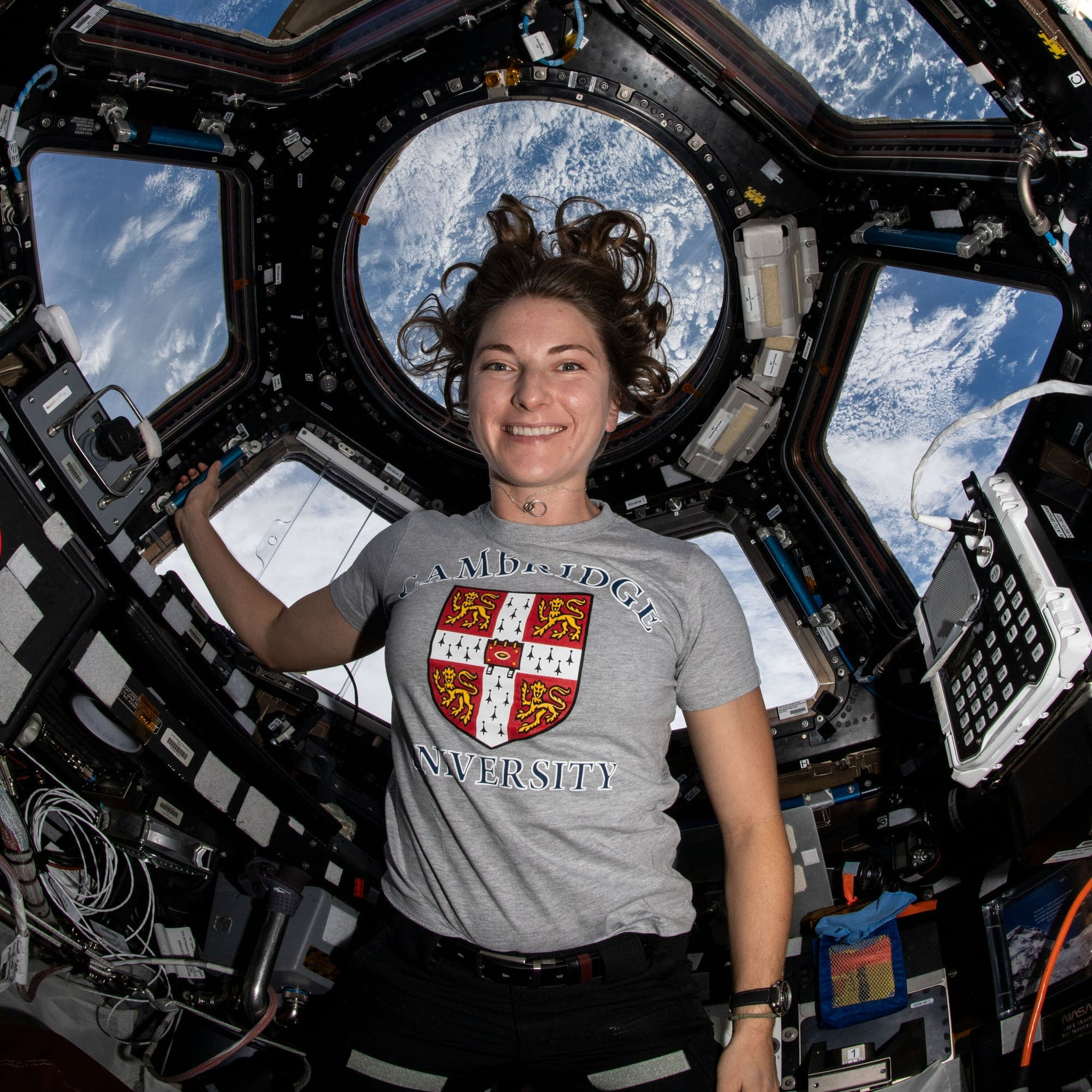
NASA astronaut who spent six months living on the International Space Station. Hi, Kayla.
嗨。
Hi.
我的第一个问题是,什么是国际空间站?
My first question is, what is the International Space Station?
国际空间站就像一座位于近地轨道的巨大实验室。它是一个庞大的飞行器,以每小时17500英里的速度绕地球旋转。我们基本上处于对行星的自由落体状态,这就是我们能留在轨道上的原因。我们有宇航员持续驻守这艘飞船。我们已经在那里生活和工作了二十多年,每天都在维护飞行器,以便能够继续居住,但更重要的是进行大量精彩的科学实验。
The International Space Station is kind of like a gigantic laboratory in low Earth orbit. It's this huge vehicle that is tumbling around the Earth at 17,500 miles per hour. We're basically in freefall around the planet, and that's how we stay in orbit. And we have astronauts who have been continually crewing this vehicle. We've been living and working up there for more than twenty years now, and we spend every day maintaining the vehicles so that we can continue to live there, but ultimately doing a ton of amazing science experiments.
酷。接下来,我收到来自宾夕法尼亚州布莱克的问题。他想知道,怎样才能成为宇航员?
Cool. Next up, I have a question from Blake in Pennsylvania. He wanted to know, how do you become an astronaut?
要成为宇航员,唯一必须做的就是学习STEM领域的专业。也就是科学、技术、工程或数学。你需要在这些领域中的某个专业获得本科和硕士学位。我们有研究洞穴黏液的微生物学家,也有研究火星等遥远行星的行星地质学家。我的背景是工程学。
The only thing you really have to do to become an astronaut is study something in a STEM field. So science, technology, engineering, or math. You need a a college degree and a master's degree in one of the tons of fields in those areas. So you have microbiologists who study cave slime, planetary geologists who study distant planets like Mars. My background is engineering.
我学过控制系统与机器人工程,后来又学了核工程,然后加入了海军。但我认为让我们最相似的一点是,我们在寻找那些非常擅长团队合作的人,因为独自前往太空并在太空取得成功是不可能的。这是一项团队运动。
I studied control systems and robotics engineering and then nuclear engineering, and then I served in the Navy. But the thing that I think makes us most similar is we are looking for people who know how to work really well on teams because you can't go to space and succeed in space by yourself. It's a team sport.
非常酷。
Very cool.
来自马里兰州的马克问我们,宇航员如何为低重力环境训练?
Mark from Maryland asked us, how do astronauts train for low gravity?
在地球上训练以适应微重力环境有点奇怪,因为没有完美的环境能完全模拟它。我们称它们为模拟环境。有时我们就在正常地球重力下训练,尽量想象在微重力中会是什么感觉。我们可以乘坐一种叫做抛物线飞行的特殊航班,这些高级飞机会以抛物线形状飞行。当你这样做时,它会让你在大约十五到三十秒内感受到微重力,感觉像在漂浮,你可以在飞机舱内“飞行”。
It is kind of weird training on Earth to work in microgravity because there's no perfect environment that mimics that. We call them analog environments. Sometimes we just train in normal Earth gravity and kind of try to imagine what it would be like to be in microgravity. We can go on these special kind of flights called parabolic flights where these fancy airplanes fly in the shape of a parabola. And when you do that, it allows you to have about fifteen to thirty seconds where you feel like you're in microgravity, that you feel like you're floating and you can fly within the aircraft cabin.
这能让你体会身体在那样的环境中是什么感觉,但时间非常短暂。我们练习微重力环境的一个超酷地方叫做中性浮力实验室。那是一个巨大的室内泳池,是世界上最大的室内泳池之一,深40英尺。我们在里面放置了一个与国际空间站大小相同的模型,并把它浸没在水中。
That gives you a sense of how it's gonna feel to have your body in that environment, but it's only for a very short chunk of time. One really cool place where we practice being in microgravity is in our facility called the Neutral Buoyancy Lab. It's a giant indoor pool, one of the biggest indoor pools in the world. It's 40 feet deep. And submerged in it, we have a model of the space station that's the size of the real space station.
那就是我们练习太空行走的地方。我们真的会穿上真正的宇航服,下到水下,然后有一队潜水员帮我们在身体上加重物或泡沫,让我们感受到真正太空行走时的感觉。我们会连续练习六个小时甚至更久的完整太空行走。我们穿着宇航服,离开气闸,完成所有真正太空行走时要做的任务,然后再回到舱内。所以我们想尽办法模拟在太空工作的感觉,这样真正上去的时候,要学的东西就少一点。
And that's where we practice our spacewalks. So we actually put on real space suits, go underwater, and then there's this team of scuba divers who helps put weights or foam on our body to make us feel like we will feel when we're in space on a real spacewalk. And we practice full spacewalks for, like, six or more hours. We practice being in our spacesuit, leaving the airlock, doing all the work we're gonna do on a real spacewalk, and then coming back inside. So we try to find all of these different ways to simulate what it might feel like to do our job in space so that when we get there, there's a little bit less to learn.
但无论你练得多充分,都无法完全准备好面对那种感觉和会遇到的挑战。所以我们练习适应力和韧性,并互相帮助,这样刚到太空、适应新环境时,就能克服这些困难。
But no matter how much you practice, you can't fully prepare yourself for how it's going to feel and some of the challenges you're going to face. But that's why we practice being adaptable and resilient and helping each other because it helps us overcome that challenge when we first arrive and we're getting used to this new environment.
这是内布拉斯加的玛戈问的。她想知道,在太空会被晒伤吗?
This one's from Margo in Nebraska. She was wondering, can you get sunburnt in space?
在太空绝对会被晒伤,而且比地球上快得多。因为在地球上,大气层帮我们挡掉很多导致晒伤的紫外线。在太空里,我们虽然有窗户可以俯瞰美丽的地球和周围的星星、太阳系,但这些窗户都有特殊的防护涂层来保护皮肤和眼睛。如果阳光特别强烈,还得戴专用眼镜,防止眼睛受到太阳的伤害。
You can absolutely get sunburnt in space and actually a lot faster than you do on Earth. Because here on Earth, the Earth's atmosphere protects us from a lot of those UV rays that cause us to get sunburnt. And so when we're in space, we actually do have windows to look out at our beautiful planet Earth and then the stars, the solar system around us. Those windows have special protective coverings to kind of help protect our skin and eyes. But if the sun's really bright, you have to wear special glasses to keep your eyes safe from getting harmful impacts from the sun.
但如果太阳角度合适,人很快就会晒伤。我觉得就算妈妈给你涂得再完美的防晒霜,也挡不住这种晒伤。所以还是得小心。
But if you're at the right sun angle, people can get sunburn pretty quickly. And I don't even think that sunscreen perfectly applied by your mom even would save you from this kind of a sunburn. So you do have to be careful.
我可不想让他脸被晒伤。
I don't want his face sunburn.
嗯,只要注意防护,就没事。就像地球上一样,有预防措施。
Yeah. If you if you watch out correctly, you'll be fine though. There's precautions you can take just like on Earth.
好的。得克萨斯州的艾克想知道,在太空放屁会发生什么?
Alright. And Ike from Texas Texas was curious to know what happens when you fart in space?
没什么特别的,我觉得跟在地球上放屁差不多。
Nothing all that special. I think it's probably the same as farting on Earth, to be honest.
那要是在宇航服里放屁呢?气体会飘到衣服顶部,然后你得闻自己的屁吗?
What about if you fart in your spacesuit? Does it go up into, like, the top of your spacesuit and then you have to smell your fart?
幸运的是,不会。宇航服就像一辆小型太空车。你把维持生命所需的一切都带在身上,包括新鲜空气和氧气。我们会呼出二氧化碳,但如果你吸入的二氧化碳过多,实际上会让你感到非常难受,甚至伤害身体。
Luckily, no. The spacesuit is kind of like a tiny space vehicle. You take everything out with you that you need to stay alive, including fresh air, fresh oxygen. And so we breathe out carbon dioxide. But if you have too much carbon dioxide that you're breathing in, it can actually make you feel really sick and hurt your body.
所以穿着宇航服时,我们会从头盔后部向前输送100%纯氧,这样我们就能吸入新鲜氧气。当我们呼出二氧化碳时,它会被推向宇航服底部。基本上,所有气流都是从头部流向脚部,然后被重新处理,去除异味或二氧化碳,再吹回面部。所以,在宇航服里放几个臭屁其实挺安全的,因为气味根本到不了鼻子。
And so when you're in a spacesuit, we flow a 100% pure oxygen from the back of our helmets towards the front, and that delivers fresh oxygen for us to inhale. And then when we exhale carbon dioxide, it pushes it down towards the bottom of our spacesuit. Everything's flowing down from your head to your feet, basically, and then being reprocessed so that it removes anything that's stinky or any carbon dioxide before it blows back over your face. So it would be a pretty safe spot to have some stinky spells in your spacesuit because they never make it to your nose.
好的,凯拉,我还有一个问题。如果宇航员在空间站上生病了,会发生什么?
Okay. I have one more question for you, Kayla. What happens if astronauts get sick while they're up on the space station?
我们对各种可能的情况都受过很好的训练。当你要在那里生活六个月时,必须做好万全准备,包括生病。我们会采取几项预防措施,尽量在出发前保持健康。我们有一个叫做隔离的流程,现在大家因为新冠疫情都更熟悉这个词了。
So we are actually really well trained for all sorts of things that can happen. When you're when you're living up there for six months, you have to be ready for everything, including getting sick. So we do a couple of things. We take precautions before we go to try to be as healthy as we can be. So we actually have this process called quarantine, which everyone is more familiar with now that we face pandemics like COVID-nineteen.
但简单来说,在发射前的两周里,所有即将接近乘组的人都必须遵守严格的协议:不去公共场所,就像待在一个小泡泡里。我们尽量不把地球上的感冒或细菌带上空间站,主要是为了保护已经在那里的乘组。因为到了太空后,你的免疫系统会因太空环境而改变。
But basically, in the two weeks before we launch, everybody who's going to be anywhere near the crew members has this, like, strict protocol where you don't go out in public. You're kind of like in a little bubble of people. So we try not to take any colds or germs from Earth with us to the space station. And that's mostly to protect the crew that's already there. Because once you're there, your immune system, it changes due to the space environment.
它对抗病原体的能力会减弱,同时你也接触不到日常生活中那些训练免疫系统、让你保持健康的因素。所以我们不想把从地球带去的细菌传染给已经在空间站的宇航员。因此,我们尽量以最佳状态抵达。到达后,我们有自己的“药房”,还有一支地面医生团队专门提供支持,我们可以进行远程医疗。
It becomes less strong at fighting things off, but you're also not exposed to the normal everyday things that help train your immune system to keep you healthy. And so we don't want to get the astronauts who are already on the space station sick when we bring up all of our germs from Earth. So we try to arrive as healthy as we can. And then once we're there, we have kind of our own pharmacy and we have this amazing team of doctors on the ground who specialize in supporting us from Earth. So we're able to do telemedicine.
我们配备了很多诊断设备,可以检测多种疾病,还能做超声等各种检查。我们也接受医疗培训,以便互相照顾。有时会有医生成为宇航员,跟我们一起上天。我的乘组里就有汤姆·马什本,他来NASA之前是急诊医生。所以我们很幸运,乘组里就有医生,但这种情况并不总是出现。
We have a lot of diagnostic equipment, whether that's testing for certain kinds of illnesses, we can do ultrasounds, all sorts of different things. And we also get our own medical training to support each other. So sometimes we have doctors who are who become astronauts, and they go to space with us. So on my crew, had Tom Marshburn, who was an emergency medicine physician before he came to NASA. So we were lucky because we had a doctor with us on our crew, but that's not always the case.
但如果真的病得很重,我们随时可以提前乘飞船返回地球。
But if we were ever really sick, we could always come home early in our spaceships.
好的,凯拉,谢谢你的回答。
Alright. Thank you for answering your questions, Kayla.
不客气。谢谢你的好奇心,今天聊得很开心。
Of course. Thank you for your amazing curiosity. It was really fun talking to you today.
再见。
Bye.
再见,Kayla。非常感谢。本期节目是
Bye, Kayla. Thanks so much. This has been
《问问宇航员》。
Ask an Astronaut.
我只是好奇,Vincent。听了这些回答后,你有没有更想当宇航员?
I'm just curious, Vincent. Now that you heard all those answers, does this make you wanna be an astronaut maybe more?
有。酷。
Yes. Cool.
哪一点让你更想当宇航员?
What about it made you wanna be an astronaut more?
主要是放屁那段。我可不想在六七小时的太空行走里闻自己的屁味。
Mostly the farting part. I don't wanna smell my own farts while on a six or seven hour spacewalk.
是啊。现在你知道了,会没事的,完美。去太空旅行要做很多准备。
Yeah. So now you know. You'll be fine. It's perfect. Traveling to space takes a lot of preparation.
那里没有空气,所以你得自己带。如果出舱,就得穿特制宇航服防止空气跑掉。
There's no air, so you have to bring it with you. And if you go outside the ship, you need a special space suit to keep the air from escaping.
还得仔细考虑吃什么。早期食物都从管子里挤,现在好多了。如今国际空间站甚至能种新鲜蔬菜。想成宇航员,就学STEM,读硕士,最重要的是学会团队合作,因为当宇航员需要协作。本期《Brains On》就到这里。
And you have to think carefully about what food to eat. In the early days, food was eaten out of a tube, but it's gotten much better since then. Today, there's even fresh vegetables grown on the International Space Station. And if you want to become an astronaut, study STEM, get a master's, and most importantly, learn how to work on a team because being an astronaut takes teamwork. That's it for this episode of Brains On.
本集由 Sandin Totten 和 Anna Goldfield 撰写。
This episode was written by Sandin Totten. And. Anna Goldfield.
编辑:Sheila Farzan。事实核查:Ruby Guthrie。
It was edited by. Sheila Farzan. Fact checking by. Ruby Guthrie.
工程协助:Rachel Breeze、Jess Berg、Adam Gross。声音设计:Rosie DuPont。原创主题音乐由
We had engineering help from Rachel Breeze, Jess Berg, and Adam Gross with sound design by. Rosie DuPont. Original theme music by
Mark Sanchez。
Mark Sanchez.
制作协助来自 Brains on Universe 团队的其他成员。
We had production help from the rest of the Brains on Universe team.
Molly Bloom。Nico Gonzalez Whistler。Lauren Humbert。Charlotte Traver。
Molly Bloom. Nico Gonzalez Whistler. Lauren Humbert. Charlotte Traver.
Joshua Ray。
Joshua Ray.
Anna Weigel。
Anna Weigel.
以及 Aron Walde Selassie。
And Aron Walde Selassie.
Beth Perlman 是我们的执行制片人,APM 工作室的负责人是 Chandra Kavadi 和 Joanne Griffith。特别感谢 Christopher Barnett、Jaden Jennings、Landy 先生和 Green 博士。
Beth Perlman is our executive producer, and the executives in charge of APM studios are Chandra Kavadi and Joanne Griffith. Special thanks to Christopher Barnett, Jaden Jennings, mister Landy, and doctor Green.
BrainZON 是一档非营利性的公共广播节目。
BrainZON is a nonprofit public radio program.
支持节目的方式有很多。访问 brainson.org 注册加入 brains on universe 通讯,获取额外内容、阅读推荐等。当你
There are lots of ways to support the show. Head to brainson.org to sign up for the brains on universe newsletter for bonus stuff, reading recommendations, and more. While you're
在那里时,你可以给我们发送神秘声音、画作和问题。
there, you can send us mystery sounds, drawings, and questions.
再说一遍,网址是 brainson.org。好了,Vincent,你准备好再听一遍那个神秘声音了吗?准备好了。来了。
Again, that's brainson.org. Alright, Vincent. Are you ready to listen to that mystery sound again? Yep. Here it is.
我听到背景里有口哨声。
I hear a whistling in the background.
这次我也听到了。你觉得是什么?
I heard that too this time. What do you think?
可能像是用管子从某个管道或罐子里吸东西,但又不完全吸出来。
It could be like sucking something out of a tube or a tank using a tube, but not completely.
好的。在揭晓答案前,你的最终猜测是什么?清空马桶后部。也许有人在修水管?听起来确实像。
Okay. What's your final guess before we hear the answer? Emptying of the back of a toilet. Maybe someone's doing some plumbing? That's definitely what it sounds like.
好的。我喜欢这个猜测。准备好听答案了吗?嗯。来了。
Alright. I love that guess. Ready for the answer? Mhmm. Here it is.
你好。我是来自加利福尼亚州圣何塞的 Paloma。那是我冲马桶的声音。没错。
Hello. I am Paloma from San Jose, California. And that was the sound of me flushing the toilet. Yeah.
嘿,我正在给So it to close。So close。我觉得这是你第一次听到时说的话。
Hey. I'm giving So it to close. So close. I think that's what you said the first time you heard it.
但让我震惊的是那口哨声。因为口哨声让我想,那肯定得是
But that was the whistling that got me. Because the whistling, I'm like, well, that's gotta be
一根管子。对。也许马桶里有一根管子,就像在水箱里。有可能。也许吧。
a tube. Yeah. Well, maybe there's a tube in the toilet, like in the tank. Possibly. Maybe.
我其实完全不懂马桶是怎么工作的。
I actually don't know anything about how toilets work.
比你知道的还少。我们会
Know less than you do. We'll do
一起研究。我们一起踏上管道之旅。干得漂亮。现在是大脑荣誉榜时间。这些了不起的孩子用他们的问题、想法、神秘声音、画作和击掌让节目持续精彩。
research together. We'll go on a plumbing journey together. Excellent work. Now it's time for the brain's honor roll. These are the incredible kids who keep the show going with their questions, ideas, mystery sounds, drawings, and high fives.
来自意大利费拉拉的Marco,来自佛罗里达莱克兰的Emily和Henry,来自荷兰埃因霍温的Rohan,来自纽约萨默斯的Hazel和Zelda,来自芝加哥的Ellie,来自马里兰贝塞斯达的Lila和Daniel,来自西雅图的Fern和Otis,来自纽约波灵的Iris和Juniper,来自科罗拉多戈尔登的Julian,来自康涅狄格布里奇沃特的Isadora,来自爱尔兰韦克斯福德的Matthew,来自洛杉矶的Lev,来自加利福尼亚拉米拉达的Aaron,来自缅因州伯威克的Sam,来自威斯康星的Winston,来自加利福尼亚河滨的Hannah,来自华盛顿埃弗雷特的Hazel和Gabriel,来自俄亥俄州哥伦布的Roman,来自乔治亚州塔克的Antonio,来自休斯顿的Autumn,来自新斯科舍省格林伍德的May,来自肯塔基州路易斯维尔的Olivia,来自田纳西州孟菲斯的Irish,来自加利福尼亚希尔兹堡的Logan,来自中国广州的Jin,来自爱尔兰都柏林的Patrick,来自马萨诸塞州阿灵顿的Emma,来自俄亥俄州克利夫兰高地的Jasper和Perry,来自北卡罗来纳州夏洛特的Bexley和Guyton,来自澳大利亚吉隆的Henry,来自俄克拉荷马州芒兹的Sawyer,来自弗吉尼亚州林奇堡的Alice和Elizabeth,来自盐湖城的Sarah Kate,来自佐治亚州达拉斯的Michael和Lillian,来自马萨诸塞州布鲁克莱恩的Nico,来自俄亥俄州哥伦布的Jasper和Sage,来自匹兹堡的Jet,来自马里兰州银泉的Ellie,来自北卡罗来纳州黑山的Lucy,来自德克萨斯州格雷普韦恩的Rahema和Gigi,来自加利福尼亚州托潘加的Elluin和Maya,来自科罗拉多州博尔德的Owen,来自马萨诸塞州阿灵顿的Estelle和Clark,来自明尼苏达州圣保罗的Lyra,来自芝加哥的Lila、Juniper和Azalea,来自田纳西州孟菲斯的Akash,来自华盛顿州温哥华的Jackson,来自华盛顿特区的Calvin,来自加利福尼亚州贝克斯菲尔德的James,来自霍华德市的Jack和William,来自康涅狄格州里奇菲尔德的Edward,来自德克萨斯州奥斯汀的Lula,来自佛罗里达州沃思湖海滩的Penelope,来自英格兰南安普敦的Ezra,来自康涅狄格州迦南的Olivia,来自马萨诸塞州莱弗里特的Olive,以及来自纽约布朗克斯的Nova。
Marco from Ferrara, Italy, Emily and Henry from Lakeland, Florida, Rohan from Eindhoven, Netherlands, Hazel and Zelda from Summers, New York, Ellie from Chicago, Lila and Daniel from Bethesda, Maryland, Fern and Otis from Seattle, Iris and Juniper from Pawling, New York, Julian from Golden, Colorado, Isadora from Bridgewater, Connecticut, Matthew from Wexford, Ireland, Lev from Los Angeles, Aaron from La Mirada, California, Sam from Burwick, Maine, Winston from Wisconsin, Hannah from Riverside, California, Hazel and Gabriel from Everett, Washington, Roman from Columbus, Ohio, Antonio from Tucker, Georgia, Autumn from Houston, May from Greenwood, Nova Scotia, Olivia from Louisville, Kentucky, Irish from Memphis, Tennessee, Logan from Healdsburg, California, Jin from Guangzhou, China, Patrick from Dublin, Ireland, Emma from Arlington, Massachusetts, Jasper and Perry from Cleveland Heights, Ohio, Bexley and Guyton from Charlotte, North Carolina, Henry from Geelong, Australia, Sawyer from Mounds, Oklahoma, Alice and Elizabeth from Lynchburg, Virginia, Sarah Kate from Salt Lake City, Michael and Lillian from Dallas, Georgia, Nico from Brookline, Massachusetts, Jasper and Sage from Columbus, Ohio, Jet from Pittsburgh, Ellie from Silver Spring, Maryland, Lucy from Black Mountain, North Carolina, Rahema and Gigi from Grapevine, Texas, Elluin and Maya from Topanga, California, Owen from Boulder, Colorado, Estelle and Clark from Arlington, Massachusetts, Lyra from Saint Paul, Minnesota, Lila, Juniper, and Azalea from Chicago, Akash from Memphis, Tennessee, Jackson from Vancouver, Washington, Calvin from Washington, DC, James from Bakersfield, California, Jack and William from Howard City, Edward from Richfield, Connecticut, Lula from Austin, Texas, Penelope from Lake Worth Beach, Florida, Ezra from Southampton, England, Olivia from Canaan, Connecticut, Olive from Leverett, Massachusetts, and Nova from Bronx, New York.
下周我们将带来一期全是关于章鱼的节目。
We'll be back next week with an episode all about octopuses.
感谢收听。
Thanks for listening.
关于 Bayt 播客
Bayt 提供中文+原文双语音频和字幕,帮助你打破语言障碍,轻松听懂全球优质播客。