本集简介
双语字幕
仅展示文本字幕,不包含中文音频;想边听边看,请使用 Bayt 播客 App。
讲故事同样关乎经验和商业敏锐度。因此,你越是训练自己了解公司内部情况,就越擅长讲故事。这也需要了解你的听众。
Storytelling is also a question of experience and business acumen. So the more you train on knowing what's inside your company, the better you will become at storytelling. And it's also a question of knowing your audience.
欢迎回到《CFO周刊》,在这里我们与财务领导者探讨如何提升团队效率、为战略腾出时间并最终取得成果。本播客由Personiv赞助,三十多年来一直是财务与会计外包领域的可信领导者。了解Personiv如何通过小至一人的定制团队助您优化运营,详情请访问personaev.com。我是主持人梅根·韦斯。
Welcome back to CFO weekly, where we're talking with financial leaders about how to build efficiency in their teams, create time for strategy, and ultimately get results. This podcast is brought to you by Personiv, the trusted leader in finance and accounting outsourcing for over thirty years. See how Personiv's customized solutions can help you streamline your operations with teams that start as small as one. Visit the website at personaev.com to learn more. I'm your host, Megan Weiss.
让我们直接开始吧。
Let's jump right in.
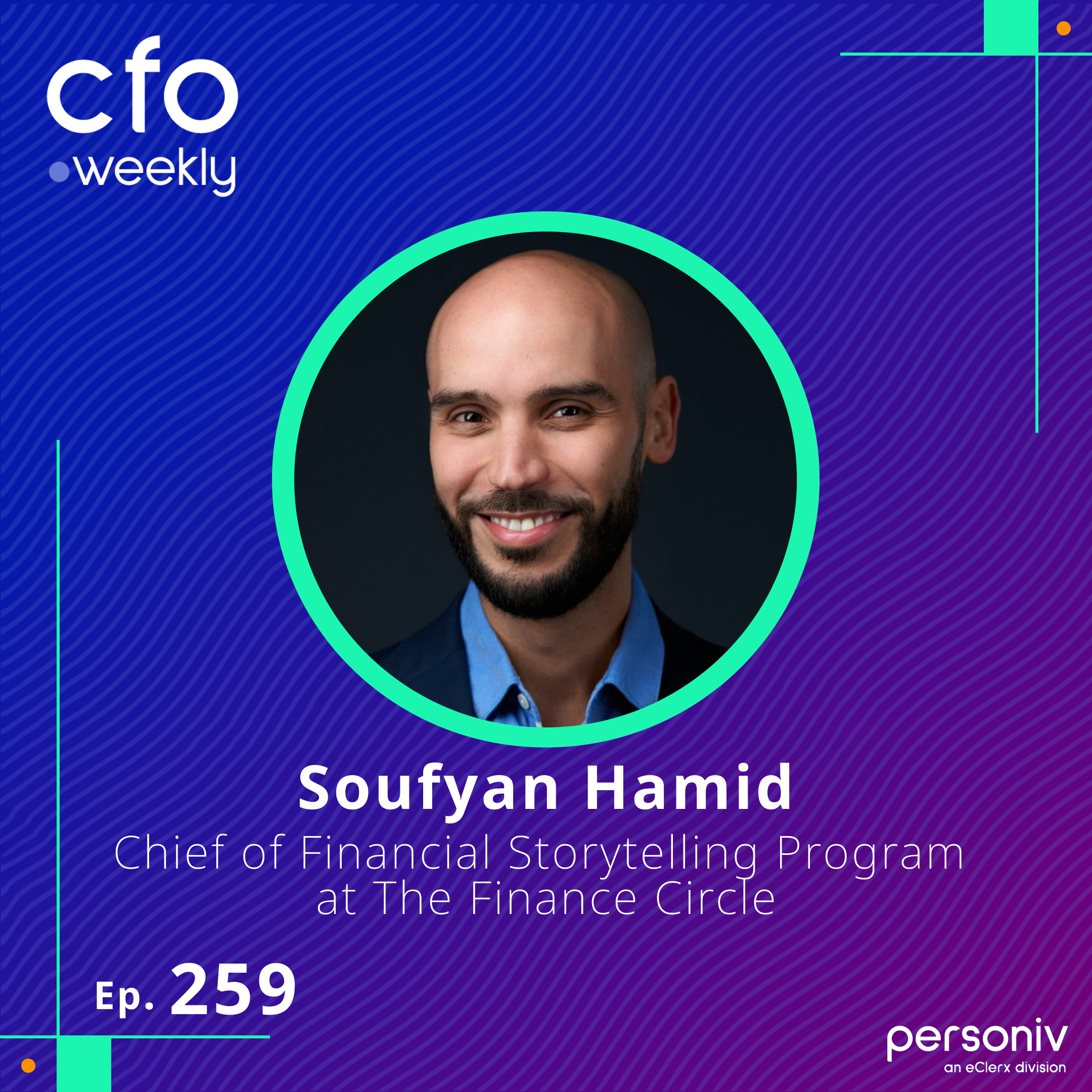
今天我的嘉宾是苏菲安·哈米德。作为财务圈负责人,他热衷于将财务专业人员转变为战略业务伙伴。拥有十余年企业财务经验的他,专长于弥合专业技能与关键软技能之间的鸿沟。其使命是赋能财务团队掌握通常较少涉及的技能,如商业头脑、沟通、讲故事和领导力。财务圈提供适合大型团队与个人的定制培训项目。
Today, my guest is Sufyan Hamid. Sufyan is the leader of the finance circle and is passionate about transforming the role of finance professionals into strategic business partners. With over a decade of experience in corporate finance, he specializes in bridging the gap between technical expertise and essential soft skills. His mission is to empower finance teams with skills that are generally less learned, like business acumen, communication, storytelling, and leadership. At the Finance Circle, they offer tailored training programs that cater to both large teams and individuals.
包括财务叙事计划在内的各项举措,旨在提升团队影响力和推动业务成功的能力。领先企业信赖他们的方法,通过研讨会、演讲和个性化辅导持续产生重大影响。苏菲安,感谢
And their initiatives, including the financial storytelling program, are designed to enhance your team's ability to influence and drive business success. Leading organizations trust their approach, and they continue to make a significant impact through workshops, speeches, and personalized coaching sessions. Sufian, thank
你作为嘉宾参加本期《CFO周刊》。
you so much for being my guest on today's episode of CFO Weekly.
谢谢邀请,梅根。很高兴再次与你交谈。
Thank you for having me, Megan. That's great to be back with you.
今天我们聚焦财务叙事及财务专业人员作为战略业务伙伴的角色演变。2023年底你首次做客节目时,财务叙事还是我刚接触的概念。如今讨论CFO角色进化时总会涉及这个话题。我十分期待与你继续探讨。让我们直接进入主题。
Today, our discussion focuses on financial storytelling and the evolving role of finance professionals as strategic business partners. And when you were first on the show in late twenty twenty three, financial storytelling was a concept that I'd only just begun to hear about. And nowadays, it seems like I can't have a conversation about the evolution of the CFO role without this topic coming up. So I'm really looking forward to continuing this discussion with you. So let's jump right in.
太好了,开始吧。
That's great. Let's do that.
首先,能否回顾你的财务生涯起点?是什么激发了你对这个领域的兴趣?你的职业道路如何发展到今天?
So to start, can you take us back to the beginning of your journey in finance and what sparked your interest in the field and how your path has evolved to where you are today?
我的财务职业生涯起步相当传统——毕业后直接被普华永道审计部门录用,这在比利时很常见,因为许多商学院和金融学院的毕业生都会选择四大会计师事务所的审计岗位作为职业起点。我在那里度过了四年,虽然非常享受这份工作,但同时也意识到自己不愿终生从事审计行业,因为我渴望深入企业内部运作。而审计工作始终让你保持外部视角,既没有决策权,对业务的影响力也微乎其微。
I started my career in finance pretty much the classic way, meaning that coming out of my studies, I was hired by PwC in auditing, which in Belgium is quite classic because we are a lot from business schools and finance schools to go to big four companies to start in audit. And I stayed there during four years and I really liked that. But in the same time, I didn't see myself in that career during all my life because I really wanted to be involved inside the companies. And when you work as an auditor, you really have this external view, but you really have no decision power. You have very little influence on the business.
正因如此我决定转向财务计划与分析(FP&A)领域。但实际转型远比预期困难,因为从审计直接跳槽到FP&A最大的障碍就是缺乏业务经验。我的解决方案是加入德勤一个名为'财务资源与外包'的小型部门,我们被派驻到不同企业以FP&A专家、会计专家或资金管理专员身份参与6个月至1年的项目。正是在这段经历中,我真正理解了财务控制与FP&A的实质,这样的工作我持续了五年。
And so that's why I decided to work in FP and A. However, it did not really go as I wanted to because it was very hard to jump from auditing to FP and A basically because you had no business experience. And so my workaround for this was to join Deloitte in a very little department that was called financial resources and outsourcing in which we were assigned to companies in order to work as an FP and A professional, as an accounting professional, treasury also in different companies for projects like six months or one year. And this is where I really learned what controlling was, what FP and A was. And I did that during five years.
这段经历也让我初尝创业管理的滋味。由于部门规模小,随着责任增加,我们需要承担远超本职的工作:培训新人、参与招聘面试、出席招聘会,还要开发客户资源——这些锻炼对我如今拓展人脉和商业开发的能力至关重要。直到某天,我开始反思这个角色带来的隐忧。
And this is also where I discovered a bit the career of entrepreneurship, because since it was a small department, as you grew in responsibilities, you also had to deliver more than just doing your job. You were required to train other people. You were required also to participate through recruitment by interviewing candidates or simply by participating to job fairs. And you also had, and that helps me a lot today to work on reaching out to people well on the commercial part of the job, meaning finding new clients, finding new projects, finding new assignments. And that was great until a certain moment where I started to think about the frustrations that I had.
尽管这种模式对FP&A入门很有帮助,但所有资深FP&A从业者和CFO都会告诉你:真正的挑战在于持续跟进。当你制定预算后,自然希望见证它是否奏效、能否优化、如何随企业发展而演变——这些恰恰是咨询顾问无法实现的,因为我们每个项目周期只有6-12个月。于是我离开德勤,加入比利时电信公司Proximus担任财务业务伙伴。
Because although this was interesting to learn the first steps into FP and A, the most difficult that I'm FP and As and CFOs will tell you the same. The most difficult is to continue to work on the duration, meaning that you work on a budget. Well, you want to see through. You want to see if it worked, if it was well done, if it's accurate, if it can be improved, and you want to see your work evolving together with the company, things that you could not do as a consultant because you were there only for six months to one year. So I decided to leave Deloitte and join a telco company in Belgium, which is called Proximus as a finance business partner.
在这里我才真正领悟财务控制、业务合作与FP&A的精髓。入职初期,我的四大背景和Power BI、Power Pivot、Power Query、Visual Basic等技术专长令人惊艳——毕竟许多财务同事已任职二三十年,部门正处在新老交替阶段。但很快挫折感袭来:与财务部其他同事不同,我总被排除在重要会议之外。
And this is really where I learned what controlling finance, business partnering, FP and A was. Because in the first steps there, everybody was impressed because I joined from Deloitte, from PWC. I bring many new technical skills like mastering Power BI, Power Pivot, Power Query, Visual Basic. So in the first month, it was all successes because I brought things that were not inside because many people were there since twenty, twenty five years, and they only started to renew a bit the staff in finance. And in the beginning, it was great, but then I started to feel some frustrations because contrary to some of my colleagues in finance, I was not invited to meetings, to important meetings.
项目启动阶段从不让我参与,业务方案总是在汇报前两天才交到我手上,业务部门的协助请求也寥寥无几。我开始怀疑自己是否误解了财务业务伙伴的定位,或是工作方式出了问题。直到每月向财务副总裁汇报时,所有疑惑才被点破——每次汇报结束时的未解疑问总比开始时更多。
I was not involved in the projects from the beginning, and I only got the business cases two days before they had to be presented. And I didn't really get many questions for our requests to help the business. So I started to think that I may have misunderstood the concept of finance business partnering or simply that I was doing something wrong. And it all became clear what I was doing wrong because every month we had to present the monthly results to the VP finance. And every month, it was somehow a frustration for everyone because there were more questions unanswered in the end than in the beginning.
分析报告中充斥着大量模糊不清的细节,整个团队都为此沮丧。终于在某次汇报后,那位VP忍无可忍地指出:'你需要提升故事叙述能力'。这是我第一次听说财务领域需要'讲故事'——原本以为这只是营销销售用来诱导消费者的技巧。
There were a lot of details, lot of unclear items in the analysis that many people were frustrated not to have. And so one day, the VP finance I had to present to every month, I think he couldn't hold it anymore. And he just told me that I needed to improve my storytelling and my stories. And for me, that was the first time I heard about stories. For me, when you talked about storytelling, it was more marketing stuff, sales stuff in order to sell things to people, to deceive people into something they didn't especially want to.
这种评价让我这个敏感者颇感受伤。自信工作出色的我决心证明他的错误,开始疯狂学习TED演讲技巧、加入国际演讲会,试图打造完美的财务演示。
But I never heard of it in the context of finance. And that's where because I'm a susceptible person, I took it a bit personally. For me, I was doing things great, and I wanted to prove him wrong that I could build great stories, great presentations. And I started to follow trainings, training to deliver a good TED talk. I joined Toastmasters.
通过这些训练,我逐渐掌握优秀演示的核心要素。虽然这些课程并非针对财务领域,但我提炼出适用于财务汇报的方法论。当我首次将新方法应用于公司预算汇报时,情况开始转变——听众开始提出实质性问题。
And by learning all of these, I started to get more sense about what was expected of a good presentation. All these were not especially destined for finance. I got the basics of how to improve good presentation in finance. And I started to develop my own methodology that I applied first myself, and it started to work pretty well. When I presented the budgets to the different views of the companies, well, I started to get questions.
那些不再是故意刁难的问题,而是真正的业务关切。我意识到:演示方式不仅影响人们对财务数据的理解,更决定着财务价值的发挥——这就是故事叙述的精髓,也是财务业务伙伴关系的根基。
I started to have more interest, like real questions, not the ones that are just given to you in order to block you, but things of real interest. I started to think maybe there's something to do here. Maybe the way we present stuff have a clear impact on how people understand finance, but also on how they can use finance. And that's the basics of storytelling. And that's the basics also of finance business partnering.
你希望财务对他们有用。这基本上就是我如何发现讲故事的力量,以及我决定要成为这方面专家的原因。
You want finance to be useful to them. And that's basically how I discovered the power of storytelling and how I decided that it was something I wanted to be a specialist in.
如今你已围绕将财务专业人士转变为战略业务伙伴这一目标构建了职业生涯。那么你如何定义财务叙事?为何这对当今财务领导者至关重要?
And now you've built your career around transforming finance professionals into strategic business partners. So how do you define financial storytelling? And why is it crucial for today's finance leaders to be good at this?
正是因为这个原因。你想让财务对人们有用。我知道我们常有这种后台财务的形象——仅为合规目的而存在的财务。但事实上财务本应一直有用,几十年来人们对财务的期待就是如此。只是现在财务专业人士面临越来越大的压力,需要提供价值、对人们有用,因为随着自动化、人工智能和效率提升,我们已没有太多借口了。
Exactly because of this. You want to make finance useful to people. I know that we often have this image of the back office finance, the finance that only for compliance purposes. The thing is that finance must have been useful all the time, and it's expected of finance since decades. It's just that now the pressure is more and more important on finance professionals to provide value, to be useful to people because we don't have so many excuses anymore with all the automation, with all the artificial intelligence, with the efficiencies that we have, we need to become more and more useful.
财务叙事是众多方面之一,但我选择专精于此是因为它能让人理解财务。它让财务对公司其他人变得重要,并具有可操作性。这就是为什么叙事能力对FP&A专业人士、CFO和财务领导者如此重要——因为你本质上是要用财务这个工具来做决策、推动战略,确保公司每个人都具备必要的财务素养,基于财务结果来驱动所有决策。
And financial storytelling is the aspect among other, but this aspect I decided to be the expert on because it makes it available to people. It makes it important to the people in the rest of the company, and it makes it actionable. And that's why storytelling is so important as tool in the skill set of FP and A professionals, CFOs, and finance leaders, because you basically want to use the tool that is finance to make decisions, to drive the strategy, to make sure that everyone in the company has the necessary financial literacy to drive all their decisions based on the financial outcome.
根据你的经验,财务专业人士在向非财务利益相关者传达财务数据时面临的最大挑战是什么?叙事如何帮助弥合这一鸿沟?
In your experience, what are some of the biggest challenges that finance professionals face when they're trying to communicate financial data to non financial stakeholders? And how does storytelling help bridge this gap?
最根本的问题在于我们传达的信息。在我与CFO、CEO以及所有不得不——请原谅我的表达——忍受财务汇报的人交谈时,最大的困难是人们不会筛选沟通内容。他们只是机械地走完财务汇报的所有结构:先是损益表,然后是收入,接着是利润率,再到运营开支...
Well, the basics is the message that we bring. Because the most difficult in my conversations with CFOs, with CEOs, and everyone that has to, excuse me, the the expression has to suffer a finance presentation is that people don't select what they communicate. They just go through all the structures that is a finance presentations with the P and L. And then in the P and L, have the revenue and you move on to the margin. You move on to the OpEx.
然后是资本支出等等。他们只是详述发现的数据,但人们需要的是核心信息。所以你必须从分析获得的信息海洋中筛选——筛选出对人们有用、重要且能采取行动的内容。这个筛选标准就是'三个什么'法则。
You move on to the CapEx and so on. They just detail what they found out, but people need to have a message. And so you have to filter in the sea of information that you got from your analysis. You have to filter everything that's useful to people, important to people, and that they can do something about it. And that filter is the three whats.
你要确保通过这个过滤器,只呈现那些重要、可执行且足够实质性影响的信息。
You make sure that with this filter, you only bring the information that matters, that can be acted upon, and that's material enough to be important to people.
回顾过去,能否分享一个你亲眼见证财务叙事对商业决策或关系产生重大影响的成功案例?
And looking back, can you share a success story where you saw firsthand financial storytelling make a significant impact on a business decision or relationship?
有个很好的例子,当我担任比利时某公司财务控制主管时。历史上预算汇报需要安排两天时间,因为预算审查要逐条过细节、展示所有假设。人们会就每个假设逐一讨论。我们不喜欢这样,后来改变了做法。
Well, I have a good story when I was head of controlling in a Belgian company. Historically, the budget presentation had to be planned on two days because the review of the budget consisted in going through all the details and show all the assumptions. And there were discussions on all the assumptions one by one. We don't like this. We will change it.
我们反复讨论。修改模型后,原计划需要两天时间完成。当我到场时,根本无法认同这种安排,也完全不认为这是高效的做法。于是我运用了故事叙述的理念——选择展示内容、筛选关键信息,聚焦于业务成果而非所有假设。毕竟归根结底,那些假设都是服务于某个故事线的。
We go back and forth. We change the model and it had to be planned on two days. When I arrived, simply could not say yes to this, and I simply did not consider that it was efficient. And so I applied my concepts of storytelling by choosing what to show, choosing what was important and focusing on the outcome, on the business outcome rather than on all the assumptions. Because all in all, the assumptions were related to a storyline.
最重要的是要让管理层接受这个故事框架。一旦框架获得认可,那些假设自然就成为了战略转化为预算的副产品。我取得的成功是将原本两天的汇报压缩到了三小时,这相当惊人。虽然我觉得三小时仍显冗长,但从两天缩减到三小时已足以证明故事叙述的力量。
And the most important was that the management could buy the storyline in. And when the storyline was bought in, well, the assumptions were just a consequence of that strategy being translated into a budget. And the success story that I got was that these two days of presentations were reduced to three hours, which was kind of impressive. Three hours was still a lot in my opinion, but going from two days to three hours was already a success that I could just assign to storytelling.
这太棒了。在您当前的财务叙事课程中,您聚焦商业敏锐度、沟通力和领导力。能否谈谈这三要素如何协同提升故事叙述的效力?
That's amazing. Today in your financial storytelling program, you focus on business acumen, communication, and leadership. So can you talk to us about how these three elements work together to enhance the effectiveness of storytelling?
确实如此。作为财务从业者,故事叙述的根本在于回归商业事件本身。因此培养叙事能力时,商业敏锐度至关重要——缺乏这个基础,故事就无从谈起。请记住,财务报告中的数据源自会计,而会计本质上是对现实事件的特殊语言转译,这种语言只有我们财会人员才懂。所以你必须深入理解业务实质来构建故事,且必须站在决策者的视角展开叙述。
Well, indeed, because the basics of storytelling when you work as a finance pro is to go back to the business events. And so business acumen is of paramount importance when you work on your storytelling skills, because without that, you have no story. Let's remember that what we have in our financial reports is coming from accounting and accounting is a basic translation of what happens in real life into a language that we know only ourselves that's accounting and finance. So business acumen will be important because you want to go back to what happens in the business to build your story. And this story has to be taken from a standpoint of the decision makers.
切忌在给出结论前就陷入细节。应该像领导者那样思考——先呈现全局框架,再逐步展开支撑论据。这正是财务负责人需要具备领导力思维的原因,你必须预判高管层的决策视角。优秀财务叙事的核心就在于,让故事始终建立在这两个前提基础上。
You don't want to start with the details before bringing your conclusion. You will want to take it from a leadership perspective where they need to have the global view before going into every supporting evidence that you brought in your story. That's why leadership as a finance pro or as a CFO is important because you take that step back that leaders, the C suite will take to make their decisions. And that's one of the elements of financial storytelling where you want your story to be based on these two assumptions.
我很好奇,大家如何参与这个课程?对于正在收听、想提升叙事能力的听众,他们该怎么找到您的课程并加入?
I'm just curious. How can people find this program? And for people that are listening that are interested in becoming better storytellers, how can they find your program, and how can they become a part of it?
我的课程是一套方法论体系,主要通过三种方式传授。最主要的是企业内训——当CFO或财务主管希望提升团队叙事能力时,我会进行全天培训。我们从财务人员最常卡壳的分析环节开始,贯穿信息筛选直到最终呈现的完整链条。
Well, my program is a methodology that I share, and I share it in, three different ways. I share it first, and that's the main way of sharing it via corporate trainings. That's something that I do with companies where the CFO or the FBA, the manager wants their staff to be to improve their storytelling skills. And so I train them in a full day training where we go from the analysis part, which is where most finance pros stop. And we go from selecting what information to share to the moment in which they indeed communicated via presentation.
采用四步教学法:先准备核心信息,再根据听众调整故事框架,接着设计幻灯片,最后训练线上线下演示技巧。这是最有效的方式,因为学员能在自身行业案例中进行针对性训练。不过这只适合6-7人以上的团队,对于小型财务部门,我开设跨企业集训班传授相同方法论。
This is through a four step approach where they first have to prepare the message, then prepare the story based on the audience. They have to prepare the slides, and they also have to prepare themselves on how to deliver a good presentation, both remotely and in person. That's the main way to do so because people want their stories and their storytelling skills to be trained in a tailored way based on their own presentations, based on their own industry, based on their own way of working. But of course, this is only for big teams because I train as from six to seven people. And so when you have smaller finance teams, I also organize cohorts in which I share the same methodology, but with people coming from different companies.
这是最佳模式——学员可以实时提问、获得反馈、当场演练。当然直播课程时间固定,不适合所有人。因此我也在个人网站提供自主进制的在线课程版本。
That's the best way I found because you also can train. You also can practice live asking your questions, getting feedback on your skills, on your presentation. But of course, that does not always work for everyone because you have to be there on time. You have only live sessions. And so for people who prefer a self paced version, I also have the program that is shared in a self paced training that is available on my website.
您认为职场新人也能掌握故事叙述技巧吗?还是说这必须依靠经验积累?
Do you find that people early in their career can be good at storytelling, or is that just something that comes with experience?
它们在演示中可能表现不错,但讲故事还关乎经验和商业敏锐度。你越深入了解公司内部情况,就越擅长讲故事。同时这也涉及了解你的听众。我说的了解听众,既包括分析层面,也包括更个人化的认知。与他们共事越多,你对他们的影响力就越大。
They can be good in presentations, but storytelling is also a question of experience and business acumen. So the more you train on knowing what's inside your company, the better you will become at storytelling. And it's also a question of knowing your audience. And when I say knowing your audience, it's a question of analysis, but also knowing them more personally. The more you work with them, the more influence you will have with them.
这就是讲故事的运作方式,因为它关乎影响力——这种影响力可以来自数据,可以来自你的分析,也可以来自你与他们建立的关系以及商业敏锐度。所以经验在讲故事中依然重要,当然越早开始训练,你在职业生涯中就会越高效。
That's how storytelling works because it's a question of influence and the influence can come from data. It can come from your analysis, but also from the relationship that you bought with them together with the business acumen. So experience will still be important in storytelling, but of course the sooner you train it, the more efficient you will be in your career.
您提到财务专业人士需要在专业技术之外培养软技能。那么财务领导者该如何提升沟通和讲故事能力?您提到了像Toastmasters这样的方式,还有哪些其他途径?
And you've mentioned that financial professionals need to develop soft skills alongside their technical expertise. So how can finance leaders cultivate their communication and storytelling skills? You mentioned something like Toastmasters, but what other ways are out there? It's
用三个相同的词概括很简单:练习、练习、再练习。第一步是要认清自己的现状——你的表达能力、行为举止、信息传递的逻辑结构是否存在不足?
simple in three words that are exactly the same. It's practice, practice, and practice. The first thing that you have to do is a first step in knowing where you are. Are you good? Are you lacking some skills in the way you speak, in the way you behave, in the message that you share with people in the structure?
所有这些元素都是讲故事的组成部分。首先要定位自身水平,认识弱点,同时发挥优势以成为最佳演讲者。这都需通过训练实现:可以先培养公开演讲能力(通过Toastmasters或专项培训),喜欢表演的人也可以通过戏剧训练。但财务故事叙述的关键在于——这不是TED演讲。
So all these elements are part of storytelling. And the first step is to know where you are, learn what are your weaknesses, but also develop your strongest point in order to become the best presenter and story teller that you can. It all comes through training and this training can come first by developing your public speaking skills, which you can find through Toastmasters, through following specific training on how to speak in public. It can come also through theater if you like committee, for example. But what's important in financial storytelling is that it's not a TED talk.
目标不是打造华而不实的演示。财务故事叙述发生在会议室、董事局、担保交易室等商务场合,你会被打断、被提问,必须遵循对己对听众都有意义的逻辑框架。
The goal is not to create a presentation of one too many. In financial storytelling, you are in a meeting, you are in a boardroom, you are in an escrow room. And so it's a business meeting in which you communicate, but you will be interrupted. You will have questions. You will have to go through a structure that will be significant for you, but also for your audience.
听众层次需根据公司及行业特性调整,这只能通过在本行业、本企业的实践中训练获得。
And that audience is adapted according to the level, but also to the company, to the industry. And this can only come through training with your own industry, with your own company as the basics.
我们来谈谈同理心在财务故事叙述中的作用。
And let's talk for a bit about empathy and the role that empathy plays in financial storytelling.
同理心至关重要,因为构思故事前首先要明确对话对象。你需要理解他们的关注点——不必认同,但知道他们在意什么才能确定故事的角度与结构。比如面对技术出身的CEO(痴迷细节),与长期担任领导职务(更关注宏观视角)的CEO就该采用不同叙述方式。
Empathy is very important in the sense that the first step before creating your story is to know who you are going to speak to. So you have to understand what's important for them. Because when you know what's important for them, I do not say that you have to agree with them. But when you know what matters to them, you know the angle and the structure that you have to adopt in your story. For example, you have an audience of the XCOM with a CEO, but the CEO is an ex tech, which is really keen to hear the details.
这种同理心是理解故事重点的第一步。同时在实际演示中,你必须保持敏锐——这不是独角戏式的TED演讲。要实时解读会议室里的反应:是否存在疑虑?是否获得认同?
You cannot use the same storytelling structure with this person that you would do for a CEO that has always worked in leadership positions and has had less appetite for details, has more appetence for the helicopter view that you bring. And so the empathy in that sense will be the first step of understanding what kind of story is important. But in the same time, during your presentation, you also have to be aware because presenting is not just like I said, a TED talk where you would be one too many. You will have to understand what people the reaction of the people in the meeting room. You will have to understand if there are doubts, if people agree with you or not.
你还需理解对他们真正重要的是什么,这样才能准备好所有可能的问题。因此,共情能力在准备阶段至关重要,确保你的故事对在场所有人来说都尽可能具有说服力。
You will have to also understand what's really important to them so that you have all the questions, the potential questions prepared. So empathy is skill that will be important in terms of preparation so that your story will be the strongest as possible for everyone in the room.
你认为叙事技巧如何助力财务部门提升影响力,从而推动公司战略制定?
How do you think that storytelling has contributed to making finance more visible influential in driving company strategy?
这个问题很好,因为这就是讲故事的终极目标——可以说是叙事技巧的'自私'目标。它能让你更受关注,获得所谓'决策席位的入场券'。决策者总声称依据数据做决定,但多数时候他们早已凭直觉做了判断,数据只是用来佐证决定。若数据与直觉相悖,他们就需要深入理解其中缘由。
That's a great question because that's the goal of storytelling. Let's say it's the selfish goal of storytelling in the sense that you become more visible and you have what we call a seat at the table, which means that when decisions are made, people want to believe that they base themselves on data. But most of the time, decision makers have already their guts helping them make decisions. And they will use data to help them supporting the decision. Or if it does not go in the same sense, they will have to understand very well.
如果你的分析只是支持众所周知的正确决策,那根本不需要精彩的故事。但当待决事项与人们固有认知相左时,叙事技巧就至关重要——你必须先说服他们接受观点,他们才会认真分析数据。具体怎么做?关键在于凸显决策对他们的重要性,甚至要放大错误决策可能带来的痛苦。
So if your analysis is just supporting the decision that's made and everyone knew what good decision was, well, it was easy and does not really need a good story. But if you are in a context where the decision that is to be made does not go along with how people have their thoughts. In that sense, storytelling will be even more important because you first have to convince them before they start analyzing the data. And how do you do that? By making it important to them and in a sense, play on the pain that a bad decision would make to them.
在帮助财务团队提升叙事能力时,如何量化成效?怎样才能知道自己正在进步?
When you're helping finance teams to develop their storytelling skills, how do you measure success? How will I know when I'm becoming a better storyteller?
虽然没有具体KPI,但可以通过汇报时的表现来评估:如果互动提问变多,说明内容比以往更吸引人;如果讨论焦点从细节转向核心观点,就证明叙事产生了影响;如果会议能形成具体行动项,更表明故事成功激发了听众的重视——毕竟叙事的根本目的就是推动行动。如果散会时对方只说'下周见'...
I do not have specific KPIs, but it's something that you can assess yourself during and after your presentations. For example, if you receive more questions during your presentation, that's the first step to understanding that your presentation was more interesting than in the past. If people start discussing the true points about your presentation rather than the details, you will understand that storytelling has an impact. If you have real action points by the end of a meeting, that means that storytelling has an impact because the goal of storytelling is to make sure that people find it important enough and interesting enough to do something about it. So if at the end of the meeting, they just say, hey.
...那说明效果不佳。但如果他们说'根据你的汇报,我们将采取A、B、C措施...'
Thanks for your presentation. See you next week. It did not make a good effect. But if they say at the end of the meeting, okay, thanks for your presentation. This is what we will do, do, do.
...并且下月通过X、Y、Z指标评估进展——这些后续动作才是叙事影响力的真正体现。会议产生的驱动力和跟进措施,都是衡量叙事效果的标尺。
And next month, we will assess our actions by checking this and this and this. This is how you understand that your story has had an impact. So all these elements on the follow-up and on the drive of your meeting will show how storytelling had an impact during your presentation.
展望未来三到五年,随着数据分析和AI技术的普及,你认为叙事技巧的角色将如何演变?
And looking forward, how do you see the role of storytelling evolving in the next three to five years, especially with the increasing use of data analytics, but especially AI?
我认为这反而让我们再无借口逃避——我曾调研听众为何不善用叙事技巧,答案多是缺乏结构框架或时间精力。手工处理报表、人工分析趋势和异常值确实耗时,但新一代AI分析工具本就应该让机器完成这些工作。虽然现有工具尚未完美,但已能实现输入数据集后自动生成趋势分析和异常提示...
I see that more as the end of our excuses to not do that because I asked my audience to explain why storytelling was not yet something that they did. And most of the time you have the lack of structure, but also the lack of time. And I can understand it if you do everything manually, if you have to do your reporting manually, that you have to look for your analytics, that you have to also look for the specific outliers, the trends, and so on. But more with the new analytics tool with AI, all of these should be done by the machines, the robots, let's say. With the new tools, it's not yet a 100% correct, but with the new tools, you will be able to put a dataset in an intelligence and they will just outline what the trends are, what the outliers are.
因此,过去占用我们70%时间的事情,现在只需花费5%到10%的时间。但剩下的90%时间用来做什么呢?你需要去和业务部门验证你的发现,了解你将合作及汇报的商业伙伴,还要明白哪种故事结构能有效推动决策。
And so from there, something that used to take 70% of our time, it will take like five to 10% of our time. But what to do with the 90? Well, you will have to go and challenge your findings with the business. You will have to know the business partners you will work with and you will present to. You will also understand which kind of story structure will work to make a decision relevant.
而这些本应在过去十到十五年间就完成的事情,现在我们终于有时间去做了。所以利用AI进行叙事非常重要,它能让我们的核心人文技能在未来几年继续保持竞争力——这都要归功于技术发展。
And all these things that we should have done already in the last ten to fifteen years, well, we will have time for this. So definitely using AI for storytelling is very important because it will allow us to still remain relevant with our human skills in the coming years. Thanks to the technology.
最后一个问题:对于想了解更多课程信息的听众,他们该去哪里获取资讯?你们有官方网站吗?
And last question, question. But for listeners out there who are interested in learning more about your program, where can they find more information? Do you have a website?
有的,我的网站是thefinancecircle.com(连写无空格),上面有我的联系方式。
Yes. I have a website. This is called thefinancecircle.com. So thefinancecircle.com in one word. This is where you will find my contact details.
网站上有我为团队和个人设计的各类课程。如果想和我交流,可以通过LinkedIn联系——只需发送好友申请,我们就能探讨如何帮助你的团队提升叙事能力。
You will find the different programs that I lead both for teams and for individuals. And for people who are curious to have a chat with me, you can contact me on LinkedIn. Just connect, and we'll start discussing on how I can help your teams become better storytellers.
Zupien,非常感谢你今天做客节目。
Zupien, thank you so much for being my guest today.
谢谢你的邀请,Megan。
Thank you for welcoming me, Megan.
真的非常感激你抽空回来与听众分享真知灼见,祝你一切顺利。
Yeah. Absolutely. I appreciate you taking the time to come back and share all your knowledge with our listeners, and I wish you all the best.
谢谢,下次见。
Thank you. See you next time.
感谢。
Thank you.
您正在收听的是由Persona呈现的《CFO周刊》。请在您获取播客的平台订阅我们的节目,收听所有剧集。想了解更多信息?请访问personiv.com。感谢您的收听。
You've been listening to CFO Weekly presented by Persona. Please subscribe wherever you get your podcasts to hear all of our episodes. Wanna learn more? Check out personiv.com. Thanks for listening.
关于 Bayt 播客
Bayt 提供中文+原文双语音频和字幕,帮助你打破语言障碍,轻松听懂全球优质播客。