本集简介
双语字幕
仅展示文本字幕,不包含中文音频;想边听边看,请使用 Bayt 播客 App。
我喜欢他作品的一点是,他说,看起来美观不仅仅是一种奢侈,而是一种必需。
What I liked about his work was that he said, the fact that it looks good is not just a luxury, it's a necessity.
大家好,欢迎收听新一期的《数据故事》。我们回来了,真不可思议。经过数月的沉寂,我们终于回来了。
Hi, everyone. Welcome to a new episode of Data Stories. We're back. It's incredible. After months of silence, we've finally made it.
总之,很高兴回来。我叫莫里茨·施特凡纳,是一名独立的数据可视化设计师,我在德国北部美丽的乡村办公室里,以自由职业者的身份从事“真相与美”的工作。
Anyways, glad to be back. My name is Moritz Stefaner. I'm an independent designer of data visualizations, and I work as a self employed truth and beauty operator out of my office here in the countryside in the beautiful North Of Germany.
我是恩里科·贝蒂尼。我是纽约大学的教授,教授并研究数据可视化。我现在不在纽约,但没关系。通常我都在那里,在正常的
And I am Enrico Bertini. I am a professor at New York University where I teach and do research in data visualization. And I'm not in New York right now, but it's fine. Normally I'm there in normal Where did
你去哪儿了?你躲到哪儿去了?这是个秘密,在一个秘密的地方。但我听说那里积雪很多。
you go? Where did you escape to? It's a secret. In a secret location. But I hear there's a lot of snow in it.
我正躲藏在山里。
I'm hiding hiding in the mountains.
很好,现在正该如此。总之,在这个播客中,我们共同探讨数据可视化、数据分析,以及数据在我们生活中的作用。通常我们会邀请嘉宾一起参与讨论。
Very good. As one should in these times. Anyways, on this podcast, together we talk about data visualization, data analysis, and generally the role data plays in our lives. And usually we do that together with the guests we invite on the show.
没错。但在我们开始之前,先做个常规的简短说明。我们的播客由听众支持,因此没有广告,这很不错。如果你喜欢这个节目,请考虑通过 patreon.com/datastories 以定期付款的方式支持我们。或者,如果你更喜欢一次性捐赠,也可以通过以下链接使用 PayPal 捐赠:paypal.medatastories。
That's right. But before we start, a usual quick note. Our podcast is listener supported, so there's no ads, which is quite nice. And if you enjoy the show, please consider supporting us with recurring payments on patreon.com/datastories. Or if you prefer, you can also send us one time donations on PayPal following this URL, paypal.medatastories.
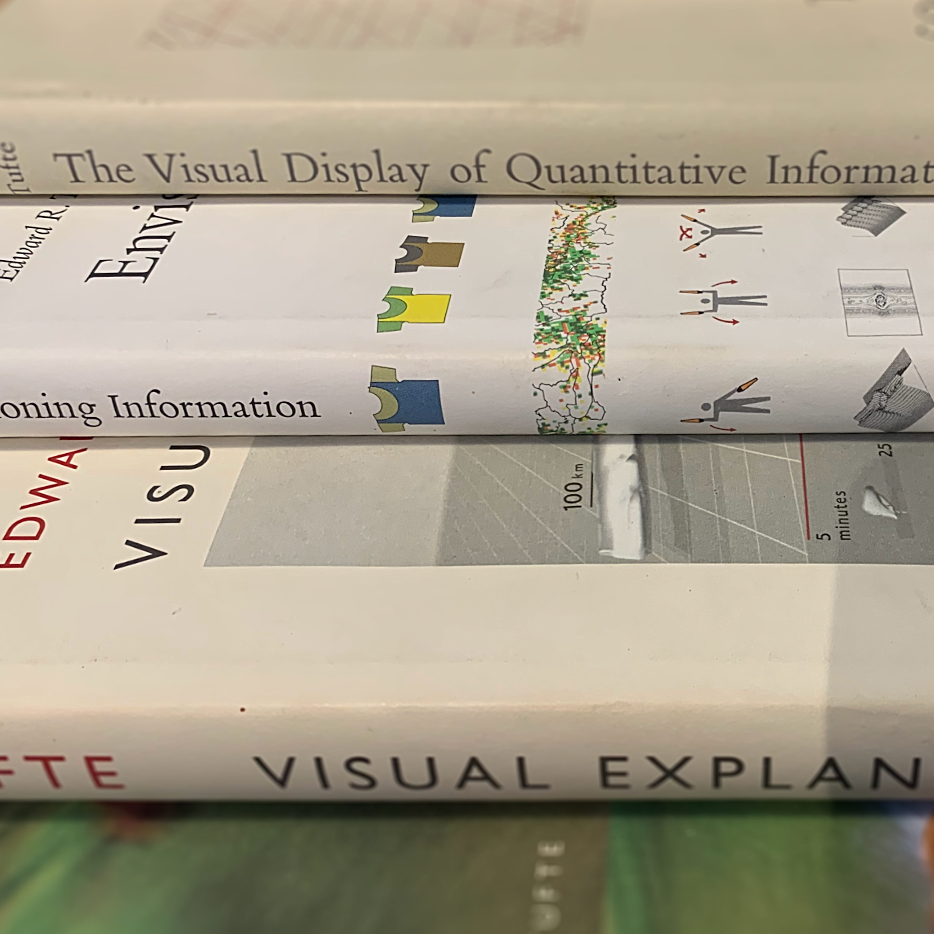
是的。今天我们要讨论的是我们清单上搁置已久的话题:爱德华·塔夫特的作品和他的新书。他刚出版了一本新书,名叫《以崭新的眼光观察》。
Yeah. So the topic today is what we had on our list for a long time. Are gonna Edward Tufte's work and his new book. So he has a new book out. It's called Seeing with Fresh Eyes.
我们会借此机会谈谈他整个作品体系以及他对数据可视化领域的影响。我相信你们中的许多人已经听说过他。如果没有,那你们也会了解到这位先生为我们这个小领域做出了哪些贡献。我们稍后还会邀请一位特别嘉宾,但在那之前,我们想先快速提一下我们这段时间在做的几个项目。首先,让我一直忙得不可开交、老实说也让我们推迟了录制进度的事情是,我参与了——而且至今仍在参与——德国的新冠疫苗接种数据仪表盘项目。
And yeah, we'll use the opportunity to talk about this whole body of work and his influence on the data we've seen. And I'm sure many of you will have heard of him. And if not, yeah, you you will hear about what what this man has contributed to to our little database scene. And we have a special guest we wanna bring on later, but before, we wanted to mention a few quick projects we've been working on in the meantime. So the first thing what kept me busy and honestly also sort of kept us a bit from recording, I'll have to admit, was I was involved I still am in the German COVID nineteen vaccination dashboard.
这是一个德国的疫苗接种数据仪表盘。我们构建了一个以移动优先的交互式网站,展示德国所有的疫苗接种统计数据,六周前上线了,现在我们持续更新和优化它。能参与如此重要的项目,感觉很棒,当然,正如你所想象的,这也非常具有挑战性。无论如何,你们可以查看一下,我们会在节目笔记中附上链接,它应该也能很好地支持其他语言。
So it's the IMF dashboard, vaccination dashboard. And, yeah, we built an interactive mobile first site showing all the vaccination statistics in Germany, launched it like six weeks ago, and now keep updating it and keep refining it. And it's it's yeah. It's great to be involved in something as important as this and but also quite demanding of course, as you can imagine. Anyways, you can check it out, we'll put the link in the show notes, and it should hopefully translate well also to other languages.
至少这是我们当初的目标。
At least that was our goal.
是的,这真是个大项目,莫里茨。恭喜你!我的意思是,你这下可触及了——我不知道有多少人——但一定既令人兴奋又令人紧张吧。
Yeah, that's a big project, Moritz. Congratulations. It's I mean, with this you're reaching, I don't know how many people, but it must be exciting and frightening at the same time.
是的,这确实是关乎重大信息的项目,我们希望一切都能做到准确无误。我们的目标之一,就是让它足够易用,让每个人都能轻松理解。所以我们没有试图做那些特别花哨的桑基图或酷炫的交互图表,而是专注于把基础做到极致:用清晰的文字、自动生成的文本、高度可访问且响应迅速的图表。说实话,我对最终呈现的效果也感到有点自豪。
Yeah. And it's really like relevant information. We wanna get everything right. And and one of our goals was really to to make it so accessible that everybody can consume it well. So we didn't like try to do super fancy Sankey diagrams or cool interactive charts, really nail the basics really well and have really good text and generate text automatically and have really accessible and responsive charts and yeah, I'm sort of also a bit proud how it turned out.
当然,没错,你应该如此。没错。
Of course. Yeah. You should be. Yeah.
而且它一直与StudioNand、CosmoConst和Kings合作,我应该提一下。
And it's worked together with StudioNand and CosmoConst and Kings, I should mention.
哦,对,老面孔了。
Oh, yeah. The usual the usual suspects.
没错,确实如此,确实如此,嗯,到现在为止。
Yeah. That's that's true. That's true. Yeah. By now.
是的。
Yes.
到现在为止。
By now.
嗯,恩里科,你最近在忙什么?
Yeah. What have you been up to, Enrico?
我生活中有很多疯狂的事情。当然。
Lots of crazy things in my life. Of course.
但在
But on
更专业的一面,我想快速提一下几件事。我们正在网上发布一个叫做 Slice Lens 的工具,这是我们将数据可视化工具用于帮助人们理解机器学习模型的更大努力的一部分。你可以想象,在模型投入生产之前,如何支持数据科学家甚至领域专家理解模型的行为,这非常重要。Slice Lens 是我们推出的第一批工具之一。它是一个小工具,你可以选择数据集的属性或变量,查看模型在特定子集中的表现。
the more professional side of things, I just want to quickly mention a couple of things. There's tool that we are publishing online that is called Slice Lens, and it's part of our larger effort to create data visualization tools to help people understand machine learning models. And so how do you support, say, data scientists or even domain experts in understanding how a model behaves before you actually put it in production, as you can imagine is quite important. And Sliced Lens is one of the first things that we are publishing out there. It's a little tool where you can select the attributes or variables of your dataset and see how the model behaves in specific subsets.
这个系统的理念是,它会引导你选择这些子集。你不是盲目浏览,系统会告诉你:‘既然你选了这个,为什么不看看那个呢?’对吧?背后有一个小小的推荐引擎。所以我对它非常兴奋。
And the idea is that the system guides you in selecting these subsets. So you're not just aimlessly browsing, the system tells you, Oh, since you're selecting this, why don't you look at that? Right? So there's a little bit of a recommendation engine behind it. So I'm really excited about it.
是的,我非常喜欢。它非常简单,但极其巧妙。我认为‘这里有一组数据切片,你可能想看看’这种通用范式非常强大。
Yeah. I like that a lot. It's really simple but really clever. And I think the general paradigm of Oh, here's a split of the data you might want to look at it is really powerful.
这正是我热爱这个项目的原因,尽管在研究界,有些人会说‘这太简单了’。但我觉得这应该是好事才对。太简单?什么叫太简单?
That's what I love of the project, even though sometime in the research community, people say, this is too simple. It's like, it should be a positive thing. Right? It's too simple. What what is too simple?
总之,我想简要提一下第二件事:我优秀的博士生丹尼尔·凯里根在过去两年里一直协助我教授我的信息可视化课程,并逐步开发了用于教学的可观测笔记本。我开始在网上发布这些笔记本,对此我非常满意。总的来说,使用可观测平台进行教学对我们来说简直是天赐之物。我简直爱死了,都能聊上几个小时。但如果你感兴趣,我们会在节目笔记中提供链接。
Anyway, so the second thing I wanna briefly mention is that my excellent PhD student, Daniel Kerrigan, has been helping me over the last two years with my InfoVis course, has been developing over time observable notebooks for teaching. And I started publishing some of these notebooks online and I'm so happy with it. And as a general remark, observable for teaching has been a godsend for us. Absolutely love I could talk for hours about it. But if you if you wanna take a look, we will put the links in the show notes.
我很高兴能分享,因为这些笔记本可以被其他教师或想通过这些笔记学习的人使用。所以,是的。而且这个合集还在不断增长,是个很好的资源。
And I'm happy to share because they can be used by other teachers or people who want to learn through these notebooks. So Yeah. And the collection is growing. So it's a it's a good resource.
我非常喜欢。没错,这太棒了。我的意思是,这段时间还发生了另一件事——D3已经十周年了,对吧?它一直是最具影响力的可视化库。
I like it a lot. Yeah. That's awesome. I mean, that's another thing that happened in the meantime, D3 turned 10 years old, right? That's been like the most influential data visualization library.
正如你们中的一些人知道的,D3的原始作者迈克·博斯托克几年前转去开发Observable了,而它确实正成为一个非常有前景的平台,用于创建酷炫的交互式数据可视化、分享可视化作品,以及分享数据可视化的制作过程。对吧?没错,这或许值得单独做一期节目——聊聊Observable,或者交互式笔记本、交互式文档。
And as, yeah, as some of you know, like Mike Bostock, the original author of D3, moved on to working on Observable a few years ago, and it's it's really turning out to be a really promising platform for creating cool interactive data viz, and sharing data viz and sharing the makings of dataviz. Right? And so Exactly. That might be worth another whole episode Oh, yeah. Observable in specific or interactive notebooks, interactive documents.
太酷了
Such a cool
哦,当然,绝对没错。
Oh, yeah. Absolutely. Yeah.
好了,这些留到以后再说吧。今天我们要讨论的更偏向经典内容,而不是未来派的交互式笔记本。我们想聊聊爱德华·塔夫特的作品,以及他对数据可视化的观点。我们还有一位特别嘉宾,你们中有些人可能在之前的节目中见过她,或者因为她曾是Data Stories团队的一员。所以,欢迎 Sandra Rendgen!
Yeah. Anyways, that's for another day. Today we wanna discuss more classical stuff than futuristic interactive notebooks. We wanna talk about Edward Tufte's work and his perspective on data viz and we have a special guest that some of you might be familiar with from previous episodes or because she was part of the Data Stories team even. And so hi and special welcome to Sandra Rendgen.
嗨。
Hi.
嗨,嗨,莫里茨。嗨,恩里科。很高兴能回来。
Hi, hi Moritz. Hi, Emrico. Really great to be back.
谢谢再次加入我们。是的,
Thanks Thanks so joining us once again. Yes,
真的很有趣。
it's really fun.
没错,而且我觉得你和这期节目简直是天作之合。你自己就是一位备受赞誉的作家,对历史数据库也非常了解。而且你长期关注这个领域,所以我们非常期待听到你对爱德华·塔夫特作品的看法。
Yeah, and I think you're a perfect match for this episode. You're an acclaimed author yourself, you know a lot about historical database as well. And yeah, you have followed the scene for a long time, so we are really interested in hearing your thoughts about Edward Tufti's work.
没错,我觉得我们可以融合一些不同的观点,因为我们三人背景各异,所以这将会是一个很好的组合。
Yeah, I think we can throw a good mix of opinions together also because we come from different backgrounds, like the three of us, so I think it's going be a good mixture.
没错,没错,绝对如此。顺便问一下,你的背景是什么?对于那些不了解你的人。
Yeah, yeah, absolutely. What is your background, by the way, for all the people who don't follow you?
我的背景?嗯,这是个好问题。我得从一开始就说明,我其实更偏向人文学科。我学习的是艺术史和文化理论,这就是我的背景。正如一些人可能知道的,大约十二年前,我开始关注信息可视化和数据可视化的领域,更多地关注这一领域的当代作品,并试图观察它如何演变,整个数据可视化领域如何发展。
My background? Yeah, that's a good question. I should note here right at the beginning, I'm more of a humanities person, actually. I've studied art history and cultural theory, so that's of, you know, that's sort of the background I'm coming from. And as some of you may know, I've started looking at the field of info vizdata viz some twelve years ago, looking more at contemporary work in the field and trying to observe how it evolves, how the whole data viz scene evolves.
然后几年前,我也开始关注历史。我也就此出版了两本书,这非常有趣。这也与爱德华·塔夫特的工作密切相关,因为他也做了大量关于让我们观察该领域历史的工作。是的。
And then a few years ago, I also turned into looking at the history. And I've published two books about that as well. And that was really interesting. That's also, you know, very related to Edward Tufti's work because he's also done a lot about making us observe the history of the field. Yeah.
你的上一本书研究了查尔斯·曼纳德的作品,名为《曼纳德系统》。没错,书中深入探讨了十九世纪让·米纳德等人的众多杰出历史作品。
And your last book looked at Charles Menard's work called The Menard System. Exactly. Went into great depth discussing all of these great historical works from Jean Minard from the nineteenth century.
没错。而且,确实是塔夫特和迈克尔·弗里恩迪为这类研究铺平了道路。我想我们可以稍微探讨一下他们如何通过自己的著作开创了研究脉络。爱德华·塔夫特无疑提供了许多启发。
Exactly. And yeah, it was really Tufti and also Michael Friendly who sort of paved the ground for this kind of research. I guess we can look into a little bit into how they started threads of research with their books. So Edward Tufte has certainly provided
一个
a
大量的推动力。
lot of impulses for that.
是的。也许为了提供一些背景,他曾是耶鲁大学的政治学、统计学和计算机科学教授,我想他是在八十年代写了第一本书,对吧?桑德拉,你知道他最著名的系列是从什么时候开始的吗?
Yeah. I mean, maybe to provide a bit of background, so he used to be a professor, for political science and statistics and computer science at Yale, and I think he wrote his first books in in the eighties, I would say, right? Sandra, do you know when the series started, like he's famous for?
是的,第一本书出版于1982年,但我知道他早在几年前就开始着手了,所以这本书的研究和理念可以追溯到七十年代。
Yeah, the first book came out in 1982. That was the publishing date, but I know he's been working on it a few years earlier. So the research and the concept for the book goes back to the seventies.
是的,是的,是的。那第一本书叫《定量信息的视觉绝望》。我想,不剧透的话,这本书是数据可视化领域的基石之作。
Yeah. Yeah. Yeah. That first book is the Visual Desperate of Quantitative Information. I think without spoiling anything, think it's one of the cornerstone books in data visualization.
是的,或者也许
Yeah. Or maybe
绝对如此。
Absolutely.
它就像那种孤岛之书,你知道的,如果你只能带三本书,对我们很多人来说,它肯定是其中之一。嗯哼。开头几页简直是满分,你知道吗?他一上来就讲艾因斯坎普的四重奏,为什么我们要做可视化?为什么我们要可视化?
It's like one of these lonely island books, you know, like if you can only bring three books. I think for many of us it it would be the one of the ones. Mhmm. The first few pages are just a home run, you know. He starts with Einskamp's quartet, like, why do we even date why do we even visualize?
他还举了太多精彩的例子,说明视觉呈现为何比其他任何信息表达方式都更强大。
And he he has so good examples, like, why visuals are so much more powerful than any other form of representing information.
嗯哼。
Mhmm.
接着是约翰·斯诺的霍乱地图、查尔斯·米纳尔著名的莫斯科进军图,所有这些都在头几页里呈现了。你知道吗?正如你所说,对很多人来说,这是他们第一次意识到:原来在Excel之前,早就存在数据可视化了,对吧?
Then John Snow, the Kolera map, Charles Minar's, the famous march to Moscow diagram. It's all there just on the first few pages, like, you know, and for a lot of people that was the first exposure, as you said, to, oh, there has been data visualization before Excel, right?
是的,而且
Yeah. And
其实这非常有趣,你知道吗,十九世纪的人们做了些什么。我认为,大致来说,我认识的做数据可视化的人中,有一半都说这本书让他们豁然开朗,或者促使他们从其他领域转到了数据可视化。对吧?至少是图克的某本书之一。这么说公平吗?
it's actually super interesting, you know, what people did in the nineteenth century. And I think roughly speaking, I would say half of the people I know in data visualization say this book sort of opened their eyes or or that made them move into data visualization from some other field. Right? Or at least one of the Tufti books. Is that fair to say?
你的看法也是这样吗?还是这只是我这个图克粉丝小圈子的主观感受?
Is that your perception as well? Or is that just my little bubble of Tufti fans?
恩里克,你怎么说?
Enrique, what would you say?
对我来说,情况确实如此。我不敢说这是我看的第一本关于可视化的书,但绝对是早期读的几本之一,它对我看待可视化及其在世界中的重要性产生了巨大影响,也让我完全着迷。我还清楚记得那个想法:我想做这个。当我发现它的时候,我就下定决心要投身于此,我从未有过任何怀疑。
Well, that was definitely the case for me. I can't say if it was the first book I read on visualization, but one of the first, and it had a huge impact on the way I saw visualization and its relevance in the world and also just being fascinated, completely fascinated I by clearly remember this idea, I want to do this. It's like when I discovered this, I had I wanted no to work on this. Right? I never had a doubt.
从这个意义上说,图克的影响非常巨大,尤其是第一本书,我必须这么说。我至今仍会回头参考那些概念。我认为也值得提及并公平地说,这是最结构化的一本书,对吧?图克真正试图提炼出一些原则、指南,这些内容会深深印在你的脑海里,让你不断提醒自己,或寻找符合这些指南的案例。
So in this sense, Tufti was huge influence. Especially the first book, I have to say. I still refer back to those concepts. I think it's also worth mentioning and fair to say that it's the most structured book, right? Where Tafti really tries to come up with principles, guidelines, things that stuck right in your mind and you keep reminding yourself all the time or finding examples that match those guidelines.
是的,而且他非常擅长将观察转化为简洁的表达,也就是形成你可以遵循的简洁规则。正如你所说,这些规则会深深留在你的记忆里。另外,我觉得这本书还有一个非常有趣的地方:直到今天,它仍然是极少数将设计——我的意思是,书中很大一部分都在探讨设计的卓越性——与理论完美结合的著作。而他不只是写写而已。
Yeah. Also in a way that he's very good in putting observation into succinct words, basically, into succinct rules that you can follow. And that's sort of, as you said, that sort of stick in your mind. And the other thing that I think is really interesting about this book is that it's a very rare up to this date, it's a very rare combination of design I mean, a lot like a huge part of the book is about design excellence. And it's not just that he writes about it.
这本书体现了这一理念,对吧?这本书非常与时俱进,能够将如此紧密的科学严谨性与他在书中贯穿始终的倡导结合在一起,实属罕见。这本身也是书中非常重要的一部分——既倡导统计严谨性与科学严谨性,也倡导设计卓越性。而且这本书的编排方式和结构本身也非常有说服力。我不太知道还有多少其他书能达到这种效果,对吧?
The book embodies this concept, right? This is very up to this date, it's very rare to have this really close combination of scientific rigor that he's also campaigning for throughout the book. That's like also a huge part of the book campaigning for statistical rigor and scientific rigor, but also for design excellence. And the book is the way it's laid out and the way it's arranged is also very, very convincing in that sense. I don't know very many other books who've achieved that, right?
这种智力严谨性与设计的结合,我想确实是这样。
This combination of intellectual rigor and design. I guess that's true.
德语词‘Gesamtkunstwerk’浮现在脑海。
German word Gesamtkunstwerk comes to
对,Gesamtwerk。这可能也是它如此有影响力的原因之一。我想补充的是,莫里茨,你提到很多人是通过这本书进入这个领域的,我想补充的是,有趣的是,他认为设计界的人们看到了一本排版精美、蕴含大量设计原则的书,而这本书所探讨的领域,正是设计界在80年代之前并不真正关注的。因此,我认为当时关注数据可视化的人寥寥无几。
mind. Yeah, Gesamtwerk. And that's probably also part of why it was so influential. What I was going to add was that I know because Moritz, you said that many people got into the field through this book, what I want to add is that interestingly, I think he made a huge step into the design community who saw a book that was very well laid out, that had a lot of design principles in it, but was tackling a field that the design community wasn't really interested in before this book came out, before the 80s. So, I think the people who looked at design visualization, that was really just a very few people.
因此,我想这本第一本书的一大成就,就是让整个数据库领域在设计界流行起来。
And so I guess this is one very big achievement of this first book, having made popular the whole database field in the design community.
是的。我想我们稍后也会讨论他的核心概念,但也许我们可以先大致概述一下他的整套丛书,然后再深入细节。抱歉,恩里科,我打断你了。
Yeah. I think we'll discuss his key concepts also later, but we can also first give a bit of an overview of his total, like, series of books, right, and then sort of dive into the details there. Sorry, Enrico, I cut you off.
你继续说吧,没关系。我只是想说,直到今天,我认为那些不直接从事可视化工作的人,当他们谈论信息设计或提供建议时,都会推荐大家去读图克的作品,对吧?
Go ahead. No, that's fine. I just wanted to say that still today, I think people who are not working directly in visualization, but when they talk about information design or give suggestions about information design, they would refer anyone to Tufti. Right?
嗯,对,对。第一本书是《定量信息的视觉显示》,真正的经典。
Mhmm. Yeah. Yeah. First book, Visual Display of Quantitative Information. True classic.
第二本是《信息可视化》,这一本更偏向定性,内容更丰富,插图也更多,我记得色彩更鲜艳、更图像化。对吧?
Second one, envisioning information. Yeah. This one's a bit more qualitative and a bit more varied, a bit more illustration heavy also, like it's more colorful and more pictorial, is my recollection. Yeah. Right?
这真是个很好的 compliment,因为第一本主要讲的是数据、小点、线条和数字,而第二本则更侧重于概念、类别、主题和主题性插图。这一本也很棒,我也非常喜欢。
So it's a really nice compliment because the first one was really about data and little dots and lines and, you know, numbers, and the second was more about concepts and categories and topics, themes, thematic illustration. Yeah. Really nice one too. I love this one as well.
第三本,我想他那里……抱歉,简单说一下,我认为他仍然以某种系统化的方式讨论了颜色,有一个系统性的方法。他提出了分层与分离的概念,我觉得这个很难理解。
The third one I think what he does there sorry. Just briefly. I think what he does there still somewhat systematically talks about color in a system, somewhat systematic way. And he has this concept of layering and separation that I think it's hard to grasp.
视觉层次。
Visual hierarchy.
对,视觉层次。我想,如果我没记错的话,纠正我如果我错了,小倍数这个概念应该是首次出现在这本书里,而不是第一本。也许我记错了。
Yeah. Visual hierarchy. So there are some, and I if I'm not mistaken, correct me if I'm wrong, I believe that the idea of small multiples appears there first and not in the first book. Maybe I'm wrong.
在第一本书里,但它叫菲利普斯图。哦,不对。菲利普斯图是那个突然出现的连接散点图。我当时就想,哇,这是七十年代的连接散点图,现在人人都以为这是新发明。
In the first book, but it's called Phillips plot. Oh, no. The Phillips plot was the connected scatter plot that appeared there out of nowhere. And I was like, wow. It's a connected scatter plot from the seventies, and now everybody thinks it's a new invention.
但Toughty在第一本书的第17页左右提到过,这挺有趣的。不过,小倍数图可能是在第二本书里出现的,也说不定。
But Toughty added, like, on page, I don't know, 17 in his first book. That's that's, like, fun. But, yeah, the small multiples, maybe they came in the second book. Could be.
我觉得他有一整章讲这个
I I think he has a a whole chapter on
我知道,是在第48页。他有一整页讲小倍数图。哦,是连通散点图的小倍数图。
I know. It's on page 48. He has a a small multiples page. Oh. Small multiples of connected scatter plot.
天啊,你还是我的猎物。八月什么?
Oh my god. You're still my hunt. August what?
是的,而且这是七十年代的东西。所以你知道,这就是重点。我们一直在重新发现图夫蒂在八十年代就已经发现的这些东西。没错。
Yeah. And it's from the seventies. So, you know, that's that's the thing. So we keep rediscovering all this stuff that Tufti has already, like, discovered in the eighties. Yep.
事情就是这么发展的。不管怎样,第二本书不错。然后我们还有两本续作:《视觉解释》和《美丽的证据》。我认为可以说,这些书变得更加轶事化了,每一章都阐述一个观点,但不再是一个整体性的论点。
That's the way things go. Anyways, good book two. Then we have two follow-up books, Visual Explanations and Beautiful Evidence. I would say it's fair to say these get a bit more anecdotal. Each chapter presents one idea but it's not an overarching argument anymore.
但更像在说:嘿,这是我现在感兴趣的另一件事。
But it's more like, hey, here's another thing I'm interested in now.
是的,是的。这并不是一个 overarching 的主题,对吧?
Yeah. Yeah. It's less of an overarching theme. Right?
更像是,他去研究雕塑,或者去探索一些他感兴趣的个体技术,但最终变成了一种兴趣的集合。
It's more like It's like he goes into sculptures or he goes into, I don't know, individual techniques he's interested in. But it becomes more a collection of interests.
这些后期著作中一个新出现的特点,是对于图像策略的一种兴趣,比如如何利用图像来说服、提供证据之类的。但正如你所说,它带有一点轶事性质,因为他只是偶然发现了一些东西。我认为,这确实是他在所有著作中的一大优势:他非常擅长筛选资料、寻找信息和案例,并展示它们对可视化整体实践的相关性。有时,如果能更进一步地综合分析,看看如何运用这种特定策略或方法,会更有启发性。但总体而言,把这些知识和案例都收集起来是非常好的。
What is something that is new in those later books is sort of an interest in pictorial strategies, sort of. Like how can you use images to sort of persuade or bring evidence or something. But as you said, it has a bit of an anecdotal character in that he just sort of finds and I think generally that's sort of one of his strengths really through all of his books, that he's very good in curating stuff and finding information, finding examples, and showing the relevance for the whole practice of visualization. Sometimes a more synthesis would be revealing to see how you could use this particular strategy or how you could use this particular method and device. But overall, it's very good to have all this knowledge or all these examples collected.
而且我觉得,我们现在说的是第三本,对吧?视觉解释。
And I think, yeah, we are now with the third one, right? Visual explanations.
但《美丽的证据》在我看来,这两本书在呈现论证风格上非常相似。
But Beautiful Evidence I see these two as very similar in a way that they present the same style of arguments.
没错。对听众来说,第三本可能叫《图像、数量、证据、叙事》,2006年出版,而最后一本的书名是《美丽的证据》。
Exactly. So for the listener, maybe the third one was called Images Quantities Evidence Narrative. It came out in 2006 and the title of the last one is Beautiful Evidence.
好书名。
Good title.
好标题,没错。
Good title, yeah.
你为什么喜欢它?
How come you like it?
他特别喜欢好的名字,所以也许他最重要的贡献之一,就是为一些已经存在的东西找到朗朗上口的名称,比如小倍数、火花图。他特别擅长为事物赋予富有特征的名称。
He has a thing for good names, so maybe one of his big contributions is also just finding catchy names for already existing stuff like small multiples, sparklines. So he has this thing with finding characteristic names.
这听起来好像只是给原本就存在的东西镀了一层薄薄的光泽,但我觉得这其中也有认知层面的意义,因为正如你之前所说,给这些事物起个好名字,能让人记住这些概念。这确实是一种成就,因为这些书是多年来许多想进入这个领域的人所阅读的,基本上过去二三十年都是如此。如果这些标题能帮助人们记住这些概念,那确实很有价值。因为他特别擅长指出这一点,说:嘿,看,这里面有真正出色的东西,而且能在认知层面上发挥作用。
Which is, it sounds maybe like as if you just put some tarnish on something that was already there, but I think there's also a cognitive thing in that because giving these things a good title is, as you said before, it makes people remember those concepts. And there's an achievement in that because, you know, in the sense of these books are books that many people read who want to go into the field and have done so over the past two or three decades, basically. So if these titles make people remember those concepts, then there's something good about that, really. Because he's really good at pointing his finger at it and saying, Hey, look, there's some really good stuff in that and it can do something on a cognitive level.
确实如此。当你为一个自己创造的新概念精确地定义其含义时,我认为这非常有帮助。但与此同时,有些人以为只要创造了这个术语,就等于发明了整个概念或整个类别,而我认为这并不正确。比如,小倍数在之前就已存在,火花图也是如此,只是当时没有被这样命名而已。现在因为艾玛·塔夫蒂创造了这个术语,并很好地阐释了这个概念,人们就以为是他发明了这一切,其实并非如此。我明白你的观点,确实,能够为复杂的事物提供简洁的定义和一个好名字,本身就有巨大的价值。
That is true. And being precise about what you mean with a certain new concept you coined, I think that can be super helpful. At the same time, sometimes people think just because you coined the term you invented the whole concept or the whole genre, and I think that's not true in some Like small multiples existed before or spark lands existed before but just weren't called that way, and now because Emma Tafti coined the term and sort of illustrated the concept really well, people think he invented the whole thing, which is not true. I see your point as well. Yeah, that there's a whole merit in being able to providing a succinct definition and a good name to something that's complex.
没错,而且让人们对这个概念印象深刻。这几乎
Yeah, and making people remember the concept. It's almost
就像一种数据库策略本身。不,我觉得有些
like a database strategy in itself. No, I think some
人们有一种惊人的能力,能够创造出一些被广泛接受的术语。是的,这很有用。我觉得这很有用。当然,在某种程度上也可能带来负面影响。
people have this amazing skill of coining some terms that stick. Yeah. And it's useful. I think it's useful. Can also be detrimental to some extent, of course.
对吧?但我同意桑德拉的观点,只要你给一个概念贴上标签,人们就会记住它。对吧?想想其他人的其他例子,对吧?
Right? But I agree with Sandra, the mere fact that you attach a label to a concept, now people remember that. Right? Thinking other examples from other people. Right?
我不知道。系统一、系统二思维。对吧?一旦你理解了,它就非常简单,但对吧?它就像
I don't know. System system one, system two thinking. Right? Once you once you understand it's super simple, but right? It's like
一个糟糕透顶的名字,但管用。
a really bad name, but it works.
太糟糕了,太糟糕了。对吧?但我们还是继续吧,对吧?
It's horrible. It's horrible. Right? But here we go. Right?
我们都明白我们在说什么。
We all know what we're talking about.
确实如此。
It's true.
是啊,或者我不了解另一个本·施耐德曼,他特别擅长做这件事,比如他总能想出很棒的首字母缩略词,对吧?嗯哼。
Yeah. Or I don't know another Ben Schneiderman is really good at doing that, for instance. He always comes up with really good acronyms. Right? Mhmm.
或者先看概览,再按需查看细节。是啊,一旦你听到这个说法,就会觉得:啊,原来如此。你到处都能看到这种做法。
Or overview first, then details on demand. Yeah. Once you hear it, it's like, here we go. Yeah. You see it everywhere.
你到处都能看到这种做法,真棒。
You see it everywhere. Great.
你知道吗?有趣的是,‘先看概览,按需查看细节’这个说法,我经常在关于历史内容的演示中使用,甚至早在交互设计出现之前,因为这其实是人们在旧地图中常用的一种策略,对吧?当然。
And you know what? The funny thing is that overview first, Details on Demand. I have often used it in presentations about historical stuff like way before interaction design because basically this is a strategy that people have used in old maps. Right? Sure.
如果你有一张巨大的墙贴地图,你可以后退几步,从远处整体观看,把握全局,然后再靠近细看、放大细节。我的意思是,这在数字媒体出现之前就存在了。但把这个概念浓缩成这句话真的很棒,因为它让人更容易记住,也突出了这种特定策略的价值,这很酷。
If you have a huge wall map, you can go back, you can step back and see it from a distance and get the whole picture. Then you can go into it and zoom in. I mean, could that before, before digital media. But it's really good to put this concept into this phrase because it makes people remember it and also puts a light on this or sheds a light on this specific strategy, which is cool.
没错,完全正确。最后,我们还有《用崭新眼光歌唱:意义、空间、数据、真相》这本书。
Yep. Absolutely true. And finally then we have the Sing with Fresh Eyes, Meaning, Space, Data, Truth book.
嗯哼。
Mhmm.
我个人必须说,我觉得这是五本书中最弱的一本。所以我才想先完整地梳理一下整个序列,因为其他几本都非常出色,期望值非常高。而这一本给我的感觉更像是未完成章节的集合。当然,里面也有一些非常好的观点,比如关于排版的一章,这在数据领域常常被低估。
Which I personally must say I I find it maybe the weakest of the five. So that's why I wanted to sort of lay out the full sequence first because the other ones are so strong that the expectations are really high. This one really seems like a collection of not totally finished, like, chapters is my feeling. Again, there's really good thoughts in there. There's there's a really cool chapter on typography, which is something that's often under valued in So data much.
或者人们根本没有系统地关注过,但排版其实非常重要。它本身就是一种数据可视化形式——比如你如何在页面上安排一句话,在哪里换行,哪些地方加粗、哪些不加粗,这些都极具力量。书中还谈到了注释,内容非常发散,像自由联想式的思绪。显然,他在尝试一些新的东西。
Or not looked at systematically, and it's so important. And it is a form of data visualization, how you arrange a sentence on a page, or where do you do the line breaks, and what do you make bold or not, you know, it's super powerful. There's stuff on annotations. It opens really wild, like loose stream of consciousness type thoughts. And so he clearly tries something new in a way.
排版本身也挺奇怪的,但如果我们积极一点来看,可以说这是一种实验性的设计。
Also with the layout, like the layout is sort of weird actually, but experimental let's say, to frame it positively.
嗯。
Yeah.
是的,但对我来说,它并没有像其他几本书那样真正打动我。你们觉得呢?
Yeah. But for me it didn't quite click as the other books. How about you guys?
从排版的角度来看,我觉得这种设计是刻意为之的,更像是一个关联网络,或者说是一种拼贴风格。这种风格有时很难穿透迷雾,因为它缺乏像第一本书那样清晰的结构和线索,能自然地引导你阅读。
Well, think it was in terms of layout, I think it looks deliberate to me that it's more how do you say that it's more like a web of associations. Yeah, collage. That's how it like collage kind of style, which is sometimes hard to cut through the mist. It doesn't have the very clear structure and threads basically that you have, for instance, in the first book. Sort of just guides you through.
但一开始,我也和你一样,莫里茨,觉得被排版搞得晕头转向,完全找不到头绪。不过,这可能是因为它呈现的确实是一个关联网络。而我感觉缺失的是那种能引导你前行的线索和整体的整合。
But also, maybe you could see at first, I had the same feeling, like you, Moritz, that I was basically overwhelmed with the layout. Just couldn't really find my way through it. But it also may have been I think it may have an association to or it is a web of associations that you are presented with. And what I'm missing a little bit is sort of the guideline that takes you through and the synthesis.
也许他前两本书确实是现代主义的,而现在他进入了后现代时代。这是正在发生的事情吗?
Maybe his first two books are really modernist, and now he's entered the postmodern age. Is that what's happening?
没错。这正是我的感受。从这个意义上说,书中蕴含着巨大的财富,大量的例子和思想。正如你所说,我其实不太清楚这本书的目标读者是谁——它像是一本教科书吗?是给那些打算进入数据库领域的人看的吗?
Exactly. That's sort of how it feels to me. And in that sense, there's a huge wealth in it, a huge wealth of examples and ideas. As you said, I didn't really understand who it was for in the sense of is it like a textbook? Is it for people who are looking to go into database?
它更偏向高级读者吗?我其实很难判断,因为书中也提到了一些我称之为科学严谨性的东西,比如严谨的思维方式,质疑假设等等。他提到的一个说法是“重构传统模型”。这让我联想到一种我称之为“通用科学素养”的东西,学生应该被教导,所有学术界人士都应遵循。此外,如果你有数据关于
Is it more for an advanced audience? I wouldn't really be able to tell because there's also I guess, for instance, it starts with some remarks on what I would call scientific rigor and, you know, rigorous thinking, trying to question assumptions, things like that. Remodeling conventional models remodel conventional models is one of his phrases and claims. And that for me goes into something that I would call, you know, general scientific hygiene that students should be taught and that students and everybody who's in academia should follow. And also, also, if have data on
学术界哪里出了问题,为什么会出现如此多的可重复性危机等等。这似乎是这本书最重要的部分,简直是在拆解科学本身。
how academia is broken or why so many the replication crisis and all of that. That seems to be the biggest part of the book actually. It's like taking science apart.
没错,正如你所说,我们还有响应式排版、注释的概念以及如何实现注释,这些都包含许多有趣的思想。此外,书中还有大量关于数据分析的论述,特别是在真相至关重要的情况下,以及关于列表、在需要时提供指令的评论。再次强调,我认为将注释和指令置于他所说的“需求点”上,即精准地放置,这是一个非常有趣的概念。
Yeah, and then we have, as you said, we have the content responsive typography and the whole notion of annotation and how you can do that, which has a lot of interesting concepts. Then there's a lot of data analysis, remarks about data analysis when truth matters, and remarks about lists, some remarks about instructions at point of need. Again, something that I thought was an interesting concept to have annotations and instructions at what he called the point of need, that they're placed precisely.
还有另一个常被可视化领域忽视、却极为重要的元素。
Then there's another element that is often overlooked in visualization, very often, and super important.
没错,我认为他这种表述方式非常好,能有效引导人们关注问题,这本身就是一种成就。最后一章是关于重构非虚构类演讲的,即如何让会议更聪明、更简短。
Yeah. And again, I thought it's a very good phrasing that sort of directs attention to the problem, which is an achievement. And then the last chapter is on remodeling non fiction presentations, so how to get smarter and shorter meetings.
所以,这可以说是一种好坏参半的情况。
So it's a sort of a mixed bag, let's say.
嗯。
Mhmm.
我的建议是,如果你已经拥有另外四本,那就为了集齐整套而买这一本;但如果你一本塔菲的书都没有,那就从第一本开始读。这大概就是我的快速总结和评价了,嗯,没错。
And my recommendation would be if you have the other four ones, need to buy it just to complete the series. If you don't own any of the Tafty books, start at the beginning. That would be my, like, you know, the quick summary review, maybe. Mhmm. Yeah.
而且,为了确保万无一失,因为不是每个人可能都熟悉他早期著作中的核心理念,我们或许应该梳理一下他的主要贡献,对吧?这样能确保大家对这些理念都有所了解。那么,你觉得他在早期著作中提出的主要概念是什么?
And I mean, maybe just to to make sure, because not everybody might be familiar with his main concepts from the earliest books, maybe we should go through the his key contributions, right? Just to make sure people are familiar with them. So what would you say are the main concepts he presents in the first books?
我想我以前说过,我认为他最大的成就,也正是让他成名的原因,就是他在第一本书中提出的主张——正如你所说,莫里茨,这些主张就体现在书页之中。当你翻开书,就会被这种氛围吸引。这种主张结合了科学或统计上的严谨性,以及在可视化中对数据处理方式的严谨性。我有时称之为‘数据卫生’,也就是一种良好的工作方式。
I think I've said it before, What I think is a huge achievement, and that's really what made him famous, is the combination of claiming and that really happened in the first book. And as you said, Moritz, it happened on the very pages. So, it's like you go into the book and you're drawn into that. And that is the combination of claiming scientific and or statistical rigor, claiming rigor in treating and how the data are treated in visualization. So just what I like to call hygiene sometimes, yeah, just a good way of working.
此外,他还坚持极高的设计标准。我欣赏他的地方在于,他说我们需要好的设计,这不仅仅是为了装饰,也不是为了奢华。外观美观并非可有可无的奢侈品,而是一种必需,因为它有助于人们理解信息,有助于数据的传达。他通过自己出版书籍,身体力行地展现了设计的重要性。
And that combined with claiming a very high design standard. And what I liked about his work was that he said, You know, we need a good design not just as It's not about decoration, it's not about luxury. The fact that it looks good is not just a luxury, it's a necessity because it helps perception. It helps the way data is mediated. And so, contribution of him showing the importance of design and embodying this by you know, self publishing his book.
顺带提一句,因为我们还没提到过,他曾试图寻找出版商。正如我所说,他早已开始研究这本书的主题,也与霍华德·韦纳、米卡·弗伦德利等其他人有联系,他们都在试图重新发掘数据可视化的早期理念。早在70年代,他就已经开始为这本书做研究了,但始终找不到愿意满足他设计标准的出版商——比如图文排版的精确位置、图像质量、印刷精度等等。
Just as a side note, because we haven't really said it, he tried to find a publisher. As I said, he had been researching the topics of the book. He was also connected with a few other people such as Howard Wehner and Micah Friendly and others who were sort of trying to rediscover ideas, older ideas about data visualization. He had been researching for the book sometime in the 70s already. Didn't find a publisher who was willing to make sure the design standards that he wanted, like the placing of images with the text and the quality of images, like the quality in which images are printed, all that stuff.
我知道,直到今天,学术出版和图像仍然是一个难题。他找不到愿意做这件事、愿意投入这笔资金的出版商,于是他用自己的房子做了第二次抵押贷款来出版《定量信息的视觉展示》。我的意思是,想象一下,难道不是吗?
I know that it's up to this day academic publishing and images is a difficult question. And so he didn't find a publisher who would do that, who was willing to do that, who was willing to invest that money also. And so he took out a second mortgage on his home in order to publish Quite a And I mean, imagine. Didn't
我不知道这件事。
know that.
是的,他确实这么做了。我不记得是从哪里知道的,但他在一些书中提到过,就像他说的那样,这是
Yeah, he did. He's I don't know where I have it from. He said it in some of his books. Like, it's it's
我也记得这个细节,当时我很受触动,我觉得他
I I recall that detail too, I was impressed I with it as think he's
我想我这里有第一本书的第二版,《定量信息的视觉展示》。他在第二版的前言中提到了这件事。所以你必须非常坚信,这对你来说一定是一个非常重要的主题,而他确实这么做了。
I think I have this second I have the second edition of the first book, The Visual Display of Quantitative. And he says that in the introduction to the second edition. So it's quite you must be very convinced. It must be a very important topic to you. And he's done that.
我认为他真的展现了这一点,我觉得他妻子是位设计师,所以他身边就有这种专业知识。我不确定他们是否一起合作写书,但你在第一本书中就能看到这种卓越的设计水准。他也一直在谈论这一点,这种统计严谨性与设计严谨性的结合,简直就像
I think he's really shown I think his wife is a designer, so he does have this knowledge close by. I don't know if they work together on the book, but you see this in the first book, this level of design excellence. And he's also talking about it. And this combination statistical rigor, design rigor together, that's like
这也体现了言出必行,你有理论,但通过实践来证明这个理论。
also practice what you preach in the sense that you have a theory, but you prove the theory by doing it, sort of.
是的,我认为这极大地推动了整个领域的发展,使其不仅吸引少数统计学家,而是吸引了更多人,也让它对广大公众更具吸引力。对我个人而言,另一件特别有趣和令人兴奋的事情是,他开始努力寻找历史资料。他真的想回溯源头,看看这一切究竟从何而来?
Yeah. And I think that really gave a huge push to the whole field, in making it appeal to a lot more people rather than just a few statisticians, basically. And just making it also for a huge public, making it more attractive. So the other thing that was personally for me super interesting and super exciting also was that he went about to try finding historical stuff. So he really wanted to go back and see, Hey, where does this all come from?
我知道在80年代,要找到历史数据库实际上非常困难,因为当时没有专门的图书馆,也没有任何数字化的在线档案。他和少数其他人曾专门去地图经销商和古籍经销商的目录中寻找历史上的数据可视化图集、历史印刷品等。这些大量资料后来都收录进了他的第一本书中。你们中有些人可能知道,他还建立了一个历史资料收藏,其中一部分最终被收入书中。我不太记得确切年份了,但我记得大约在2010年,他通过佳士得拍卖行卖掉了这个收藏。
I know that practically back in the 80s, it was actually quite a bit of work to find historical databases because there were no specialized libraries, there were no online digitized archives of anything. He and a few other people actually went catalogs of map dealers and rare book dealers to find historical atlases of Dataviz, to find historical broadsheet prints, etc. And so much of this has gone into his first book. Some of you will know that he has also built a collection of historical stuff, some of which has made its way into the book. And he I don't recall the exact year, but I think around 2010 he sold this collection with the auction house Christie's.
但仅仅是他投入了如此多的努力,甚至可能是大量资金,去建立这个收藏,并试图理解我们背后的历史,就让我个人以及许多其他领域内的人深受启发。他还让这个理念变得流行起来。比如,我之所以去研究明纳,其源头正是他的第一本书。
But just the fact that he's put so much effort and probably money into building this collection and just trying to get a sense of what is the history that we have behind us was really revealing to me personally and I think to many, many other people in the field. And he's also made it popular. Like the whole idea of me looking into Minar, for instance, goes back to his first Yeah.
现在有一整代年轻人正在研究数据库的历史,寻找那些真正冷门的资料。
And there's like a whole young generation now of folks looking into the historical side of database and like finding Exactly. Obscure
而这,再次说明,这始终是一个集体努力的过程。正如我所说,他并不是唯一一个。其他一些人也一直参与其中。如今,同样如此——我本人也发表过一些内容,但还有其他人,比如杰森·福雷斯特、RJ·安德鲁斯,以及许多其他人,都在深入挖掘这些资料。我们挖掘得越深,就越发现这个领域有多么庞大。
And that's, again, that's something that is it always was a collective effort. Like he was not the only one, as I said. Some other people were always also involved. And also now, also today, like I've published some stuff, but there's also other people like Jason Forrest and RJ Andrews and many people who are really digging to find stuff. And like the more we dig, it's like it's huge.
这个领域正变得越来越庞大。我们看到了自己背后悠久的传统,以及可以依托的丰富资源。但真正让这一切流行起来的是图夫特,正是他率先提出:嘿,我们来看看这些吧,这太有趣了,我们有必要了解这些。
It's becoming ever bigger. So we see all of this tradition that we have behind us and all of what we can build upon. But it's Tufti who really made this popular, who really said, Hey, let's look at that. That's so interesting and we need to know about that.
是的,我认为如果我没记错的话,他从未在自己的书中详细描述过他是如何开展这项工作的,对吧?有没有人记录过他是如何起步的,或者他遵循了怎样的流程?这肯定是一项巨大的工作。
Yeah, I think it would be if I'm not mistaken, he never really describes in his books what is the process that he followed to do that, right? Are there any accounts about how he got started or what process he followed? It must be a huge amount of work.
你是说历史研究吗?
You mean the historical research?
历史研究。嗯,
The historical research. Well,
正如我所说,我认为在80年代,人们大量旅行,与经销商接触,比如稀有书籍经销商、古籍收藏家、地图经销商,与一群人的网络保持联系。法国也有一群人正在研究这个领域。当然,法国的稀有书籍经销商也在收集19世纪末的统计地图集之类的东西。因此,法国和美国之间,以及迈克尔·弗里德曼和爱德华·塔夫特之间,有着大量的交流。当时有好几个人都在做这项研究,我认为他们也相互合作过。
as I said, I think back in the 80s, was really a lot of traveling, talking to dealer, like rare book dealers, antiquarians, map dealers, just being in touch with a number, like a network of people. There's also a community in France of people who were looking into that. There was, of course, the French rare book dealers also had the statistical atlases of the late nineteenth century were collecting them and stuff. So there was a lot of exchange between France and The US and between Michael Friendly and Edward Tufte. So several people were working on that, and I think they also worked together.
你知道,他们看到某个稀有书籍经销商那里有一件藏品,其中一个人买下它,然后另一个人又从别的经销商那里买下另一件。所以你看,正如我所说,这其实是一种集体努力,他们实际上不得不去购买这些资料,因为——正如我所说,当时根本没有数字化档案之类的东西。否则,你只需要去巴黎的实体档案馆查看即可。
You know, they saw one piece there with this rare book dealer and one of them would buy that and then somebody else would buy another piece from another dealer. So, you see, they sort of had as I said, it was really a collective effort and you couldn't they actually had to buy that stuff because you couldn't, you know, as I said, there weren't any kind of digitized archives or something. Or otherwise you would just have to travel to Paris to look at something in a real archive.
而且
And
所以,是的,正如我所说,他并不是唯一做这件事的人,但他通过自己的著作,确实成功地普及了整个主题,让我们意识到这并不是什么新事物,早在很久以前就有人在研究它了。是的,是的。我认为,正是这些贡献让他在我心中产生了共鸣。
so yeah, as I said, he was not the only one to do that, but he certainly, through his books, he's really managed to popularize the whole topic and make us aware that it's not something new and that there's people who have done research on this, like, since way back when. Yeah. Yeah. So these, I think, are the main contributions that made him resonate for me.
嗯,是的,是的。我想我们也可以稍微转向塔夫蒂认为什么是优秀数据图形的问题,因为我觉得他对此有非常清晰的理论。而我个人对这个问题有些矛盾。
Mhmm. Yeah. Yeah. I think I'd move like to move the discussion a bit also to what Tafti thinks makes a good data graphic because I think he has a very clear theory there. And I personally have a bit of a torn relationship.
比如,在理论的某些方面,我完全认同自己。但在其他方面,我会觉得,哦,也许有些地方走得太远了,或者在现实中的执行方式过于极端了。我很想知道你对此的看法。我认为他在第一本书中提出的核心观点是:图形中的每一个像素都应当与数据相关联并呈现数据。这是一种极端的纯粹主义和极简主义,这很好,能够带来极其优雅、巧妙且丰富的图形。所以,我认为如果做得好,它同样可以带来非常深刻的内容——极简并不意味着体验的贫乏。
Like, in some aspects of the theory, I I totally find myself. And in other aspects, find like, oh, maybe that went a bit too far, or sort of in the way it was then executed in the world, like took things too much to an extreme, and I'm curious about your thoughts there as And I think the main idea he presented in his first books is really every single pixel in a graphic should be connected to data and present data. So it's this sort of really extreme purism, minimalism, which is great and which can lead to really super elegant and clever and really rich graphics. So I think if it's done well it can also lead to something centrally very rich. So it doesn't have to be deprived of experience just because you're minimal.
但他也引入了‘误导因子’的概念,比如一张图表有多大的误导性;他还谈到了‘分块图表’。他提出了一些特定类型的数据图表,认为它们实际上很糟糕,甚至可以说是垃圾,通常是因为这些图表包含了非数据的插图元素,比如过于可爱的设计,或者不够高效、不够明显实用的东西,对吧?
But he also introduces these ideas of a lie factor, like how much is a graphic misleading, or he talks about chunk charts. So he has certain types of graphics, data graphics, that he says are really actually bad or like trash in a way. And often that's connected to non data illustration elements or like cutesy ideas or like not totally super highly functional stuff. Or not obviously functional stuff. Right?
我认为这导致了数据可视化领域在几年内出现了一种刻板的简约风格,甚至有些过度夸张。但图夫提说,我们不能添加图标,那样会让人困惑,会破坏我们的数据墨水比。我认为图夫提本人其实也喜欢有趣的视觉设计,即使它们并不基于数据——显然,他提供了大量这样的例子。
And I think that led to a certain austerity in data visualization for a few years or that sort of over exaggerated. But Tufti said we cannot add icons, you know, that would be confusing to the people. That would sort of ruin our data ink ratio, you know. I think Tufti himself enjoys interesting visuals, like even if they're not data based. Clearly, you know, he does he has all these examples.
但他在书中提出的理论本身并未经过实证检验,这是我稍后想强调的另一点。不过,仅就书中呈现的理论而言,它给人的感觉非常严格,完全不允许任何趣味性。而我认为,历史已经证明他是错的——我们已经看到了许多极其成功的数据可视化作品,它们并非每个数据点都直接与数据挂钩,而是包含插图元素,甚至非常手工化。比如想想乔吉奥·卢皮的作品,或者奈杰尔·霍姆斯,他在书中猛烈批评了后者,但霍姆斯无疑是一位极具影响力的数据插画师,对吧?
But just the theory he presents in the books and that theory is not proven empirically, that's another point I wanna make later. But in the theory he presents in the books, I think it comes across very much as very restrictive and very no fun allowed. And I would argue history has proven him wrong because we have seen really, really successful data visualization that when not every single data point is directly connected to data and that has illustrative elements and that's like very handmade. Maybe think of Giorgio Lupi's work or Nigel Holmes who he really bashes in his books and who is definitely a really influential data illustrator. Right?
他确实做出了杰出的作品。而如果你看看如今杂志或网站上数据可视化的主流标准,它们显然并不符合图夫提的风格,对吧?我认为我们已经超越了那种纯粹的、或许理想化的‘纯数据图表’理念——那种被奉为完美的模式。你怎么看?
And who is sort of he does great work. And if you look at what's today, let's say the standard for data visualization in magazines, on websites, it's not very tufty in, right? And I think we have moved on from that pure idea of or that maybe idealized idea of the pure data chart that is ideal in any way. What's your take on that?
恩里科,你先说吗?
Enrico, do you want to go first?
对,对。我不知道该从哪儿说起,因为我有太多想法了,思绪太混乱了。我一个一个说吧,先讲几点。
Yeah, yeah. I don't know where to start because I have so many things to say. I'm overwhelmed by my thoughts. Take it one by one. A couple of things.
我有一部分观点是,我不反对你的看法,莫里茨。我想知道的是,他旧有的理论是否是一种反应,是对他在世界上看到的数据图形使用方式的强烈反应,对吧?我怀疑他原本认为统计图表主要通过报纸呈现给大众,而这些图表往往——用直白的话说——简直是垃圾。或许你为了纠正这种状况而过度补偿了。
One is part of me is what I don't disagree with you, Moritz. One thing is I'm wondering if partly his old theory is a reaction, is a strong reaction to what he was seeing or how he was seeing data graphics being used in the world, right? I suspect that he came from this whole idea that statistical graphs are mostly being presented to the to the large public through newspapers, and they're often, like, complete garbage for lack of a better word. To say bluntly, it may be probably you overcompensated for right as a reaction to what
你所看到的
I you were seeing
我不知道。这只是一个假设,说实话。我从未与图夫蒂谈过,我怎么知道呢?
don't know. It's a hypothesis, honestly. Never spoke with Tufti, so how do I know? It
听起来合理。
seems plausible.
我觉得这听起来很合理。我还想说什么来着?对了,他提出了很多概念,比如数据激增展示、生活因素、垃圾图表,我想每个人都受到了这些影响。我本人也深受影响。我认为可视化在过去几年里发生了很大变化。
I think it seems plausible. What else did I want to say? Yeah, he has all this concept like data increase show, life factor, junk charts, I think everyone has been influenced by that. And I certainly have been influenced by that a lot. I think visualization has changed quite a lot over the years.
我认为,换一种方式来看这种张力,或许可以说,图夫蒂主要关注的是高效图形的理念,对吧?这种效率的理念。而我们现在使用可视化的目的却不同了,对吧?可视化也可以用来创造一种体验,对吧?我认为有很多非常优秀的设计师。
And these, I think maybe another way to look at this tension, so to speak, is that I think Tufti was mostly addressing the idea of having efficient graphics, right? This idea of efficiency, right? Whereas we now use visualization for different kinds of purposes, right? So visualization can also be used as having an experience, right? And I think there are lots of really good designers.
你提到过佐治亚,我觉得这是个绝佳的例子。在她的作品中,你不仅从图形中提取信息,更是在经历一种体验。如果你现在想最大化体验感,那么数据墨水比可能就不是最重要的参数了。或者
I think you mentioned Georgia. I think it's an excellent example there. In her work, you are not only extracting information from a piece of graphics, but you are having an experience, And if you want to maximize for experience now maybe data ink ratio is not your most important parameter. Or
可记忆性,对吧?我们有研究表明,更丰富的图形
memorability, right? And we have studies showing that more embellished graphics
在提高可记忆性方面可能更
can be more
有效。
effective in terms of memorability.
没错。没错。
Exactly. Exactly.
是的,
Yeah,
这就是我的看法。我只是想给你,莫里茨,抛出一个挑战。哦,
that's my take on it. I just wanna say gonna throw a challenge at you, Moritz. Oh,
我喜欢挑战。
I love challenges.
你的工作在我看来更像是在努力,我认为我足够了解你,可以
Your work looks to me mostly like striving for I think I know you well enough to
说:是啊,是啊。你很了解我
say Yeah, yeah. You know me well
足够了解你,能在这里终结这种欺骗行为。你的图表中的每个元素都必须有意义,对吧?
enough to end cheating up here really here. Every element in your graphic has to matter, right?
我知道,没错。就是这样。
I know, yeah. That's right.
所以我觉得你有点在装样子。在我看来,你某种程度上是在装样子,因为你的工作涉及非常艰巨的任务
So I think you're kind of faking it. It sounds to me that you're kind of faking it to some extent because your work is very tough tasks in
是啊,有些是这样,所以才会有爱恨交织的关系。
Yeah, some that's why the love hate relationship.
对吧?是啊。但也许,嗯,也许不,
Right? Yeah. But maybe, yeah, maybe No,
我没什么要补充的,我只是想取笑一下
I don't have anything to add. I just wanted to make fun of
也许我可以换个说法。我觉得我们应该从历史发展的角度来审视这一点。第一本书出版于1982年,而我说过,相关研究可以追溯到70年代。我认为你说得对,这在很大程度上是对当时所见现象的回应。
the Maybe I can give it I feel like we don't see this or let me say it differently. I think we should see this more in a historical development. The first book came out in 1982. And I said, the research goes back to the 70s. I think you're right in saying much of it was a reaction to what he saw.
但总的来说,我们可以说,至少在20世纪下半叶,这一领域已经分化为不同的方向:一方面是媒体领域,比如报纸和杂志,它们早已长期使用图形;另一方面是科学领域的图表,比如科学语境中的示意图。他虽然两者都举了例子,但从未真正区分过这两个领域。
But generally, what we can say is the field was always at least at that point, the field in the second part of the twentieth century the field was already at least differentiated into something that was the media. Newspapers, magazines. They have been using graphics for a long time. We also have this other field of scientific, you know, diagrams in scientific context. And he doesn't really I mean, he has examples for both ends, but he never really differentiates between those two fields.
这正是你之前提到的:我们使用可视化是为了不同的目的,而这一点在当时就已经存在了。我认为他的一些批评更多是针对媒体图形的——他要求媒体图形具备更高的统计严谨性,并说:‘嘿,人们,你们不能这样干,你们只是为了看起来有趣而做这种纯粹的统计垃圾。’
And that's what you said earlier. We use visualisation for different ends. And that has been the case back then already. And I think some of his criticism is more related to the media graphics from which he asked more statistical rigor and said, Hey, people, you cannot do that this way. It's just statistical crap what you're doing just to make it look interesting.
但这种批评主要针对的是媒体部门,比如新闻编辑室;而另一部分,许多设计上的卓越成就、图形上的精美表现,我认为更多是来自科学界所使用的图表。我还没见过大量这类资料的集合,但我推测,在60年代、70年代和80年代,许多科学图形看起来简直一团糟。因此,我推测——当然这只是推测——当时如果能更明确地区分这两类需求就好了:‘这些人需要更多这种东西,那些人则需要更多那种东西。’
Know, that was targeted at media graphics, media like newsroom departments. But then the other stuff, much of the design excellence, the graphical excellence, I think much of that goes for the more scientific community that were using diagrams. For whom I believe I haven't really seen large collections of that, but I would assume that back in the 70s, 60s, 80s, much of the scientific graphics were just looking like hell. And so I would assume, but that's a speculation, that, you know, it would have been helpful to sort of differentiate this more and say like, Hey, These people need more of that. These people need more of that.
但那时,我们已经为不同的用户群体设计了图形。而且我们还必须注意到,这本书出版于1982年,而他成功地建立起了巨大的声誉,这很棒。但正因为这些观点被一遍又一遍地重复传播,它们逐渐变成了数据库设计的‘十诫’。这种反复传播确实有其积极的一面,我确信如此。
But then, you know, we had graphics for different users back then already. And I guess also we need to look at the fact that, again, the book came out in 'eighty two. And he just managed to build himself such a reputation, which is great. Right, But through this and through those sentences being repeated all over again, again and again and again, they sort of had this, you know, the 10 Commandments of database Exactly. And that sort of them being repeated all over again, which has it had something good, I'm pretty sure.
正如你所说,莫里茨,对恩里科和莫里茨而言,这些观点对我们这一代人产生了深远影响。确实如此,影响非常深刻。但到了某个阶段,这些观点就像被刻在石头上一样不可动摇了。这时,开始有人提出批评:‘没错,这些观点确实有道理,也包含一些真理,但你们需要更全面地看待它们,或者它们还有更多层面。’
And as you said, Moritz, to Enrico to Moritz, it had an influence on our generation. Absolutely. Like a deep influence. But at some point it just became like, you know, carved into stone. And at that point, I think we had some criticism coming up where people would say, Well, you know, it is true and, you know, there is some truth to it, but, you know, you need to see this more in context or there's more to it.
而且总是要带着一点怀疑态度来看待,理解它源于特定的背景,他的思维非常偏向印刷媒介。而如今我们已经有了数字设计,以及各种媒体形式,比如动态图形,对吧?我认为他在某种程度上也承认了这一点,但并没有真正理解这种转变对完全不同的媒介上呈现的设计所带来的根本性影响。我记得在他的书中,他曾批评过那些雷暴风格的图形,但那些其实是当时糟糕的电视屏幕效果,而他则做出了非常精美的印刷品重设计,对吧?
And always take it with a grain of salt and understand that it originated in a certain context, that his mindset is very print centered also. And by now we have digital design and we have all kinds of media, we have motion graphics, right? And I think he's, to some degree, acknowledges that but doesn't really quite grasp what a fundamental change that can make to a design that is presented on a totally different medium. I recall in his books he criticizes these thunderstorm graphics, but that were really crappy TV sets, and he makes these beautiful print redesigns. Right?
当然,这些设计在印刷品上看起来非常出色,你知道吗?或者像这些针对iPhone天气应用的重设计,它们在iPhone上确实能很好地发挥作用。我认为,理解他所处的背景以及他当时所反对的对象,或许能让我们意识到:哦,原来这是一整套非常有趣的思想与理论体系,但它的适用范围可能也有局限性,它并不是数据可视化的唯一真理。
Which, of course, it looks awesome in print, you know. You know? Or like these iPhone weather app redesigns that really would work on an iPhone. And and I think understanding, like, yeah, the the context he's coming from and what he was arguing against at the time maybe makes one realize, oh, okay. It's it's a super interesting, like, total package of thoughts and and theory, but it also has sort of a limited applicability maybe, you know, and it's not the single truth about data visualization.
或者说是‘十诫’,我喜欢这个比喻。
Or the 10 Commandments, I love that analogy.
但你知道吗?当我翻阅他最近的那本书时,有趣的是,我们之前说过,有点困惑于这本书本质上是一堆观点或想法的集合,我们不禁问:它的核心论点是什么?它究竟想表达什么?但我在阅读时突然有了一个顿悟:他提出的所谓‘图形句子’概念非常有意思,这指的是将文本从网格中抽离出来,自由地放置在空间中,只要能更好地传达内容即可。这是其中一个概念。他还谈到了‘内容敏感的响应式排版’,以及如何通过与特定内容元素相关的换行来增强意义、促进理解。
But you know what, when I looked through the last book, interestingly, I mean, we said earlier that we were having a bit of trouble with the fact that it's basically a collection of yeah, a collection of ideas or thoughts where we felt, where's the overarching argument? Like, what it aimed for? But I had a moment I mean, there's very interesting examples of what he calls graphical sentences, which is basically relating to, yeah, sentences or lines of text which are taken out of a text grid and just basically applied freewheeling in space wherever they help the content that is being mediated. So that's one of the concepts. He also talks about what is it content sensitive responsive typography and how line breaks that refer to specific content elements could help meaning, could help creating, could help understanding also.
我在阅读时想到,我缺少的是对这些理念所依赖的具体媒体技术的参考。当然,他引用了法国诗人阿波利奈尔著名的具体诗作品,这当然很美,当然你也可以手工排版,让文字的布局服务于意义,这毫无疑问。
And I was thinking, at reading it, I was like, I was missing the reference to the specific media technologies in which this could be used. Mean, of course you can make He quotes one of the famous caligrams by Apollinaire, the French poet. And of course, it's a beautiful thing, and of course you can do that by hand manually and arrange the typography in a sense that helps the meaning, of course.
最早的排版师出现时,就有很多这类具体诗歌的实验,没错。
The first typographers came out, there was a lot of these concrete poetry experiments, Yeah.
这很美,我也理解它的意义。我也明白它如何有助于在数据库中传达意义。但问题是,这在现实中根本不可行——你如何在当前任何主流的数据库工具或软件中实际应用它呢?不过,也许这更像是一种指向未来的启示。
It's beautiful and I understand that. And I also understand how it could relate to helping mediating meaning in database. But, you know, this is not practical. How are you ever going to use that in one of the current contemporary database tools, softwares, whatever? But maybe this is something that's more you know, pointing towards the future.
我们不妨这么说:如果你有类似响应式排版这样的东西,随着更多灵活的设计出现,这或许会成为一个可供人们在技术发展的后续阶段回溯的创意库。也许吧,因为这些想法大多源于印刷领域。
Let's say like this. If you have something like responsive typography, if you more flexible things coming up, maybe this is a pool of ideas that people can come back to with later stages of technology development. Maybe. Because this is ideas that many of them are based in the print universe.
是的。
Yeah.
但我不知道过去十年中VisTools经历了多么迅速的技术发展,也不清楚未来还会出现什么。所以,这种创意库正是我喜欢上一本著作的地方。也许,你可以把它看作是一片略显狂野的创意池,能够为未来的解决方案提供启发。
But I don't know what we have seen a very fast technological development in VisTools over the past ten years. I don't know what's coming up. So a pool and that's what I like about the last book. Maybe, you know, it can be seen as sort of a bit of a wild pool of ideas that could inform future solutions.
我的意思是,上一本书又更偏向艺术层面了。他一直都在艺术与科学之间跳跃,我觉得这本书再次将天平摆回了艺术一侧。它与科学的关系也很有趣,因为正如你所说,他展现出一种严谨性,并且对每个概念的清晰定义有着严格的要求。我认为他确实以这种方式清晰地梳理了自己的思想,但他从未用实证研究来证明任何观点。我觉得这也很有意思。
I mean, the last book is more on the art side again. Like, he's always, like, jumping between art and science anyways, and I think that the last book swung the pendulum again to the art side. The relation to science is interesting too, think, because he has, as you said, he presents this rigor and he has this ask for clarity and and, like, really being really strict about what everything means. And I do think he lays out his thoughts really well in that way, but he never proves anything with empirical findings. I think that that's another interesting
观察。
observation.
我认为他的一切都围绕着科学,唯独数据可视化除外,对吧?恩里科,你的看法是否如此?或者你怎么看?
I think that he's all about science except the science of data visualization. Right? Enrico, does that match your perspective or what's your thought on that?
我觉得这很有趣,因为可视化领域一些基础的感知研究早在八十年代就已开始,比如克利夫兰和麦吉尔的工作。他一定了解或熟悉这些研究成果,对吧?尤其是因为这些研究影响深远。
I think it's interesting because some of the basic perceptual studies done in in visualization started, again, in the eighties. Right? The work of Cleveland and McGill. He he must have been or is familiar with this body of work, right? Especially because it's been hugely influential.
我不知道为什么。我觉得他从来不会真正谈论实证证据。他有时可能支持,有时又反驳,或者有时支持他的直觉。我不确定。
I don't know why. I think he never really talks about empirical evidence. He might actually sometimes even support sometimes contradict or sometimes support his his Yeah. His intuitions. I don't know.
这很有趣。我觉得问他一下会很有趣,对吧?
It's interesting. I think it's it would be interesting to ask him. Right?
但如果说,我们必须对我们的流程极其严谨,把我们在图形设计中所做的每一件事都解释得清清楚楚,却又只是凭空提出观点,这之间有一种奇怪的张力,不是吗?
But there's a weird tension in saying, oh, need to be super rigorous about our process and justify everything, you know, really well, what we do in our graphics, but then just come up with opinions. You know? That's sort of a weird tension, isn't it?
确实如此。我觉得多年来确实收集了大量额外的证据,但他从未在新书中提到过这些。所以,我真的不知道。
It is, it is. Yeah, I think it's also true that a lot of additional evidence has been collected later on in the years. But again, he never mentions that in the newer books. So I don't know. I honestly don't know.
这很有趣。
It's interesting.
也许这样也没关系。他的角色在这样的社群或这样的关系网络中可能有所不同,对吧?也许他的作用只是打开这些门,而其他人则需要去探索门后到底有什么,并整理他留下的那些关联线索。我不知道,但这样也挺好。
Maybe it's also fine. Mean, has a different role to play in such a community or in such a, like, constellation, right? Maybe his role is just opening up all these doors and then other people need to see what's exactly inside and to sort of organize, you know, his trail of connections. I don't know. That's fine.
是的,当我思考他表达思想的方式时,我觉得他确实像设计师那样去做。对吧?我的意思是,莫里茨,你可以纠正我,但我认为设计师更倾向于通过实例来传达想法,而不是说‘科学就是这样说的’,对吧?
Yeah, think when I think about his way of communicating his thoughts, I think he really approaches this with the way designers would do it. Right? I mean, Moritz, you can correct me. But I think designers have more of they want to communicate things by example, not by saying, this is what science says. Right?
是的,我会先给你一个概念,然后给出一堆例子来展示这个概念的应用。没错,这是一种不同的学习和教学方式,对吧?
Yeah. So I'll give you a concept and then I'll give you a bunch of a bunch of examples that show the application of that concept. Yeah. It's just a different way of of learning, teaching and learning things. Right?
顺便说一下,他他是
By the way, he's He
他就像一位设计老师,我同意。他还经常在工作坊里教学,已经教过数十万学生了。我也认同他那种教学风格——不是来自书本的、科学式教学,而是更注重实践视角,培养直觉,对吧?但话说回来,我觉得有点奇怪,因为内容本身如此强调严谨性和绝对真理,这似乎很好。
is like a design teacher, I would agree. He does a lot of teaching in workshops as well, and he has taught like hundreds of thousands of students. And I would agree that the style of teaching he probably has, like coming from the book, then not a scientific way of teaching, but more a practical perspective and sharpening one's intuitions, right? But again, I think it's weird because the content itself is so much about rigor and absolute truths. Which seems good.
是的。
Yeah.
是的,我同意,确实有这种关注。但我要说,即使
Yeah, I agree. There's definitely attention there. But I have to say even if
他们不可能做到一切,对吧?一个人能做什么呢?这
they can't everything, right? What can one person do? That's
个性也会带来一些压力吧,谁知道呢?是的。
Personality kind of some stress as as well. Who knows? Yeah.
但我缺乏一个整体的视角,不过我认为他在我们刚才提到的内容中扮演了相当重要的角色,比如收集例子、概念和想法。不仅仅是为了狭义上的数据可视化,也是为了这种视觉思维整体理念的文化传播。
But I'm lacking the general overview, but I would assume that he has played quite a role in just what we said, like gathering examples gathering concepts and ideas. Not just for datavess in the more narrow sense, but also for the larger culture of this whole idea of visual thinking.
而且
And
再说一次,我最近那本书里缺少了对那些为这一思想脉络做出贡献的研究者的参考文献。但我只是假设他确实对这一整体理念有所贡献。我的意思是,现在这种做法无处不在,人人都在做笔记、用视觉化思考,这已经成为一种普遍的实用方法。是的,也许他的资料收集也为此做出了贡献。
again, I was the last book I was missing references to researchers who have, you know, contributed to that line of thought. But I would just assume that he has contributed to this whole idea. I mean, now it's everywhere. Like everybody sketched notes and visual thinking is sort of like a practical thing that's pervasive. Yeah, maybe he has contributed with his collections as well.
是啊,是啊。如果他没有在1982年写出《定量信息的视觉显示》,也许我们所有人都不会拥有现在这份工作。我觉得这完全有可能,我不是在开玩笑。我
Yeah, yeah. Maybe we all wouldn't have a job if he hadn't written the visual display of quantitative information in 1982. I think it's totally possible, I'm not joking. I
很感激
am grateful
这一点。
for that.
我得说,莫里斯,回到实证证据这个想法,事实上,通过翻阅他的著作并梳理哪些观点成立、哪些不成立,还能收集到大量额外的实证证据。对吧?哦,是的。对许多其他领域来说,情况其实也是一样的,对吧?
I have to say, Maurice, that going back to to the idea of empirical evidence, in fact, there there lot there is a lot of additional empirical evidence that could be gathered by just sifting through his books and trying to figure out what holds and what doesn't. Right? Oh, yeah. Effectively, the same is true for many other yeah. Right?
我在想,我现在正在思考雅克·贝尔坦的工作,其实是一回事,对吧?没错。甚至贝尔坦所构建的理论,比塔夫蒂的还要系统得多。
Think about I'm I'm now thinking about the work of Jacques Bertin is the same same thing. Right? Yeah. Even even even Bertin has been producing a whole theory in a way much more structured than Tafti's.
我正想说,没错,它更加详细、结构更清晰,排版也更好。
Was just gonna say it's Yeah. It's it's much more detailed and structured and layout.
我认为,重要的是我们要摆脱这种做法:总有一个权威父亲式的人物提出关于什么是好的强烈观点,大家只是点头称是,说‘没错,这很好’,而其他东西就被视为不好。我认为,我们也应该向前看,把每个人对数据库的看法都视为众多观点之一,而不是唯一正确的观点。我觉得这个领域已经具备了这种趋势。我同意,几年前我还觉得大家都盲目接受同样的教条式观点,所有有趣的东西都被这些教条压制了。
I think it's also important that we move on from this practice of, okay, there's this father figure that comes up with strong convictions about what is good, and everybody keeps nodding and saying, yeah, that's good, and the other things are bad, you know. I think it's important that we also move on and see everybody's perspective on database as one perspective, not the the perspective. And I think the field is there. I agree. For a few years I wasn't before it that everybody would adopt the same dogma type views, you know, and sort of all the interesting stuff would be shut down by these.
但某个人说了这个那个,于是就成了教条,我们再也不能做别的了。
But person x said this and that and that's why it's dogma and we can't do anything else.
可惜的是,埃伯特·哈夫蒂的伟大之处在于他极其成功且影响深远,我非常钦佩这一点。作为作者,天啊,真是令人敬佩。
Well, it's a bit of a pity that mean, what is great for Ebert Hafti is that he was hugely successful and influential. And I admire that. Like, as an author, like, wow. Respect. Respect.
但另一方面,这也可能扭曲了研究领域,因为所有关注都集中在了他的著作上,其他声音可能因此未能获得应有的关注。确实如此。二十多年来,我一直觉得这些就是数据库领域的‘圣经’,没人再写别的了,但事实并非如此。所以,他某种程度上夺走了其他不太出名的研究者和作者的光芒,他们的书可能没那么精美。
On the other hand, this may also have how do you say that distorted the research field in the sense that through all the attention put on his books, other voices may have been may have not gotten the attention were Sure. That they deserved. Because for like twenty years I felt like there was a sense that these were the books of Database and nobody else was writing about it. And that was not the case. So he sort of took a bit of light away from other authors, researchers who were not so popular and whose books may not have been so beautiful.
所以,也许我们未来的任务就是重新发现这条研究路径,是的,正如
So maybe it's just our task for the future to sort of rediscover that line of research Yeah, as
也许真正的思想领导力并不是占据一个领域并排斥他人,而是同样提升他人的声音,甚至包括异议的声音,对吧?
maybe true thought leadership is not like dominating a space and leaving no room for anybody else, but sort of also elevating others' voices or even dissenting voices the same way, right?
引用他人的声音,是的,在
Referencing voices Yeah, in
也要引用你自己的人。
also referencing your people.
因为这也能构建起社区。
Because that also makes the community.
完全同意。是的,而且我觉得,我从未见过他,也从未与他有过任何互动,所以我真的不了解这个人,对吧?某种程度上,这似乎是一个错失的机会,因为他似乎没有与更广泛的社区产生联系,对吧?我的意思是,如今数据库已经非常流行了。
Totally agree. Yeah, And I think, again, I never met him and never had any interaction with him. So I really don't know the man, right? In a way, it seems to be a missed opportunity that doesn't seem to engage with the larger community, right? I mean, by now, database is super popular.
外面有很多杰出的设计师,他为什么不去参与他们的作品或与这些人互动呢?我不知道。在我看来,这主要是一个错失的机会。如果能更清楚地了解这一点,那会非常有趣,对吧?
There are amazing designers out there. Why is he not engaging with their work or these people? I don't know. I mean, it seems to me mostly a missed opportunity. It would be really interesting to have a better sense of I mean, right?
像这样的人物实际上最终可以发挥更大的作用,甚至可能是积极的作用。我不知道。这看起来像是一个错失的机会。但话说回来,谁知道呢?我从未与他互动过。
A figure like that could actually play a much bigger role in the end and maybe a positive one. I don't know. It seems to be a missed opportunity. But again, who knows? Never interacted with him.
所以不能这么说。
So can't say.
是的,这完全正确。但另一方面,这个人已经写了五本了不起的书。我们先自己做到这一点,然后再继续讨论。
Yeah. And it's totally true. But on the other hand, the man has written five amazing books. Let's first do that ourselves and then we talk again.
没错。
Exactly.
是的,绝对如此。绝对如此。太好了。我想这差不多已经说完了,除非你还有强烈的想法或理论。
Yes. Absolutely. Absolutely. Cool. I think that pretty much concludes it except you have burning burning thoughts or theories.
嗯,我想我们还没提到过这一点。
Well, think we didn't mention yeah.
我们没提到他的工作坊。我不知道有没有人参加过他的工作坊,或者
We didn't mention his his workshops. I don't know if anyone is have you ever been in one of his workshops or
没有,但2012年罗伯特·科扎拉有一篇非常有趣的评论。他参加过其中一场工作坊,非常喜欢。如果你想找一篇精彩的吐槽,这篇就很不错。我们可以附上这个链接。我觉得它混合了各种观点。
No, but there's a really fun review by Robert Cozzara from 2012. He was part of one of the workshops, he did really enjoy it. If you're looking for a good rant, that's a really nice one. We can link that one. And I think it's mixed things.
有些人说这太棒了,像打开了他们认知的新维度,让他们豁然开朗;但也有人说,我读过这些书,内容并没有什么令人震惊的新东西,只是再次听一听也不错。所以我觉得评价不一。不过我自己还没参加过。但我很好奇,现在网上有在线版本了。
So some people say it's amazing, has like opened their eyes in like new ways they are now enlightened and others say well I read the books, it was nothing know sensational new but it was good to hear it again. So I think that's mixed. But I haven't taken part in one too. I would be curious though. There's an online version now.
你可以参加在线课程,我正想说,现在它们都已经上线了。我认为从疫情以来就一直有在线版了。我感觉这类课程总体上对那些原本不太接触这个领域的人特别有帮助。罗伯特·科扎拉在撰写评论时,是该领域一家大型软件公司的资深研究员,可以说是圈内人了。
I You can take the online was just going to say they're online now. I mean they have been since corona times I think. And I have the sense that they're generally good for opening up the field to somebody who is not so much into it. Robert Cozzara, at the time he wrote the review, was like and had been an esteemed researcher at one of the big software companies in the field. He was as much as an insider as you could get.
对他来说,这门课可能并不合适,但我认为它更针对那些处于外围、希望获得一些整体性了解的人,提供一种通识性的洞察。
So for him, this may have not been the right course, but I think it's more targeted to people who are more, let's say, on the outskirts, trying to get more of an insight, like a general insight.
这或许适合我们的听众:如果你参加过图夫特的课程,欢迎告诉我们你喜不喜欢,对吧?
Maybe that's something for our listeners. If you have taken part in a Tufte course, let us know if you liked it or not, Right?
没错,太好了,很棒。
Exactly. Good. Cool.
我觉得我们该收尾了。我们已经录了一个多小时了,也许后期剪辑能缩短,但至少我们已经录了一段时间了。非常感谢你参与。
I think we should wrap it up. We are over an hour or maybe if we manage to edit it down, we're not, but at least we've been recording for a while. Thanks very much for That joining
这场讨论太棒了,非常有趣。
great discussion. Was That was a lot of fun.
把书拿过来。数据库里的每个人至少都应该有几本。
Get the books. Everybody in database should have a couple of them at least.
没错。
Exactly.
而且
And
第一本,正如我们多次提到的,第一本是经典之作,基本上是必备的。
the first one really, as we've said many times, the first one is a classic. That's a must have basically.
倒一杯酒,然后往右边看。这是正面信息的视觉呈现,非常推荐。没错,很棒。
Pour a glass and of go on the right. That is visual display of positive information. It's totally recommended. Yeah. Cool.
我们会坚持下去,希望我们能持续记录这个游戏,而不仅仅是在半年后才做点什么。所以我们现在努力保持节奏,希望能再次稍微加强一些。是的,是的,是的。拜托了,希望一切顺利。
And we will hold, we hope we will record to the game, not just in half a year or something. So we try to keep the rhythm now going hopefully again a bit more. Yes, yes, yes. Yes, fingers crossed And it will work
非常感谢你邀请我。
thanks so much for having me.
很高兴有你加入。
Wonderful to have you.
重新聚在一起真的非常愉快。
Really fun to get back together.
是啊,很高兴你能来。
Yeah, It's great to have you on.
希望我们以后还能再这样多次合作。嗯嗯,那会很棒。太好了。好的。
Hopefully we can repeat that by times. Mhmm. That would be nice. Wonderful. Okay.
非常感谢,我们很快再聊。再见。再见。
Thanks so much and talk to you soon. Bye. Bye.
再见,大家。
Bye bye everybody.
大家好,感谢你们再次收听《Data Stories》。在离开之前,最后提几点:本节目由观众众筹支持,你们可以通过Patreon支持我们,网址是patreon.com/datastories,在那里我们会为支持者每月发布即将播出的剧集预告;或者你们也可以通过PayPal一次性捐赠,地址是paypal.medatastories。
Hey folks thanks for listening to Data Stories again. Before you leave a few last notes this show is crowdfunded and you can support us on Patreon at patreon.com/datastories where we publish monthly previews of upcoming episodes for our supporters Or you can also send us a one time donation via PayPal at paypal.medatastories.
或者,作为免费支持我们节目的方式,如果您能花几分钟在 iTunes 上为我们评分,也会非常有帮助。以下是几种直接从我们这里获取新闻的方式:我们在 Twitter、Facebook 和 Instagram 上都有账号,请关注我们以获取最新动态。我们还有一个 Slack 频道,您可以直接与我们聊天。
Or as a free way to support the show, if you can spend a couple of minutes rating us on iTunes, that would be very helpful as well. And here's some information on the many ways you can get news directly from us. We are on Twitter, Facebook and Instagram. So follow us there for the latest updates. We have also a Slack channel where you can chat with us directly.
要注册,请访问我们的主页 datastory.es,在页面底部会找到一个按钮。
And to sign up, to our homepage at datastory.es, and there you'll find a button at the bottom of the page.
您还可以在那里订阅我们的电子邮件通讯,以便直接将新闻发送到您的收件箱,并在我们发布新一期节目时收到通知。
And there you can also subscribe to our email newsletter if you want to get news directly into your inbox and be notified whenever we publish a new episode.
没错。我们非常乐意与听众互动。如果您想建议如何改进节目,或认识任何想邀请的精彩人物,甚至有想让我们讨论的项目,请随时告诉我们。
That's right. And we love to get in touch with our listeners. So let us know if you want to suggest a way to improve the show or know any amazing people you want us to invite or even have any project you want us to talk about.
是的,绝对没问题。别犹豫,直接给我们发邮件至 maildatastory.es。
Yeah. Absolutely. Don't hesitate to get in touch. Just send us an email at maildatastory. Es.
暂时就这些了。下次再见,感谢收听《Data Stories》。
That's all for now. See you next time, and thanks for listening to Data Stories.
关于 Bayt 播客
Bayt 提供中文+原文双语音频和字幕,帮助你打破语言障碍,轻松听懂全球优质播客。