本集简介
双语字幕
仅展示文本字幕,不包含中文音频;想边听边看,请使用 Bayt 播客 App。
大家好。
Hi, everyone.
我是亚伦·科恩。
It's Aaron Cohen.
我们终于发布了第四季。
We've finally released our fourth season.
不知道你们有没有注意到。
I don't know if you noticed.
前三季之间每季都相隔一年。
There was a year between each of the first three seasons.
而这全新的第四季花了两年半时间。
This new fourth season took two and a half years.
为什么?
Why?
因为资金出现了缺口。
Because of gaps in funding.
我们希望能以创纪录的速度推出第五季。
We'd love to get out season five in record time.
希望您能加入Patreon上的'拥抱一切'社区,支持我们探索马勒交响曲的奇妙世界。
I hope you'll join the Embrace Everything community on Patreon to support our exploration into the wonderful world of Mahler symphonies.
从5美元到5000美元,每一份捐赠都意义非凡。
From $5 to $5,000, every gift counts.
请访问theworldofgustavmahler.org并点击'支持'加入我们。
Please join us at theworldofgustavmahler.org and click on support.
节目说明中也有链接,谢谢大家。
There's also a link in the show notes, And thank you.
'拥抱一切'第一季《古斯塔夫·马勒的世界》得以制作,要感谢卡普兰基金会的慷慨资助。
Season one of Embrace Everything, The World of Gustav Mahler, was made possible by a generous grant from the Kaplan Foundation.
您可以在我们的网站theworldofgustavemahler.org上找到本期节目中所有曲目和演奏者的完整列表。
You can find a complete list of pieces and performers featured in this episode on our website, theworldofgustavemahler.org.
请在X和蓝鸟平台关注world of mahler,在Facebook和Instagram关注the world of Gustave Mahler。
Please follow us on x and blue sky at world of mahler and on Facebook and Instagram at the world of Gustave Mahler.
在本期节目中,我们将探讨马勒第一交响曲的第三乐章,该乐章在1889年马勒首演时颇具争议。
In this episode, we'll explore the third movement of Mahler's first symphony, which was quite controversial when Mahler premiered it in 1889.
观众对这个乐章感到完全困惑,所以我们将尝试理解为何他们会如此难以接受它。
The audience was totally perplexed by this movement, so we'll see if we can figure out why they had so much trouble with it.
我是亚伦·科恩。
I'm Aaron Cohen.
让我们开始吧。
Let's dive in.
马勒第一交响曲的第三乐章以葬礼进行曲的节奏开场。
The third movement of Mahler's first symphony begins with the beat of a funeral march.
马勒为我们描绘了这幅画面。
Mahler paints the picture for us.
对于这个乐章,以下解释会有所帮助。
For this movement, the following explanation will help.
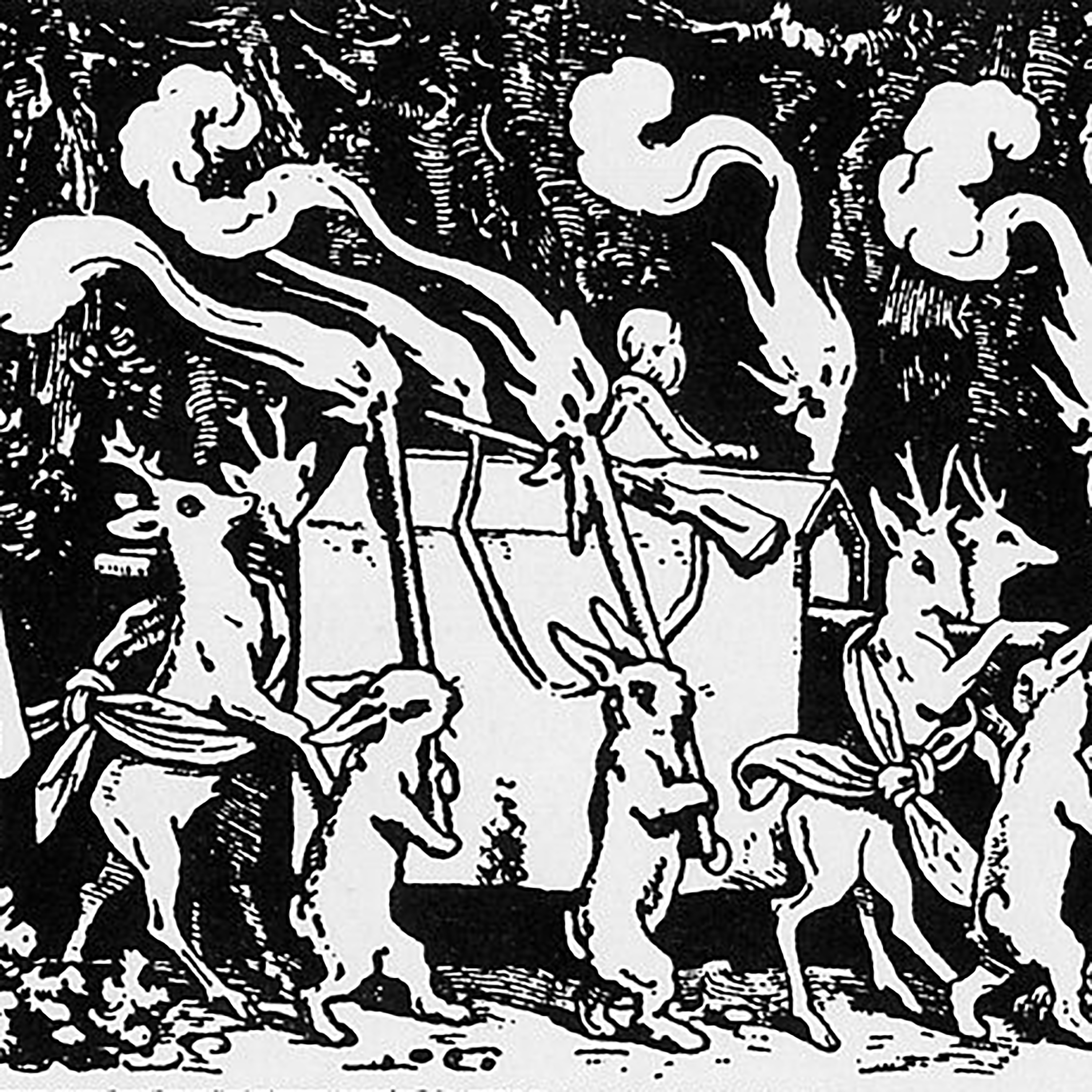
其基本灵感源自奥地利儿童都熟知的幽默版画——童话古书中的《猎人的葬礼》。
The basic inspiration for it was found in a humorous engraving well known to all Austrian children, the huntsman's funeral, from an old book of fairy tales.
这幅版画出自莫里茨·冯·施温德之手,他是19世纪上半叶奥地利著名画家。
The engraving is by Moritz von Schwind, a popular Austrian painter who lived in the first half of the nineteenth century.
森林动物们护送着死去猎人的灵柩前往墓地。
The forest animals accompany the dead hunter's coffin to the grave.
野兔们扛着旗帜。
Hares carry the banner.
队伍前方行进着一群波西米亚乐手,伴唱的有猫、蟾蜍、乌鸦等动物。
In front of them march a group of Bohemian musicians accompanied by singing cats, toads, crows, etcetera.
猎人的棺木由他生前可能猎杀过的所有动物共同抬着。
The hunter's casket is carried by all the animals he would have killed in his lifetime.
雄鹿、鹿、狐狸及其他四足动物和禽类以各种滑稽姿态跟随送葬队伍。
Stags, deer, foxes, and other four legged and feathered animals follow the funeral procession in all kinds of farcical positions.
时而表达讽刺欢快的情绪,时而呈现阴森诡异的氛围。
The mood expressed is sometimes ironic and merry, sometimes gloomy and uncanny.
乐章由低音提琴独奏的旋律.
The movement kicks off with a melody played by the solo double bass.
这听起来可能有些熟悉,因为马勒改编了著名的童谣《雅克兄弟》。
This might sound somewhat familiar because Mahler adapts the famous children's tune Frere Jacques.
但他稍作调整,将其改为小调。
But with a slight adjustment, he changes it to a minor key.
音乐教授玛丽莲·麦考伊。
Music professor Marilyn McCoy.
演奏这首曲子时,人们开始发笑。
When this piece is performed, people start to laugh.
人们微笑。
People smile.
他们环顾四周,心想:这是个错误吗?
They they look around and they go, is this a mistake?
这是阿姆斯特丹皇家音乐厅管弦乐团首席低音提琴手多米尼克·塞尔德斯的介绍。
Here's Dominique Seldes, principal bass of the Royal Concertbauer Orchestra of Amsterdam.
这就是那种既暴露又顽皮的特质。
It's just one of those things that's just so exposed and just so naughty.
那么你该如何演奏它呢?
And then how do you play it?
你要像演奏葬礼曲那样演奏吗?
Do you play it like a funeral?
还是像有人在歌唱那样演奏?
Do you play it as somebody singing?
它本意是要表现悲伤吗?
Is it meant to be sad?
它本意是要开启一场游行吗?
Is it meant to start a parade?
娜塔莉·鲍尔·莱克纳回忆起作曲家本人对这段旋律的感受。
Natalie Bauer Lechner remembered how the composer himself felt about the melody.
马勒说过,即使在他童年时,他也从未像人们通常唱的那样,认为《雅克兄弟》是欢快的,而是觉得它极其悲怆。
Mahler said that even as a child, he had never thought of Frere Jacques as cheerful, the way it is always sung, but rather profoundly tragic.
即便在那时,他就能从中听出后来发展出的东西。
Even then, he could hear in it what he developed from it later.
马勒表示这首葬礼进行曲的灵感来自一群糟糕的业余乐手。
Mahler said this funeral march was inspired by a band of lousy amateur musicians.
是否应该故意演奏得很差?
Should it be played badly?
贝斯手多米尼克·塞尔提斯。
Bassist Dominic Celtis.
我把它演奏成一首忧郁而优美的旋律,由此开启一系列更加忧郁动人的曲调。
I play it as a melancholic, beautiful tune which starts this parade of more melancholic, beautiful tunes.
对我来说,它听起来应该很悦耳。
And then for me, it should sound nice.
为了用声音描绘这幅充满反讽的画面,马勒需要找到如何以矛盾的方式运用管弦乐队。
In order to paint this ironic picture in sound, Mahler needed to figure out how to use the orchestra in paradoxical ways.
如果我想
If I want
制造柔和压抑的音效,我不会交给能轻松演奏的乐器,而是交给那些需要费力才能勉强发声的乐器——通常需要强行突破其自然音域才能实现。
to produce a soft subdued sound, I don't give it to an instrument which produces it easily, but rather to one which can get it only with effort and under pressure, often only by forcing itself and exceeding its natural range.
我经常让低音提琴和巴松管在最高音上发出吱吱声,同时让长笛在低音区费力地吹奏。
I often make the basses and bassoons squeak on the highest notes while my flute huffs and puffs down below.
在这个非常奇怪的开场之后,一种完全不同的音乐开始了,听起来像是犹太音乐。
And after this very strange opening, a completely different kind of music begins, music that sounds Jewish.
玛丽莲·麦考伊。
Marilyn McCoy.
所以这就像是,这到底是什么?
And so it's like, what the heck is this?
听起来就像你走进了某个派对现场。
It sounds like you've walked into a party somewhere.
在这个乐章中,每个新段落都出人意料。
Within this movement, each new section is a surprise.
在葬礼进行曲之后,你不会想到会出现派对音乐。
After a funeral March, you wouldn't expect party music.
甚至有人认为这是一场婚礼派对。
It's even been suggested this is a wedding party.
小号听起来真的像是喝醉了,醉醺醺的。
The trumpets really sound like they're intoxicated, like they're they're drunk.
它们确实没有和其他乐器保持一致的节奏,虽然谱面上就是这么写的,但在实际演奏中,指挥可以灵活掌控这种快慢变化。
They're really not playing in tempo with the others, And it is composed that way, but I think in performance, that's something a conductor can really push or pull.
我其实很喜欢他们加快节奏的处理,因为我觉得这段音乐本就该带点疯癫和狂野的味道。
And I actually like when they push it because I think it's meant to be kind of nutty and kind of crazy.
管弦乐队。
Orchestra.
显然他成长过程中听过这类民间乐队,尤其是犹太乐队的演奏,对这种音乐风格很熟悉。
Clearly, he heard these kind of folk bands and especially the Jewish ones when he was growing up, and he was used to this kind of music.
这种独特风味的民间音乐对交响乐作品而言是全新的尝试。
This particular flavor of folk music was new to the symphonic repertoire.
这其实很容易做到,因为单簧管本身就倾向于那样演奏。
That's actually an easy thing to do because the clarinet kind of naturally wants to go that way.
而在古典演奏中,我们通常要克制这种倾向,所以很多时候并不会那样表现。
And in the classical playing, we're actually reining it in, so it doesn't a lot of the time.
马勒生为犹太人。
Mahler was born Jewish.
他并不特别虔诚,因此不清楚他将这些元素融入交响曲是为了指向犹太教,还是为了展现他成长过程中受到的各种音乐影响。
He wasn't especially religious, so it's unclear if he was putting this into his symphony to point to Judaism or to point to the many musical influences he heard growing up.
菲尔·波尔曼指出,值得注意的是马勒成长于一个边境地区。
Phil Bohlman says it's notable that Mahler grew up in a border area.
这个边境地区即摩拉维亚,位于捷克地区的波希米亚与上奥地利、下奥地利之间的交界地带。
A border area being Moravia, a border between the Bohemian lands of the Czech area and sort of Upper Austria and Lower Austria.
这是个说捷克语的地区。
It's a Czech speaking area.
这是个说德语的地区。
It's a German speaking area.
这是个说意第绪语的地区。
It's a Yiddish speaking area.
马勒将他成长过程中听到的所有这些元素融合在一起。
Mahler takes all these things he heard growing up and tosses them all together.
通过这种方式,在创造新声音的过程中产生了一种融合,我认为这对马勒来说至关重要。
And in so doing, there's a sort of a blending on on the creating of new sounds, and I think this is really critical for Mahler.
换句话说,他并非试图重现某种过往的世界,而是创造新世界,或者说是让听众注意到。
In other words, that he's not trying to evoke some sort of world from yesterday, but rather to create new worlds or actually draw the listener's attention to worlds that are in conflict with each other.
马勒还能够以极其流畅的方式在不同音乐风格之间转换。
Mahler is also able to transition between contrasting styles of music with great fluidity.
流畅。
Fluidity.
回到比尔·哈德根斯。
Back to Bill Hudgens.
我喜欢他那些柔和、近乎感官享受的温柔时刻。
I love it when he gets soft and he gets these very tender, almost sensual type moments.
有些段落美得不可思议,比如第一交响曲第三乐章中段,音乐逐渐减弱,随后一段优美的小提琴旋律开启了整个小节,那可能是某种感官享受。
Some of those places are incredibly beautiful, you know, like the transition in the third movement of this first symphony halfway through where it dies down and down and down, and then this beautiful soft violin melody starts this whole little section that could be it could be something quite sensual.
也可能是为孩童而作的片段。
It could be something for a child.
他在这方面确实做出了惊人的成就。
It it he does amazing things that way.
这是马勒从他早期《旅人之歌》中摘录的另一段旋律。
This is another passage that Mahler lifted from one of his way farer songs.
流浪者正躺下,萌生自杀的念头。
The wanderer is lying down and contemplating suicide.
以下是歌词内容:
Here are the song lyrics.
路旁伫立着一棵菩提树。
By the road stands a linden tree.
我终于在菩提树下找到安歇,花瓣如雪般飘落在我身上。
There at last I found rest and sleep under the linden tree, which snowed its blossoms down on me.
那时我还不懂生活的痛苦。
I knew not of life's pain.
一切,一切都重新好起来了。
All all was well again.
一切爱与悲伤,我的世界,我的梦想。
All all love and grief, my world, my dreams.
这首歌名为《我挚爱的蓝眼睛》,指的是让马勒心碎的年轻女子约翰娜·里斯特。
The song is called the two blue eyes of my beloved, referring to Johanna Riester, a young woman who caused Mahler such heartbreak.
这段插曲过后,葬礼进行曲再次从我们身边经过。
After this interlude, the funeral march passes by us again.
马勒的朋友娜塔莉·鲍尔-莱希纳解释了这些看似不协调的并置。
Mahler's friend, Natalie Bauer Lechner, explained the seemingly incongruous juxtapositions.
第三乐章是《雅克兄弟》片段,相比作品其余部分,它遭到了更多的误解与蔑视。
The third movement is the Frere Jacques piece, which was more misunderstood and scorned than all the rest of the work.
你也可以这样想象其中发生的情景。
You might also picture what happens in it in some such way as this.
我们的主人公目睹一支送葬队伍从他面前经过,世间所有苦难与悲哀以其尖锐的对比和可怕的讽刺攫住了他。
Our hero watches a funeral procession draw past him, and all the misery, the sum of the world's sorrow possesses him with its sharp contrasts and hideous irony.
必须把《弗列日卡》葬礼进行曲想象成是由一群可怜乐手机械视奏的——就是那种在这种葬礼上演奏的乐手。
The Ferezhaka funeral march one has to think of as being mechanically sight read by a miserable group of musicians of the sort that plays at such funerals.
这段音乐不时被世间所有的粗俗、轻浮与平庸打断,伴随着一支杂七杂八的波西米亚乐队的声响,从而展现出我们主人公那可怕而痛苦的思想,他的哀叹。
This is periodically interrupted by all the crudity, frivolity, and banality in the world with the sounds of some sort of motley, bohemian players band, and thereby the terrible and painful thoughts, the lamentation of our hero.
以其讽刺与尖锐,在我看来,这是人们所听过的最令人震惊的作品,尤其是在精彩的中段之后,我们看到送葬队伍在埋葬完毕后又从我们身边经过,而葬礼乐手们用音调奏响了那惯常的欢快乐曲。
With its irony and cutting edge, it is, to my way of thinking, the most staggering thing one has ever heard, particularly the point following the wonderful middle section where we see the procession returning past us after the burial and where the funeral players in tone the customary merry tune.
单簧管演奏家比尔·哈德金斯说,派对音乐演奏起来非常有趣。
Clarinetist Bill Hudgens says the party music is a lot of fun to play.
因为它与我们通常所做的截然不同。
Because it's quite different than what we usually do.
尤其是对单簧管来说,它表现得相当出色。
And it especially on a clarinet, it lays quite well.
我的意思是,我们不会像现在的流行克莱兹默乐队那样,用那么多不同的喉音和人声来在单簧管上创造出与标准古典演奏截然不同的效果。
I mean we don't go as far as what popular klezmer bands would do now where they use so many different guttural and vocal sounds to create really quite different things on the clarinet than we would use in standard classical playing.
但你至少能展示出一点那种风格,这还挺有趣的。
But you get to show a hint of that at least, which is kind of fun.
以我们今天的耳朵听来,这样一首交响乐让我们想起《屋顶上的小提琴手》,我们认为那是犹太音乐。
To our ears today, a symphony that sounds like this makes us think of Fiddler on the Roof, which we consider to be Jewish music.
克里斯蒂安·克莱因教授表示这并不那么简单,因为马勒在摩拉维亚成长时有着独特的处境。
Professor Christian Klein says it's not quite so straightforward because Mahler had a unique situation growing up in Moravia.
对我来说,已经很难明确区分那里的犹太音乐和摩拉维亚音乐了。
For me, it was not so clear anymore to draw a clear distinction between Jewish music there and the Moravian music there.
因为例如那些演奏的乐队成员和音乐家,他们既是摩拉维亚人也是犹太人。
Because, for instance, the bandsmen and the musicians playing, they were as well Moravians as they were Jews.
如果你看看那些为舞蹈和流行活动演奏的音乐,它们之间的差异并不那么明显。
And if you look at the music which was played, for instance, for dance and for popular functions, the music doesn't differ so strongly.
马勒在这个乐章中为我们呈现了多种音乐风格。
Mahler has given us many kinds of music in this movement.
而在接近尾声时,他又以另一种出人意料的方式将它们融合在一起,玛丽莲·麦考伊。
And towards the end, he he combines them in another surprising way, Marilyn McCoy.
嗯,在结尾处,它们全部被叠加在一起。
Well, at at the end, they all they're all superimposed.
两组克莱兹默乐手以不同速度演奏,同时底下还有葬礼进行曲。
Two groups of klezmer musicians playing at different tempi, and then you have the funeral march underneath.
这是典型的马勒式对位时刻,三种元素同时进行。
That's the typical Malarian counter point moment where you have all three things going on at the same time.
民族音乐学家菲尔·鲍曼,他融合多种元素于一体。
Ethnomusicologist Phil Bowman, he does many things and he brings them together.
而且这些元素并非各自独立的部分。
And it's not their individual parts.
换句话说,这不是单纯的犹太旋律,而是他通过创造性方式锻造新声音的尝试,创造现代作品的同时,揭示了矛盾、裂痕与问题——那些演奏和聆听这些音乐的人们彼此间的偏见,以及他们无法完全融入瓦格纳等人所建立的音乐典范。
In other words, it's not a Jewish melody, but it's rather the way in which he seeks creatively to forge a new sound, to make something modern, and and in so doing, sees the conflicts, the the fissures, and the problems, the ways in which those who would be performing and listening to these music have prejudice toward each other and and and don't fit neatly into the sort of canon that somebody like Wagner would create.
换言之,这是朝着更深入理解差异迈进的一步。
In other words, this is this is a movement toward a deeper understanding of difference.
乐章尾声处,送葬队伍渐行渐远。
The movement concludes with our funeral procession marching marching off into the distance.
真的结束了吗?
Or does it?
现在交还给玛丽莲·麦考伊。
Back to Marilyn McCoy.
到最后,简直让人毛骨悚然。
By the end, like, it's just so creepy.
你懂吗?
You know?
所以最初只是个大笑话的事情,现在变得有点像鬼故事了。
So something that was a big joke at the beginning has now become kind of like a ghost story.
声音变得越来越微弱。
It's getting softer and softer.
因此你听到的最后一个声音,我是说,虽然有低音,但你还能听到那个‘噗’的一声。
And so the last sound you hear, I mean, there is a bass, but you also hear that puh.
就像,你听到的有点像是一个人呼出最后一口气的声音。
Like, you hear kind of a it's like the breath going out of someone.
关于 Bayt 播客
Bayt 提供中文+原文双语音频和字幕,帮助你打破语言障碍,轻松听懂全球优质播客。