本集简介
双语字幕
仅展示文本字幕,不包含中文音频;想边听边看,请使用 Bayt 播客 App。
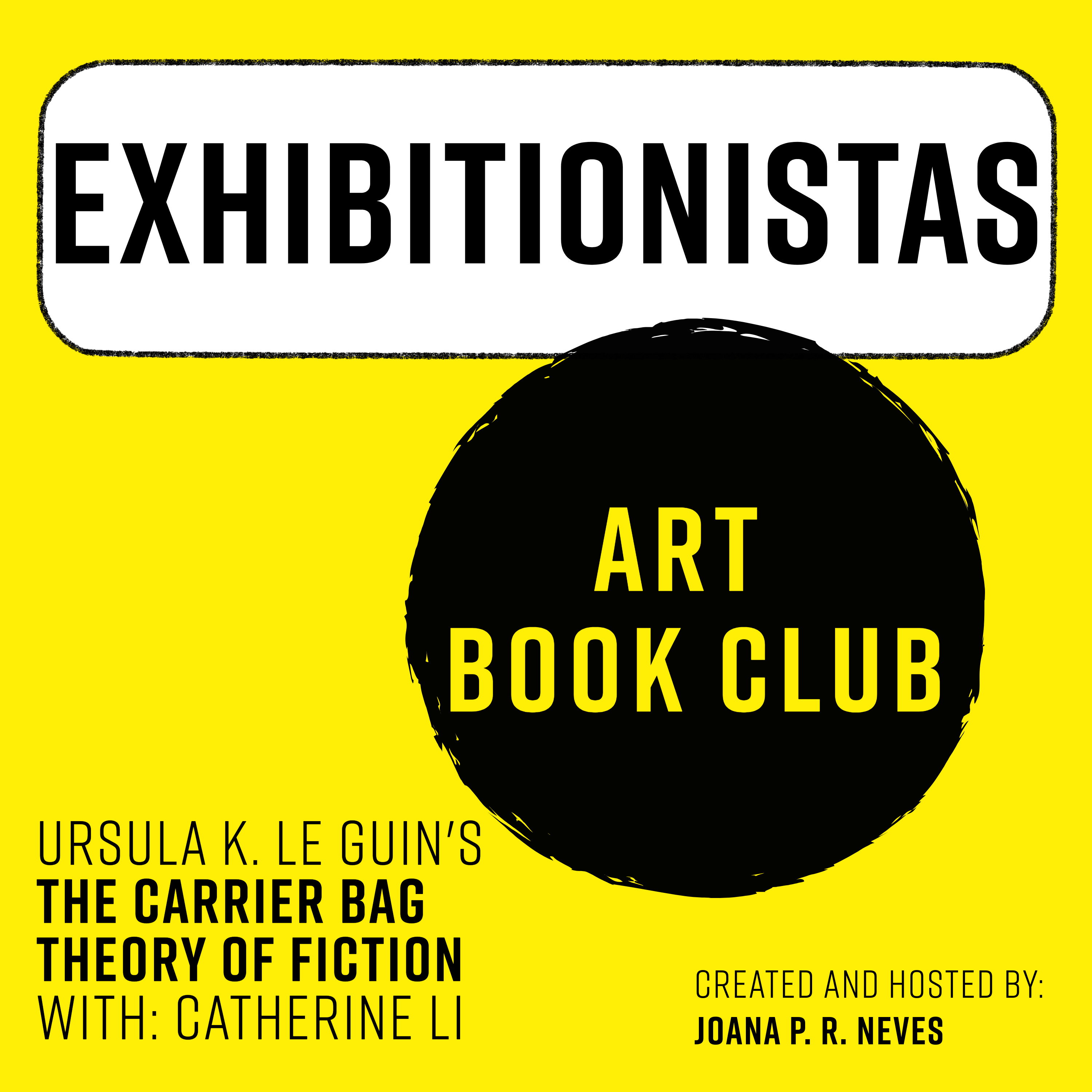
大家好,欢迎收听《展览家》播客,我是独立策展人兼作家Joanna PR Neves,也是本播客的主持人。常听节目的朋友肯定注意到了,上期节目未能如期发布,原因很简单:过去三周我大部分时间都在出差。若需证明这是个单人制作的节目,这就是明证——你们现在知道了!
Hello hello hello welcome to Exhibition Estas this is Joanna PR Neves. I am an independent curator and writer and the hosts of this podcast. For those who follow the podcast regularly, of course you notice that, the last episode did not drop and the reason is very simple: I was traveling for work for the most part of three weeks. If you needed any proof that this is a one woman show, that's it. You have it!
有时难免会遇到突发状况,比如这次我就染上了流感,所以今天声音听起来有些不同。但我无比兴奋地向大家介绍这期新节目,它同时也是一个全新板块《艺术书友会》。我为此深感自豪,这期节目制作实属不易——我必须坦言,正因我是个完美主义者,总希望一切尽善尽美才导致延期发布。再者,作为独立播客,若你还需要最后一点动力来点击链接支持我们,我想就是现在了,对吧?要知道,这档节目因你们而存在,只有通过会员支持才能持续发展。支持方式多种多样...
Sometimes these things happen as it so happens to catch the flu, which is precisely why my voice sounds a bit different today. But I'm so so so excited to introduce this new episode to you, which by the way is also a new segment called Art Book Club, and I'm so proud of this segment I'm very proud of this episode It was not easy I have to tell you not to drop the episodes because I am a perfectionist I like everything to be impeccable But also, this is an independent podcast and if you needed any more incentives to finally click on that link and donate. I think this is it, isn't it? You know, this podcast cannot exist without you and it can only thrive if you become a member. So, there's many ways to do it.
你可以查看节目说明——就是每集标题下方那段简介文字,在所有播客平台都能找到。支持途径非常丰富:比如订阅Substack(这同时也是订阅新闻通讯的方式)。不过身为作家,我其实不做新闻通讯,觉得那既浪费时间又占空间。
You can go on the show's notes so that's the little blurb below the title of the episode. It's a sort of a description of the episode that you find on all platforms all podcast platforms and you have very very different ways to contribute. You can subscribe to the Substack which by the same token is a way for you to subscribe to the newsletter. So as you know I'm a writer, I don't do newsletters. I find them a waste of time, a waste of space.
通常我会把通讯内容转化为文章形式,并附上大量与节目相关的链接和信息。这个《艺术书友会》板块是我与嘉宾Catherine Lee对谈时萌生的创意。嘉宾带来的书籍都不是专为当代艺术而写——这就是规则。
So usually what I do with the newsletters is that they become a sort of a text. They're also filled with links, information. About the episodes, this is a segment that I decided to create while talking to my guests, Catherine Lee. The books that my guests bring to the segment were not written with contemporary art in mind. So that's the rule.
游戏规则就是:必须选择与当代艺术无关的书籍。我们在对谈中发现,有本书对我们两人理解策展理念产生了深远影响。若不清楚策展是什么,它本质上是展览的概念构思、创作组织与推广。妙处在于,你完全可能受某本与本职工作无关的书籍或作者启发,并将其融入自己的专业领域——即使你不是策展人,也能从这些节目中获益。悄悄说,我常听商业、单口喜剧和表演类播客,因为跨领域的方法论往往能带来启发。比如有段时间我苦于公开演讲,后来通过研究喜剧演员如何构思笑点、铺垫包袱的技巧获得了巨大帮助!
That's the rule of the game. It has to be a book that is not about contemporary art. And we found out in conversation that one book for us, for both of us, was incredibly important for our idea or notion of what curating is. If you don't know what curating is, basically it's conceptualizing, creating, organizing, promoting exhibitions I think that the beauty of the fact that you can be influenced by a book or an author a vision that speaks about something other than your job and bringing it into your own craft means that even if you're not a curator, can always take something from these episodes. I'll tell you a little secret I listen to a lot of podcasts about business, about stand up comedy, acting because having methodologies from other areas can be useful to your own So for example, at a certain moment, believe it or not, I was really stuck when it came to public speaking So I started listening a lot to stand up comedians who talk about their craft and it really inspired me to see how they develop an idea, how they verbalize it, how they lead you to the pun, how they deliver the pun and it helped me quite a bit!
你总能汲取可应用于自身领域的信息。而本期嘉宾绝对不负期待——她是位极具原创性的思考者。她选择的书是厄休拉·勒古恩的极短篇《小说承载理论》。我们将看到,一个微小的视角转换如何能包容整个社群。闲言少叙,现在就请收听节目吧。我得回去休息了,但希望你们能和我录制时一样享受本期内容。别忘了点击链接支持,让我们继续这段精彩的《展览家》之旅。开始吧!
So there's always information you can get that you can apply to your own area and this guest let me tell you does not disappoint she is such an original thinker so I can tell you now that the book she chose to bring is Ursula K Le Guin's very, very, very short text The Carrier Back Theory of Fiction. We find out that a very, very small shift perspective can include a whole community of people. So, without further ado, I will leave you to the episode. As for myself, I am going back to bed but you I hope you enjoy this episode as much as I did recording it and don't forget click on those links help me continue this amazing adventure that is exhibitionist. Let's do this!
欢迎来到《艺术书友会》板块。在这里,嘉宾将带来那些并非专为当代艺术(甚至视觉艺术)而写,却以个人或集体方式进入当代艺术经典谱系的书籍。很荣幸首次邀请到独立策展人Catherine Lee做客《展览家》。这位常驻伦敦的策展人特别关注特定场域活动,以及参与式艺术项目和展览。
Welcome to the segment Art Book Club. This is a segment where my guests bring a book that has not been particularly written with contemporary art or even visual art in mind, but which somehow, either on a personal level or on a collective level, it has entered the contemporary art canon. It's my honor to welcome to exhibitionistas for the first time, the independent curator Catherine Lee. Catherine is a London based curator. She's very interested in her curating activities and projects in site specific events, also in participatory events or projects or exhibitions.
她还对数字档案及其他更多领域感兴趣。凯瑟琳,欢迎来到Exhibitionistas。
She's also interested in digital archives and much more than that. So Catherine, welcome to Exhibitionistas.
谢谢。嗨,乔安娜。嗨。感谢你邀请我参与这个精彩的项目,这是你在项目空间主持的开幕活动之一。
Thank you. Hi Joanna. Hi. Thank you for inviting me for this amazing project. One of the opening you hosted in your project space.
我们当时聊了些随机话题,比如做策展人的感受。显然,我们之间存在一些认知差距,毕竟我们之前没有正式见过面,经历也不同。你在业内经验丰富得多,而我是一个刚入行五年的新兴策展人。但让我惊讶的是我们竟能如此迅速地建立起默契。
We were talking about random topics, about how that it feels like to be a curator. And obviously, our conversation, there's a gap between two of us as, you know, we haven't met before officially, and we have different experience. You are much more experienced in the industry. I'm a emerging curator who just, you know, engaging this industry for, like, five years or even less. So and I was amazed by how quick we bonded with each other.
是啊,那些问题确实简单直接。
Yeah. It was really quick and simple questions.
但那是因为你提出了那个问题,对吧?你问的问题让我有点措手不及——倒不是惊讶,而是引发了我的思考。你想说说吗?
But that's because you asked the question, didn't you? You asked the question that kind of let me a bit taken aback not taken aback, but it made me think. So do you want to say?
是的,我想是因为我总在质疑策展人这个角色。我们都知道'策展人'这个词源自'治愈'(cure)。是叫Curai吗?
Yeah, I guess because I always question about the role as a curator And we all know that curator came from the word cure. Curai?
拉丁语里是Curai。
Curai in Latin.
是的。对。所以,我刚才问你是否能选一个词或三个词来替代‘策展人’这个词,你会选什么?对。你想再试一次吗?
Yes. Yeah. So, and I was asking you if you can choose one word or three words to substitute the word curator, what would you choose? Yeah. Would you want to try it again?
对,对,当然。我不记得当时怎么回答你的,因为奇怪的是,我最近就这个话题进行了两次对话。我记得——不确定是否和你——当时我说对我来说策展人是空间专家。观察空间、理解空间及其全部含义,包括可能涉及的人群特征、空间所在位置的地理环境等等。我当时是这么回答的吗?
Yes, yes, sure. I don't remember what I told you because weirdly, I think I've had two conversations recently about that. And I remember, I don't know if it was with you, I remember saying for me a curator is a space specialist. Looking at a space, understanding a space and with everything that it means, it can be the demographic of the people who goes into the space, the space where the space is located, so the geography, all of it. Did I answer that at the time?
我不记得了。
I don't remember.
不,对,你提到了空间。你说过重新构想空间是策展中最迷人的部分,因为你说你喜欢思考作品,想象所有作品布置后产生的效果,你会站在观众的角度反复走进空间去重新体验。没错,就是这样。我清楚地记得这点。然后我突然想起那本书《Carrier Back Theory or Fiction》,我说如果要找个词替代策展人,我想成为‘carrier back’。
No, yes, you mentioned the space. You mentioned that, you know, you reimagine the space is a huge, the most fascinating part for curation, because you said you would like thinking about the work, imagine how the effects are going to be look like once you put all the work, and you will put yourself into the shoes as an audience, and then you just walk into the space over and over again to re experience Exactly, the whole yeah. Yes, I remember that very well. And then I think that was the point I, all of a sudden, remembered the book, Carrier Back Theory or Fiction. And I said, want to be a if I can find a word to substitute the word curator, I want to be a carrier back.
今天早上我在想,这是不是新近产生的想法——因为刚读完那本书才想到这个概念。但实际上五年前我也有过类似想法。记得当时参加皇家艺术学院策展课程面试时(最后因学费太高没去,去了中央圣马丁),我被问到如何看待策展人?
And this morning, I was thinking, is that something new that, like, recently I just because I read this book, then I think about this concept. But actually, I had the similar thought, like, five years ago. I remember I was in the interview for the curating course for Royal College of Art, and I didn't go because the tuition fee was too high. I went to Central Samarit one instead. But I remember I was being asked to answer the question of how how do you see a curator?
我说,我认为策展人就像个空盒子,能容纳任何事物,无论美丑。这个想法突然又浮现在我脑海。
I said, I see a curator as an empty box, an empty box that is capable for anything, no matter it's beautiful or not beautiful. And that is something I just all of a sudden remembered.
你记得这个啊
You remember that,
是的。这真是个有趣的巧合,因为当我读到《承载之袋》时,天啊,这个想法对我这个策展人来说太耳目一新了。我想成为一个永远背着袋子的策展人。我看到了真正创新和令人振奋的内容。实际上,五年前我也有过同样的想法,尽管当时没读过类似的作品。
yes. And then this is such an interesting coincidence because when I read the Carrier Bag, was, oh my god, the idea is so refreshing for me as a curator. I want to be a curator, a person who carrying a bag all the time. And I saw there's something really innovating and refreshing. And actually, I had the same thought five years ago without reading a single piece of writing like this.
而且我的实践经验非常有限。我刚完成学士学位,还没真正踏入行业。是的,就是这样。
And I have very limited experience, like practical experience. I just finished my BA, and I haven't really stepped into the real industry. Yes. Yeah. So that was
这很迷人,因为这是个艺术读书会,关于书籍的。我特别感兴趣的是,你读到了一本在某种程度上与你先前直觉共鸣的书。你在这本书中发现了自己实际思考过的东西。我认为这非常奇妙,因为我们常把作家、思想家视为给大众带来启蒙的人,向他们学习。但实际上这是集体努力。我想厄休拉·K...
That's fascinating because this being an art book club, so about books, I'm really interested in the fact that you read a book that in some ways resonated with an instinct that you had before. And you found in this book something that you were actually thinking about on your own. And I think that's really fascinating because sometimes we have this idea of writers, thinkers, authors as these people who bring a sort of enlightenment to the masses, are learning from them. But actually, it's a collective effort. And I think Ursula K.
勒古恩在书中谈到了这点,关于社群理念,关于你与他人共同构建某物的事实。你思考过这点,我们思考着需要填补的空白领域,这很有趣——这几乎像是柏拉图式的理念,思想存在于某处,独立于我们之外,我们只是在某个时刻传递它们,并将其带入特定语境中。向听众解释下对话背景:你当时谈到策展,我记得你提到厄休拉·K·勒古恩的《承载之袋小说理论》对策展很重要时,我当时惊呼:什么?
Le Guin talks about that in the book, about this idea of community and about the fact that you are building something with someone else. And that the fact that you thought about that and the fact that we are thinking in terms of empty spaces where we have to bring something in is really interesting in the sense that it is almost as if it's like a platonic idea where ideas are somewhere and they're external from us We just kind of convey them at a certain point. And we also bring them into certain specific contexts. So to explain to our listeners how this conversation unfolded. So you were talking about curating and I remember that when you mentioned the book, The Carrier Back Theory of Fiction by Ursula K Le Guin as being important for curating, I remember saying, What?
什么?你知道我有多惊讶吗?这本书对我也极其重要。所以我邀请你作为这个环节的首位嘉宾,因为一本与策展无关的书竟让两位策展人相遇,他们可能因不同原因喜爱这本书,其中一位甚至早有同感,在空白领域的思考上与勒古恩不谋而合。能谈谈你对场所专注的理念吗?比如在公共空间举办的展览,或针对特定场域的展览,以及参与性理念?
What? You know, I was so surprised because it is a really important book for me as well. That's why I wanted you to be the first guest of this segment, because I was fascinated by the fact that a book that has nothing to do with curation suddenly was bringing two curators together who both loved the book probably for very different reasons and one of them actually had had the idea before and kind of met Ursula K Le Guin halfway while already having thought about this empty space. So do you want to talk a little bit about this idea that you have of being really focused in place? So exhibitions that are either on public spaces or oriented towards a site specific or a site where they happen, the idea of participation.
那么你职业生涯中组织过哪些与这些理念对应的实践?
So what in your career have you organised that would correspond to these ideas?
嗯,这个问题关联到许多理论,比如空间诗学。在空间相关实践方面,我对参与式艺术做了大量研究。我的问题始终是:空间如何培育社群?通过参与,进入空间的社群或人们如何改变空间?这种永恒的互动让空间与社群共同成长。这个理念让我着迷,它与《承载之袋系列小说》的核心思想平行——勒古恩建议你带着袋子...
Well, I think that this question links to many different theories like the poetic of space. So in terms of the space related practice, I did a lot of research towards participatory art. And my question was always about how a space is able to cultivate a community and through participation, how a community or people entering the space could make changes to the space. And then this kind of everlasting interaction make both the space and the community growing. And this idea fascinates me, and that's really parallel with this one of the core idea in this book of carrier bag serial fiction, which means, you know, Laquine was suggesting you you have a bag.
你将感兴趣的事物放入这个包中,这个包承载着所有声音、所有经历、所有在这个狭小空间内发生的关系。所以她并非建议你必须将实践扩展到广阔空间,而是在某种程度上提出了另一种方式——将一切压缩到最小空间来预示即将发生的事。
You put the things that you found interested into this bag, and this bag is holding for all the voices, all the experience, all the relationships that are happening just within this tiny space. So she is not suggesting, you know, you have to expand your practice into, like, massive space. But in a way, she is suggesting another way. You put everything in as small as possible space to say what's going to happen.
等等,等等,我要打断一下,这太迷人了,我知道你要谈的是你的某个项目。但首先让我们正式介绍一下文本。是的,厄休拉·K·勒古恩,这位作家以科幻小说创作者的身份闻名,需要特别说明。
So wait, wait, wait. I'm going to stop you there, because that's fascinating and I know what you're going to talk about, which is a project of yours. But first of all, let's introduce the text properly. Yes. So, Ursula K Le Guin, author, she's known as a science fiction writer, to be very specific.
她出生于1929年10月21日,七年前于2018年1月22日逝世。她是加州人,在那里出生、生活并开展创作。她曾短暂旅居欧洲,作为富布赖特学者在巴黎求学时结识丈夫,后返回美国,晚年又曾赴欧进修。但本质上她是扎根加州的作家,以诗歌创作起步,写过短篇小说,最广为人知的是科幻作品,同时也创作了震撼人心的散文——我认为她是位杰出的散文家,因为她擅长用平实语言阐述复杂事物。
She was born on 10/21/1929. She passed away recently seven years ago in on the 01/22/2018. She's a Californian, born there, she lived there and she developed her work there. She had a few stints in Europe, she was a Fulbright Scholar, so she came to Paris to study where she met her husband, then she went back and then she had another stint in Europe to study much later, but she's basically she was a California based author and she wrote poetry, she started as a poet, she wrote short stories, she's mainly known as a science fiction writer, but she also wrote absolutely mind blowing essays. I think she's a marvelous essayist because she knows how to write about complicated things in simple terms.
那么你想介绍一下这本书吗?书名是《小说的载体背包理论》。哦,我们拿的是同一版本。
So do you want to introduce the book? So the book is called The Carrier Back Theory of Fiction. Oh, we have the same one.
是的。看
Yes. Look
这个。我们这本一模一样。书上还写着:用旧了、脏兮兮的、折痕累累,你这本和我这本差不多。
at that. We have exactly this. And it says, used up and dirty and folded yours as much as mine.
确实如此。非常感谢让我介绍这篇精彩文本,这对我而言也是重读的好机会——每次重温都如此令人神清气爽、灵感迸发,因为它总能将我最近的思绪、周遭环境与新近际遇重新串联起来,总能给予我处理这些想法的全新视角。其实准备这个引言时我觉得很有挑战性,因为全文如此简短,而核心理念又如此简单直白。
Exactly, exactly. Thank you so much for letting me to introduce this amazing text because it's also a good opportunity for me to return to this text as it's always so refreshing and inspiring every time when I go back because it's always reconnects me to my recent thought, to my surroundings, my recent encounters. And it's always give me a really refreshing idea of how how I can, you know, deal with those thoughts. And actually, I was thinking about this introduction. I found it so challenging because the whole text is so short and the idea is actually so simple and straightforward.
但其思想的深度与星火般的构思,实际上让任何简短的介绍都难以充分展现这篇文本想要展开的内容。
But the depth of it, the constellation of thought, sparks, actually make any kind of brief introduction reduced what this text want to open up.
是的。
Yeah.
所以,我的意思是,我会尽力尝试。
So, I mean, I'll try.
我相信你能做到。我相信你能做到。
I'm sure you can do it. I'm sure you can do it.
是的。简而言之,《载者归来》系列小说由飞鸟·勒奎因于1986年创作,1988年首次发表在丹尼斯·杜邦主编的《女性书写科幻小说文集》中。这是一篇非常简短而激进的论文,重新构想了文化、人类历史和叙事方式。基于女性主义人类学(这点我们稍后可以展开),她提出人类最早的器具并非武器,而是容器——用于关怀与分享的袋子。由此,她挑战了以武器或战利品形态呈现的、围绕战斗与征服者的英雄中心叙事。
Yeah. So, in short, the carrierback series of fiction was written by Asuka Lequine in 1986, and it was first published in Essays by Women Writing Science Fiction edited by Denise Dupont in 1988. So it's a very short, radical essay that reimagines both culture, human history and storytelling. Based on feminist anthropology, which we can expand on that later, she suggested that the first human toad was not a weapon but a contender, a bag for caring and sharing. From this, she challenges the weapon shaped or spare shaped hero centered story for battles and conquerors, etc.
她主张小说可以成为载者归来的容器,承载多元声音、日常经验和集体生存。如今,这一理念持续影响着女性主义生态写作,也对艺术家和策展人产生深远影响。它更在告诉我们何为另一种叙事,何为更具关联性的叙事方式方面发挥着重要作用。
She was proposing that fiction can be a career back, a vessel for many voices, everyday experience and collective survival. So today, this idea continues to influence feminist ecological writing and as well as for artists and curators. It also plays a very important role to tell us what is another story, what is a more relational ways of storytelling.
是的,这是本精彩的书。确实,厄休拉·K·勒奎因可以说经历了一场复兴——或者说被重新发现。作为一个没有接受过英式教育的人,我是成年后才来到英国的。我是通过唐娜·哈拉维接触到厄休拉·K·勒奎因的。当时我正在读唐娜·哈拉维的作品,她现在也成了策展人和当代艺术思想家、哲学家们经常提及的名字。
Yeah, it's wonderful book. It is true that it has I mean, Ursula K. Le Guin has had a sort of a revival or maybe discovery, I have to say, not being someone who has had an English education, so I arrived as a grown up to The UK already. I came to Ursula K Le Guin through Donna Haraway. So, was reading Donna Haraway, who has also become a name that has been kind of thrown around between curators and contemporary art thinkers and philosophers.
唐娜·哈拉维是这样一个人:她拥有科学背景,但如今是新思想的传播者。她教授的课程名称很奇特,像是某种关于当代认识论的新思想与叙事之类的内容。我记得读她关于可持续性和生态概念的论述,关于如何转变视角以与地球和生物圈和谐共处。她还不断提及厄休拉·勒古恩。
And Donna Haraway is someone who is She has a scientific background, but she now is a teacher of new ideas. I think the course she teaches has a very strange name, like a sort of new ideas and narratives in contemporary and epistemology, you know, something like this. And I remember reading Donna Haraway specifically about sustainability and about notions of ecology and how shift your perspective in order to align yourself with the earth and the planet, the biosphere. And she kept referencing Ursula K. Le Guin.
有一天我在书店里看到这本小书,心想这是初次阅读科幻作家厄休拉·勒古恩作品的绝佳机会。没想到这是篇散文,完全出乎意料,却成为我人生的重要时刻。我记得阅读时被文字激荡得心潮澎湃,同时又像你说得那样,因这个如此简单的理念而觉得自己有点蠢。
And one day I was in a bookshop and I saw this little book and I thought, oh, this is a great way to read the first story by science fiction author Ursula K. Le Guin. And little did I know it was an essay. So, I was really not expecting to read this, and it was a really important moment for me. I remember reading this and being feeling elated by the text and as you say so well, feeling a bit stupid because it's such a simple idea at the same time, like you say so well.
我在想,如果最重要的物品...顺便说我对史前时期很着迷,读过很多相关书籍。虽然并非专家,但尽可能多阅读。我记得当时在想:为什么我从未考虑过这点?显然当你作为游牧者,用天然材料反复建造房屋,还要为食物奋斗时,最先需要的难道不是用来盛放采集果实、与伙伴分享的容器吗?
Like, what if the most important object and I'm fascinated by prehistory, by the way, I read a lot about prehistory. And I'm not a specialist, obviously, but I try to read as much as I can. And I remember thinking, why did I never think about that? Because obviously, when you are a person, perhaps nomadic, building houses from natural materials that you have to build and build over again, then to try and fight food. Isn't it obvious that the first thing you need is something to carry the fruits that you have collected for you and for your friends?
这让我想起小时候对《鲁滨逊漂流记》的痴迷。我也是。没错,我特别喜欢那本小说。
I remember, that remembers me. So when I was a kid, I was fascinated by the novel Robinson Crusoe. Me too. Yes. And I like that novel so much.
我反复阅读它,因为看着一个现代社会的人突然流落荒岛,必须从零开始重建一切实在太迷人了。我清楚记得我们确实需要重读...
I read it over and over again because it's so fascinating to see a human being from modern society and all of a sudden through to an island and you have to rebuild everything from scratch. And I remember very clearly that I couldn't we need to revisit
这就是下期艺术读书会的主题,我想也是我们与展览达人节目的下一期内容。
That's the next art book club. I think that's our next episode with exhibitionistas.
我记忆犹新的是有个章节专门讲述鲁滨逊如何制作陶罐。
I remember very vividly, there was one chapter talking about how Robinson is making the pot.
它就在那里,不是吗?它就在那里。
And it was right there, wasn't it? And it was right there.
我们从未如此明确地讨论过哪个脚趾最有用。
And we never have this kind of really clear sort of which toe was most useful.
你还没告诉我们你是怎么发现这本书的。你是怎么知道它的?你什么时候读的?你感觉如何?这是怎么发生的?
You haven't told us how you have come across the book. How did you find out about it? When did you read it? How did you feel about it? How did that happen?
你是怎么遇到这本书的?所以它
How did you encounter this book? So it
非常有趣且出人意料。大约两年前,其实是去年,我进行了一个艺术变革项目,我号召所有伦敦艺术家向我提交一个艺术家的午餐盒。这样我就能把所有午餐盒带到维也纳,因为我要去那里做策展驻留。我会在维也纳待上大约十天。我要把所有这些午餐盒带到维也纳,与另一群艺术家会面,然后维也纳的每位艺术家会收到一个由伦敦艺术家准备的午餐盒。
was very interesting and also surprising. So like two years ago, actually, last year, I did an artistic change project, which I called out for all London artists to submit an artist's lunchbox to me. And therefore, I could carry all the lunchbox to Vienna because I'm going to do a curatorial residency over there. So I'm gonna stay in Vienna for, like, ten days. So I'm going to carry all the lunchbox to Vienna and meet another bunch of artists, and then another bunch of each artist from Vienna would receive one lunchbox that prepared by London artist.
然后维也纳的艺术家可以用伦敦艺术家制作的午餐盒创作新作品。当时一位参与项目的伦敦艺术家在提交他的书籍给我时说,'你的项目应该读读Laqueen的这篇文字,因为你的项目听起来和这本书的建议非常相似。'我当时就说,'快告诉我更多。'后来我拿到了这本书,实际上是在维也纳驻留期间读的。觉得非常着迷,因为我让艺术家们用午餐盒做的事——其实并不是要他们准备真正的午餐。
And then the Vienna artist could use the the lunchbox that made by London artist to to create a new work. And then one of the artists who is was participating from London, when he was submitting his books to me, he said, oh, your projects, you should read the this text by also Laqueen because your project sounds really similar with what is this books book suggesting. And I was like, oh, tell me more. And then I got this book, and then I read it in Vienna, actually, during my residency. Found it fascinating because what I was suggesting for the artist to do with the the lunchbox, because it's not actually asking people to prepare an actual lunch.
相反,我要求每个人找一个盒子,比如午餐盒,看看你的工作室、家或你实践所在的任何地方,把工作室里不需要的、废弃的或损坏的材料放进这个小盒子里。这个命题非常非常开放。可以说相当开放。是的,即使你给我一盒空气,说是'这是我工作室的空气',只要你能告诉我这是来自你工作室的空气,那也完全可以。
Instead, I ask everyone to find a box, a lunchbox, for example, and look at your studio or your home or wherever your practice is based in and put materials that is unwanted, wasted or sabotaged in your studio into this very little box. Prompt was really, really, really Open. I would say open. Yes. Even you gave me a box of air, you say, was an air my studio, that's even fine as long as you tell me, Is this air from your studio?
所以这就像任何事物一样。基于对象或非基于对象的说法都行,这些都很好。它不能是有价值的东西。它不能是。举个例子,如果你是个画家,你从画布上剪下的边角料、草稿或素描,你随手就扔掉了。
So it's like anything. Object based or non object based saying this is all fine. It can't be valuable thing. It can't be. And for example, if you're a painter, you have an offcut from your canvas, a draft or a sketch that you just throw away.
而你并不真想扔掉它,因为你还是想把它留在工作室里,以防哪天需要。类似这样的东西。但我也给出了一点建议,希望这些材料或整个盒子能反映你和你的实践。但它必须不是像垃圾一样毫无价值的东西。它必须是垃圾。就像我做的那个公开征集。
And you don't want to really throw it away because you still want to keep in your studio in case you need it one day. Things like that. But I also give a little bit of suggestion that I hope those materials or this whole box can reflect you and your practice. But it has to be not invaluable stuff like rubbish. It has to be rubbish, And things like I did that open call.
仅仅十天,我就收到了25个盒子。太有趣了。人们只是带着一个小盒子来找我。然后那个艺术家——就是推荐我这本书的那位——他告诉我,这个实践太棒了,因为你总是把工作室空间当作一个神圣的空间,一个创作艺术品的圣地。而那些艺术品必须离开工作室,进入画廊,准备好接受公众和策展人的批评。
And just in ten days, I received 25 boxes. It was so funny. People just carry a little box and come to me. Then the artist who was so funny, the artist who was recommending me this book, he told me, oh, this practice is amazing because, you know, you always treat your studio space as a, let's say, a sacred space, a sacred space for producing artworks. And those artworks have to be, you know, go out of the you know, get out from the studio, go to the galleries, and be ready for the critics from the public and curators.
然后当你开始审视工作室的每个角落时,会感到非常有趣,因为你终于意识到自己在工作室里建立的整个生态系统。那些与你一同成长的小东西,它们可能是垃圾、草稿、素描,或是用完的颜料管、裁下的木条或画框。你一直在积累这些,但都是为了服务于工作室实践的核心目标——创作艺术品。但由于你太专注于艺术品创作,几乎忘记了周围的这些小东西。他觉得这个实践很迷人,因为一旦你把目光和注意力放在这些小东西上,整个工作室对你来说就变成了一个完全不同的世界。
And then once you start looking of every corner of your studio, it's just so funny because now you finally realize the whole ecosystem that you build into the studio And those little things that are grown up with you, they are maybe they are rubbish, they are drafts, they are sketches, they are, like, you know, finished tubes or cut off woods or stretcher bars. You've been accumulating all this, but all to serve the essential goal of the studio practice, which is producing artwork. But because you're so focusing on this artwork production, you almost forget all these little things that are around you. And he found this practice fascinating because because once you put your eyes, put your attention to these little things, the whole studio is like a total different thing to you. It's like another world.
你是这么说的吗?这是一个生态系统。一个生态系统。所有东西都参与其中,甚至像你说的那些不想要的东西,也在这个生态系统中扮演着积极的角色。这就是那位艺术家的意思,对吧?
Is that what you said? It's an ecosystem. It's an ecosystem. Everything participates, even the unwanted things, like you said, participate and have an active role in this ecosystem. That's what the artist meant, right?
是的。当他开始往盒子里放东西时——因为他需要精挑细选——然后他意识到,天啊,有些他从未注意过的小东西实际上贡献了很大一部分。比如,可能是他在工作室实践中常吃的一种饼干盒。现在你对这些饼干有了全新的认识,因为你与这种饼干建立了亲密的关系。然后他把所有东西都放进那个盒子,甚至包括一只袜子。
Yes. And once he starts to put in things, because he needs to be selective to put things into that very box, So and he realized, oh my god, some little things that he never noticed actually contribute a huge part. Maybe, like, for example, a a biscuit box that he always ate, like, a kind of biscuit he always ate during the studio practice. And then you now you have really refreshing thought out these biscuits because you have this intimate relationship with this very kind of biscuit. And then he put everything into that box, even a sock.
我对他的盒子记忆犹新。想象一下当我打开盒子时的反应——天啊。我当时觉得这个盒子闻起来就像整个世界。我是说,不。想象一下,所有这些东西,还有他做的小物件。
I remembered very well about his. Imagine when I opened the box, was like, oh my god. I was like, this this box smell like the world. I mean, no. So imagine, like, all the things and also the small things he made and, like, little object.
他正在用捡来的物品制作雕塑。虽然这个小物件很难用,但他舍不得扔掉,于是把它们堆在工作室的角落。天啊,这太迷人了——当你把所有东西放进这个盒子时,仿佛整个学习历程都被浓缩其中。这些物品突然就不再是垃圾了。
He's also making sculptures using found objects. So this little object he found is really difficult to use, but he don't want he doesn't want to throw them away. So he kind of accumulated them in the corner of the studio. And he found, oh my god, this is fascinating because once you start putting everything in this box, you just feel like your whole journey of student practice is condensed in this tiny box. And and it feels like they are not trash anymore.
它们变成了最珍贵的东西,成为全新的作品。这位伦敦艺术家雅各布·克莱顿的创作涉及绘画、现成物和充满玩趣的物件。
They become the most valuable thing. It becomes a new piece of work. It's called Jacob Clayton, a London based artist whose practice is about paintings, about found objects and also things that are playful.
你提到书籍时我立刻想到马塞尔·杜尚,他对艺术的思考就像我们策展时那样,既充满热爱又保持犀利批判。他还创造了法语称为'盒子里的博物馆'的作品,用自己作品的图像在盒子里构建了一个微型博物馆。作为策展人,我们总是怀着敬畏又保持适当距离来看待博物馆这种人造空间,你同意吗?
As soon as you talked about the books, I thought about Marcel Duchamp, because he really did think a lot about art, like we think about curating, with as much love as a sharp critical sense as well. And he also created what he called in French, which means the box in a suitcase or the box as suitcase. And so he created a museum in a box with images, right, of his own work. And I remember being also really struck by this and being really interested because I think as curators, we always think about the museum with reverence, but also with a sort of a healthy distance also of the artificial setting that the museum can be as well. Would you agree with that?
你是只认同尊重的那部分,不认同保持距离的观点吗?
How You did you come agree only with the respect, not with the distance?
噢距离。是的,我确实认同保持距离。因为距离能创造...
Oh, distance. Yes, I do agree with the distance. Yes. Know you Because the distance creates the
气场。它能创造气场。但我们也知道展览空间远不止博物馆——艺术家自营空间、快闪空间、非白立方空间。实际上能在纯白立方里办展的机会很少。然后你会开始幻想:如果整个世界都是博物馆会怎样?有部叫《午夜牛郎》的电影里,作家威廉·巴勒斯拿着手杖在街上指着普通城市物件说'这是艺术品'。
aura. It creates the aura, but also in some ways, we kind of also know that exhibitions occur in many other kinds of spaces other than museums. So artists run spaces, pop up spaces, spaces that are not white cubes. It's very rare that actually you get to exhibit work in a white cube. But then you also start to of deliriously think, okay, so what if everything what if the world was a museum and everything was and there's a film called Midnight Cowboy, I think, where at a certain time, William Burroughs is walking in the street, so the writer, and with his cane, I think he has a cane and he's pointing at things with his cane and he's saying, This is a work of art.
他基本上就是在指认构成城市空间的寻常物件。作为策展人,我们最终都会陷入这种关于空间可能性的狂想。你想到午餐盒的灵感,可能既有实际考量也带着这种梦幻色彩吧?你是怎么产生这个创意的?
And he's just pointing at things that make up the urban space, basically. As curators, we do end up in this kind of delirium of what a space can be and what an exhibition space can be. So I'm pretty sure that you have I mean, the reason why you thought about the lunchboxes may be rooted in very practical reasons, but also very aniric or kind of delirious reasons. How did you come to the idea?
所以它们非常实用,因为便于携带。
So it was very practical because they are portable.
没错,没错,这正是杜尚对他自己的easyMA I所说的。
Exactly, exactly, which is what Duchamp said about his own easyMA I
我在完成这个项目后也在网上看到了他的作品,因为我在寻找参考,想找到类似的项目,那些可能在其它方面能引起我共鸣的。由于我当时在做策展驻留项目,受到伦敦奥地利文化论坛的支持,他们资助我去维也纳进行了为期十天的调研。我的任务是作为签约独立策展人,他们要求我从维也纳本地挑选五位艺术家,与另外五位我挑选的伦敦艺术家合作,最终举办一场展览。
saw his project online as well after I made this because I was looking for reference to, you know, find similar projects, like, you know, that maybe resonate with me, but in different aspects. So because I was doing this curatorial residency, I was supported by Austrian Culture Forum in London, and they were supporting me to do a research trip in Vienna for, like, ten days. And my goal, they were asking me as a contracted independent curator. They will ask me to select, like, five artists from Vienna, like, Vienna based five artists, to collaborate with another five artists. I selected from London to do a final exhibition.
这个选择标准源于我当时的一个想法——关于如何让作品显得昂贵。我感兴趣的是艺术家如何用单一材料让作品显得昂贵。可以是体积庞大的昂贵,确实我选了一位创作大型作品的艺术家;也可以是微小但执着的创意,你完全痴迷于这个小点子。
And and the selection based on my the same that I I came up at the time, which is making making expensive. I was interested in how artists can use one single materials to make things expensive. It can be in expensive, like huge. I, yeah, I did select one artist who make huge things. Or you can come up with tiny ideas, but you are so obsessed with this tiny idea.
就是不断重复、重复、重复。我选的某些艺术家的实践也确实涉及声誉。虽然最初有这个想法,但发现仅限伦敦和维也纳各五位艺术家对我而言太局限了,我想拓展这个概念。于是决定在维也纳停留超过十天。
You just keep repeating, repeating, repeating. So some artists I selected also their practice also involves reputation. So I had this very initial idea, but I found it's really limiting for me to just like five artists from both London and Vienna. And I want to expand this idea. And and then I I was thinking, okay, I'm going to stay in Vienna for more than ten days.
我完全可以做更多事,不只是和艺术家谈话或参观美术馆。我完全可以和当地艺术家进行更具互动性的合作。嗯。然后我开始思考如何更好地连接伦敦和维也纳的艺术圈——必须从人开始。
I can definitely do more things than just, you know, like, having conversation with artists or, you know, visiting museum. I can definitely do something more interactive with local artists. Mhmm. And then I was thinking, like, how I can make something, make the connection better between London art scene and Vienna art scene. I need to start from people.
但我需要找到一个关键入口让他们彼此连接。而且必须切实可行,因为我没有预算支持大规模的双向项目。
And and then But I need to find a really key portal for them to connect with each other. And it has to be practical because I don't have budget to support me bring a massive project back and forth or
这正是我想探讨的,因为我非常喜欢书中首先提到的食物这一基本要素。我们稍后会深入讨论,但书中引用了厄休拉·勒奎恩文本中史前人类获取食物的方式。这段文字最打动我的,是它通过最实际的生存问题——如何获取食物、选择何种饮食以维持生计、养育子女和维系社群——将最具世界观构建性的价值理论串联起来。你在策展中也提到这个问题,很多时候会面临这种可怕局面:你有一个项目构想,但随后要考虑运输成本,还要承担在展馆搭建超声检查设备的费用。人们往往不会想到策展和做展览决策时涉及的诸多成本,尤其是那些号称要连接多个城市的项目计划。作为策展人,你只有2000英镑预算,心知这根本行不通。
That's what I wanted to get to because I love the fact that in the book, the first thing that is mentioned is food as a sort of a really basic We'll go into that, so I will explain that later, but one of the references made is the way people fed themselves in prehistory in the book, in Ursula K. Le Guin's text. And what I loved about that text is that it connects the most world building, value oriented theory through the most practical thing, which is how to keep alive, how to get food and what kind of diet to have in order to have a good living, and to raise kids and to just live as a community. And you raise this issue and in curating, a lot of the times you have that terrifying situation where you have an idea for a project, but then you have the shipping costs and then you have also the costs that come with building a sonography in the space. So there's a lot of costs that people don't think about when you're curating an exhibition and when you're making decisions for an exhibition, particularly exhibitions there are these kind of programs of Oh, we're going to connect this city and that other city and then as a curator you're like you have £2,000 of budget and you think this cannot work.
我不是说你们预算特别少,这是夸张说法。但人们常以为策展人只处理宏大概念,实际上我们也要应对非常非常实际的琐事,我想这正是这本书与策展工作如此共鸣的原因。
I don't want to say that you had a very small budget, that's not what I'm saying. I'm exaggerating, it's hyperbole. But those are kind of the people think of curators as dealing with big ideas, but we also deal with very, very, very practical things, which I think is why this book resonates so much with curating as well.
是的,首先要生存。为了生存,我们必须想出最简单却自认创新的点子。这本书另一个核心观点是如何让事情更具集体性,因为你需要创造能容纳更多事物、更多声音的空间。
Yeah, you have to survive. And in order to survive, we have to come up with the most simple, but we think it's innovative ideas. Yes. And another important thing is then another core point from this book is how to make things more collective. Because you need to think about, you know, you need to be able to create something and create a space that is capable to hold more things, more voices.
对这个项目我也深有同感。我不得不承认,虽然享受选择合作艺术家的权力,但同时又厌恶这种权力——凭什么该由我来决定哪些艺术家值得被选中?
To me, for this project, same. And I hate this. I mean, I of of course, I enjoy. I have this kind of power. I have to admit it to be able to select the artists I like to collaborate with towards the exhibition in the end.
这种生杀大权让我非常抵触。因此我觉得参与式艺术特别迷人,它赋予人们自主选择权,这些机会对所有人开放。
But at the same time, I hate this idea because I would I would think, why the how I I why should it be me holding this power of selecting those artists and artists that need to be selected in most of cases. And then why I should have this killing power, you know? And I hate this. That's why I found participatory art is so fascinating, because you give people options. And these options are open to everyone.
参与者可以按自己意愿加入,这更像是互利协作而非我单方面给予机会。所以我想创建这种公开征集式的参与艺术,让人们自由投稿并随心诠释餐盒作品。这样既能吸纳多元声音,又免去我筛选的负担。记得收集餐盒时,我拖着行李箱穿梭伦敦——
You can participate if you like. So this is like more mutual beneficial collaboration instead of me giving you opportunity. So that's why I want to create this kind of open call based participatory art so people submit as they like and people can participate to interpret the lunchbox afterwards as they want. So and that opens up opens for more voices, and and I don't have to do those selection. And I remembered when I was collecting the box, I was carrying my luggage.
有些艺术家当面递交,有些则请求我帮忙收取。当我拖着行李箱穿梭于各个工作室时,有位艺术家激动地拥抱我说:'太喜欢这种开放征集的方式了,因为你没有进行筛选。'这正是我组织公开征集的初衷。
I was collecting so some artists, they they submit to me in person, but some of them, they said, oh, if it would be great if you'll you can help if you can collect the box, and I'm happy to do that. So I did a really quick travel around London between artist studios, and I was collecting with my luggage. And one of the artists said, oh my god. I like this open call because you are not selecting. It's like She was hugging me like, I like this way of, you know, you organize an open call.
厄休拉·勒古恩做的另一件事是挑战英雄的概念。她为读者提供了一个切入点,让你以为她要解释故事的结构是什么、好故事的标准。而她开篇描述的却非常有趣——与我们固有认知相反,史前和新石器时代的饮食其实以植物和坚果为主,或许还包括她提到的昆虫、软体动物,以及小老鼠、兔子等,狩猎行为其实很少。接着她提出了一个让我深感有趣的实用观点,引用原话就是:‘史前普通人每周工作十五小时就能过上不错的生活。’
Another thing that Ursula K. Le Guin does is to challenge the notion of the hero. So she kind of gives you a starting point to the book where you think she's headed towards an explanation of what's the structure of storytelling, what makes a good story. And so she starts by describing something really interesting, which is that contrary to what we believe, it was so the prehistoric and neolithic diet was very much vegetable based, nut based, perhaps adding bugs and mollusks, as she says, and little rats, rabbits, so there wasn't much hunting. And so she says something that I find really really interesting, which again comes to this notion of practicalities, which is that the average, so I'm quoting here, the average prehistoric person could make a nice living in about a fifteen hour work week.
引用结束。她解释道,这主要归功于采集——当时人们对环境了如指掌,确实需要蛋白质时知道去哪找兔子。但她特别强调野生燕麦的重要性,因为燕麦营养极其丰富,据考证(至少在当时研究显示)是主食基础。她将这种每周十五小时的生存模式描述为理想生活:会唱歌的人围着火堆歌唱,会缝纫的人缝制衣物,有幽默感的人逗大家发笑。而那些没有特殊才能的人,可能因为无聊决定去狩猎猛犸象之类的大型猎物。我特别喜欢她视角的转换——她用第一人称代入史前人类说道:‘很难把剥野生燕麦壳的过程讲得惊心动魄:我剥了一粒,又一粒,挠了挠虫咬的包,有人说了句俏皮话,我们去溪边喝水,观察了会儿蝾螈,然后又发现一片燕麦地。’
End of quote. And so she's saying that because of foraging, basically, because there was a real knowledge of the environment, you knew where the rabbit would come if you really needed some protein, but basically she's very focused on wild oats because oats really are extremely nourishing and are the basis of the foods that was apparently or at the time, I don't know how studies are at the moment, but at the time was a big part of the basis of food. And so, she talks about these fifteen hours of subsistence as leading to a really nice life where people who could sing would sing by the fire, those who could sew would sew, those who could be funny were making, you know, a spectacle of themselves to make other people laugh, but remained the skill less people, the people who didn't have any particular talent, who maybe were getting a bit bored and so therefore decided to go hunting big game, so hunting the mammoth. And I love how she shifts and I remember reading this at the time and not quite because she speaks in the first person, so she puts herself in the place of someone who was a prehistoric person and she says, so quote: It is hard to tell a real gripping tale of how I rested a wild oat seed from its husk and then another, and then another, and then another, and then another, and then I scratched my nap bites, and all said something funny, and we went to the creek, and got a drink, and watched newts for a while, and then I found another patch of oats.
她用第一人称继续道:‘我讲的故事远不如猎人带回社区的精彩。他们带来的不仅是行动,更是英雄。有英雄的故事才充满力量!’读到这里我突然意识到:这不正是文学课上学的故事基本结构吗?需要铺垫、危机、解决危机的英雄、对抗、胜利,然后故事结束。
So she's talking in the first person and she's saying I can't fight or my story isn't as interesting as the story that the hunters are bringing into the community. So what they're bringing is not only an action, but they're also bringing a hero. So, the story not only has action, it has a hero. It is powerful! And so, as I was reading this, I was thinking: Oh, so she's giving us the structure of, you know, basically the basic thing that you study when you're studying literature in school, which is: you need to have this and then you need to have a crisis and then someone solves the crisis, there's an opposition, then there's a victory and then the story's over.
我正有些失望时,她突然扭转了叙事——其实早该料到,当她提到‘无特殊技能者成为猎人’时就埋下了伏笔。她完全转换视角引入了弗吉尼亚·伍尔夫。就像你说的,文本看似简单但内涵深远。接着她又提到我不熟悉的作家伊丽莎白·费希尔,她出版了名为《女性的...》(书中未引全名)的书
And I was a bit disappointed until she flips the script, which I should have seen coming obviously when she started talking about the skill less people who become hunters, and she changes the perspective completely by bringing up Virginia Woolf. It's a really Like you say, it's a very simple text, but she goes very far. So, she brings Virginia Woolf up and then she brings someone who I didn't know, who was Elizabeth Fisher, who was a writer and an editor who published the book called Women's Well, actually, she doesn't quote the whole title in the text, so the book is called
《女性创造、性进化与社会形塑》
Women's Creation, Sexual Evolution and the Shaping of Society.
没错。这本书1977年出版,1979年获得普利策奖提名。突然间整个故事彻底反转,视角完全不同,我阅读时如遭雷击。这与‘策展人即英雄’的概念存在某种平行关联。
Exactly. And it was nominated for a Pulitzer Prize in 1979 and I think published in 1977. So, suddenly the story is completely flipped, the perspectives are completely different and that's when I was hit like a ton of bricks by reading this thing. And it is a little bit there's a parallel there with the notion of the curator as hero. You
对,就像我刚提到的,我不想要那种能决定他人生死的超能力。正因如此我才深感共鸣。往前看的话,总会有能力更强、更像英雄的人存在,甚至强到我无法直呼其名。或许直到突然死亡降临那刻,我才会意识到这一点。
Yeah, it's like what I just mentioned, like I don't want to have that kind of superpower of being able to save or kill certain people. Exactly. That's why I feel so resonated with. Also, if we look ahead, there is someone who is more superpower have more superpowers, more like a hero, and someone is beyond my league, and I can't even say him or or she or they. And I can't maybe I will be realized when I was killed, I mean, all of a sudden.
你明白我的意思吗?就像,它真的与整个世界平行。特别是在艺术行业,总有一些强大或主导的声音引领潮流或操纵市场,我们甚至无法...是的,
You know what I mean? Like, it's really it's really parallel with this whole world. I mean, especially in the art industry, there's always certain powerful or dominating voices that are leading the trend or manipulating the market that we can't even Yeah,
我们不能指名道姓。但在过去是可以的。比如我学策展时,记得我的老师基本都是男性,他们对哈罗德·泽曼怀有崇敬,他被塑造成天才形象。后来当我从哲学转向美学,又决定攻读策展硕士时,出现了从'艺术家是英雄'到'不,你才是英雄'的观念转变。
we can't name names. Well, in the past we can. For example, when I studied curating, I remember that my teachers, who were basically male, I must say, had this reverence towards Harold Zeman, for example, who was presented as this genius. So suddenly there was a shift when I was younger and studied philosophy and then went into aesthetics and then decided to do a master's in curating studies. There was this shift between the artist as the hero And then I was fed this story as No, no, no, you are the hero.
策展人才是英雄。你才是意见领袖。看看哈拉德·泽曼!我来自文学背景,最初热爱写作和小说,记得那场名为《当态度成为形式》的重要文献展——泽曼策划的,应该是1969年吧?
The curator is the hero. You're the one who is the opinion maker. Look at Harald Zeman! And I remember because I come from literature, from my first love was writing, literature, fiction and I remember when attitudes become form so the name of the big document exhibition that Zehmann curated, I believe in 1968? 'sixty nine.
我记得《在你脑海中生活,当态度成为形式》这个宏大标题。作为对文字极度敏感的人,当时惊叹:天啊!这标题太震撼了,它突破运动流派的局限,打开思维包容当时所有创作。我更着迷于他形成这种视野的过程,而非具体工作方式。不过必须说,泽曼后来策划的展览让艺术家邀请朋友参展,既扩展了策展人的决策权,也强化了你刚说的'意见领袖'属性——策展人邀请熟人办展。
So I remember Live in Your Head, When Attitudes Become Form, this mega title and being someone who's very, very taken by words, I remember thinking Oh my, oh my! This is such an incredible title, this is life changing because it doesn't really describe or it's not contained by movements, names of movements, it kind of opens up the minds to whatever everyone was doing at the time and you kind of are fascinated by this figure and I was much more interested in the way he had come to that vision of things rather than how he worked, what was possible, why were the names why was that group of artists important at the time? But one must also say that Harald Zehman then curated another exhibition where artists invited friends. So there was this idea which kind of opened up the scope the decisional power of the curator, but maybe it also emphasized what you were just describing, which is as an opinion maker, a curator invites the people they know and organizes exhibitions with their friends.
对我来说,每次策展都在自我质疑。我策划过很多群展,确实常邀请身边人——即便不算密友,但受限于我的文化背景和经历,视野总是集中在特定人群。虽然也能看到圈外人,但内心总有阻碍让我难以接触他们。
And to me, I always keep questioning myself every time when I curate a show, because I did curate a lot of group shows. And I'm not going to deny that I never invite my close friends. Instead, I always invite people around me, because even they are not close, but because of my circle, because of maybe my culture background, also my experience shaped the very particular people, group of people around me, and I can only see them. I can also see people, like, apart from, like, those group of people, but the thing is something might stop me from very inside. Maybe they are not really approachable to me.
但我一直在努力突破这个圈子,邀请没有共同好友、毫无交集的艺术家。虽然常被拒绝——即便带着预算和酬劳,可能因为策展理念不合,他们觉得无关紧要。
But the thing is, I would say I would definitely keep trying to approach the people that are not in my because I'm expanding this circle by inviting more people that I have no common friend with, I have no overlap with. So, and I found it's fascinating all the time because every time I always always I've I've been rejected by artists a few times. Even I bring budget, bring artist fee to them, is there still always a not a reason for them to reject me? And multiple reasons, maybe my curatorial approach or my curatorial premise doesn't really resonate with them. They found it irrelevant.
这很正常。但我也遇到过行业资深却不认识我的艺术家,他们非常开放包容,愿意接纳新想法和新合作者。这给了我很大动力,也是本书的核心建议:你必须拓展自身容量,让这个'容器'能承载更多可能,才能创造更精彩的故事。
That's all fine, but I do have experience with artists who have no idea who the hell am I, who are more very experienced in the industry, but they still, like, very open, very kind and embracing the new ideas and embracing to collaborate with new people. And that gave me a lot of motivation. And that is also one of the central, I guess, suggestion from this book as well, you have to make yourself be capable of holding more things. Therefore, very, this container of you, your world or your friend circle can be able to create more exciting story.
是的。我感兴趣的是策展中的伦理关切与优先级问题,不贬低你们已有的专业素养。因为如果让另一位资历完全相同的策展人与你同席,你们各自的专业领域很可能并不重合。伊丽莎白·费舍尔是个非常有趣的人物——我原以为她是人类学家,实则不然。她作为作家出版的这本书首先是本女性主义著作,融合了社会学、民族学与人类学视角,提出女性才是狩猎采集阶段最初的发明者,这观点相当耐人寻味。她开篇就质问:为何女性被视为可交易买卖的财产?
Yeah. I'm interested in the ethical concern and priority of curating, not undermining the expertise that you have, because if you sit with another curator with exactly the same profile as you, you will have your expertise, they will have their expertise, which will probably not be the same. So Elizabeth Fisher is a really interesting character because I thought she was an anthropologist, but actually she isn't. She was a writer who then produced this book, which is a feminist book first and foremost, that draws on sociology, ethnology and anthropology, and that says that the women were the first inventors of the hunter gatherer phase, which is really interesting. And so, she starts by saying, why are women considered as property that has been exchanged and sold?
这是该书提出的首要问题之一。她将我们认知中的自然概念与女性概念联系了起来。
So that's one of the first questions of the book. And she associates our idea of nature with the idea of women.
那么
So
自然如同女性身体一样,都是需要被征服和占有的对象。厄休拉·勒古恩在文中直接引用了这本书。你提出的叙事问题令我深思——那些被主流叙事掩盖的共同体叙事。当我阅读时,女性主义视角格外引人入胜,正如你所解读的那般犀利:它不仅捍卫着女性对自然、生命、人类学和知识的视角,更在控诉'你们将这一切定义为女性特质并将我们禁锢其中,但这本质上关乎整个社群'。
nature is also something to be conquered and possessed as much as the female body. Ursula K. Le Guin directly quotes the book very quickly in the text. I'm interested here in the question of narratives that you raised, which is the main narrative and the underlying communitarian narratives that are being overlooked. So for me, when I read the text, the feminist perspective was really interesting because, and I see the way you read it as it being really effective, because it's not only defending a female perspective of nature, of life, of anthropology and of knowledge, it is saying you call this female and you put us in that role, but actually this is all about community.
确实。从事策展实践时——就像你刚说的,可能觉得我经验更丰富,但真要细数的话,我的资历并不算深。我把每个项目都当作孩子般对待,需要倾尽全力去守护。正因如此,我总会过度思虑。
Yeah. When I'm doing the curatorial practice, and I I never think I mean, this is something, as you just said, you think I have more experience, but I if I have to count it, I don't think I have really long profile. But I treat every project like a child. And it's like something I need to protect with all my effort. And that's why I think, I overthink even too much.
我会担忧参与者是否满意成果?必须确认他们知情同意。今后若需提及他们,务必规范署名。为此我专门建了网站记录所有出版物。或许我算是个女性主义策展人,只是从未意识到。
I worried about, oh, is the participant happy with the result? I need to ask them for the consent for sure. If I need to mention them in the future, I have to credit them properly, things like that. So I build a website to document all the launch books. So I may I may be a feminist curator, but I never realize it.
这种表述更准确。我行事全凭直觉,因为内心认为正确,灵魂在召唤我这么做。最终想来,或许正因我的女性身份,才形成这种行事风格。我宁愿这样解读——而且我觉得这样挺好。
That is a better way of phrase it. So I do things based on my instinct. So I do think because I feel it's right, because it's my inner soul is calling me to do this. Therefore, I guess, because I'm feel a female, in the end, that explains how I do things in that way. So I would rather interpret in this way because and I was okay.
我是一名女性主义艺术家。所以我也是女性主义策展人。我做的一切都充满女性主义色彩。好吧,我会意识到,天啊,这太美了。
I'm a feminist artist. So I'm a feminist curator. So I do everything feminist. Ly. Okay, I will realize, oh my god, this is so beautiful.
但我从不带着特定目的去做这些。我完全追随本能。还有件事我发现也非常女性主义,但对我而言很自然——能够收集事物、思考未来、规划更长远的发展、整合资源并维持现状,让这个项目可持续发展。这其中有某种非常非常自然的东西。
But I never do that with very particular intention. I follow my very instinct. So and another thing I found is really also very feminist, but very natural to me is be able to gather things, to think about future, to think about longer future, to be able to gather resources and sustain the current make this project sustainable. There's something really, really natural.
你谈到可持续性很有意思
It's interesting that you were talking about sustainability
噢,还有可获得性和可及性。这是当下很流行的概念,比如我在伦敦艺术大学工作,我们一直受这类教育熏陶
Oh, and availability as well, accessibility. It's something nowadays, like, you know, I work in UL, we've been Cape Educated like
所以是伦敦艺术大学对吧,
So the University of Arts of Yeah,
作为伦敦艺术大学的教职工,我们经常参加这类研讨会,讨论如何让你的课程或项目更具包容性、更多样化、更可持续。这是如今人们整天挂在嘴边的事。但关键在于,这本就是非常自然的事。这就是为什么这本书如此吸引我。
University of Arts London. As staff member, we always have this kind of session of, you know, how to make your session or how to make the project more accessible, more diverse, more sustainable. It's something that people keep yelling all the time nowadays. But the thing is, it's something so natural. That's why this book fascinates me.
就像我们一直在高喊那些宣言,鼓励每个人都要具有可及性、可持续性。但史前人类早就在这么做了,甚至根本没想过什么是可持续。这让我感到耳目一新。我认为一旦你理解人们为何这样做,你就能更自然、更真心实意地行事,真正追随内心,而不是只为应付差事。
It's like we've been yelling those manifestos all the time, and we encourage everyone to be accessible, be sustainable. But people, prehistory people, already been doing that without any single thoughts of what exactly is sustainable. And that is really refreshing for me. And I think once you understand why people are doing this, you will be able to doing everything more naturally, more really follow your heart, more genuinely, instead of just to tick the book.
你刚才谈到史前时期,谈到Lokey LeWind描述新石器时代人类的生活方式——与万物保持某种和谐共处的关系,展览空间是博物馆而非中心,但你会发现这个展览空间或许另有含义,存在于别处。
You were talking about prehistory and you were talking about the way as Lokey LeWind describes the way the Neolithic people live, so in a sort of a harmonious relationship with things, the exhibition space is a museum, is a non centre, but you're seeing that maybe the exhibition space is something else, is somewhere else.
回答这个问题时,我也想提及特别触动我的情感点,这也是这本书引起我共鸣的原因——尤其是当Le Queen谈到某种男性时,他们能够制作麻袋或携带容器来收纳物品、为更多人开启更长远未来的可能性。这种共鸣源于她文字中蕴含的关怀,这种关怀贯穿我所有策展项目却未曾察觉。直到筹备这位艺术家的午餐盒项目时,我把约25个午餐盒全塞进行李箱,甚至为此精简衣物腾空间——我必须节省空间。
To answer this question, I also want to mention the very emotional point for me, and also why this book resonates with me, especially when Le Queen is talking about women a kind of man that is able to making a sack or carrying a bag to hold things, to gather things, to open up things for more people, for longer future. And that's resonated with me because this kind of care embedded in her text is really important to me throughout my all my curatorial project, and I didn't even realize that. So that very moment was I put when I was doing this artist's lunchboxing, I put all the lunchbox, was about 25 lunchboxes, into a luggage. So I didn't even prepare a lot of my clothes because I need to save space. I need to save space
我对此...
I so I about that.
飞机降落时我穿着两件外套。虽然让整个空间对所有人开放确实野心勃勃,但我会竭尽全力,不断学习改进。这无疑将成为我策展生涯中的重要篇章。
I wear two jacket coats with me when I was landing the plan. But this is really ambitious to make the whole space accessible to everyone. This is very ambitious. But I would try my best and I've been learning and also improving. But this would be definitely a huge part of my learning journey as a curator.
你并非运营中心,不是决策者,更不是英雄角色对吧?我们之前讨论过策展人与英雄的平行关系。但我要说,通过构建如此原创的工作框架——让人们寄来午餐盒,你按提示去工作室收集,再将其运至维也纳,以近乎行为艺术的方式分发并重组工作坊场景——你让自己远比那些只会发邮件借作品的策展人耀眼得多。后者无非在借展表上写'联系我的画廊'或'直接联系我',作品运输后参加或不参加开幕式,某种程度上这种策展人毫无特色,因为他们只是提出想法、联系对方、发发消息、开个Zoom会议。而策展的真谛本应是让艺术家成为展览的核心。
You're not at the center of the operation, you're not the decision maker and you are not the person who's the hero, right? We were talking about establishing a parallel between the curator and the hero. But I would argue that by setting up such an original frame of work and such an original setting of people sending you their lunchboxes, you going into the studio to collect a lunchbox that you gave a prompt for and then carrying the lunchboxes to Vienna and then creating this almost performative distribution of the lunchboxes and rearranging the workshop setting, I think you render yourself far more visible and far more remarkable than any person who would just have sent an email to an artist saying I want borrow that work of yours, please. They would have sent Yes, speak to my gallery or Speak to me if they don't have a gallery, in in the loan forms, the work is shipped, they're invited to the inauguration or not, and in some ways the curator becomes really unremarkable because they're just the person who had an idea, contacted them, you know, make perhaps an effort to send a text, explain the idea, do a Zoom call, but then the idea of curating is that the artist is at the forefront of the exhibition.
主角本不是你,但此刻你作为载体却异常醒目。我的第二个观点是:载体本身极为重要。回想节目开头讨论的《鲁滨逊漂流记》,整整一章都在讲制作陶罐——在史前时代制作容器谈何容易?这意味着要连续编织无数小时,处理材料,老天作证还要制造织物——细想简直难以置信,仅凭双手(当然还有模板工具)和世代相传的技艺,最终制成如此精美的容器。某种程度上,你主动从策展人的神坛走下,将自己置于与艺术家同等的创作层面。
It's not you, but here you are much more visible as someone who is and you're making the carrier visible. And the second part of my argument would be: I think that the carrier is a really important object because if you think about it and you were talking about Robinson Crusoe in the beginning of the episode and the fact that a whole chapter is dedicated at creating a pot, it's not easy to make a container when you live in a prehistoric time. It means that you have to weave for hours and hours and hours and hours, you have to work on the material, you have to create fabric for Christ's sakes, which is just unimaginable when you think about it, that you had to make fabric with your bare hands, of course with your stencils and tools and obviously lots of traditions that were passed on from generation to generation, but still the container is a beautiful object in itself that requires so much skill. So in some ways you kind of descended from your pedestal of the curator as the maximum authority, you placed yourself in the creative level alongside the artists in some ways, I feel.
谢谢。这个对我策展方式的评论很有意思。我发现自己与女王观点高度共鸣——她谦逊地表示并非反对英雄中心叙事,只是不认同这类故事,甚至说如果人类意味着杀戮与武器,那她根本不算人类。
Thank you. I mean, this is a very interesting comment on I just you know, on this project, also my way of being a curator. Something I found really relevant with resonated with what the Queen said because she very humbly said she didn't disagree with the hero center story. She just said she defers with all this kind of story, or maybe she's not human at all. If a human means you need to kill, you need to use a weapon, then she's not human at all.
这就是她可能转变为有缺陷人类的地方。
And this is where she transit to being maybe a defective human.
你介意我读一下吗?是的,因为你说得很对。那个他们谈论的社会、文明显然属于他们。他们拥有它,喜欢它,他们是人,完完全全的人,打斗、刺戳、杀戮。为了证明我也是人类,我寻找着证据。
Do you mind if I read the Yes. Because you are quite right. It's such a beautiful The society, the civilization they were talking about was evidently theirs. They owned it, they liked it, they were human, fully human, bashing, sticking, thrusting, killing. Wanting to be human too, I sought for evidence that I was.
但如果这就是制造武器并用它杀人的代价,那么显然我要么作为人类极度缺陷,要么根本就不是人类。
But if that's what it took to make a weapon and kill with it, then evidently I was either extremely defective as a human being or not human at all.
是啊,我想我只是很喜欢她反驳这类...你知道的,一个萦绕不散的故事的方式。但她没说'我不同意',而是说'好吧,如果成为人类意味着要像这样,那我根本不是人类,因为我不像这类人,我也不喜欢杀戮'。所以当你在谈论我的项目时说'你做过头了'时,我才会觉得...
Yeah, I guess I guess I just really like the way she disagrees with this kind of, you know, a haunting story, but she didn't say, I disagree. She say she says instead, she said, okay. If that if that means being a heal is that you are human, then I'm not human at all because I'm not like this kind of people, and I don't like killing. So I, that's why I feel like when you were talking about my project, you know, you said I did too much,
我没说你做过头了。我说你做得非常...基本上你是在编织。编织着整个容器,你做了大量工作让自己处于质疑的位置——既为艺术家,也为项目中的其他人提出疑问。
I did not say you did too much. Said you did very You were weaving, basically. Were weaving the container, which is you did a huge amount of work that put you in the place of inquiry, of questioning for the artists and for the other people involved in the project.
是的,但就像你说的,通常对策展人的理解就是写邮件、联系艺术家、联系画廊、联系收藏家。这些都是非常...姑且说是智力工作吧。你坐在笔记本电脑前组织思路,用这种方式交付项目。但我并不是要否认...
Yeah, but it's also, as you said, like, the normal typical understanding of being a curator is, like, writing emails, approach artists, approach galleries, approach collectors. They all, like, really, let's say, intelligent work. You sit in front of your laptop, and then you and then you organize your thoughts. You deliver the project in this way. But to me, I mean, I'm not denying.
我也喜欢被这样策展。我大部分工作都是在笔记本电脑前完成的。但对我来说,这个项目的独特之处在于——就像你说的——我真的用双手编织了整个项目。这种亲身实践的经验是任何电脑工作都无法替代的。当我在飞机上,当我带着行李前往另一个城市时,我感觉自己更理解'策展(curator)'这个词里'关怀(caring)'的意味了。
I also like being curated like this. Most of the work I have I've done in front of my laptop. But to me, this project is so unique for me is I I literally like you said, I waved the whole project with my own bare hands. And that's something I learned so much from this project because because this kind of hand on experience cannot be replaced by any kind of, you know, laptop based work. And again, and I I I feel when I was on the plane and when I was carrying the the luggage to another city, I feel like I kind of understanding curator more like caring and caring.
那真的令人耳目一新。我想成为这样的策展人,因为我从中感受到了深深的愉悦。我知道这需要付出大量艰辛的工作,四处奔波。但我并不是说这些劳动和工作本身,而是它们构成了整个项目的一部分,让更多人能接触到这个项目,让每位参与者都能舒适地参与其中,建立联系,营造整体氛围,创造出一种他们可能从未体验过的全新感受——这正是我真正渴望实现的目标,也是驱使我前进的动力。
And that was really refreshing. And I want to be a curator like this because I felt a really deep pleasure of doing that. And I know there was a lot of laborious work carrying around, traveling around. But I'm I'm not saying but those all this lab labor, all this work, they are part of this whole project, making this project available for more people, making every participant comfortable with participating to this project, making making the connection, making the whole atmosphere, the whole experience something into something that they kind of never experienced before is something I really, really want to achieve and that drives me to do that.
我想我们的对话始于一个观点:你以为自己独有的想法,其实很多人都曾有过。你只是承载了这个想法,对吧?但你选择承载它而非其他,这本身就是一种决定。所以你是带来改变的人。这应该被当作英雄行为来颂扬吗?
I think our conversation started by us saying that idea that you thought you had, actually many people have had that idea before. You're just carrying that idea, right? But the way you carry it is at least making a decision of carrying that and not something else. So you are the person bringing that change. Should that be celebrated as a heroic thing?
我不这么认为。这只是一件事,一个展品而已。即使是艺术家也不该被这样颂扬。就连厄休拉·勒古恩都不该——她第一个会说这不是她的主意,是伊丽莎白的主意。所以不该把任何人捧上神坛。
I don't think so. It's just a thing, it's just an exhibit. Even artists, I think, shouldn't be celebrated like that. Even Ursula K Le Guin should not be and she's the first one to say this is not my idea, this is Elizabeth's Elizabeth's idea. So no one should be put in the pedestal.
这就是我的观点。不是艺术家,不是作家,不是策展人,不是播客主,不是年长者,也不是年轻人。但事实是:我有二十年资历,你有五年;我懂葡萄牙历史,你懂什么历史我不清楚。我们都有能力,都能做出贡献,都有价值。我认为重要的是认清自我价值,尊重他人——但在尊重他人之前,也要尊重自己。这种对自身视角的认知非常重要。
That's what I think. Not artists, not writers, not curators, not podcasters, not older people, not younger people. But it is a thing, it is a reality that I have twenty year career, you have a five year career, I know Portuguese history, you know I don't know what history you knew, and so we all have competences and we all bring something to the table and we all have value. And I think that it's important to know one's value, it's important to respect others, but before you respect others, you have to respect yourself as well. And I think this consciousness of your perspective is very important.
空盒子不只是空盒子。它由特定材料制成,经过特定设计,不存在绝对的中立性。
An empty box is not just an empty box. It is made in a certain material, it was designed in a certain way, there's no neutrality.
而且你放进盒子里的东西更重要。对,更重要。所以回到那个大盒子项目——如果没有那些艺术家,那些对这个想法充满热情、非常开放的艺术家,没有他们的贡献...
And also the thing that you put into the box also matters a lot. More. Yeah, more. So, yeah, so back to the the large box project. I mean, without those artists, those very open artists who are so excited with this kind of idea and without their contribution.
他们真的非常慷慨。有些人提交的书简直美得像珍宝箱。
They're really, really generous. Some of the books they submitted was like so beautiful, like a treasure box.
我有个问题想问你,你刚才说的内容让我很感兴趣——关于‘承载’这个概念,我从未思考过这点。作为策展人,我对‘成为某种载体’这个理念非常着迷。在行动层面这意味着什么?除了艺术作品之外,你认为自己还在承载着什么?
I have a question for you, which is so the the value of I'm intrigued by what you said, which I don't think I've ever thought about, which is this idea of carrying. I'm really interested in that idea of being a carrier of something as a curator. What does that mean in terms of action and what do you see yourself carrying beyond the artwork, obviously?
我认为这是个非常好的问题。我也一直在思考,为什么我更愿意用‘载体’而非其他词来描述自己
I think this is very good question. And also been thinking about that a lot, like why would I like to describe myself as a carrier instead
的
of
是的。我发现这个词比‘策展人’更准确,因为策展人听起来像医生——我在做手术。当然我确实可以...或者对作品进行真正的手术,但它们其实并没有生病
Yeah. I found it more accurate than curator Because curator feels like I'm a doctor. I'm doing some surgery. Absolutely, I can be Or do some really surgery to the artwork, then they are not ill.
或者是治疗师?因为你在治愈或
Or a provider because you're healing or
对,你是在治愈什么,但这更像是你预设了艺术品本身是病态的。这让我感觉自己像是行走在策展人这条路上的人,在这段旅程中可能会遇到许多事物——比如今天遇到你,明天可能遇到另一个人
Yeah, you're healing something, but it's more like you kind of presume that artwork, they are ill. It makes me feel like I'm a person who is walking on this journey of being a curator. And on this journey, I might encounter many things. I encountered you today. Tomorrow, I might encounter another person.
即便看电视节目时,我也会遇到某些思想。如果以策展人视角来看,所有这些相遇对我都至关重要
Even I'm watching a TV programme, I encounter some thought. So all these encounters are very important to me if I see myself as curator.
我认为这个观点非常有趣。不得不说,这种表达方式很美。而且我觉得有趣之处在于个人层面——这是有意为之,还是你真心认为这是个人偏好?策展行为终究与个人经历密不可分。
I think that's very interesting point. It's a beautiful way of putting it, I have to say And also I think the interesting point is the personal aspect Was it intentional or do you really believe that it's a personal Personal preference Curating is bound to the person's experience.
我非常认同。虽然我们试图——我试图避免让一切都过于个人化,但问题是这确实难以避免。毕竟归根结底我是个人。我的选择——应该说我的选择可能在我诞生前就已形成。它可能源于我的文化背景、接受的教育,以及整个环境持续灌输给我的信息。
I would say very much so. Although we would try to I would try to avoid making everything too personal, but the thing is, it's something you can't really avoid. It's something because I'm a person in the end. I would definitely my choice, I would say my choice might be made even before me. So it might be made because of my culture, because all the education I received, because this whole environment is feeding me with some information.
因此我做出了选择,这个选择是个人偏好与更广阔文化背景共同作用的结果。我接受这个事实:某些决定确实源于我的个人判断,但同时也有更深层的力量推动着这个决定。刚才的描述可能有些抽象,就像旅人背着行囊,但这是描述我作为策展人感受最贴切的方式——你会遇到无数新事物,最重要的是保持开放心态,始终意识到自己正在旅程中观察着、吸收着周围的信息。
Therefore, I made my choice, and this choice is made by the combination of my personal preference and the wider, broader culture context. So I embrace this fact that I might make some decisions because this is my personal decision. But also, I think it's something more beyond is driven me to do that decision. Also, the the description I just used might be a bit abstract, like a person carrying a bag on a journey, but I think this is the most accurate way to describe my feeling as being a curator, because you do encounter so many new things. And most important thing is having this open mind and always aware that you are on the journey, that you are observing, you are absorbing things around you, the information.
而你感到责任重大
And you feel responsible
因为当你完成收集行为后就会感到责任——就像'这个想法太迷人了,我得记下来以后慢慢思考'。
for You the feel responsible since you have this finished this action of collecting things, it was like, okay, this idea is so fascinating. I need to put on my list and I will think about that later.
结束这场美妙的对话前——我收获良多,视角也发生了转变,我想这正是本书的意义所在:用看似显而易见却从未关注的方式转换视角。这就是你今天带给我的启示。我们何不选些文末段落来朗读?你愿意读读最后那段吗?
So, to end this really lovely conversation where I learned so much and kind of shifted perspectives, which I think is what this book is about, is about shifting perspectives in a way that seems so obvious and yet you haven't been looking at. So I feel that that's what you brought to me today. Why don't we choose the bits in the final part of the text that you could read? So do you want to read your final paragraph towards the end?
因为这个段落提到我们尚未谈及的内容,但足够让人理解勒奎恩的意图。这段写道:小说元素间可能存在冲突关系,但将叙事简化为冲突是荒谬的。在被视作行囊/腹部/盒子/房屋/药包的叙事中,冲突、竞争、压力、斗争等要素应被视为整体的必要组成部分——这个整体既不能定性为冲突也不能说是和谐,因为其目的既非解决也非静止,而是持续的过程。
Because this paragraph mentions something we haven't yet mentioned, but I think it's good enough to understand what LeQueen is trying to suggest. So this paragraph is saying, one relationship among elements in the novel may well be that of conflicts, but the reduction of narrative to conflicts is absurd. Conflicts, competition, stress, struggle, etc, within the narrative conceived as carry bag or belly or box or house or medicine bundle may be seen as necessary elements of a whole which itself cannot be characterized either as conflicts or as harmony, since its purpose is neither resolution nor stasis, but continuing process.
是啊,有趣的是我摘录的部分正好是下一段。
Yeah, and what's funny is that my excerpt is the next paragraph.
那很好。
That's good.
所以这真的很有意思,因为在某些方面,你觉得她是不是在说,她并不反对冲突,冲突只是很小的一部分。
So this is really interesting because in some ways, do you think she's saying that the only she's not against conflict, that conflict is just a small part.
是的。她试图去中心化冲突的概念,因为就像你一开始说的,当你学习文学时,老师教的是冲突是推动整个叙事的主要原因。但对Laquene而言,叙事只是故事的一部分。它和其他所有元素一样,都是整体的一部分。而整个故事的最终目的,无论是解释还是融合冲突,都只是为了让一切继续下去。
Yes. She's trying to decentralize the idea of conflicts because as you said at the very beginning, when you studied literature, you were taught that the conflicts are the main reason to drive the whole narrative. But for Laquene, narrative is just part of the story. And it's same with all the other elements as a whole. And the final purpose for the whole story, interpret or to incorporate the conflicts, is just trying to make everything keep going.
最终目标并非突出这些冲突的结果或结局。
The ultimate goal is not to highlight the result or the outcome of these conflicts.
所以某种程度上,你对‘活着’的理解视角非常狭隘,而不是像你一开始说的那样扩展。我标注了,那么接下来是什么?她说:‘最后很明显,英雄在这个袋子里看起来状态不佳。他需要一个舞台、基座或巅峰。你把他放进袋子里,他看起来像只兔子,像个土豆。’
And so, some ways, you're having a really narrow perspective of what being alive is, rather than expanding, like you were saying in the beginning, like that your goal is expansion. I highlighted, so, what comes next? Which is so she says, Finally, it's clear that the hero does not look well in this bag. He needs a stage or a pedestal or a pinnacle. You put him in a bag and he looks like a rabbit, like a potato.
这就是为什么我喜欢小说。它们里面没有英雄,只有普通人。
That is why I like novels. Instead of heroes, they have people in them.
它们非常美丽。
They're very beautiful.
她太不可思议了。这么短的文本。我觉得这可能是艺术书俱乐部环节里有人带来过的最短文本了。不过确实如此。真的非常感谢你。
She's incredible. A small text. I think it's probably gonna be the smallest text someone's gonna bring to the art book club segment. And yet and so yeah. Well, thank you so so so so much.
这次阅读既愉悦又富有启发性,能重温这篇文本真是莫大的享受。非常感谢你,凯瑟琳。
This was so pleasurable and so enlightening and such a pleasure also to revisit this text. Thank you so, so much, Catherine.
应该是我谢谢你。虽然对话很长,但对我来说,因为谈话如此引人入胜,我一直能保持精力充沛。你总能提到些我从未真正思考过的事,让我重新审视自己的项目,重新思考作为策展人的职业生涯和身份认知。这太棒了。非常感谢你,乔安娜。
I mean, thank you. I mean, it was such a long conversation, But for me, it was really I mean, I was able to keep energetic all the time because you were so you know, the conversation was so intriguing, and you will always be able to, you know, mention something that I I also never really think about before, and you you let me to because let me to to reflect on my projects once again, to ref reflect on my career as curator or my perception of being a curator once again. I mean, this is lovely. Thank you so much, Joanna.
听着,希望你能再来做客。亲爱的听众们,非常感谢你们坚持收听。这次访谈非常愉快。凯瑟琳确实说过这是场很长的对话,所以你们听到的内容已经经过大量剪辑。我们实际聊了两个多小时。再次感谢,再见!
Listen, I hope you come back, and to you, dear listeners, thank you so much for sticking around. This has been a huge pleasure. Catherine did say it was a very long conversation, so you will know that this will have been edited quite a bit. We did talk for more than two hours. So, yeah, thanks again and bye bye!
《展览主义者》是由我乔安娜·P·阿内维斯独立制作主持的播客节目。我们每两周更新一集,第三季将是个转折点——新增五种节目形式:从更具实验性的艺术旅行日志、艺术故事,到与非业内人士对话的个展访谈,因为我们既是艺术的参与者也是生活的观察者。新听众可以慢慢欣赏往期节目库。
Exhibitionist, this is an independent podcast created and hosted by me, Joanna P. Arnevis. We have episodes every two weeks and this season, season three, is a bit of a turning point. We have five new episode types from more experimental art travelogues or art stories to conversational formats about solo exhibitions with people who are not part of the industry because we're all both actors and spectators of art and life. If you're new here, you have a whole catalogue of episodes to enjoy.
请按自己的节奏收听这些内容。
This cover them at your own pace.
关于 Bayt 播客
Bayt 提供中文+原文双语音频和字幕,帮助你打破语言障碍,轻松听懂全球优质播客。