本集简介
双语字幕
仅展示文本字幕,不包含中文音频;想边听边看,请使用 Bayt 播客 App。
这里是《隐藏的大脑》。
This is Hidden Brain.
我是尚卡尔·韦丹塔。
I'm Shankar Vedanta.
在热门电视剧《黑钱胜地》中,一位聪明的财务顾问突然发现自己站在了法律的对立面。
In the hit television show Ozark, a bright financial adviser finds himself suddenly working on the wrong side of
法律的对立面。
the law.
我们该怎么跟孩子们解释?
What's our story for the kids?
温蒂,我们可以告诉他们真相。
Well, we could tell them the truth, Wendy.
你觉得怎么样?
How would that be?
由于商业伙伴的一系列错误决策,由杰森·贝特曼饰演的马蒂·伯德开始为贩毒集团工作。
Following a series of bad decisions by his business partner, Marty Byrd, played by Jason Bateman, begins working for a drug cartel.
我要你在一周内准备好开业。
I want you to be ready to set up shop within a week.
对。
Yeah.
马蒂,当我开车经过你家时,最好能看到你的贷款房产挂着出售的牌子。
And Marty, when I drive by your house, there better be a for sale sign on your loan.
几乎从一开始,尸体就开始堆积。
Almost from the start, the bodies start to fall.
有人被从阳台上扔下去。
People get thrown off balconies.
有人被枪杀。
People get shot.
有人触电身亡。
People are electrocuted.
当政府官员介入时,更多的暴力事件随之发生。
When government officials get involved, more violence unfolds.
人们互相背叛。
People betray one another.
他们互相欺骗。
They cheat each other.
他们行事自私且目光短浅。
They act in selfish and shortsighted ways.
让我帮你回忆一下。
Let me just jog your memory for a minute.
有一个无辜的人被谋杀了。
There was an innocent man who was murdered.
加里。
Gary.
他是个好人。
He was a good man.
你可能会说这是毒品电影或电视剧的类型。
You might say this is the genre of the drug movie or television show.
你可以在《火线》和《绝命毒师》这样的高口碑电视剧,以及《毒品网络》《疤面煞星》这类电影中看到这种题材
You see it in critically acclaimed TV shows like The Wire and Breaking Bad and in movies such as Traffic and Scarface.
跟我的小朋友打个招呼吧!
Say hello to my little friend!
想玩玩看吗?
You want to play with?
好的
Okay.
好的
Okay.
贯穿这些剧集,我们能感受到毒瘾那不可抗拒的力量
Running through these dramas, we sense the irresistible power of drug addiction.
海洛因、可卡因或甲基苯丙胺那无法抗拒的诱惑
The implacable draw of heroin or cocaine or methamphetamine.
毒品交易肆虐之处,混乱与犯罪如影随形
The chaos and crime that follow everywhere the drug trade is plight.
我曾将这些电视剧和电影作为娱乐消遣观看。
I have watched many of these TV shows and movies as entertainment.
多年来,我还报道过研究药物成瘾科学的研究人员的工作。
For many years, I also reported on the work of researchers who study the science of drug addiction.
不久前,我接触到一个颠覆性的观点,彻底改变了我对成瘾的理解。
Some time ago, I came by a mind bending idea that transformed my understanding of addiction.
它挑战了我对毒品和成瘾本质的认知。
It challenged how I think about drugs and what it means to be addicted.
这让我意识到,尽管关于毒品交易的影视作品扣人心弦,却远未能揭示成瘾在我们生活中更深层的故事。
And it told me that as gripping as TV shows and movies about the drug trade might be, they don't begin to capture the profound story of addiction in all of our lives.
今天,我们将开始讲述一个横跨两集的故事。
Today, we begin with a story we are telling across two episodes.
它将改变你对大脑的认知,并为如何过上幸福满足的生活提供深刻的见解。
It will change the way you think about your brain and offer some profound insights into what it means to live a life of happiness and contentment.
本周《隐藏大脑》将探讨快乐、痛苦与平衡。
Pleasure, pain and balance this week on Hidden Brain.
我们所有人都以为自己知道成瘾是什么样子。
All of us think we know what addictions look like.
我们看过关于帮派暴力和毒品窝点的电影和电视剧。
We've seen the movies and TV shows about gang violence and drug dens.
斯坦福大学的安娜·莱姆克研究成瘾科学。
At Stanford University, Anna Lemke studies the science of addiction.
她认为我们对成瘾的理解过于狭隘。
She argues our conception of addiction is far too narrow.
安娜·莱姆克,欢迎来到《隐藏的大脑》。
Anna Lemke, welcome to Hidden Brain.
谢谢邀请。
Thank you for having me.
很高兴能来到这里。
I'm excited to be here.
安娜,你是在硅谷中心执业的心理医生,我认为加州湾区可能是人类历史上最富裕国家中最富庶的地区。
Anna, you're a practicing psychiatrist in the heart of Silicon Valley, and I think of California's Bay Area as perhaps the, you know, the richest part of the richest country in the history of humankind.
所以一位来自十七世纪的时间旅行者可能会认为,即使街道不是用黄金铺就的,至少人们会对如此丰厚的物质成就感到非常幸福。
So a time traveler from the seventeenth century might assume that, you know, even if the streets were not paved with gold, at a minimum, people would be very happy with so much material success.
你的精神病诊所门可罗雀吗?
Is your psychiatric practice empty?
我仍然惊叹于人们外在表现与内心真实体验之间的巨大差距。
I still marvel at the gap between how people present outwardly and the truth of their inner experience.
我们每天都会见到一些看似拥有世间一切的人:财富、美貌,还有有意义的工作。
We see people every day who seem to have everything you could ever want: wealth, beauty, you know, meaningful work.
但当你深入了解时,却发现他们痛苦不堪。
And yet when you look under the hood, they're miserably unhappy.
安娜,随着时间的推移,你接诊的抑郁症、焦虑症和慢性疼痛患者越来越多,这些病症有时很难找到根源或诱因。
So over time, Anna, you've seen more and more patients suffering from depression, anxiety, and chronic pain, ailments for which they are hard pressed sometimes to find a source or or a cause.
正如你所说,这些人往往是健康、富裕、受过良好教育的群体,生活中似乎应有尽有。
And as you say, often these are healthy, affluent, educated people with seemingly everything they could want in life.
你的一位患者是位年轻有为的医生,职业生涯前景光明。
One patient of yours was a young physician with a very promising career.
你能描述一下初次见面时他的样子吗?
Can you describe what he was like when you first met him?
是个讨人喜欢的年轻人。
Delightful young man.
英俊、善良、体贴、周到。
Handsome, kind, thoughtful, considerate.
他来找我其实是因为酒驾。
He came to me in fact because he got a DUI.
他当时是酒后驾驶。
He was driving under the influence.
但事实证明,酒精并非他的主要问题。
But as it turned out, alcohol was not his primary problem.
进入诊疗室后,他向我坦白自己确实有上瘾问题,但不是酒精上瘾,而是网络赌博和体育博彩上瘾。
Once he was in my office, he revealed to me that he did in fact have an addiction problem, but it wasn't addiction to alcohol, it was an addiction to online gambling, sports betting.
他的故事是这样的。
And his story went like this.
他曾是一名非常成功的高中和大学运动员,一级联赛选手,获得过各种荣誉,确实是一位杰出的运动员。
He was a very successful high school and collegiate athlete, division one, all kinds of accolades, really a remarkable athlete.
那种高水平体育竞技的循环,伴随高水平比赛而来的肾上腺素,胜利与失败,那完全就是他的心头好,对吧?
And that cycle of engagement in high level athletics, the adrenaline that goes along with high level competition, the wins, the losses, that absolutely was his jam, right?
这让他忙碌、投入,并且感到非常非常快乐。
It kept him busy and engaged and really, really happy.
但当这段职业生涯自然结束时,就像许多高水平运动员一样,他经历了一种自由落体般的失落感,一种存在主义的、深刻的失望,甚至有点身份认同危机。
But when that career came to its natural end, like so many high level athletes, there was a sort of a free falling disappointment to kind of an existential, profound disappointment, a bit of an identity crisis.
尽管他即将进入医学院——这给了他一个新的身份可以依附——但他非常怀念通过参与体育运动获得的那种高强度循环。
And although he was headed to medical school, which, you know, gave him kind of a new identity to latch onto, he really missed that cycle of intensity that he got through participation in sports.
后来,他的大学好友邀请他参加梦幻橄榄球联盟。
And then he was invited by his collegiate buddies to participate in fantasy football, in a fantasy football league.
你知道,他们聚在一起挑选各自的球队。
And, you know, they all get together and they choose their teams.
当时还涉及一些小额赌注。
And then there was, you know, minor money involved in that.
但他对此变得非常非常投入,甚至超过了他的大学朋友们。
But he got really, really into it, more so than his buddies from college.
这几乎成为他随后开始想通过体育博彩和赌博来参与体育活动的导火索。
And that was really almost the spark for him then to begin to want to engage athletically through sports betting and sports gambling.
你知道,一开始只是50美元、100美元的小额投注。
And, you know, it started with $50, a $100.
而这时他已经开始上医学院了。
And at this time he's now started medical school.
他正在上医学预科课程。
He's doing his pre med courses.
你知道,他正在为临床实习年做准备。
You know, he's getting ready for his clinical years.
他有这部手机。
He had this phone.
他可以在大查房时掏出手机——就是本该听主讲人讲话的时候——浏览各种体育赛事结果,然后下注。
He could pull it out during grand rounds, you know, when he was supposed to be listening to the speaker and scroll through results of all the different sports and then he could place a bet.
这种便捷性彻底困住了他,他发现自己完全沉迷其中,从每月花费几百美元发展到每周几千美元,最终变成每天如此。
And that accessibility just absolutely ensnared him, and he found himself completely caught up in it to the point where he was now spending not hundreds of dollars, but thousands of dollars, not monthly, but weekly, and eventually daily.
大约六个月内,他就完全花光了从父母那里继承来用于支付医学院学费的信托基金。
And in about six months, he completely spent the trust fund that he had inherited from his parents in order to pay for medical school.
他感到无比羞愧,没有告诉任何人。
And he was so ashamed that he didn't tell anybody.
他暗自想,只要我能赢一把,就能把钱全部赢回来,一切就都没问题了。
And he thought to himself, well, if I can just win, then I can get all the money back and then I'll be fine.
于是他在不告知任何人的情况下申请了一笔巨额贷款来支付医学院学费。
So he took out an enormous loan without telling anybody to pay for medical school.
他原本打算把钱存进银行,想着以后慢慢偿还。
And he thought, okay, I'm going to put it in the bank, you know, I'm going to pay it back.
结果这笔钱也被他赌光了。
And instead he gambled that away too.
安娜还有另一位患者,其开始做的事看起来可能比体育博彩更加无害。
Anna had another patient who started doing something that might seem even more harmless than sports betting.
这个人发现自己从网购的循环中获得了极大的快感。
So this was somebody who just found himself really getting intense pleasure out of the cycle of shopping online.
他会花大量时间搜索各种想买的商品。
He would spend quite a bit of time searching for different items that he was interested in buying.
这种类似寻宝的过程让他非常着迷且满足。
And the process of kind of like the treasure hunting was very entrancing and rewarding for him.
整个过程缓慢推进,直到他选定要买的物品并下单。
All kind of building up slowly to the point where he would choose the item that he would buy and then buy it.
然后他会满怀期待地等待它被送到家里。
And then he would be waiting in anticipation for it to be delivered to his home.
这一切都让他感到非常愉悦。
All of that was very pleasurable.
然后包裹送达,他会拆开并取出物品。
And then it would be delivered and he would open it and take it out.
这正是他想要的东西,感觉棒极了,对他而言简直是美妙至极。
It was the thing that he wanted and it felt so good and it was just, you know, wonderfulness for him.
因为这个循环对他如此着迷,他开始越来越频繁地这样做,并逐渐将其作为调节情绪的生理依赖。
So because that cycle was so entrancing for him, he started to do it more and more and he kind of came to rely on it as a physiologic crutch for managing his mood.
但随着时间的推移,他发现这个循环变得越来越短,从中获得的期待感和愉悦感也越来越少。
But over time, he found was that the cycle got shorter and shorter and the anticipation and pleasure that he got from it got less and less.
到最后,他刚拆开包裹拿到订购的商品,整个过程就结束了。
To the point where as soon as he opened the box and got what he had ordered, it was over.
然后他又会立刻上网购买下一件东西。
And then he'd be online again, to buy the next thing.
最终他家里堆满了根本不需要也不想要的物品,还背上了数万美元的信用卡债务。
And eventually he ended up with rooms in his house full of stuff that he didn't need or want and tens of thousands of dollars of credit card debt.
但即便如此他仍无法停止。
And yet even then he couldn't stop.
于是作为最后手段,他开始购买一些廉价商品——钥匙扣、马克杯、帽子、廉价太阳镜等根本不需要的东西。
So what he started to do as kind of a last resort is he bought like these cheap items, key chains, mugs, caps, cheap sunglasses, things he didn't need or want.
而这些东西一到手,他就会立即退货。
Then as soon as he got them, he would return them.
-哇。
-Wow.
-因为他身无分文。
-Because he didn't have any money.
但他无法打破购物循环。
But he couldn't break the shopping cycle.
我想谈谈最后一个病人,你称之为雅各布的男子。
I want to talk about one last patient, a man you call Jacob.
给听众们一个提示,接下来的故事会涉及性和自杀的内容。
And a note for listeners that this next story includes references to both sex and suicide.
雅各布在你初次见他时已届中年,甚至可能更年长些。
Jacob was middle aged or maybe even a little older when you first met him.
他的故事是怎样的,安娜?
What was his story, Anna?
雅各布是斯坦福大学的科学家。
Jacob was a Stanford scientist.
顺便说一句,我要强调一点,我是在获得患者许可后才转述他们的故事。
And by the way, let me just emphasize that I got permission from my patients to relay their stories.
而且我使用了化名并隐藏了其他可识别特征。
And I use pseudonyms and hide other identifying features.
雅各布是斯坦福大学的科学家,他来找我寻求帮助,主要是为了解决严重的性瘾问题,包括色情内容和强迫性自慰行为。
So Jacob was a Stanford scientist who came to me seeking help specifically for a severe sex addiction, so sex pornography, compulsive masturbation.
他描述的是在90年代,他会观看色情内容并自慰,频率大概是每天一次,但那时还能控制。
And what he described was in the 90s, he used pornography and he masturbated, you know, as much as daily, but it was never unmanageable.
他仍能履行父亲和丈夫的职责,在事业上也很成功。
He was still able to function as a father, as husband, he was successful in his profession.
但随着互联网的发展,特别是2000年代初智能手机的普及,他发现这种追求变得失控了。
But with the advent of the internet, and especially in the early 2000s, the smartphone, he found that this pursuit of his became unmanageable.
也就是说他每天花越来越多时间观看色情内容,深夜不睡觉,甚至缺席本该出席的会议,整夜沉迷其中反复自慰。
Which is to say that he was using more and more pornography for more hours every day, late into the night, not showing up at a conference that he was supposed to speak at, prepared to give that speech because he had been up the entire night before watching pornography, repeatedly masturbating.
久而久之,他需要越来越刺激的内容才能获得同等快感,于是从常规色情内容升级到更变态的形式。
And over time he needed more and more potent forms to get the same effect, so he escalated from sort of vanilla toast pornography to more deviant forms of pornography.
后来连色情内容本身也无法满足他了,于是开始去看现场表演并找妓女。
And then pornography itself wasn't adequate, so then he was going to live shows and meeting up with prostitutes.
最终,他的成瘾程度发展到进入聊天室,在聊天室里和其他人进行危险行为,把所有可用时间都花在这种活动上,导致他的生活彻底崩溃。
And eventually, you know, his addiction progressed to the point where he was going into chat rooms, doing dangerous things with other people in chat rooms, spending all of his available time engaged in this activity to the point that essentially his life completely fell apart.
他的妻子离开了他。
His wife left him.
天啊。
Oh my God.
他甚至考虑结束生命,还在办公室附近找了个地方想上吊自杀。
And he was thinking about ending his life and even found a spot near his office where he thought about hanging himself.
当然,每个案例的情况都不同。
Each of these cases, of course, is different.
网购和赌博不一样。
Online shopping is not the same as gambling.
赌博和色情内容也不一样。
And gambling is not the same as pornography.
但随着时间的推移,安娜逐渐发现这些患者之间不仅存在联系,还与许多未曾寻求精神科医生帮助的人有着相似之处。
But in time, Anna came to see connections not just between these patients but to many people who are not seeking the help of a psychiatrist.
包括像她这样的人。
People like herself.
广告后我们将继续讨论。
That's when we come back.
在进入广告前,如果你正在与成瘾问题或心理健康危机作斗争,请记住你并不孤单。
Before we go to the break, if you are struggling with an addiction or a mental health crisis, you are not alone.
有很多人愿意提供帮助。
There are people who can help.
请随时拨打或发送短信至自杀与危机生命热线988,全天候服务。
Call or text the suicide and crisis lifeline anytime, day or night, at 988.
您正在收听《隐藏的大脑》。
You're listening to Hidden Brain.
我是尚卡尔·韦丹塔姆。
I'm Shankar Vedanta.
这里是《隐藏的大脑》节目。
This is Hidden Brain.
我是尚卡尔·韦丹塔。
I'm Shankar Vedanta.
在斯坦福大学多年的行医过程中,精神病学家安娜·莱姆基发现,生活在湾区——美国最富裕地区之一的许多人,正遭受着一种奇怪的疾病困扰。
Over many years of practice at Stanford University, psychiatrist Anna Lemke has found that lots of people living in the Bay Area, one of the wealthiest parts of The United States, were suffering from a strange malady.
尽管在教育和物质财富方面享有巨大成功,她的许多病人却并不快乐。
Despite being blessed with great success in terms of education and material wealth, many of her patients were unhappy.
有一次,安娜在自己身上看到了与她治疗的病人相似的东西。
At one point, Anna saw something in herself that reminded her of the patients she was treating.
安娜,我想聚焦你40岁左右的生活。
Anna, I want to zoom into your life around the time you turned 40.
那时你的生活发生了什么?
What was going on in your life at this time?
那时我的生活还不错。
My life was good then.
你知道,我的婚姻很美满。
You know, my marriage was fine.
我的孩子们都很健康。
My kids were healthy.
我的工作既有回报又有意义。
My work was rewarding and meaningful.
作为一名40岁的女性,我的健康状况相对良好。
I was in relatively good health for a 40 year old woman.
所以一切都很顺利。
So things were good.
你一直都很喜欢阅读。
Now, you've always loved reading.
大约在那段时间,你迷上了一套非常受欢迎的丛书。
And around this time, you fell in love with a very popular book series.
是哪套书呢?
What was it?
那是《暮光之城》系列。
It was the Twilight Saga.
你能简单介绍一下《暮光之城》系列是什么吗?
And can you tell me a little bit about what the Twilight Saga is?
坦白说我还没读过这些书。
I confess I have not read the books.
它们的大致情节是什么?讲的是什么?
What is their broad plot and what is it?
比如?
Like?
嗯,你知道,我是在送孩子上小学时接触到《暮光之城》的,当时有一群妈妈聚在一起。
Well, you know, I was turned on to the Twilight saga when I dropped my kids off at elementary school and there was a group of moms clustered around.
梅根是其中一位妈妈,也是我的朋友。
Megan was one of the moms, my friend.
她们都笑得前仰后合,我走过去问,嘿,什么事这么好笑?
And they were all laughing hysterically and I went over and I said, hey, what's so funny?
梅根说,哦,我一直在读这本我超级喜欢的爱情小说。
And Megan said, oh, I've been reading this romance novel that I absolutely love.
然后我去书店想买续集,结果找不到。
And I went into the bookstore to try to get the sequel, and I couldn't find it.
我就去问书店老板,嘿,你知道续集在哪里吗?
So I went up to the bookstore owner and I said, hey, you know, where's the the sequel?
他说,在青少年区。
And he said, it's in the teenager section.
对吧?
Right?
于是所有妈妈们都笑翻了。
So all the moms started cracking up.
她们觉得这是最好笑的事。
They thought that was the funniest thing.
但她说,你们真该读读这本书。
But she said, but you guys have to read it.
这本书太棒了。
It's so good.
于是我说,好吧,梅根。
So I said, okay, Megan.
它叫什么名字?
What is it called?
因为我一直在找好书看。
Because I I'm always looking for a good read.
对吧?
Right?
她说,哦,叫《暮光之城》。
She said, oh, it's called The Twilight Saga.
所以我想,好吧。
So I thought, okay.
我会试试看的。
I'll give it a try.
这本书对我来说简直令人着迷。
And it was absolutely mesmerizing for me.
就好像我这辈子从未读过小说一样,突然间,这本关于一群青少年吸血鬼互相咬脖子的故事完全把我带入了另一个世界。
It was as if I had never read a novel in my life, and all of a sudden, this novel about a bunch of teenage vampires running around biting each other on the neck just absolutely transported me.
这感觉真的很奇怪。
It was really weird.
后来《暮光之城》系列书籍被改编成了非常受欢迎的电影系列。
So the Twilight books eventually spawned a very popular series of films.
我想给你们播放其中一部电影的片段。
I want to play you a clip from one of those movies.
一个名叫贝拉的女孩正在质问她认识的男孩爱德华,关于他的真实身份。
A teenage girl named Bella is confronting a boy she knows, Edward, about his true nature.
我知道你是什么。
I know what you are.
说出来
Say it
大声说出来。
out loud.
说出来。
Say it.
吸血鬼。
Vampire.
你害怕吗?
Are you afraid?
不。
No.
好吧。
Okay.
这里有很多,你知道的,令人窒息的停顿,但我听到的是幻想、超自然的内容。
So there are a lot of, you know, breathless pauses here, but I'm hearing, you know, fantasy, paranormal stuff.
但这听起来像是一种足够无害的消遣,安娜。
But it sounds like an innocent enough pastime, Anna.
哦,足够无害的消遣?
Oh, an innocent enough pastime?
当然。
Sure.
一开始总是无害的。
It always starts out innocent.
而且,当然,你知道,它曾经是。
And, of course, you know, it was.
但事实是,它以一种引起深刻共鸣的方式改变了我当下的感受,让我想要继续。
But what happened was it changed the way I felt in the moment in a way that resonated so deeply that I wanted to keep recreating that feeling.
那是什么样的感觉呢?
And what was that feeling?
那本质上是一种虚无的感觉。
It was essentially a feeling of non being.
当我阅读《暮光之城》系列时,它把我带到了另一个时空,让我彻底忘记了自我。
While I was reading the Twilight Saga, it just transported me to another time and place such that I completely forgot myself.
这种自我遗忘显然是我需要且渴望的。
And that self forgetting was clearly something that I needed and wanted.
你知道,我读完了整个系列,大概有四本书。
You know, read the whole saga and it gets like four books.
然后我想再次重现那种感觉。
And then I wanted to recreate that feeling again.
于是我又把整个系列重读了一遍。
So I read the whole saga again.
哇。
Wow.
虽然愉悦,但不如第一次那么享受。
Pleasurable, but not as pleasurable as the first time around.
但那时我已完全沉迷于吸血鬼爱情小说这类题材了。
But by then, I was completely tapped into this whole genre of vampire romance novels.
于是我开始投入越来越多的时间、精力和创造力去获取和阅读吸血鬼爱情小说。
And so I started to invest larger and larger amounts of time, energy, and creativity into obtaining and reading vampire romance novels.
你知道,一开始看似无害,但后来变得有点痴迷了。
You know, seemingly innocent to start with, but it became a bit of an obsession.
当我把吸血鬼言情小说都读完后,又转向狼人言情小说,接着还有通灵师、预言师之类的题材
And and when I ran out of vampire romance novels, I moved on to werewolf romance novels, and then there was necromancers and soothsayers and
哦,哇。
Oh, wow.
各种各样的超自然言情小说。
All kinds of paranormal romance novels.
你都是从哪里搞到这些书的?
Where were you procuring these books?
我就住在一个小图书馆旁边,但他们的藏书很有限。
So I live right next to a little library, which has a limited collection.
所以当我读完本地图书馆的有限藏书后,要么骑车去总馆,要么通过馆际互借系统订购。
So when I went through the limited collection at my local library, I either biked over to the main library or you can order through the interlibrary loan.
而且你知道,有些言情小说的封面非常暴露。
And, you know, some of these romance novels have very revealing covers.
比如那种封面是肌肉男站在船头之类的撕衣言情小说。
Like, it was some bodice ripper with some hunk on the cover, you know, at the prow of a ship or something.
我可不想在公共场合被人看到读这种书。
Like, I wouldn't wanna be seen reading that anywhere.
于是安娜想出了一个办法来向家人朋友隐藏她读的书。
So Anna came up with a way to hide what she was reading from her family and friends.
我还没向任何人透露过这件事。
I haven't revealed this to anybody.
这太糟糕了。
This is terrible.
但实际上我会把书藏在另一本书里,这样当孩子或丈夫经过时,我看起来像是在读另一本书。
But I would actually put the book inside another book so that if one of my kids came by or my husband came by, I could look like I was reading the other book.
哇。
Wow.
比如医学期刊之类的。
Like a medical journal or something.
不过这可能骗不了他们,因为你知道的,他们清楚我不会花那么多时间读医学期刊。
Except that might not really trick them because, like, you know, they would know that I wouldn't spend that much time reading a medical journal.
安娜,我八年级时也这么干过。
I mean, I used to do this in eighth grade, Anna.
我觉得这种书中藏书的把戏,我在八年级时就已经玩得炉火纯青了。
I felt like, you know, the trick of the book inside the book was something I had perfected in eighth grade.
我知道,我知道。
I know, I know.
而我四十多岁才发现这招。
And I discovered it in my 40s.
我能说什么呢?
What can I tell you?
我是个晚熟的人。
I was a late bloomer.
所以安娜,当你从纸质书转向电子书时,你对这类文学的热爱突然得到了极大提升。
So at at one point, Anna, your your love of this literature received a turbocharge when you moved from the the printed page to the electronic domain.
告诉我这是怎么发生的。
Tell me how that happened.
嗯,我的朋友苏珊说,哦,你应该买个Kindle,这样就不用随身携带这些书了。
Well, my friend Susan said, oh, you should get a Kindle because then you don't have to, you know, be carrying these books around.
那时候Kindle刚问世不久。
Kindles had just come out then.
当然,我非常喜欢这个主意,因为这样获取书籍会很方便。
And, of course, that was very I liked that idea because it would be easy access.
但很快,我也开始经常上亚马逊寻找类似《暮光之城》系列的作品。
But pretty soon, I also started regularly going on Amazon and looking for, you know, things that were similar to the Twilight saga.
猜猜怎么着?
And guess what?
亚马逊会主动推荐这些书给你,现在我们都知道了。
Amazon will suggest those to you as we all know now.
所以亚马逊帮我完成了这项工作。
And so Amazon did the work for me.
我只需要看看我的推荐列表,心想,哦,他们告诉我应该读这本。
All I had to do was look in my feed and say, oh, they're telling me I should read this one.
他们告诉我应该读那本。
They're telling me that I should read that one.
后来在这个过程中,我还发现可以在亚马逊上找到免费书籍。
And like later on in the process, I also discovered that you can get free books on Amazon.
所以只要是浪漫类别的免费书,我都会下载来读。
So anything that was free that was in the romance category, I would download and read.
这确实是我走向终结的开始,因为自从有了那台电子阅读器,我基本上就成了一个连续阅读者。
And that was really the beginning of the end for me because once I had that electronic reader, I essentially became a chain reader.
就像我刚读完一本书,就会立刻从当地图书馆借阅或在亚马逊上购买另一本。
Like as soon as I finished one book, I would either borrow from the local library or buy on Amazon another book.
这些全都是言情小说。
These were all romance novels.
我甚至到了这样一种程度:只要不是在处理工作或家庭等必须做的事情,我就会一直在看言情小说。
And I got to a point where whenever I wasn't doing something that I absolutely had to do, like for my work or my family, I was reading romance novels.
哇。
Wow.
后来发展到我只想做这件事。
And then it got to where, like, that's all I wanted to do.
我对其他任何事情都提不起兴趣。
And I didn't enjoy anything else.
我甚至不太愿意陪伴我的孩子或丈夫。
I didn't even really wanna, like, be with my kids or my husband.
对吧?
Right?
我只想快点度过那些时光,这样我就能回去读言情小说了。
I just wanted those times to rush through them so that I could go back to reading romance novels.
我后来才意识到的另一点是,那些相对温和的言情小说——你知道的,性爱场景描写不那么露骨的——已经无法满足我了。
The other thing that I only realized in retrospect was that these sort of tamer versions of romance where, you know, the sex scenes aren't super graphic, well, stopped working for me.
现在我需要越来越露骨的言情小说类型,才能获得我追求的那种刺激感。
And now I needed ever more graphic types of romance novels in order to get that zing that I was looking for.
所以到这个时候,这已经不再是关于阅读的乐趣或你对语言的热爱了。
So this was no longer about the pleasure of reading at this point or your love of language.
它已经变成了别的东西。
It it it had become something else.
哦,它绝对变成了别的东西。
Oh, it had absolutely become something else.
当然,它植根于阅读的乐趣和我一直以来从小说中获得的愉悦。
And, of course, it was rooted in the pleasure of reading and the pleasure that I've always gotten from fiction.
但问题是,我后来发展到根本不在乎书写得是否糟糕、情节是否拙劣或角色是否无趣。
But what happened was I got to a point where I really didn't care if it was badly written or badly plotted or the characters were uninteresting.
我只会直接翻到高潮部分,双关语是故意的。
I would just flip through to the climax, pun intended.
于是后来我开始阅读非常露骨的色情文学。
So then I got to where I was, like, reading really graphic erotica.
而且越露骨越好。
And the more graphic, the better.
性爱场景越多越好。
The more sex scenes, the better.
但这一切都是为了达到那一刻,获得某种非常特定的感觉。
But it was all about getting to that moment and getting a certain very specific feeling.
是啊。
Yeah.
我掌握了一个诀窍:随便拿起一本爱情小说,翻到三分之二或四分之三处,就能直接找到关键部分。
And I became the possessor of the knowledge that if you take any romance novel and you open it up to two thirds of a three quarters of the way through, you know, you'll get right to the point.
也就是说这些爱情小说都是精心设计的。
Which is to say these are these romance novels are engineered.
它们都是按照固定套路写成的。
They're written according to a recipe.
要知道,此时的你已是斯坦福大学备受尊敬的研究员和精神科医生。
So at this point, you know, you're a respected researcher and psychiatrist at Stanford University.
你还有个美满的家庭。
You have a great family.
但不再是了。
But no longer.
很快就不再是了。
Soon to be no longer.
好吧。
Okay.
但这就是我想问你的。
But but that's what I wanna ask you about.
你知道,你在某些方面所做的事,一定与你公众形象相冲突,那种你是个母亲、拥有美好家庭的认知。
You know, you you you have you know, what you are doing in some ways must have felt at odds with your public persona, the the the sense that you had that you were a mom, that you had a great family.
你会为自己新发现的激情文学爱好感到难为情吗?
Were you embarrassed by your newfound love of steamy literature?
首先,我当时并没有真正意识到正在发生什么。
First of all, I didn't really see what was happening as it was happening.
我偶尔会和朋友开玩笑说,哦,我对吸血鬼爱情小说或爱情小说整体上瘾了。
I would occasionally joke to friends, oh, I'm so addicted to vampire romance novels or romance novels in general.
但正因为能拿这事开玩笑,我觉得这说明我其实并没有上瘾,或者这不算真正的问题。
But just by being able to joke about it, I felt that that must mean I'm really not addicted to it or it's not really a problem.
另一个重要因素是科技发展,让我能秘密进行这些行为。
The other thing was that because of the technology in large part, I could do the behavior secretly.
自从有了Kindle,我可以在上面阅读任何内容而不被人知道。
Once I got the Kindle, you know, I could be reading something on that Kindle that nobody else knew what I was reading.
而在此之前,我根本不想在任何地方被人看到读这类书。
Whereas before, I wouldn't wanna be seen reading that anywhere.
那样会非常尴尬。
That would just be really embarrassing.
但在Kindle上阅读是匿名的。
But on a Kindle, like it was anonymous.
这对你的病患护理产生了什么影响?
How did this affect your patient care?
因为想必在这整个过程中,你仍在治疗其他病人,帮助人们戒除成瘾。
Because presumably through all of this, were still treating other patients and helping people with their addictions.
对。
Right.
当事情发生时,我并没有真正意识到它的发生,也没有将其与我的患者正在经历的事情联系起来。
As it was happening, I didn't really see it happening and I didn't relate it as being similar to what my patients were going through.
这一点我真的是事后才看清的。
That that I really only saw in retrospect.
但我开始对工作失去兴趣。
But I started to be less interested in my work.
就像,曾经给予我意义、目标和快乐的工作开始变得单调、灰暗且无聊。
Like, again, the work that had given me meaning and purpose and joy started to be dull and gray and boring.
我发现自己越来越不投入,更想草草完成工作,这样就能回家看言情小说。
And I I found myself less engaged and more just wanting to rush through the work so that I could go home and read romance novels.
所以你没有在工作时看这些。
So you weren't reading these at work.
你把阅读时间留在了家里。
You reserved the reading at home.
嗯,有那么一天,这差不多是这种行为达到顶峰的时候。
Well, there was one day, and this was sort of near the sort of culmination of this behavior.
那段时间我对时间的感知很模糊,但我想这大概发展了一两年时间。
Time is weird for me then, but I think it developed over the course of about a year or two.
不过我确实带了本言情小说去上班,在病人就诊间隔的十分钟里阅读。
But I did bring a romance novel to work and was reading in the ten minutes between patients.
我不想当业余心理医生,不过看起来你...没关系。
So I don't wanna play armchair psychiatrist, but but it seems that you were That's okay.
你知道,你是在用沉迷这些小说作为一种逃避方式。
You know, you you you were using your immersion in these books as a kind of escape.
你觉得你在逃避什么呢?
What do you think you were escaping from?
这正是最有趣的地方。
Well, that's what's so fascinating.
我其实并没有什么需要逃避的。
I really didn't have anything to escape from.
我有一个很棒的丈夫。
I have a great husband.
我有这些可爱的孩子。
I have got these great kids.
我有一份热爱的工作。
I have work that I adore.
我的病人们都非常棒。
My patients are just so fantastic.
没有任何问题。
There was nothing wrong.
我真的只是在逃避到。
I was really just escaping to.
而我逃避去的地方,就是不必待在自己的身体里,不必思考,能够体验这种强烈的愉悦感,你知道,那个对我来说非常非常愉快的地方。
And the thing that I was escaping to was just not having to be in my body, not having to think, being able to experience this kind of intense euphoria, you know, this other place which was very, very pleasant for me.
就是感觉很好。
Just felt good.
我想指出的另一点是,我们反复观察到的模式是:某件事最初是令人愉悦的。
The other thing I just want to flag here is that the pattern we've seen over and over again which is that something starts out being pleasurable.
比如你的朋友向你推荐这本爱情小说,你读了《暮光之城》系列,觉得有趣又享受,于是你会继续读下去。
So your friend tells you about this romance novel, you read the Twilight saga, you find it fun, you find it enjoyable, and so you go back for more.
但在这个过程中,平衡逐渐被打破,你不再是因为获得愉悦而阅读这些内容。
But somewhere along this process, sort of the balance shifts, and now you're no longer actually reading these things because they're giving you pleasure.
而是几乎是为了逃避痛苦而阅读。
It's that, you know, you're reading them almost to avoid pain.
这样说对吗?
Does that sound right?
这就是关键所在——我们最初出于理性原因开始做某件事,它能成功实现我们追求的目标,无论是带来快乐还是达成其他目的。
That's really the key that we start out doing whatever the behavior is for rational reasons and it succeeds in achieving what we're trying to achieve either to give us pleasure or to accomplish some other goal.
但如果它劫持了我们大脑的奖赏回路,就会形成自己的生命力。
But if it then hijacks our brain's reward pathway, it gets a life of its own.
即使它不再实现我们想要的效果,我们也无法停止。
And then even when it stops doing what we want it to do, we can't stop.
展开剩余字幕(还有 205 条)
而这正是成瘾的标志性特征。
And that's really the hallmark of addiction.
稍后回来时,我们将探讨这一日益全球化的顽疾背后的脑科学原理。
When we come back, the brain science behind an increasingly global malady.
您正在收听的是《隐藏的大脑》。
You're listening to Hidden Brain.
我是尚卡尔·韦丹塔。
I'm Shankar Vedanta.
这里是《隐藏的大脑》。
This is Hidden Brain.
我是尚卡尔·韦丹塔。
I'm Shankar Vedanta.
安娜·莱姆克是斯坦福大学行为科学领域的精神病学家兼研究员。
Anna Lemke is a psychiatrist and researcher in the behavioral sciences at Stanford University.
她是《放纵时代的平衡之道》的作者。
She's the author of Finding Balance in the Age of Indulgence.
安娜,你的许多患者都遭受与强迫性过度消费相关的问题,你自己也经历过一些这样的情况。
Anna, many of your patients suffered from problems related to compulsive overconsumption, and you experienced some of this yourself.
但你比你的患者有一个巨大优势。
But you had a big advantage over your patients.
你作为一名研究大脑的科研人员,了解神经科学中一项关于大脑内痛苦与快乐关系的重要发现。
You were a researcher and a scientist who studies the brain, and you knew about a very important discovery in neuroscience that has to do with the relationship between pain and pleasure inside the brain.
这项发现是什么?
What was this discovery?
这项发现就是痛苦与快乐在大脑中是共定位的。
This discovery was the fact that pain and pleasure are co located in the brain.
所以大脑中处理快乐的区域同样处理痛苦,它们就像天平的两端。
So the same parts of the brain that process pleasure also process pain, and they work like opposite sides of a balance.
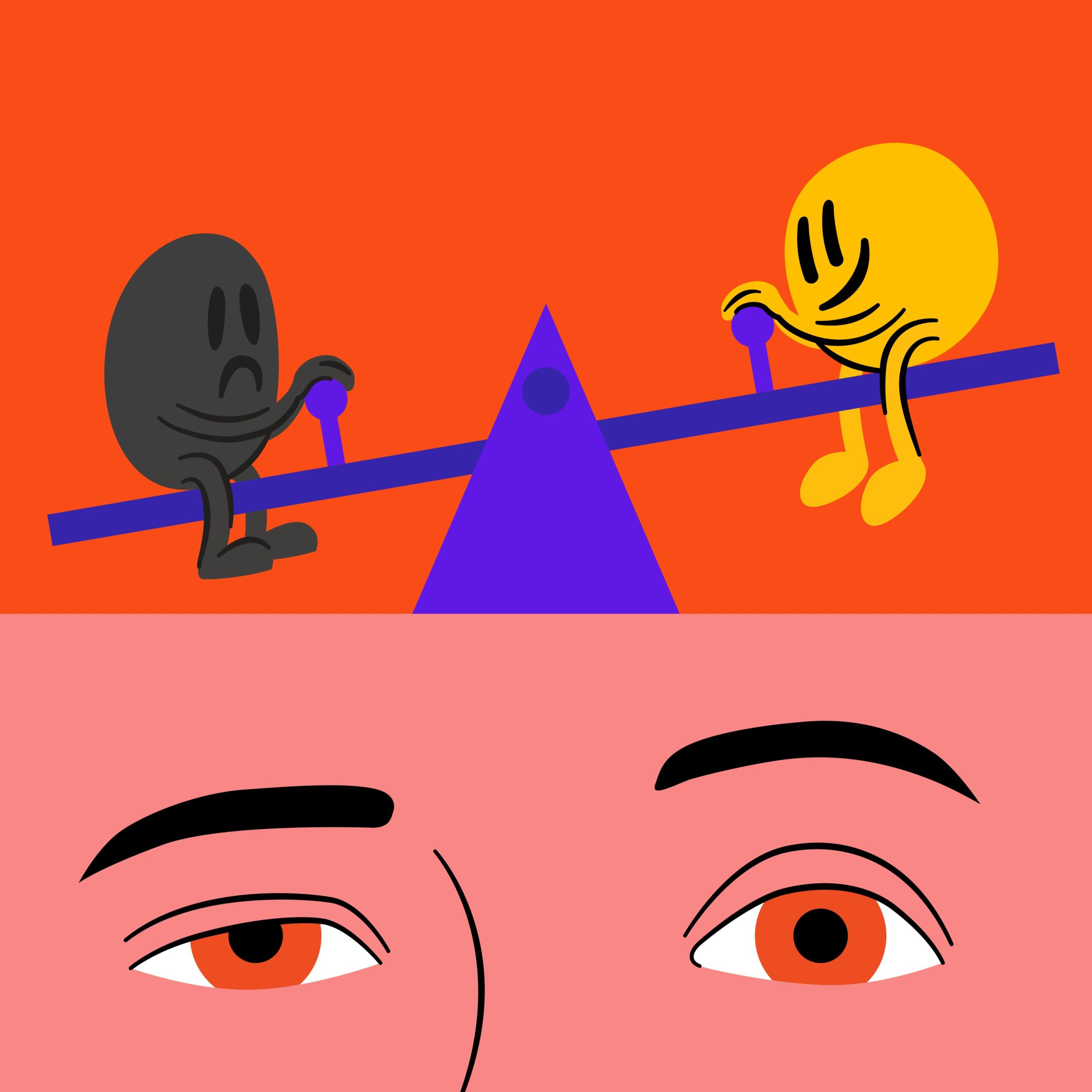
所以几乎就像跷跷板一样?
So almost like a seesaw?
正是如此。
Exactly.
就像儿童游乐场里的跷跷板一样。
Like a seesaw or a teeter totter in a kid's playground.
当那个跷跷板或中央支点上的横梁与地面平行时,它处于静止状态,也就是神经科学家所称的稳态。
And when that teeter totter or that beam on a central fulcrum is level with the ground, it's at rest, or what neuroscientists call homeostasis.
当我们体验快乐时,它会向一侧倾斜;当我们体验痛苦时,它会向相反方向倾斜。
When we experience pleasure, it tips one way and when we experience pain, it tips in the opposite direction.
这个平衡遵循某些规则,其中第一条也是最重要的规则是:平衡系统倾向于保持水平状态。
There are certain rules governing this balance and the first and most important rule is that the balance wants to remain level.
也就是处于稳态。
That is at homeostasis.
我们的大脑会非常努力地在任何偏离中立状态后恢复水平平衡。
And our brains will work very hard to restore a level balance after any deviation from neutrality.
所以当我们追求令人愉悦的事物时,比如当我咬一口美味的甜点时,想象中我实际上是在按压跷跷板的快乐那一侧。
So when we reach for things that are pleasurable, when I bite into a delicious dessert, for example, I'm imagining that I'm essentially pressing down on the pleasure side of that seesaw.
没错。
That's right.
因此,当我们做愉悦的事情时,奖励通路会释放多巴胺,天平会向愉悦一侧倾斜。但紧接着,大脑就会竭力恢复平衡,首先会向痛苦一侧倾斜同等幅度,然后才回到水平位置。
So when we do something that's pleasurable and we release dopamine in the reward pathway and the balance tilts to the side of pleasure, no sooner has that happened than our brains will work very hard to restore a level balance and they do that first by tilting an equal and opposite amount to the side of pain before going back to the level position.
我喜欢把这想象成一群神经适应小精灵跳到天平的痛苦一侧——这就是快感消退、宿醉和后效。
And I like to imagine that as these little neuro adaptation gremlins hopping on the pain side of the balance and that's the come down, the hangover, the after effect.
这种情况甚至经常发生在我们仍体验着多巴胺冲击时,且往往超出意识觉察范围。
And it often happens even while we're still experiencing the dopamine hit and it often happens outside of conscious awareness.
那么,如果我这样想象:压跷跷板的一边时,这些小精灵就跳到另一边——为什么它们要往痛苦侧施压呢?
So if I have this image here about pressing down on one side of the seesaw and these and these gremlins are jumping on the other side, Why is it they wanna press down on the side of pain?
为什么不直接尝试达到平衡状态呢?
Why not just try and get to, you know, equilibrium?
为什么要施加这么大压力导致它完全倾向另一侧?
Why why press down so much that it tips over in the other direction?
这是个很好的问题。
That's a great question.
我虽不完全明白为何机制如此设计——为何每次愉悦都要付出代价——但我推测这与该机制使我们成为终极追求者有关:永不满足已有,永远渴望更多。
And I don't exactly know why the mechanism is built like that, why we pay a price for every pleasure, but I suspect it has to do with the fact that that kind of mechanism makes us the ultimate seekers, never satisfied with what we have, always looking for more.
仔细想想,我们经过数百万年的进化,已经形成了趋乐避苦的本能。
When if you think about it, we are evolved over millions of years of evolution to approach pleasure and avoid pain.
在此基础上,还存在这种快乐与痛苦的平衡机制——一旦获得我们追求的任何奖励、体验到愉悦时,我们会立即记住其来源和方式,并渴望重现它。
And then on top of that, you have this pleasure pain balance whereby as soon as we get whatever reward we're looking for, we experience pleasure, we immediately remember where and how that happened and we want to recreate it.
这种重现行为会因多巴胺冲击后的急速消退而加速。
And that recreation is accelerated by the fact that as soon as we get that hit of dopamine, we essentially go into dopamine free fall.
这就是天平痛苦侧那些小妖精的作用。
That's those gremlins on the pain side of the balance.
此时我们处于多巴胺匮乏状态,会产生强烈的动机去付出努力获取下一个奖励——在人类历史的大部分时期,这意味着每天步行数十公里,付出巨大劳动才能获得微薄回报。
And now we're in a dopamine deficit state and we feel this overwhelming motivation to do the work it takes to get the next reward, which for most of human existence has meant walking tens of kilometers every day, has involved doing enormous work in order to get just a little bit of reward.
因此多巴胺本身无所谓好坏,它对生存至关重要,驱使我们不断行动并追寻下一个目标。
So it's not that dopamine is good or bad, it's that dopamine is essential for survival and it keeps us moving and always looking for the next thing.
所以多巴胺不仅参与愉悦感受。
So dopamine is not involved only in feeling pleasure.
或许更重要的是,它还关乎动机——这正是你刚才讨论的核心。
Perhaps more importantly, it's also involved in motivation, which is of course what you're talking about just now.
你能解释一下多巴胺作为快乐信使,同时也作为动机构建者之间的这种联系吗?
Can you explain that connection between dopamine as a messenger of pleasure, but also dopamine as the architect for motivation?
是的。
Yeah.
有一个非常著名的实验,科学家们培育了大脑奖赏通路中没有多巴胺受体的小鼠。
So there's a very famous experiment in in which rats were bioengineered to not have dopamine receptors in the reward pathway of the brain.
科学家们发现,如果把食物放进小鼠嘴里,它们会吃掉食物并显得很享受。
And what the scientists discovered was that if they put food into the rat's mouth, the rat would eat the food and seem to get pleasure from the food.
但如果把食物放在哪怕只有一个身长的距离外,这些小鼠就会活活饿死。
But if they put the food even, you know, a single body length, the way the rat would starve to death.
换句话说,我们不仅需要多巴胺来体验快乐,还需要它提供动力去获取奖励。
In other words, we need dopamine, not just for the experience of pleasure, but also for the motivation to do the work to go get the reward.
多巴胺可能正是通过制造这种多巴胺亏缺状态,或者说平衡中痛苦一侧的那些小恶魔,来激发我们的动力。
And probably the way that dopamine makes us motivated is to create this dopamine deficit state or those gremlins on the pain side of the balance.
那么当我们把经过数百万年进化的大脑,突然放到这个只需按个按钮就能获得一切的现代环境中,会发生什么呢?
So what happens when we transport this brain that evolved, you know, over millions of years into the modern environment where everything is now available at the touch of a button?
这套让我们在快感过后立即体验痛苦的古老神经回路,与现代生态系统严重不匹配。
This ancient wiring that has us experiencing pain in the immediate aftermath of pleasure is woefully mismatched for our modern ecosystem.
为什么?
Why?
因为我们被快感包围着。
Because we are surrounded by pleasure.
我们比人类历史上任何时候都更容易接触到更多成瘾性药物和行为。
We have more access to more reinforcing drugs and behaviors than at any point in human history.
甚至那些原本被认为是健康的活动,比如阅读、锻炼或玩游戏,现在也被药物化了,在某种程度上变成了毒品。
Even things that previously you know you could have thought of as healthy like reading or exercise or playing games has become drugified, has been turned into a drug in some way.
这使我们所有人都更容易上瘾,也更容易陷入多巴胺缺乏状态——大脑会通过下调自身多巴胺的生成和传递来补偿过量的快感,不仅降到基线以下,还会造成这种持续性的生理渴求,随之而来的就是焦虑、易怒和抑郁等伴随症状。
Making us all more vulnerable to the problem of addiction and also making us more vulnerable to the problem of this dopamine deficit state whereby our brains try to compensate for this excess of pleasure by down regulating our own dopamine production and transmission, not just a baseline, but below baseline, creating this constant physiologic craving for more pleasure, but also the things that go along with craving, which are anxiety, irritability, and depression.
所以你说,我们大脑中驱使我们追求快感、逃避痛苦的机制,是在物资匮乏的世界中经过数百万年进化形成的。
So the mechanisms in our brain that compel us to, you know, approach pleasure and avoid pain, you say were evolved over millions of years for a world of scarcity.
而如今,由于被如此多刺激物包围,就像你说的,我们简直像是在用消防水带狂饮多巴胺。
Whereas today, because we're surrounded by so much stuff, we're sort of drinking from a fire hose of dopamine, as you put it.
是的。
Yeah.
这就是所谓的丰饶悖论。
This is it's it's the plenty paradox.
对吧?
Right?
这实际上是过度富足带来的生理压力。
It's the literal physiologic stress of overabundance.
那么请用我们之前讨论过的跷跷板类比来解释一下。
So walk me through the same seesaw analogy that we talked about earlier.
要知道,在十万年前,如果我发现了一棵枣树,树上有美味的枣子。
You know, again, a 100,000 years ago, you know, I found a a date tree, and the date tree had delicious dates.
吃这些枣子让我的大脑非常愉悦,但那棵树上并没有多少枣子。
And it made my my brain very happy to eat some of those dates, but there were not very many dates on that one tree.
我必须寻找下一棵树,而下一棵树可能——就像你说的——在三英里之外,需要付出巨大努力才能到达。
I had to find the next tree, and the next tree might have been, as you say, three miles away, and so it required a huge amount of effort to get to that next date tree.
在我们生活的这个世界里,事物只需轻触按钮就能获得,这种情况下那个跷跷板发生了什么变化?
What's happening with that seesaw now in the world in which we live where things are in fact available at the touch of a button?
是的。
Yeah.
让我们先回顾一下,当你寻找枣树时,跷跷板发生了什么变化。
Well, let's go back for a second and talk about what's happening with the seesaw when you're looking for the date tree.
因为当你在环境中搜寻,试图找到一棵结着几颗枣子的枣树时,你的快乐痛苦平衡会偏向痛苦一侧,对吧?
Because what happens as you're scouring your environment to try to find, you know, one date tree with a couple of dates on it, is that your pleasure pain balance goes onto the pain side, right?
因为你又饿又累,还在不停行走。
Because you're hungry and you're walking and you're tired.
最终你找到了这棵枣树,欣喜若狂地吃下枣子,你的快乐痛苦平衡又回到了水平位置。
And then finally you find this date tree and you know, you're ecstatic and you eat this date and your your pleasure pain balance goes back to the level position.
这种感觉就像欣快症,因为这里的关键部分在于快乐痛苦平衡的指向性。
Which feels like euphoria because part of the key here is the directionality of the pleasure pain balance.
所以如果我因为饥饿而痛苦,然后找到食物吃下,这种向快乐方向的移动,其愉悦程度就像我从平衡状态开始,使用致幻剂达到兴奋状态一样。
So if I'm in pain because I'm hungry and then I find something to eat and it moves me in the direction of pleasure, that's as pleasurable as if I start out with a level balance and I use an intoxicant and I get high.
有意思。
Interesting.
那么现在同样的痛苦快乐平衡,会发生什么?
And so now the same pain pleasure balance now, what happens now?
是的。
Yeah.
所以在现代世界,比如说,就拿硅谷为例,因为它是典型代表,但现在全世界也都是如此。
So now in the modern world, let's say, yeah, take Silicon Valley because it's a prime example, but it's also true all over the world now.
你饿了然后去找吃的,对吧?
You go and you're hungry, right?
你正在寻找一棵枣树,突然发现亚马逊给你送来一整箱枣子,就放在厨房桌子上。
And you're looking for a date tree and all of a sudden, you've got like a whole crate of dates shipped to you from Amazon, right on your kitchen table.
顺便说一句,这些枣子大得离谱,异常巨大的那种,对吧?
By the way, they're giant, like they're like abnormally giant dates, Right?
所以你吃了颗亚马逊的大枣,这会释放多巴胺到你的奖励回路,因为商家还添加了糖、盐、脂肪和调味剂。
So you eat a giant date from Amazon and it releases dopamine in your reward pathway because they've also added sugar and salt and fat and flavorings.
就像是咖啡椰枣之类的,谁知道呢?
It's like coffee dates or something, who knows?
你获得了多巴胺的释放,哇,感觉太棒了,因为想想看,人类历史上谁曾吃过这样的椰枣?
And you get the release of dopamine and wow, that feels great because like, wow, who's ever had a date like that in the history of humans?
然后,当快感结束后,你的快乐痛苦天平就会倾向痛苦一侧,因为那些小恶魔正试图抵消所有的多巴胺。
And then, you know, as soon as it's over, your pleasure pain balance tips to the side of pain because those gremlins are trying to compensate for all that dopamine.
一旦你处于多巴胺不足状态,天平痛苦侧的小恶魔就会让你想要恢复平衡。
And as soon as you're in that dopamine deficit state with the gremlins on the pain side of the balance, you want to restore a level balance.
那最简单的方法是什么呢?
And what is the easiest way to do that?
你可以等待小恶魔自行离开。
Well, you could wait until the gremlins hop off.
因为只要等待足够长时间,它们就会离开,体内平衡就会恢复。
Because if you wait long enough, they will hop off and homeostasis will be restored.
或者你可以再吃一颗椰枣。
Or you could eat another date.
如果你再吃一颗椰枣,因为面前就有一整箱椰枣,这样见效会更快。
And if you eat another date, because there's a whole crate of dates right in front of you, that would work faster.
对吧?
Right?
也许这次你会吃两颗,这样既能平衡状态,又能让你偏向快乐的一边。
And maybe you'll eat two this time because then that'll level your balance, but also get you over to the pleasure side.
很快你就会吃掉整箱椰枣了。
And pretty soon you've eaten the whole crate of dates.
现在你基本上是在与那些神经适应小怪物作战。
And now you're essentially at war with those neuro adaptation gremlins.
我们越是试图压下跷跷板的快乐一端,小怪物们就越是在另一端施压以求达到平衡状态,你提出的观点是随着时间的推移,小怪物们开始向跷跷板另一端施压,最终我们就会陷入抑郁和焦虑。
And the more we then try and press down on the pleasure side of the seesaw, and the more the gremlins try and press down on the other side to achieve homeostasis, you make the case that over time, the gremlins start to push down on the opposite side of the seesaw, and then we end up depressed and anxious.
安娜,解释一下这是怎么发生的。
Explain how this happens, Ana.
-当我们持续用高度强化的物质和行为轰炸奖励通路时,就会在平衡的痛苦端积累越来越多的小怪物。
-Well, what happens as we continually bombard our reward pathway with highly reinforcing substances and behaviors is that we accumulate more and more gremlins on the pain side of the balance.
它们只是在履行职责,试图恢复内稳态平衡。
They're just doing their job, you know, trying to restore homeostasis.
久而久之,那些小恶魔基本上就在痛苦一侧安营扎寨了,还带着帐篷和烧烤架。
And over time, you know, those gremlins essentially are camped out on the pain side of the balance, tents and barbecues in tow.
这时我们就进入了成瘾大脑状态。
And now we're in addicted brain.
我们已经改变了享乐或快乐的设定点,以至于现在需要更多剂量的毒品,以及更高效的毒品形式,不是为了获得快感,而仅仅是为了平衡状态、感受正常。
We've changed our hedonic or joy set point such that now we need more of our drug, quantity wise, and more potent forms of our drug not to get high, but just to level the balance and feel normal.
最重要的是,当我们不使用时,我们带着偏向痛苦一侧的快乐痛苦平衡四处走动,这意味着我们正在经历任何成瘾物质戒断的普遍症状:焦虑、易怒、失眠、抑郁和渴望。
And most importantly, when we're not using, we're walking around with a pleasure pain balance tilted to the side of pain, which means we are experiencing the universal symptoms of withdrawal from any addictive substance, which are anxiety, irritability, insomnia, depression, and craving.
作为成瘾精神病学家,你治疗过许多药物依赖患者。
I mean, you're an addiction psychiatrist and you treat many patients who are dependent on drugs.
这里说的药物是传统意义上的化学物质,通过吞服、吸食、鼻吸或摄入等方式使用。
So drugs in the conventional sense of a chemical that is swallowed or smoked or snorted or ingested.
显然这是个非常严重的问题。
Obviously that is a very big problem.
但你要知道,你在这里提出了一个更为激进的观点。
But you know, you're making a much more radical claim here.
你是说我们对成瘾的问题不仅限于尼古丁、可卡因和海洛因。
You're saying that our problem with addiction is not just limited to nicotine and cocaine and heroin.
你说得完全正确。
You're absolutely right.
我的意思是,科学、技术和创新让我们几乎能把所有人类行为都变得像毒品一样令人上瘾。
What I am saying is that science, technology and innovation has allowed us to drugify almost every human behavior.
如果你还没上瘾,那么你附近的网站很快就会让你上瘾。
If you're not addicted yet, it's coming soon to a website near you.
而我更激进的观点是,抑郁、焦虑和自杀率的上升——顺便说一句,这些在世界上最富裕的国家上升最快——部分原因在于我们用过多的多巴胺过度刺激了大脑的奖赏通路。
And my bigger claim is that the rising rates of depression, anxiety and suicide, which by the way are rising fastest in the richest nations in the world, are due in part to the fact that we are overloading our brain's reward pathway with too much dopamine.
并且在我们大脑试图补偿过多快感的过程中,我们实际上是在个体层面上下调了自己的多巴胺产生和传递,不仅降到基线水平,甚至低于基线水平。
And that in our brain's effort to compensate for too much pleasure, we are essentially individually and down regulating our own dopamine production and transmission, not just to baseline levels, but actually below baseline levels.
所以我们处于多巴胺缺乏状态。
So we are in a dopamine deficit state.
这意味着我们都变得更不快乐、更焦虑、更抑郁、更易怒,更难从过去带给我们快乐或世代给予人们快乐的事物中获得愉悦,同时也对痛苦更加敏感,对吧?
Which means that we're all unhappier, more anxious, more depressed, more irritable, less able to take joy in the things that used to give us joy or that have given people joy for generations, and also more susceptible to pain, right?
现在哪怕是最轻微的冒犯也会让我们感到痛苦,这并不是因为我们被宠坏了或价值观改变了。
Even the merest slight now can make us pain and that we're not this isn't happening because somehow we're spoiled or our values have changed.
这是因为我们通过持续用这些高回报物质和行为轰炸大脑,实际上已经生理性地改变了大脑结构。
It's because we've literally physiologically changed our brains as a result of constantly bombarding them with these high reward substances and behaviors.
所以在某些方面,这确实让我感到震撼,安娜,因为我明白尼古丁、酒精、大麻、海洛因和可卡因这些物质为何会让人上瘾。
So in some ways, feels really mind bending to me, Ana, because I can see how nicotine and alcohol and marijuana or heroin or cocaine I can see how these could be addictive.
但你提到的许多事物——食物、社交联系或性亲密——这些本身并不是问题。
But many of the things you're talking about, food or social connection or sexual intimacy, these are not things that are inherently problems.
事实上,其中许多正是人之为人的重要组成部分。
In fact, many of them are part of what it means to be human.
请谈谈现代社会是如何把这些原本正常健康的事物,用你的话说,给‘毒品化’的?
Talk about how our modern societies have taken these normal healthy things and in effect, as you would put it, drugify them?
现代社会将性行为、进食、游戏这些曾经正常健康的事物毒品化的方式,主要是通过增加四个要素:数量、可获得性、效力和新奇度。
So the way that our modern society has drugified these things that used to be normal and healthy like having sex or eating food or playing games is essentially by increasing four factors, quantity, access, potency and novelty.
因为我们卓越的制造系统使我们能够大量生产这些强化物质,而我们惊人的供应链可以将它们运送到世界各地。
Because our incredible manufacturing system has allowed us to make these reinforcing substances in enormous quantities and our amazing supply chain allows us to ship them all over the world.
我最喜欢的一个轶事是,在1880年代,卷烟机被发明出来,使香烟制造商从每分钟生产4支烟提升到每分钟生产20000支烟。
One of my favorite sort of anecdotes is that in the 1880s, the cigarette rolling machine was invented, allowing manufacturers of cigarettes to go from manufacturing four cigarettes a minute to 20,000 cigarettes a minute.
哇。
Wow.
而这只是我们众多改变中的一个例子。
And that's just one example of what we've done all around.
而且,你知道,我自己也沉迷于阅读言情小说,当我开始寻找其他言情小说时,我发现那里有一个完整的言情小说宇宙。
And my, you know, my own romance novel reading addiction that developed, and one of the things that I discovered when I went looking for other romance novels is that there's a whole universe of romance novels out there.
没有尽头,数量真的是无穷无尽的。
There was no, it was really a never ending quantity.
因为数量确实很重要,我们越是使用我们选择的'毒品'——无论是物质还是行为——我们的大脑接触得越多,我们就越有可能改变我们的大脑,形成这种成瘾性的回路。
And quantity really matters because the more we use our drug of choice, our substance or behavior that's reinforcing, the more of it we expose our brains to and the more often the more likely we are to change our brains to this addicted kind of circuitry.
所以数量是第一个驱动因素。
So quantity is the first driver.
其他因素有哪些?
What are the others?
是的。
Yeah.
数量是首要因素。
So quantity is the first one.
可获得性或便利性也极为关键。
Availability or access is huge.
如果你在一个毒品随处可见的社区长大,大量流行病学数据显示,你更可能尝试毒品并对其上瘾。
So if you if you grow up in a neighborhood where drugs are sold on the street corner, we have lots of epidemiologic data showing that you're more likely to try drugs and more likely to get addicted to them.
如今我们生活在一个能轻易获得各种成瘾物质或行为的世界,无论是吸血鬼爱情小说还是薯片游戏色情片,亦或传统毒品如酒精大麻和尼古丁。
And now we live in a world where we all have more access to our substance or behavior of choice, whether it's vampire romance novels or potato chips or games or pornography or old fashioned drugs like alcohol, cannabis, and nicotine.
当然,智能手机本质上就像为数字一代24小时不间断输送多巴胺的皮下注射器。
And of course, the smartphone is essentially the equivalent of the hypodermic syringe delivering digital dopamine 20 fourseven for our wired generation.
事实正是如此。
And that's really what it is.
智能手机彻底改变了现状。
The smartphone totally changed things.
当人们可以随身携带这个能24小时获取数字媒体和数字内容的设备时,我们本质上都对这些数字毒品更加上瘾了。
When people could carry in their pocket this device that gave them access to digital media and digital content 20, we all essentially became more addicted to these kinds of digital drugs.
好的,我们已经讨论了数量和可获取性。
Alright, so we've talked about quantity and we've talked about accessibility.
接下来是什么?
What's next?
是的,可获得性,可访问性。
Yeah, availability, accessibility.
另一个因素是效力。
And the other one is, potency.
要克服天平痛苦侧这些障碍(通常被称为耐受性),方法之一就是要么使用更多药物,要么使用更强效的形式,要么采用更强效的给药机制。
So one of the ways to overcome these gremlins on the pain side of the balance or what's often referred to as tolerance is to either use more of the drug or use more potent forms or have a more potent drug delivery mechanism.
例如,对于阿片类药物,有人可能一开始使用鸦片,但最终会转向效力强约10倍的海洛因。
So for example, with opioids, someone might start out using opium, but eventually go to heroin, which is about 10 times more potent.
最终升级到芬太尼,其效力是海洛因的50到100倍。
And then eventually progressed to fentanyl, which is 50 to a 100 times more potent.
这至少能让他们暂时战胜那些痛苦小恶魔,获得他们渴望的感觉。
And this would allow them to at least temporarily win that battle with their gremlins and get the feeling that they're looking for.
但另一种增强效力的方法是将两种药物混合制成第三种更新颖的药物。
But another way to achieve potency is to combine two drugs to make it a third more novel drug.
这种做法一直存在。
And this is done all the time.
例如人们将阿片类药物与苯二氮卓类药物混合,或是现在这种令人痛心的新型兽用镇静剂'僵尸药'。
For example, people combining opioids with things like benzodiazepines or now this new veterinary sedative tranq, which people are sadly using.
通过将两种不同药物混合,我们得到了一种新型药物,它能改变大脑受体反应,帮助我们克服耐药性。
By combining two distinct drugs together, we get a new novel drug which then changes it up for our brain receptors and allows us to overcome tolerance.
而在非违禁物质领域,你也会看到类似法式吐司冰淇淋这样的组合。
And and in the realm of non illegal substances, you can also have combinations like French toast ice cream.
正是如此。
Exactly.
或者,你知道,我很容易沉迷于YouTube视频,尤其是《美国偶像》的幕后花絮。
Or, you know, I very easily get hooked on YouTube videos, especially outtakes of American Idol.
当我思考为什么《美国偶像》对我如此有吸引力时,嗯,他们早就研究透了,对吧?
And when I think about why on earth is American Idol so entrancing for me, well, they've figured it out, right?
他们利用了音乐——这对大多数人的大脑来说本就是种奖励,能释放多巴胺,让人感觉愉悦。
They've taken music, which is already reinforcing for most people's brains, releases dopamine, feels good.
然后他们又将音乐与游戏结合,把它变成竞赛,从而创造出一种效力极强的‘毒品’。
And then they've combined that with gaming, and they've turned it into a competition, and thereby, you know, really made a very potent drug.
你能谈谈‘新奇性’这个因素吗?
Can you talk a moment about the factor that's known as novelty?
这在成瘾性药物中确实存在,但对于许多我们以前可能不认为有问题的东西也是如此。
This is true in in drugs of abuse, but it's also true for many of the other things that, you know, previously we might not have thought as being problematic.
是的。
Yeah.
多巴胺对新奇事物极其敏感,这就是为什么人们会对新闻这类东西上瘾。
So dopamine is extremely sensitive to novelty, which is why, for example, people can get addicted to things like the news.
这就是新闻的定义。
That's the definition of news.
它是不断向你涌来的新事物。
It's new stuff coming your way.
但现代世界变得如此有害的是,为了留住顾客并让他们不断回头,你必须把他们之前喜欢的东西重新包装成稍微新颖、不同或更好的样子。
But what's become so so toxic about the modern world is that, you know, in order to maintain customers and keep them coming back, you've got to take the thing that they like before and then package it as slightly new or different or better.
而互联网已经完全掌握了这一点。
And the Internet has absolutely mastered that.
对吧?
Right?
这些人工智能算法研究我们,了解我们之前花时间在什么地方、喜欢什么,然后提供或建议一些相似但略有不同的事物。
These AI algorithms learn us, figure out where we've spent time before, what we've liked before, and then proffer or suggest to us things that are similar but a little bit different.
这完全激发了这种寻宝机制——我们不断追寻,因为希望下一次的收获会比之前的好那么一点点,但又与之前的相似。
And that absolutely engages this treasure seeking function where we we keep going because we're hoping that the next hit will be something that's just a little bit better but similar to what we had before.
你知道吗,我记得我上八年级或者七年级的时候,安娜,老师们会告诫我和所有同学避开当地的一个公园,因为传言说那里有人在买卖和使用毒品。
You know, I remember when I was in eighth grade or maybe seventh grade, Anna, teachers would tell me, you know, to avoid a local park, me and all of my classmates, because the rumor was that drugs were being bought and sold and used at this park.
但是,你看,如果一切都能被‘毒品化’,如果成瘾行为可以通过各种方式传输到我们的客厅和卧室,那么现在真的很难再划出界限说‘别去那个公园’,因为问题已经不仅仅局限于某个公园了。
But, you know, if everything can be drugified, if if addictions can be beamed and streamed and, you know, WiFied into our living rooms and bedrooms, it becomes really now very hard to put a fence around it and say, avoid going to this park because the problem is no longer just with one park.
这正是我们作为个人、父母和学校都面临的问题。
That's the problem we're all facing as individuals, as parents, as schools.
我是说,我不知道你怎么想,但当我四处走动看到人们都粘在手机上时,真的让我很伤心。
I mean, I don't know about you, but but when I walk around and see the way that people are just glued to their phones, it just makes me really sad.
然而我完全理解这种现象。
And yet I totally get it.
这些东西简直让人着迷。
I mean, these things are they're literally mesmerizing.
这些设备让我们陷入恍惚状态。
We are put in a trance by these devices.
它们对我们脆弱的小小人类大脑有着极强的强化作用。
They're highly reinforcing for our very fragile little human brains.
当我们把大脑中古老的快乐痛苦平衡机制与现代世界频繁强烈刺激快乐端的行为结合起来时,麻烦就来了。
When we combine the ancient pleasure pain seesaw in the brain with a modern world that is ready to push hard and often on the pleasure side of balance, we get trouble.
我们最终会陷入强迫性过度消费,以及由此给人们的健康、幸福和人际关系带来的所有相关问题。
We end up with compulsive overconsumption and all the associated problems it causes for people's health, well-being and relationships.
我们还面临着抑郁和焦虑的泛滥。
We also end up with a plague of depression and anxiety.
在故事的第二部分,即将在下一集中呈现,我们将探讨如何重置我们与丰裕世界的关系,将不幸转化为繁荣。
In the second part of the story, coming up in the next episode, how to reset our relationship with a world of plenty and turn unhappiness into thriving.
安娜·莱姆克,非常感谢你今天做客《隐藏的大脑》。
Anna Lemke, thank you so much for joining me today on Hidden Brain.
哦,非常荣幸。
Oh, you're very welcome.
《隐藏的大脑》由Hidden Brain Media制作。
Hidden Brain is produced by Hidden Brain Media.
我们的音频制作团队包括安妮·墨菲·保罗、克里斯汀·王、劳拉·科雷尔、瑞安·卡茨、奥特姆·巴恩斯、安德鲁·查德威克和尼克·伍德伯里。
Our audio production team includes Annie Murphy Paul, Kristen Wong, Laura Correll, Ryan Katz, Autumn Barnes, Andrew Chadwick, and Nick Woodbury.
塔拉·博伊尔是我们的执行制片人。
Tara Boyle is our executive producer.
我是Hidden Brain的执行编辑。
I'm Hidden Brain's executive editor.
在结束之前,我们要感谢Atlassian旗下的Loom赞助Hidden Brain 2025年认知之旅。
Before we go today, we want to say thank you to Loom by Atlassian for sponsoring the Hidden Brain twenty twenty five Perceptions Tour.
有了Loom,团队能更快推进工作,用快速清晰的视频消息取代冗长的会议和缓慢的审批流程。
With Loom, teams move work forward faster, replacing endless meetings and slow approvals with quick, clear video messages.
今天,我们将听取博士的见解。
Today, we'll hear from Doctor.
Molly Sands,Atlassian团队协作实验室负责人,关于Loom如何改变团队工作方式的分享。
Molly Sands, head of the Teamwork Lab at Atlassian, about how Loom is transforming the way teams work.
我是博士。
I am Doctor.
Molly Sands,我负责领导Atlassian的团队协作实验室,这是我们关于未来工作的研究与创新部门。
Molly Sands, and I lead the Teamwork Lab at Atlassian, which is our future of work research and innovation group.
如果我能挥动魔法棒改变团队协作的一点,那就是阻止团队把所有事情都放到会议中解决。
If I could wave the magic wand and change something about teamwork, I would stop teams from using meetings for every single thing.
我希望团队能拥抱异步沟通方式,这样分享更新或反馈时就不需要所有人同时停下手中的工作。
I wish teams would embrace asynchronous communication, so sharing updates or feedback in ways that don't require everyone to drop what they're doing at the same time.
Loom是一个视频消息平台,让你能快速录制并分享更新、操作演示或反馈,无需再安排会议。
Loom is a video messaging platform that lets you quickly record and share updates, walkthroughs, or feedback without scheduling another meeting.
Loom的神奇之处在于它感觉非常个性化,就像有人轻拍你的肩膀,但实际上它是异步的。
The magic of Loom is that it feels really personal, like someone tapping you on the shoulder, but it's actually asynchronous.
Loom让团队能非常轻松地在更短时间内分享并获取所需信息。
Loom makes it very easy for teams to share and get the information they need in less time.
团队越多使用Loom进行沟通和记录对话,他们由AI驱动的知识库就会变得越智能。
And the more that teams use Loom to communicate and to capture conversations, the smarter their AI enabled knowledge bases gets.
它让人们能根据自身精力和优先级来规划日程,而不是被会议安排所束缚。
It lets people design their day around their energy and around their priorities instead of being trapped by their meeting schedule.
Loom是AI驱动的视频通讯工具,推动团队向前发展。
Loom is AI powered video communication that moves teams forward.
无论是分享反馈、获取批准还是设定背景,Loom都能让团队轻松共享并协作完成工作。
Whether you're sharing feedback, obtaining approvals, or setting context, Loom makes it easy for teams to share and collaborate on work.
节省时间,专注于重要事项,无需再开会议。
Save time and stay focused on what matters without another meeting.
立即体验Loom,访问loom.com。
Try Loom today at loom.com.
网址是loom.com。
That's loom.com.
我是Shankar Vedantam。
I'm Shankar Vedantam.
下次见。
See you soon.
关于 Bayt 播客
Bayt 提供中文+原文双语音频和字幕,帮助你打破语言障碍,轻松听懂全球优质播客。