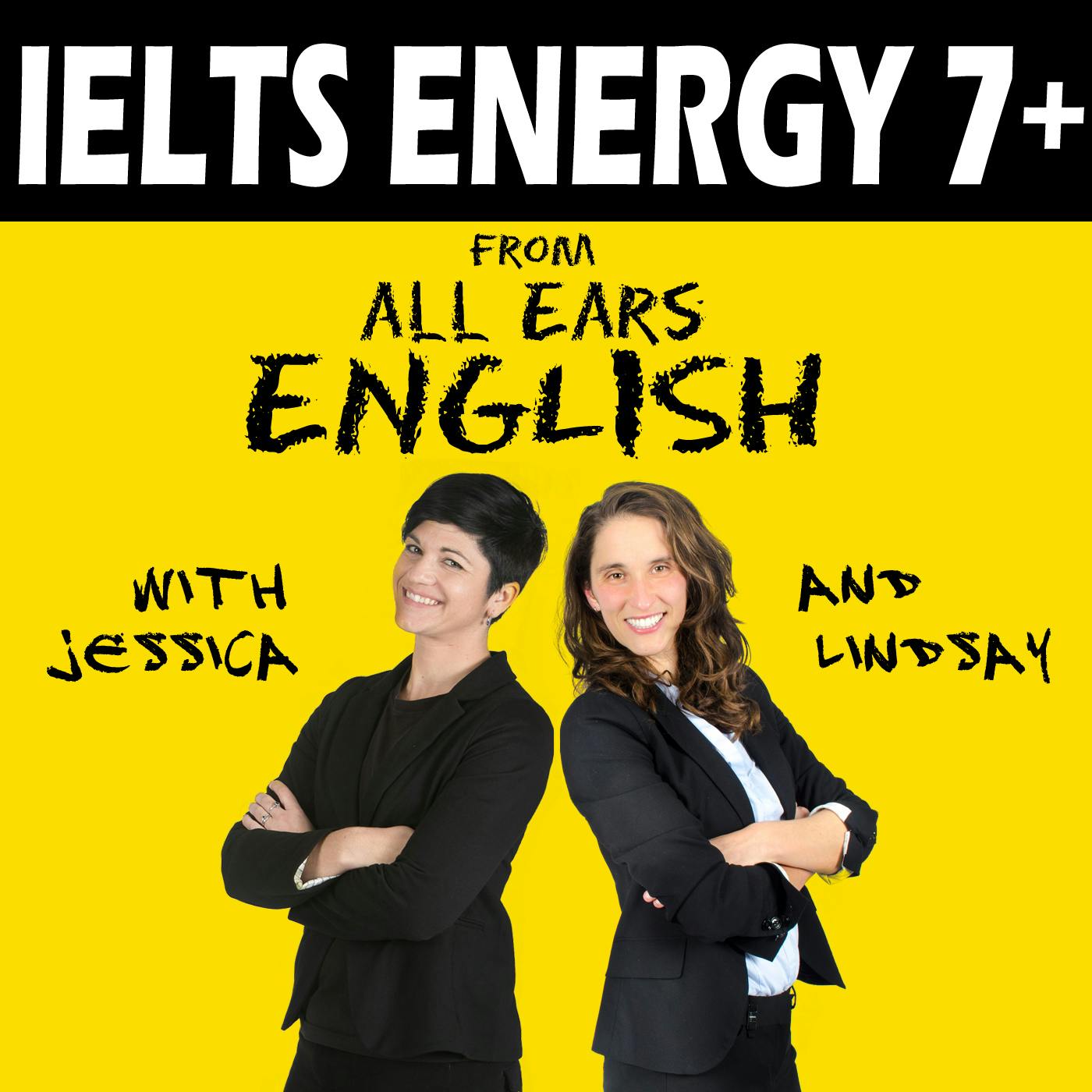
本集简介
双语字幕
仅展示文本字幕,不包含中文音频;想边听边看,请使用 Bayt 播客 App。
这是雅思能量播客第五期。
This is an IELTS energy podcast episode five.
如何规避雅思口语第一部分的陷阱。
How to avoid the dangers of speaking part one on the IELTS.
您正在收听的是All Ears English出品的雅思能量播客。
You are listening to the IELTS energy podcast from All Ears English.
我们坚信沟通重于完美,我们将为您展示如何在下次雅思考试中斩获所需的7分。
We believe in connection, not perfection, and we are here to show you how to get the seven that you need on your next IELTS exam.
订阅我们的节目,与卓越考官Jessica Beck和英语冒险家Lindsey McMahon同行。
Cribe to our show and join Jessica Beck, the examiner of excellence, and Lindsey McMahon, the English adventurer.
节目信号来自美国俄勒冈州波特兰市和马萨诸塞州波士顿市。
Coming to you from Portland, Oregon, and Boston, Massachusetts, USA.
美国。
USA.
为何雅思口语第一部分如此危机四伏?
Why is speaking part one on the IELTS so dangerous?
今天,我们的优秀考官杰西卡·贝克将告诉你原因。
Well, today, Jessica Beck, our examiner of excellence, will tell you why.
你是否曾感觉英语几乎流利,但还差那么一点,这阻碍了你在工作中的表现?
Do you ever feel almost fluent in English, but not quite, and it's holding you back at work?
你明明知道那些单词,但需要时却说不出来。
You know the words, but they don't come when you need them.
无论是会议、演讲,还是日常闲聊。
Meetings, presentations, even small talk.
这种感觉令人沮丧。
It feels frustrating.
但你并不孤单,这正是我们推出免费流利度测试的原因。
But you're not alone, and that's why we created our free fluency quiz.
通过这个快速测试,你可以找出阻碍流利度的症结、了解自身水平并获得改进建议。
It's a quick way to find out what's blocking your fluency, what your level is, and what to do about it.
想象一下,你能用英语自信地主持会议、阐述观点,甚至在派对等社交场合自如交流。
Imagine leading meetings, presenting ideas, or even attending social events like parties and connecting confidently in English.
不再自我怀疑。
No second guessing yourself.
今天就参加免费流利度测试吧。
Take the free fluency quiz today.
访问 allearsenglish.com/fluencyscore。
Go to allearsenglish.com/fluencyscore.
再说一遍,请访问 allearsenglish.com/fluencyscore。
One more time, go to allearsenglish.com/fluencyscore.
嗨,琳赛。
Hi, Lindsay.
嘿,杰西卡。
Hey, Jessica.
你今天怎么样?
How are doing today?
挺好的。
Good.
我有一阵子没和你聊天了。
I haven't talked to you in a while.
你还好吗?
Are you well?
我很好。
I'm doing great.
我很好。
I'm doing great.
我很兴奋,因为我们今天要讨论这个让人紧张的话题——雅思考试中的口语部分。
And I'm excited because we're here to talk about this nail biting thing they call speaking on the IELTS exam.
不。
No.
是的。
Yeah.
这对学生们来说确实是个令人望而生畏的挑战。
This is something that's really intimidating to students.
我是说,有时候连我也会觉得紧张。
I mean, it's intimidating for me sometimes also.
对吧?
Right?
是啊。
Yeah.
我们知道的。
We know.
我是说,如果我们只讨论一般的语言学习,英语学习,我们知道这往往是让学生们容易紧张的关键点。
I mean, if we just talk about general language learning, English learning, we know this is kind of the hot button where students kind of tend to to get nervous.
而且我理解那种感受。
And and I understand how that feels.
对吧?
Right?
我是说,当然。
I mean Of course.
你们俩都在国外生活过。
You've both lived abroad.
比如,你在台湾生活过。
Like, you've lived in Taiwan.
对吧?
Right?
是啊。
Yeah.
还有欧洲的一些国家,当你试图向那些不耐烦盯着你的人表达时。
And some countries in Europe and just trying to get those words out to to someone who's just staring at you impatiently.
或者至少你觉得他们不耐烦。
Or at least you think they're impatient.
这很艰难。
It's tough.
没错。
Right.
是啊。
Yeah.
是啊。
Yeah.
注意到我们总是倾向于把别人想得比实际情况更糟糕。
Noticed that we always sort of imagine that the person is thinking something worse than they actually probably are.
哦,完全同意。
Oh, totally.
我相信大多数时候对方其实很有耐心,只是我们太紧张了没注意到。
I'm sure the other person is very patient most of the time, but we're just too nervous to notice.
是啊。
Yeah.
是啊。
Yeah.
所以我们总是把事情想得比实际情况糟糕得多。
So we we we we tend to think that it's a lot worse than it is.
但无论如何,雅思考试中确实有口语部分,所以我们今天特别想在这方面帮助听众。
But either way, there is speaking on the IELTS, so we wanna help our listeners with that here, especially today.
这么说你已经教授雅思十年了。
So what you've been teaching IELTS for ten years.
那真是很长一段时间了,杰西卡。
That's a really long time, Jessica.
太棒了。
That's awesome.
确实是很长的时间。
It is a really long time.
是啊。
Yeah.
我认为最重要的是要记住,考官并不想给你低分。
And I think the the most important thing to remember is that the examiner does not want to give you a bad grade.
你知道吗?
You know?
就像我们刚才讨论的。
Like what we just talked about.
有时候学生走进考场时,他们会想:'天哪,考官讨厌我'。
You sometimes they students go in and they they think, oh my gosh, the examiner hates me.
考官太刻薄了。
The examiner is so mean.
考官是恶魔。
The examiner's evil.
没错。
Exactly.
但你要知道,我们作为考官,是希望考生能发挥出最佳水平,考试设计也是如此。
But, you know, the we as examiners, they want you to to do your best, and the test is also designed that way.
所以从口语第一部分开始,难度会逐渐提升直到第三部分。
So it starts in speaking part one, and then it gets harder as you go along to speaking part three.
但今天我想先谈谈第一部分,以及考官在考察什么。
But today I wanted to start by talking about part one and what the examiner is looking for.
所以考官希望你能谈谈自己,这些问题都非常简单。
So the examiner wants you to talk about yourself and the answers are all very simple.
比如,你会开车吗?
So for example, do you, drive a car?
你认为每个人都应该学开车吗?
Do you think everyone should learn how to drive a car?
你喜欢长途汽车旅行吗?
Do you enjoy taking long car trips?
那么...只是为了明确,这个环节他们问的都是关于你个人的问题。
So So so just to clarify, in this section, they're asking you questions about yourself.
对吧?
Right?
是的。
Yeah.
作为考生?
As a test taker?
对。
Yeah.
好的。
Okay.
好的。
Okay.
你会被问到三个话题,都是关于你自己的。
So you're gonna be asked about three topics, and they're all about you.
那你在上学吗?
So do you go to school?
你有工作吗?
Do you have a job?
你喜欢你的公寓吗?
Do you like your apartment?
都是非常简单的问题。
Just really simple stuff.
这里的风险在于,有些学生会变得过于放松,开始用单字回答。
So the danger here is that some students get a little bit too relaxed, and they start using, like, one word answers.
你明白吗?
You know?
就是那种‘哦,对’的回答。
So Oh, Yeah.
我是说,这其实不公平,因为在现实生活中我们确实会这样回答。
Which, I mean, is unfair because in real life, that's what we would do.
对吧?
Right?
比如‘你是学生吗?’
Like, are you a student?
‘你喜欢学英语吗?’
Do you like studying English?
‘当然。’
Sure.
诸如此类的事情。
Stuff like that.
但你知道,遗憾的是,这不是真实生活。
But, you know, unfortunately, it's not real life.
这是一场考试。
It's a test.
所以没错。
So Right.
对。
Right.
你必须记住这一点,并且必须始终使用完整的句子。
You have to remember that, and you have to use complete sentences all the time.
你还应该尝试用至少两句话来回答。
And you also should try and answer with at least two sentences.
所以我通常告诉学生尽量用两到四句话来回答。
So I usually tell students try to answer in two to four sentences.
那么你会在另一句话里加些什么内容呢?
So what would you put in that other sentence?
比如说,如果我向你提问,
For example, if I said if I asked you,
你知道的,对。
you know, do you yeah.
你开车吗,杰西卡?
Do you drive, Jessica?
对。
Yeah.
是的。
Yeah.
什么好吧。
What okay.
是的。
Yes.
我会开车。
I do.
但除此之外你会怎么说呢?
But what would you say beyond that?
嗯。
Yeah.
问得好。
Good question.
所以我经常和学生们做头脑风暴练习来训练这个。
So I do a lot of brainstorming activities with my students to practice this.
想想那些疑问词:谁、什么、哪里、何时、为什么、如何。
So think of the question words, who, what, where, when, why, how.
这些都是你可以提供的细节。
And those are the details you can give.
所以我的回答可以是:是的,我会开车。
So my answer could be, yeah, I drive.
其实我三个月前刚买了辆新车,但我只是上下班开开。
I actually just got a new car three months ago, but I only drive it to work and back.
好的。
Okay.
我喜欢这样。
I like that.
我喜欢这样。
I like that.
就是谁、什么、何时、何地、为什么。
So who, what, when, where, why.
我喜欢这个。
I like that.
我记得几周前我们讨论托业考试时你提到过这个,这个框架非常实用,对吧?
I think you mentioned that when we were talking about TOEIC a few weeks ago, and that's such a useful framework to have, isn't it?
是的。
Yeah.
而且当你试图说话时感到紧张、不知该说什么时,那些疑问词就是帮你想到更多细节的方法。
And any when you're trying to talk and you're nervous and you can't think about what to say, those question words are are how you can think of more details.
避免在雅思口语考试中紧张和惊慌的唯一方法,就是确切知道考官想要什么才能拿到7分。
The only way to avoid getting nervous and panicking on the speaking section of the IELTS is to know exactly what the examiner wants for you to get a seven.
现在就了解考官想要什么,请前往allearsenglish.com/evaluation下载我们的免费小抄。
Find out what the examiner wants right now in our free downloadable cheat sheet by going to allearsenglish.com/evaluation.
网址是allearsenglish.com/evaluation。
That's allearsenglish.com/evaluation.
到时候见。
See you there.
你还能想到哪些方法来增加细节,让回答更丰富呢?
And how else could you think of more details to kind of, oh, add more I don't know.
让你的回答更独特或更突出。
Make your answer more unique or make it stand out more.
你还会考虑添加哪些内容呢?
What else would you think about adding?
哦,当然。
Oh, sure.
是的。
Yeah.
这实际上是个非常好的观点。
That's a really good point, actually.
我其实还想讨论词汇这部分内容。
That's something else that I wanted to talk about is the vocabulary part of things.
当然,你的词汇会被评分。
So, of course, you're graded on your vocabulary.
如果你想脱颖而出,想让考官注意到你是更高水平的学生,获得更高分,就应该尝试使用一些俚语和非正式词汇。
And if you want to stand out, if you want the examiner to, notice you as, a higher level student or a a better student, a higher scoring student, then you should really try and use some slang, some informal words.
考官想了解你的词汇广度。
The examiner wants to know that you have a range of vocabulary.
当谈论非正式话题时,比如描述你的公寓外观,你不会使用学术词汇,那样不合情理。
So if you're talking about an informal topic, like, what your apartment looks like, you're not gonna use academic words, you know, like, that doesn't make sense.
当然。
Sure.
当然不会。
Of course not.
是的。
Yeah.
你会用一些俚语、习语。
You're gonna you're gonna use some slang, some idioms.
比如,你可以说,这张沙发超级舒服。
So, for example, you could say, well, the the couch is is super comfy.
你知道,我经常用那个副词来形容形容词。
You know, I I use that that adverb a lot to describe adjectives.
我也是。
Me too.
超级舒服。
Super comfy.
我们都这样。
We all do.
我觉得这是代际差异之类的。
I think it's generational thing or something.
我们确实如此。
We really do.
确实是的。
I It is.
我随时都在用这个词。
Use it all the time.
所以这是个好词,各位。
So it's a good one, guys.
没错。
Yeah.
就像,如果我听到学生说完全一样的句子——'我的沙发超级舒服'。
So, yeah, like, if I heard a student say that exact sentence, oh, my couch is super comfy.
我会很佩服。
I I'd be impressed.
我会说,哇哦。
I'd be like, woah.
你肯定有美国朋友。
You must have American friends.
太棒了。
That's awesome.
所以
So in
那样的话,你会觉得这个人不只是局限于课本上的表达方式。
that case, you'd think this person is not you just limited to the textbook and the way they speak.
对吧?
Right?
他们已经超越了课本。
They've gone beyond the textbook.
没错。
Exactly.
这正是我们在课程中讨论的目标,通过这些课程让你达到七分或更高水平。
And that's that's what we're talking about in the course of the goal of these episodes is to get you to a seven or higher.
嗯,就是这样做到的。
Well, that's how you do it.
口语考试七分水平的描述是能够使用习语和更广泛词汇的人。
So the description of a seven for the speaking test is someone who can use idioms and a wider range of vocabulary.
所以考官在留意那些课本里学不到的东西。
So the examiner is listening for stuff that you don't get from textbooks.
哦,哇。
Oh, wow.
我觉得这里很适合偶尔穿插几个短语动词,这些可以归为非正式词汇。
I would think this is a good place to sneak in a phrasal verb here and there too, which would kinda go under informal vocab.
对吧?
Right?
但确实如此。
But Exactly.
是的。
Yeah.
对。
Yeah.
那我们的听众该如何...我也说不好。
And how can our listeners sort of I don't know.
有时候很难自然而然地插入随意的俚语、习语或词汇。
Sometimes it's hard to just spontaneously throw in a random slang or idiom or vocabulary term.
他们怎样才能做到这一点,把这些内容融入进去呢?
How can they get themselves to do that, to throw that in there?
是的。
Yeah.
完全正确。
Totally.
我会选择那些更常用、更适用的词汇,比如我们提到的用'super'来修饰形容词。
I would use the the more applicable common ones, like like what we mentioned, using super to describe adjectives.
你可以在几乎任何回答中使用这个词。
You can use that in, like, any answer.
真的,你只需要
You seriously, just
所以就用'super'这个词。
So just use super.
就一直用'super'这个词。
Just use super all the time.
不。
No.
我认为,如果你不能每天都和美国人交流,看些情景喜剧是个不错的主意。
It's I think I think it's a good idea to watch some sitcoms if if you don't hang out with Americans every day.
而且,我知道很多人做不到这一点,因为你周围没有美国人。
And, you know, I'm sure a lot of you can't because you're just they're not around you.
那就通过电视来听我们说话吧。
So listen to us on TV.
看一部情景喜剧,或许可以记下你注意到的一些有趣的东西。
Watch a sitcom and maybe write down something that you noticed, something, you know, that you think was interesting.
只需要准备一个简短的清单。
And just have a a short list, a small list.
我建议不超过10个你认为日常对话中能用到的词汇。
I would say no more than 10 words that you think you could use in normal speaking.
哦,我喜欢这个建议。
Oh, I like that.
我认为这是个好策略,因为内容太多容易让人无所适从。
I think that's a good strategy because it's easy to get overwhelmed.
如果我们列出一百个俚语清单,可能一个都用不上
And if we have a list of a 100 slang terms that we could use, we won't use any of
的。
them.
确实如此。
Exactly.
完全正确。
Exactly.
我知道我经常看到学生这样做,因为,哇,人们动力十足,他们会列出长达好几页的词汇表。
I know I've seen students do that so often because, wow, like, people are so motivated and they just create these vocabulary lists that go on for pages.
而且如果我随便指列表上的一个词,你很可能不知道它的意思,因为你不可能记住上千个新单词。
And and if I just point to one word on that list, like, you are not gonna know what it means because you can't remember a thousand new words.
是啊。
Yeah.
我觉得学生有时会对列清单有种特别的执念。
There's a certain addiction to lists, I think, for students sometimes.
但关于听力我想说一点,即使像我们说的你没法经常和美国人相处——比如我在纽约的一些学生,他们就在地铁上偷听别人聊天。
But one thing that I wanna say about listening, you know, even if you can't as we said, you can't necessarily hang out with American people, you know, I have some students in New York, and what they do is they just eavesdrop on people on in this on the subway.
天哪。
Oh my gosh.
完全同意。
Totally.
这主意太棒了。
That's such a good idea.
是啊。
Yeah.
你可以做到的。
You can do it.
我是说,我们本来就会这么做。
I mean, we all do it anyways.
对吧?
Right?
作为母语者,有时候我们
As native speakers, sometimes we
但你不该说出来。
But you're not supposed to say it.
我知道。
I know.
我们在这里揭露秘密,但有时比你的书更有趣。
We got revealing secrets here, but it's more interesting than your book sometimes.
所以,就在你所在城市的地铁上,或者公交车站等公共场所,坐下来观察和聆听。
So so just jump on the subway in your local in your city or, you know, the bus station or some public place and just sit and observe and listen.
当然。
For sure.
对吧?
Right?
是啊。
Yeah.
我是说,我最喜欢做的事情之一就是观察人群。
I mean, one of my favorite things to do is just people watch in general.
所以如果你有幸身处一个英语国家,那就花个二、三十分钟在公共场所待着。
So if you're if you're in an if you're, you know, fortunate enough to be in an English speaking country, then just take, like, twenty, thirty minutes and hang out in a public place.
是啊。
Yeah.
对。
Yeah.
没错。
Yeah.
即便你不在英语国家,比如住在东京的话,就去六本木。
Or even if you're not in an English speaking country, you know, if you live in Tokyo, go to Roppongi.
对吧?
Right?
我们都知道那是国际人士聚集的地方。
We know that's where all the international people hang out.
哦,台湾那边也有这样的地方。
Oh, There's there's gonna Taiwan.
具体是哪里?
What is it?
是啊。
Yeah.
现在任何城市都会有外籍人士的聚集地。
There's gonna be an expat an expat hangout in in any city these days.
比如说,如果你找到一个跑步俱乐部,我在想比如'Hash House Harriers'。
If you find a a, like, a running club, for example, or I'm thinking of the Hash House Harriers.
不知道你听说过没有。
I don't know if you know.
这个没什么意思。
It's not interesting.
我没听说过这个。
I haven't heard about that.
这是一个主要说英语的外籍人士跑步俱乐部,现在几乎遍布全球每个城市。
It's an English speaking mostly expat running club that's in pretty much every city around the world now.
看起来是
Seems like
哦,非常酷。
Oh, very cool.
但他们每周聚会一次,在乡村或城市周边进行疯狂的跑步活动。
But they meet up once a week and go for like crazy runs in the in the countryside or around the city.
这是结识一些很酷的英国、澳大利亚、美国朋友并练习英语的绝佳方式。
And that's an awesome way to get to know some really cool British, Australian, American friends and practice English.
哦,是啊。
Oh, yeah.
有意思。
Interesting.
而且我们知道我们往往能学得特别好。
And we know that we tend to learn really well.
至少我在身体活动时学习效果特别好。
At least I learn really well when I'm moving physically.
没错。
Yeah.
所以我觉得播客学习非常棒。
That's why I think podcast learning is so amazing.
我不知道这是否只是我个人的感受,还是大家都这样,但身体运动确实会对大脑产生影响。
I don't know if that's just me or if that's everyone, but physical movement does something to your brain.
对吧?
Right?
你的大脑会获得更多氧气。
You get more oxygen to your brain.
是啊。
Yeah.
因此,如果你能在跑步时进行对话,你就能更好地记住这些谈话内容。
And therefore, you'll take in you'll remember those conversations you have if you can have a conversation while you run, of course.
我明白。
I know.
是的。
Yeah.
我想,跑步后可能是最棒的部分。
I think I think the best part is after the run, probably.
是啊。
Yeah.
嗯,这话题我们下次可以再深入探讨。
So, well, that's another topic that we could get into next time.
不过非常感谢你,杰西卡。
But thank you so much, Jessica.
这次交流真的太棒了。
This has been just fantastic.
我的意思是,各种想法不断涌现,我们真心希望能帮助大家通过雅思考试,拿到你们需要的7分。
I mean, the ideas are just bubbling over, and we're really here to help you guys, you know, pass the IELTS and get that seven that you need.
所以请持续关注。
So tune in.
有太多建议可以给,有太多内容可以聊了。
There's so there's so much advice, and there's so much to talk about.
所以我确信我们今天没有完成所有的建议内容。
So I'm sure that we didn't we didn't complete all of our advice today.
哦,不。
So Oh, no.
无论听众对哪些内容想了解更多,请告诉我们。
Whatever whatever the listeners are curious about knowing more of, please let us know.
好的。
Yeah.
我们很快会再回来。
We'll be back soon.
我们想告诉大家,如果想获得15分钟免费与Jessica评估口语部分的机会,你们有机会赢得这个名额。
And we just wanna kinda let you guys know that if you want fifteen minutes for free with Jessica to have your speaking section evaluated, you have an opportunity to win that chance.
明白吗?
Okay?
去赢得这个机会。
To win that opportunity.
赢得那个机会的机会。
Opportunity to win that opportunity.
那太好了。
That's great.
那太棒了。
That's great.
所以如果大家访问allearsenglish.com/evaluation,输入你们的邮箱,就能获得一份小抄。
So if you guys go to allearsenglish.com/evaluation, you're gonna enter your email, and you're gonna get a cheat sheet.
对吧?
Right?
那份小抄叫什么来着,杰西卡?
What is that cheat sheet called, Jessica?
让我们
Let's
我希望它是关于如何... 是的。
it's the I hope it's how to I've Yeah.
这正是考官想要的。
It's what the examiner wants.
对吧?
Right?
考官想得到七分。
What the examiner wants to get a seven.
是的。
Yeah.
没错。
Yeah.
正是如此。
Exactly.
完美。
Perfect.
所以你要去领取那份小抄,然后有机会填写我们的一题问卷调查。
So you're gonna go ahead and you're gonna grab that cheat sheet, and then you're gonna have a chance to fill out our one question survey.
我们想知道你们对雅思考试有哪些疑问。
We wanna know what you guys wanna know about the IELTS exam.
明白吗?
Okay?
填写完成后,所有参与调查的人将有机会参加抽奖,赢取15分钟与Jessica的Skype会话,让她评估你的口语部分。
And after you fill that out, anyone who fills out that survey is entered into a contest to win fifteen minutes with Jessica on Skype to have your speaking section evaluated.
而且会很有趣。
And it will be fun.
我保证。
I promise.
那将会非常棒。
It'll be fantastic.
我毫不怀疑。
I have no doubt.
好的。
Okay.
非常感谢你抽出时间,杰西卡。
Thanks so much for your time, Jessica.
这是我的荣幸,琳赛。
My pleasure, Lindsay.
谢谢你。
Thank you.
非常感谢。
Thanks a lot.
保重。
Take care.
你也是。
You too.
再见。
Bye.
非常感谢收听All Ears English的雅思能量播客。
Thanks so much for listening to the IELTS energy podcast from All Ears English.
如果你想每周从林赛和杰西卡那里获取如何在下次雅思考试中取得7分的技巧,请务必在电脑或智能手机上订阅我们的播客。
And if you want to get tips from Lindsay and Jessica every week on how to get a seven on your next IELTS exam, be sure to subscribe to our podcast on your computer or on your smartphone.
再次感谢,我们很快再见。
Thanks again, and see you soon.
关于 Bayt 播客
Bayt 提供中文+原文双语音频和字幕,帮助你打破语言障碍,轻松听懂全球优质播客。