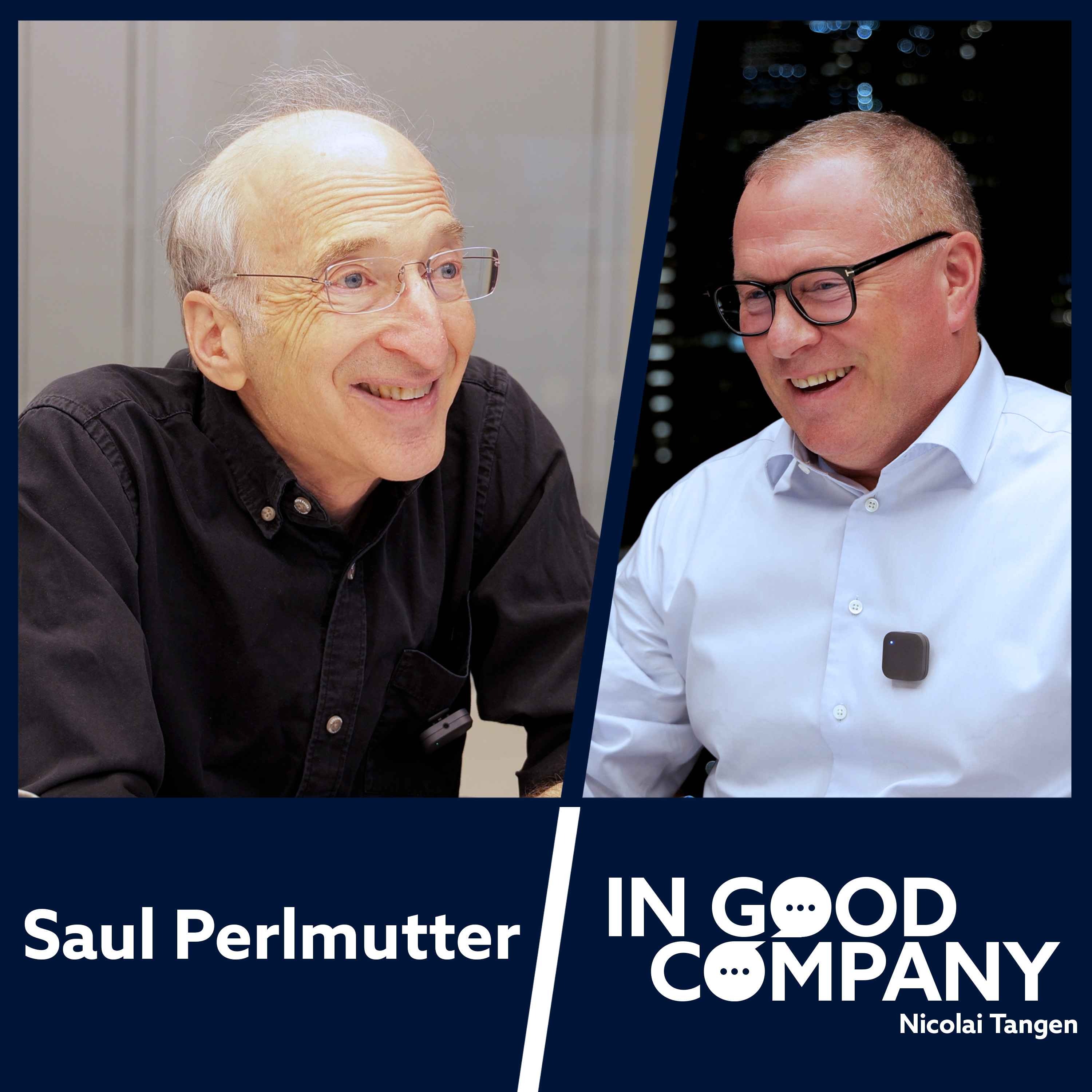
本集简介
双语字幕
仅展示文本字幕,不包含中文音频;想边听边看,请使用 Bayt 播客 App。
大家好,欢迎来到《In Good Company》。
Hi everybody and welcome to In Good Company.
我是尼古拉·塔甘,挪威主权财富基金的首席执行官。
I'm Nikola Tangan, the CEO of the Norwegian sovereign wealth fund.
今天,我有幸与索尔·珀尔马特共处,我认为他绝对是我们在播客中请过的最聪明的人。
And today I'm in particularly good company with Saul Perlmutter, who I would argue easily is the cleverest person we ever had on the podcast.
因为索尔因发现宇宙以越来越快的速度膨胀而获得了诺贝尔物理学奖。
Because Sol won the Nobel Prize in Physics for discovering that the universe expands at an increasingly rapid pace.
此外,他还撰写了一本书,名为《第三千禧年思维》,教我们如何运用科学方法应对这个日益不确定的世界。
Now, he also written a book called Third Millennium Thinking, which teaches us how to use scientific method in order to navigate this increasingly uncertain world.
所以,索尔,热烈欢迎你来到这个播客。
So, Sal, big welcome to this podcast.
谢谢。
Thank you.
很高兴来到这里。
It's good to be here.
我想我们可以从这本书和科学思维开始。
I thought we could start with the book and kind of the scientific thinking.
那么,什么是第三千禧年思维?
So what is Third Millennium Thinking?
这个名称有点奇怪,因为我们真正想表达的是,我们这种最佳的科学思维方式如何帮助整个社会更好地共同解决问题。
Well, it's a bit of a odd name because what we really want to capture is the direction in which we think the best of our scientific style of thinking has been helping our whole society be able to do better in working through problems together.
我们想弄清楚这种思维方式究竟是什么样子,以便人们意识到,其中许多元素其实都可以用在日常生活中,用在与他人交流和共同解决问题时。
And we want to try to capture what does that really look like so that people can realize that there's so many elements of it that they could all be using in their daily life also they could be using when they're talking to other people and working out problems together.
从某种意义上说,我们现在已经学会了如何解决世界上那些极其重大、困难而有趣的问题。
And in some sense, I'd say that we've learned by now how to solve really dramatic problems and difficult problems and interesting problems in the world.
我认为剩下的那个问题,如果我们能解决,就能产生巨大影响,那就是:我们该如何彼此沟通,如何共同解决问题,以便真正运用我们已掌握的其他所有技术。
The one that I feel is the leftover problem that we can make a huge difference if we can solve is just how to talk to each other, how to work problems out together so that we can actually use all these other techniques that we've learned.
因为第一次我见到你时,我们交谈中你曾说,尼古拉,我们现在其实已经能解决世界上所有问题了。
Because the first time I met you, when we spoke, you said, Nikolay, we can now solve all the problems in the world.
气候变化、如何养活人们,但我们做不到,因为我们无法彼此沟通。
Climate, how to feed people, but we don't manage to because we don't talk to each other.
我的意思是,这太了不起了。
I mean, it's remarkable.
我认为我们实际上正生活在一个非凡的历史、史前甚至宇宙历史时刻,我们是地球上第一批有能力解决行星规模问题的世代。
I think we actually live at an incredible moment in history and prehistory and in fact you know maybe even cosmic history where we are the first generations on this planet who have the ability to solve planetary sized problems.
我认为,竟然会发生一场大流行病,而我们却知道该如何应对大流行病。
I think the idea that there could be a pandemic and we actually know what to do about a pandemic.
我们星球上生活着数十亿人,比我们小时候多得多,而我们小时候,世界上大多数人都在挨饿入睡。
We have billions of people living on the planet, many more than when we were children, and at the time when we were children, most of the world was going to bed hungry.
如今,挨饿的人口比例已经变得非常小,我们现在知道如何养活整个星球。
Today that's a very small percentage and we now know how it's possible to feed a planet.
我们甚至能够应对像气候变化这样的问题,历史上这类变化曾以不同方式摧毁过不同文明。
We can even handle things like climate changes that have happened throughout history have wiped out civilizations at different points in different ways.
今天,有史以来第一次,我们知道如何稳定气候,并且确实能够管理它。
Today, for the very first time ever, we know how you could stabilize a a climate, and that we can actually manage that.
我们甚至能够应对那种杀死恐龙的威胁——小行星或彗星撞击地球的可能性,这种事件曾灭绝了地球上大多数物种家族。
We could even manage the the, you know, the thing that killed the dinosaurs, possibility of a comet or asteroid hitting the Earth, and that one wiped out most of the families of species on the planet.
这本身就是一种可能性,甚至连这个问题我们都有能力解决。
That's something, even that, we have the possibility of being able to solve that problem.
这真是一个相当了不起的起点,对吧?
That's a pretty incredible starting point, right?
所以,如果我们能有片刻喘息,彼此问问:我们想要生活在怎样的世界里?那么今天,这正是我们都该去享受的时刻。
So it seems like the one thing that we should all be enjoying today, if we had had a moment to just breathe and ask each other, what is the world that we want to live in?
这正是我们彼此转向,说:好吧,终于,我们可以建造一个让我们所有人都为之自豪的星球的时刻。
This would be the moment where we could all be turn to each other and say, Okay, now, finally, we can build a planet that we'd just all be proud to live in.
但就在这一刻,我们却难以彼此互动,也无法以足够有效的方式沟通,来完成这项工作。
And at that very moment, we're having a hard time interacting with each other and communicating well enough in a productive way so that we can do this work.
那么,什么是科学方法?
So what is a scientific method?
当我提到科学方法时,我们很多人在学校里学到的是一种被称为假设检验的概念。
So when I say the scientific method, often many of us have been taught something called the scientific method in school, which was just this hypothesis testing concept.
但那只是这一整套文化中众多不同理念的其中一个部分,这些理念共同构成了我们认识世界的方式。
But that's just one piece of this whole culture of grab bag of a whole bunch of different ideas that together make an approach to thinking about the world.
它包括以概率的方式思考世界,我们通常并不知道任何事情绝对正确或绝对错误。
It includes things like thinking of the world probabilistically, that we don't tend to know, we very rarely know anything absolutely true or absolutely false.
通常我们对某些事情有很强的信心,认为它们很可能为真,有些事情我们愿意拿生命去赌它们为真,而有些事情我们则不确定是否为真。
Generally we have a fairly strong sense that this is very likely to be true, something else we would bet our lives on being true, Something else we're not sure is true.
这种区分实际上非常有用。
And that's actually a very useful differentiation.
它不是非黑即白的‘是’或‘否’。
It's not a black and white yes or no.
而是我会对这个有90%的把握,但对那个我只愿意下70%的赌注。
It's this one I'm gonna bet 90% on, but this one I'm only gonna give, you know, 70% bet on.
事实证明,这种方式让我们变得非常强大。
And that makes us very powerful, turns out.
通过这种方式,我们实际上能做比简单地说‘已知’或‘未知’多得多的事情。
We actually can do a lot more that way than in just saying absolutely known or absolutely unknown.
在概率性的时代,你如何思考你的生活?
How do you think about your life in probabilistic times?
在我们的日常生活中,这种情况随时都会出现。
Well, in our day to day lives, it comes up all the time.
我们不得不做出各种判断,其中一些我们已经非常熟悉了,比如判断过马路是否安全,我们在这方面相当在行。
We are having to make, you know, well, some of them we just are very used to, we make a bet on whether it's safe to cross the street and we are pretty good at that.
有些情况则迫使我们偶尔要认真思考,比如必须做出医疗决策时。
Some of them we occasionally are forced to think very hard about when we have to make a health care decision.
所以,你应该吃这种药吗?你应该做这个手术吗?人们必须仔细权衡各种可能性和风险。
So, you know, should you take this medicine, should you, you know, people have to decide whether to get a certain operation, those you actually have to think through very carefully what the odds are and what what the, but, and how much you should risk.
我认为,我们意识到自己确实在做这些判断,但它们隐藏在我们日常的许多其他活动中;当我们作为群体做决策时,通常不会记得这一点,也不会记得我们其实应该用这种方式来避免对任何观点过于执着,而是愿意考虑:我可能错了。
Those are things that we, I think, recognise that we do, but it's hidden in many, many of the other day to day activities that we do, and when we make decisions as a group, we don't usually remember that, and we don't remember that actually we should be using this as a way of not getting overly attached to any part of argument, but being willing to consider, well, I could be wrong.
我的意思是,我有75%到80%的把握自己是对的,但仍有25%的可能性我是错的,如果是这样,也许你的观点在这个特定讨论中才是正确的。
I mean, I'm 75%, 80% sure I'm right, but there's 25 odds I'm wrong in this one, in which case maybe your point might be the right point in this particular discussion.
这使得讨论更加灵活,也让群体更容易在不固守自身立场的情况下共同思考问题。
And it makes it much more of a fluid discussion, much more possible for groups to think through problems without being attached to their position.
你提到一种叫做‘个人谦逊与集体傲慢’的现象。
You talk about something called individual humility and collective arrogance.
你这话是什么意思?
What do you mean by that?
在这些故事片段中,你需要理解,我们科学家之所以能取得成功,很大程度上是因为我们始终考虑自己可能犯错、可能理解有误。
So these parts of the story where you need to be able to understand that most of what we do to scientists that has made successful is to consider the possibility that we're making a mistake and that we're getting something wrong.
对于实验科学家来说,95%的时间都在寻找这次的错误在哪里。
And that is probably 95% of an experimental scientist's life is looking for where are the mistakes this time.
在他们进行的实验中,在他们所使用的理论中,日常工作中,大多数测量都存在一定的误差。
In the experiment they're running, in the theory that they're working with, If they're day to day, you know, most measurements have some error to them.
你必须弄清楚,你所进行的特定测量允许的误差范围是多少。
You have to figure out what the amount of error is that's that is permissible for the particular measurement you're making.
但这些错误就摆在你面前,是其中的一部分。
But and that's part of the mistakes that are there in front of you.
你真正寻找的是,你希望发现你所依赖的基础理论中存在的错误。
What you're really looking for is you're really hoping you find mistakes in the fundamental theories that you're working with.
所以当你发现我们对引力的理解有误时,那真是令人兴奋。
So when you find out there's something wrong with our understanding of gravity, that was really exciting.
这正是让爱因斯坦成名的原因之一。
And that was what made Einstein one of the things that made him famous.
大多数科学家一直在努力探索和拓展我们所确信的边界,思考哪些方面如果与我们现有的认知不同,将会令人惊叹。
And most scientists, they're constantly trying to figure out and push the edges of what is it that we are fairly sure about, but what things would be amazing if it turned out that the world was a little different than we thought.
这实际上正是我们的优势所在——这种持续质疑的能力,表面上看像是弱点,总是怀疑一切,但事实上,我认为这才是我们的超能力。
And that is actually where our strength comes from, that ability to be constantly questioning, and it sounds like a weakness, to always be doubting, but it turns out that I think that's really where our superpower lies.
现在,
Now,
如果你在团队中工作,这会更容易一些,对吧?
that's easier if you work in a team, right?
那么,团队有什么特别之处呢?
So what's so special about teams?
这方面有几个方面。
There's a couple of aspects to this.
一是,当你独自一人时,很难跳出自己的思维框架。
One is that I think it's very easy, very hard to think outside of your own head when you're by yourself.
一旦你开始与他人交谈,可能性的范围就会打开。
And as soon as you start talking to other people, it opens up the range of possibilities.
更困难但更重要的是,与你认为意见相左的人交谈。
Even more difficult, but even more important, is talking to people that you think that you disagree with.
因此,科学建立了一整套传统:将你的工作展示给那些会严厉质疑、指出其所有缺陷的人。
And so science has built a whole tradition of taking your work and putting it in front of people who are going to give it a hard time, and are going to show all the flaws in it.
这实际上是发现你可能出错之处的最有效方法之一。
And that's actually one of the most successful ways to figure out where you may be going wrong.
我们的社会作为一个整体,似乎已经失去了很多这种技能,或忘记了为何要与不同意见的人交谈,以及其中的益处所在。
Our society, as a larger society, seems to have lost a lot of that skill, or that memory of why it is that you talk to people that you disagree and where the usefulness comes in.
为什么社会会失去这种能力?
Why has society lost this?
我认为我们在彼此交流时会经历不同的浪潮,其中一些浪潮会把人们推向各自的群体,使他们只与那些已经认同自己观点的人交谈。
I think we happen to go through different waves in our communication with each other, and some of them tend to be they tend to corner people into groups where they are only talking to people who already agree with them.
然后他们就会觉得其他群体令人害怕。
And then they find that the other groups sound scary.
而来自外部的其他群体,对于一个内部交流的群体来说,当你们与另一个群体互动时,很容易觉得对方群体就是坏的、邪恶的,或者有你们不信任的意图。
And the other groups from the outside, it's very easy for a group that's talking among themselves and you're talking with a different group, for the other group to look like they're just bad in some way, evil or out to do something that you don't trust.
但当人们真正相互沟通、共同思考问题时,几乎总是会发现,这些处于不同交流圈中的人实际上共享着几乎相同的主要目标,而差异更多只是在于他们对某些事实性问题的答案看法不同,而非根本优先级完全不同。
But when people actually communicate with each other and think through problems together, almost invariably they start discovering that the actual people themselves that may be in these separate bubbles of communication turn out to really share almost all of the same big goals and the differences are much more just the question of what do they think the answer is to some factual question rather than really their priorities being completely different.
但如果你和一个以驳倒你论点为职责的人合作,科学中的自我ego是否比社会其他领域更少?
But if you work with somebody whose job is to shoot down your arguments, Is there less room for ego in science than in other parts of society?
我总是把科学的理想层面与日常实际发生的情况区分开来。
Well, I always describe the aspirational aspects of science as opposed to what actually happens day to day.
日常生活中,人们确实会犯错,他们并不总是遵循我所描述的科学最佳实践,以及我所说的这个第三千禧年思维模式。
Day to day people do things wrong, to day they don't follow the prescriptions of, you know, I think what this best idea of what science and this third millennium thinking that I'm describing has offered us.
但总体而言,这正是科学的理想目标:开放地倾听他人给你的批评。
As a whole though, that's the aspirational goal, to be open to listening when somebody gives you criticism.
这非常难做到,不是每个科学家每次都能做到,但从宏观角度看,人们最终会听取审稿人的意见,会听取在会议上做报告时他人提出的异议,而这最终会产生巨大影响。
And it's very difficult to do, not every scientist does it every time, but in the big picture eventually people listen to referee's comments on papers, they listen to the objections raised in a conference when they're giving a talk, and it ends up actually making a big difference.
这意味着他们可能前三四次都不想听,但最终他们会想,我必须回答这个问题,而这会让他们思维更加敏锐。
It means that they may not want to hear it the first three or four times, but eventually they think, you know, I've got to answer that question, and that sharpens up their thinking.
所以这与整个自信的谦逊密切相关。
So it's kind of tied into the whole confident humility
当然。
Absolutely.
而且,我不觉得科学家的典型形象是谦逊的人,但你谦逊吗?
And, you know, I don't think of the typical image of a scientist as being a humble person, but Are you humble?
在这方面,我认为我努力尽可能地保持谦逊,对吧?
In this particular respect, I think I aspire to being as humble as I can, right?
因为我清楚自己曾经犯过错,漏掉过一些事情,也犯过错误,有时是我自己发现的,但其他时候,只有别人指出来我才意识到。
Because I know that I've done things wrong, and I've figured things I've missed they've made mistakes, and I've caught them sometimes myself, but other times I've only caught them because somebody else was there.
你在哪些方面不够谦逊?
At which parts of you are less humble?
我认为不够谦逊的那部分其实挺有意思的。
So I think the part that's less humble is actually sort of an interesting one.
科学文化中还有另一个方面,我认为必须以一种有趣的方式保持傲慢,那就是科学之所以能取得进步,是因为它允许你相信——甚至可能欺骗自己——认为你有能力解决困难的问题,直到你真的解决了它们。
There's another side of the culture of science which I think has to be arrogant in a very interesting way, which is that you I think science has benefited by having a culture that allows you to believe, or maybe even fool yourself, into thinking that you can solve difficult problems long enough to solve them.
问题是,我认为我们大多数人并不具备坚持问题直到真正解决所需的韧性。
And the problem is that most of us, I don't think, are built to stick to a problem as long as it really takes.
因此,我们往往认为:我已经很努力地研究这个问题了,至少花了一天,也许花了一周,然后就放弃了。
And so I think we tend to think, well I tried very hard on that problem, I spent at least a day on it, maybe I spent a week on it, and then you give up.
而科学文化却让人相信:我们能够解决这个问题,如果这一周没搞明白,就继续努力,或许一个月后就能看到进展,再试另一种方法,再过一个月,最终人们还是能解决这些问题——这需要一种特定的自信,某种意义上的傲慢,才能坚持足够长的时间去攻克真正值得解决的难题。
Whereas the culture of science has I think led people to think we can solve that problem and if we didn't figure it out that week we'll keep working on it and we'll see some progress maybe by a month or so from now we'll try something different and then another month and eventually people figure out these problems and it takes a certain kind of confidence, certain kind of can call arrogance I think to manage to stay with a problem long enough to do these problems that are worth our solving.
那你必须对自己才华有点近乎固执的信念,对吧?
Well, you have to be a bit of a die hard believer in your own brilliance, right?
没错,这其实很奇怪,因为你真正需要的是这种微妙的平衡:既非常谦逊,乐于承认错误,又充满信心,坚信我们一定能找到答案——如果方法行不通,你就相信一定还有别的办法。
Exactly, To keep it's a very strange thing because you want, what you really want is this funny balance between being very humble and very willing to be wrong and yet very can do, that we're going to be able to figure this thing out so that you if it doesn't work, you think there's got to be a different way we can do this.
我认为,这正是科学运作的一个真正秘诀。
And that is I think one of the real secrets of how sciences work.
从某种意义上说,正是犯错的刹车机制,让科学中的许多环节都充满了怀疑和质疑,从而避免你陷入某些思维陷阱。
In some sense it's the brakes of making mistakes that so many of the things that science involves is the skepticisms and the doubts that keep you from falling into certain kinds of mental traps.
但你不能只靠刹车来开车。
But you can't drive a car with just brakes.
你需要一个油门踏板。
You need an accelerator pedal.
我认为这个油门踏板就是我们能够解决这个问题的信念。
And I think that accelerator pedal is this can do sense that we can figure this out.
这是一个难题,但一旦你明确了问题,我们就有相当大的机会找到解决方法。
It's hard problem, but once you identify the problem, we have a reasonable chance of figuring out how to solve it.
什么样的团队才算好?
What makes a good team?
在我看来,真正产生巨大差异的是这样一群人:他们拥有各种不同的技能,但又不会因为自我膨胀而无法融入团队、互相交流想法并认真倾听彼此。
Well, I've seen that, for me at least, that it's been the thing that's made a huge difference is that combination of people who come in with a wide variety of skills, but who aren't so ego driven that they can't just join a group together and bounce ideas with each other and listen to each other.
这种组合的人既非常有能力,又能享受团队合作和共同思考的过程。
And that combination of people who are very capable but are also able to enjoy team nature and the thinking together.
这正是我通常在团队中寻找的特质。
That's the thing that I usually am looking for in a group.
与此相关的是,你总希望这个人非常有能力和才华,但同时也具备一点那种‘我能行’的精神,让他们愿意留在房间里,和团队一起持续钻研问题,哪怕花上大多数人不愿花的额外时间。
Along a little bit with that, you always want the person to be very skilled and capable, but you also want them to have a little bit of that can do spirit, that they think that it's worth staying in the room with the group of people and worrying the problem for that extra time that most people wouldn't.
越来越多的诺贝尔奖由团队获得。
Increasingly, Nobel Prizes are won by teams.
总的来说,科学已经越来越不再是那种单打独斗的活动,比如人们脑海中那个穿着白大褂、独自走进实验室消失不见的孤独科学家形象。
So the in general, science has become less and less of a, you know, single person activity, you know, where the the image of a lone scientist putting on their lab coat and going down to the lab and disappearing.
那从来就不是我的经历。
That's never that's not been my experience at all.
即使是很小的团队,也通常是多人合作的项目,而很多科学研究都需要足够的不同专业知识和不同部分,规模也变得足够大,因此通常需要相当大的团队。
And even rather small groups are still often groups of people doing projects, and a lot of science just requires enough different expertise and different parts, and the scales have gotten big enough that they often are fairly big teams.
我所参与的项目规模还算小,大概有30人左右,大家共同合作完成某项工作。
They're you know, the projects I was doing were smallish in the sense of maybe 30, you know, 30 people, you know, all working together on something.
但这些项目在近年来的下一阶段,参与人数已经增加到数百人。
But the very next stage of those same projects in more recent years are now hundreds of people in those projects.
在分工和管理整个流程方面,有哪些挑战?
What are the challenges in terms of splitting the work and managing that whole process?
这非常棘手,因为你必须平衡各种因素。
It's very tricky because you have all sorts of balancing acts to do.
因此,你希望一群人共享大量他们的方法和其他资源,比如互相分享软件以共同改进,但这样做的风险是,如果共享过多,就失去了通常能帮助发现错误的独立对比。
So there's the fact that you want groups of people to share a lot of their approaches and other resources, might share their software with each other to work on it, but there's a danger then that if they've shared too much then you don't get the independent comparisons that you can often find the errors with.
所以,从某种意义上说,你需要鼓励一些小组在整体团队达成共识的同时,独立开展工作。
So you, in some sense, need to encourage splinter groups to be working on things while the whole group is coming to consensus at the same time.
这些平衡行为实际上贯穿了那本书中整个‘第三伦敦思维’的故事:你所做的大多数事情,都需要在多个目标之间找到正确的平衡,而这些目标往往并不明显是需要同时实现的。
And these balancing acts actually go throughout the whole Third and London Thinking story in that book, is that most things you're doing, you're having to get that right balance between several different things you're trying to achieve that aren't necessarily obvious that you would do them at the same time.
室内乐与此有什么关系?
How does chamber music come into this?
因为那是你的一个团队。
Because that's one of your teams.
我当时在思考,谁是我生命中一些最有影响力的老师?
So I was thinking about this from the point of view of who have been some of the more influential teachers in my life?
而且,你知道,其中一些人,很明显。
And and, you know, some of them, know, it's obvious.
我的研究导师在我攻读物理学博士学位时对我影响深远,其他人则属于那种你上过的某些课程中的老师,我至今仍记得他们。
My research adviser was, you know, very influential as when I was going my PhD in physics, and others, you know, are are in that category of, you know, teachers in in certain courses that you've taken that that I I still remember.
但也许其中一个更有趣的是,对于那些在人生中学习过乐器的人,他们的乐器老师通常会伴随你多年,直到你成长起来。
But perhaps one of the more interesting ones is for those people who've studied an instrument in their lives, your teacher of that instrument has stayed with you for usually it stayed with you for many, many years while you were growing up.
就我而言,我的小提琴老师是一位极具影响力的人,她名叫弗朗西斯·达菲,她能够教导一种极致细致与精准的结合,同时带着一种精神和目标——创造音乐,而不仅仅是把事情做对。
So in my case, my violin teacher was very influential person, her name was Frances Duffy, and she was able to teach a certain degree of this mix of extreme care and precision but with a spirit and a goal of making music, not of just doing something right.
你还在演奏吗?
Do you still play?
我确实还在演奏,我一直以来对演奏感兴趣的部分并不是独奏音乐,而是弦乐四重奏和其他形式的室内乐。
And I do still play, and the thing that I was always interested in when I was playing was not solo music, I was interested in playing string quartets and other kinds of chamber music.
我认为,这种乐趣与团队合作解决科学问题时的乐趣非常相似:一群人都在贡献自己的力量,但他们必须彼此倾听。
And I think the pleasures in that are very much some of the same pleasures as in group efforts for solving a scientific problem, that you have a group of people who are all contributing something, but they have to listen to each other.
而这种来回高度专注的程度,我认为正是让这种体验如此生动的原因,也是让科学团队项目如此有趣的原因之一。
And then the degree of paying attention back and forth, I think, is what makes that so enlivening, and it's also, I think, one of things that makes a group science project fun.
什么是盲分析?
What is blind analysis?
我们意识到的一个经典问题,实际上在更广泛的世界中,我们称之为确认偏误:当你试图理解某个新闻故事时,很容易陷入只阅读那些印证你已有观点的新闻,而不去阅读那些与你信念相悖的信息。
One of the classic problems that we've become aware of, actually in the larger world we see it in a thing called confirmation bias, it's very easy when you're, let's say, trying to see what what some news story is telling you, to fall into the danger of only reading the news stories that already tell you something that you believe and not reading the ones that are giving you information that would disagree with something you believe.
当你偶然读到一篇与你认为正确观点相悖的文章时,你会寻找它所有的错误。
And when you do happen to read an article that says something that disagrees with something that you think is right, you look for all the mistakes it's making.
而当你看到一篇说‘有人做了一项研究,结果支持了你喜欢的观点’的文章时,你并不会以同样的方式去挑剔它的缺陷。
Whereas when you see an article that's saying, oh, somebody did a study and it agrees with something that you like, you don't look for its flaws in the same way.
这种情况不仅发生在政治领域和读报纸时,也发生在科学项目中。
And this happens actually not only in politics and when you read in the newspaper, but in a science project.
因此,当你在测量图表中的数据点时,如果结果与某个理论一致或相悖,而你非常期待看到结果,就存在一种真正的风险——历史上已经发生过这种情况,你可以回溯查看过去的图表,你会发现:当人们认为图表显示的是他们预期的结果时(无论它是证实了理论还是反驳了理论),他们更容易接受它;而如果图表显示的是他们意想不到的结果,他们就更可能去寻找其中的错误。
So when you're measuring some graph, the points for a graph, and it's going to agree with a theory or disagree with a theory and you're very excited to see what the results are, there's a real danger that, and you see it has happened now in history, can go back and look through the graphs of the past, You see that there's a danger that people accept the graph when they think it's showing you what they were sort of expecting to see, either because it confirmed the theory or it disagreed with the theory, whichever it was that they were kind of expecting it to show, and they're more likely to look for the errors in that graph if it's showing something that they don't expect.
这意味着,论文中出现的图表往往只是科学家预期的结果,因为他们不会去仔细查找这些结果中的错误。
So that means that there's a real bias towards having graphs come out in papers that are just what the scientist was expecting to get because those are the ones that they don't go hunting for the errors in.
近年来,物理学家开始意识到,这种陷阱正在让许多人误入歧途。
And in recent years that's become something where the physicists started to become aware that this was a trap that people were falling into.
科学的一个核心理念就是识别这些陷阱,然后找出解决它们的方法。
And one of the whole ideas of science is to recognize these traps and then to figure out how to solve them.
因此,物理学界开始采用一种名为盲分析的技术来解决这一特定陷阱:在所有人达成一致,确认已排查了所有测量误差之前,你不能看到最终包含真实数值的图表结果。
So the way the physics community has started to solve this particular trap is they've started using this technique called blind analysis where you don't let yourself see the results, the the final graphs with the real, you know, the real, values on the graph, until everybody has agreed that you've looked for all the errors in the measurement.
然后,在你检查完所有错误之后,你会打开信封,看看这些数字对应的是什么结果,看看这个答案是否符合你的预期或愿望,或者是否与你的预期或愿望相悖。
And then when you've checked for all the errors, then you open the envelope and you see what the numbers correspond to, and and you see whether the the answer is what you were expecting or what you wanted or if it goes against what you wanted or what you're expecting.
这是一个相当令人震撼的时刻。
And it's a it's a kind of traumatic moment.
所以,我们曾在小组会议上经历过这样的场景:那天快结束时,我们的一名学生即将揭开他过去一年半来一直研究的数据的盲态,如果结果符合某种方向,他将获得一份出色的博士论文;如果不符合,结果就会令人失望。
And so you I've been in we've been in the group meetings where we were sitting there, it was the end of the day, and one of our students was about to unblind their data they'd been working on for the last year and a half, and if they came out a certain way they would have a wonderful PhD thesis, if it didn't it would be disappointing, result.
而这一切都取决于他们打开这个去盲化结果时会发生什么。
And, and it was all gonna depend on what happened when they opened this, they opened this unblinded result.
记得有一次,特别晚了。
And, remember one time particularly, it was, like, late at night.
我们开了一个很长很长的会议,已经过了晚饭时间。
We had gone for a long, long meeting, and it was past dinner time.
我们正试图决定:现在就打开它,还是等到早上精神好的时候再打开?
We're And trying to decide, okay.
我们正试图决定:现在就打开它,还是等到早上精神好的时候再打开?
Are we gonna open it now, or should we wait in the morning and do it when we're fresh?
你知道吗?
You know?
因为如果结果错了,最终会非常令人沮丧。
Because if it comes out wrong, it's gonna be really devastating at the end of the day.
也许我们应该等到我们休息好了再说。
Maybe we should wait until we're, you know, sort of, you know, rested, etcetera.
我们彼此对视了一下,然后说:算了,还是看吧。
And we all looked at each other and said, nah, let's look at it.
于是我们决定就在此时揭开盲态,并接受任何结果。
And so we decided that was the time that we were gonna unblind and we were gonna have to accept whatever we got.
结果好吗?
And was it good?
那次结果很好。
That time it was good.
不
Not
每次都是,但那次确实是
every time, but that time it was was The
确认偏见这个概念很有趣,对吧?
whole concept of confirmation bias is interesting, right?
我的意思是,如果你持有一种政治观点,你就只看福克斯新闻。
I mean, you got one political view, and then you only watch Fox News.
如果你有另一种观点,你就只看别的频道。
You've got another point of view, you only watch something else.
没错。
Exactly.
你知道吗?
You know?
我想,这就是造成社会更大两极分化的原因。
This is, I guess, what creates more of the polarization in society.
这确实是个大问题。
No, it's a real problem.
而且,如果你是福克斯新闻的观众,当你看到《纽约时报》的文章时,往往会对其持非常怀疑的态度。
And also we tend to, you know, if you are a Fox News watcher, when you see a New York Times article, assume that it was you're very skeptical about it.
如果你是《纽约时报》的读者,看到福克斯新闻的报道,就会觉得里面肯定有问题,总爱去找对方的错误,却不会去挑自己媒体的毛病。
And if you're a New York Times reader and you watch a Fox News story, you assume that there's something got something wrong in it, and you tend to look for all the errors in the other, but not in your own own reporters.
确认偏误对投资者来说也非常、非常有害,因为你做了一项投资,然后你只阅读那些证实你已有观点的信息。
And confirmation bias is very, very problematic also for investors, because you made an investment, and the only piece of news you read is the stuff that's confirming your already existing view.
我
I
我认为这显然是一个深层次的问题,对我们所有人来说,几乎在任何事情上,我们都可能陷入这种陷阱。
think it's clearly one of these deep problems that for all of us, for almost anything we're doing, we can fall into that trap.
我之前也用医疗例子来描述过:当你在决定某种医疗方案是好是坏时,很容易忍不住去网上搜寻,直到找到符合你期望的说法。
I've been describing it also like when you're trying to decide let me use the medical example again you're trying to decide whether or not you do something that's a good idea or a bad idea for your medical treatment and there's a real temptation to hunt on the websites until you find one that says what you want to hear.
我认为真正该做的是:在不了解你的具体情况之前,先判断哪些网站在其他方面更值得信赖,这样你就能在不知情的情况下选择网站,然后再去看它对你的情况给出了什么建议。
And I think that really what you need to do is you need to first, without looking at what it says about your particular case, look for which websites do you trust more about everything else besides that one, so that you choose your website blinded without knowing what it would say for your particular case, and then you read what it recommends.
所以听好了,我现在已经买了价值一百万美元的苹果股票。
So listen now, I have bought a million dollars worth of Apple stock.
是的。
Yes.
好的。
Okay.
我们房间里有四个人。
And we have four people around in the room here.
我们该如何分析、质疑和研究是否应该持有苹果股票呢?
What's the best way to analyse and question and research whether we should own Apple or not?
首先,你们房间里有四个人,这可能是一个真正的优势,对吧?
So to begin with, the fact that you have four people in the room could be a real asset, right?
因为他们可能拥有不同的信息来源,能够带来不同的
Because they could have different sources of information and be able to bring different
呃,不好意思,我们是不是该让40亿人进房间?
Well, I'm sorry, should we have 4,000,000,000 in the room?
首先,让我们从头开始。
First of all, let's start from total scratch.
好的,我想要一百万美元的苹果股票。
Okay, so I want a million dollars of Apple stock.
我们该如何决定这是否是一个好的投资?
How should we decide whether that's a good investment?
好的,显然,这个故事的一部分是:世界上哪里的信息能让你在这种情况下的预测最有优势?
All right, so obviously, part of the story is where is the information out in the world that would give you the most chance at doing good predictions in this pure case?
当然,在这个故事中,你必须决定你预期信息最丰富的地方在哪里。
And in this story of course you have to decide where do you expect the most information to lie.
是那些从事技术开发的人吗?
Is it going to be with people who are doing the technology development?
是那些从事消费者研究的人吗?
Is it going be with the people who are doing the consumer research?
是那些被消费者研究忽略的实际消费者吗?
Will it be actual consumers themselves that are missed by the consumer research?
根据你认为信息最集中的地方,你可能希望邀请不同的人参与讨论。
And depending on where you think the most information sits, you might want to bring different people to the table.
我猜测,在许多这类话题中,你需要相当广泛的信息来源,包括一些你甚至没想到的来源,而这实际上需要接触比你通常为获取信息而邀请的更多人。
My guess would be that in many of these topics you want a fairly broad range of sources of information, some that you would not have even thought of, and that actually requires reaching more people than you might typically do if you're trying to bring information in.
你不能让所有人都聚在一起,轮流在房间里走动,第一个人说出所有推荐或不推荐这项投资的理由,或者建议采取何种形式。
You cannot have them all get together and start walking around the room with the first person saying all the best reasons for why it is that they would recommend the investment or not or what form to do it in.
然后第二个人发言,第三个人接着说,因为他们会受到前一个人言论的极大影响,这样很容易导致出现群体思维。
And then have the next person talk and the next person talk because they will be so influenced by what the previous person says that there's a real danger that you just get heard thinking.
人们会固守那些听起来非常有道理的观点,既不想因为引入来自其他来源的其他信息而让自己显得尴尬,也不想显得在与人争辩。
That people lock in on what sounded like a very good argument and they don't want to embarrass themselves by bringing in some other information that they have from a different source nor do they want to sound like they're arguing.
他们不想显得与房间里其他人的观点,尤其是前一位发言者的意见,产生冲突。
They don't want to sound like they're conflicting necessarily with the other people, the previous person in the room.
因此,更好的做法是让每个人独立写下自己的信息,各自单独提供,然后再进行汇总。
So it's much better to get all the information written down independently so people provide it separately and then aggregate it.
接着,大家共同查看这些信息,试图弄清楚:现在我们该如何同时处理所有这些信息?
Then people look at it together and try to figure out, okay, now how do we work with all this information at the same time?
因此,人们已经开发出多种工具,用于这类游戏和各种组织活动,以便在可能的情况下最大限度地发挥这种优势。
So there are a number of tools that people have used for playing these games and different kinds of organisational activities that get the best of that when you can.
我特别喜欢那些既涉及价值观又涉及事实问题的决策。
I particularly like some decisions that need both some values in play as well as the factual issues.
其中一些决策通过随机抽取人口样本的方式处理得非常好,而这当然与你在投资案例中可能采取的做法略有不同。
Some of those seem to be done very well with using random samples of the population, which which of course is a little bit different from probably what you'd be doing in an investment case.
但即便如此,你也永远无法预知,更广泛的随机覆盖可能会触及到一些你仅靠退后一步、试图挑选出10个人时根本不会想到的信息来源。
But even there you never know, it could be that having a broader random reach would reach a source of information that never would have occurred if you were just stepping back and trying to choose your 10 people.
我认为这种偏见的一个非常糟糕的例子是,挪威最高法院中资历最老、经验最丰富的法官会首先发言。
I think one of the really bad examples of this bias is, you know, in the Norwegian Supreme Court, the oldest and most experienced member of the court speaks first.
啊,是的。
Ah, yes.
由于这个原因,该法院的异议率是所有法院中最低的。
And you have the lowest supposedly disagreement of any court because of that.
这听起来恰恰与这个概念相反。
Now it sounds like the exact opposite of this concept.
现在你
Now you're
是的,而在隔壁的瑞典,最年轻的人先发言。
Yeah, whilst in Sweden, just around the corner, is the youngest person who speaks first.
是吗?
Is that right?
是的,而且你们的分歧要大得多。
Yeah, and you have much more disagreement.
这太有趣了。
That's fascinating.
简直难以置信,对吧?
It's unbelievable, no?
这真的很有意思。
That's really interesting.
这真的非常有趣。
That's really very interesting.
但这种情况怎么能持续这么多年呢?
But how can this last for years and years and years?
我的意思是,听到这些故事时,你意识到这些偏见,人们难道不应该立刻跳出来问:我们该如何解决这个问题吗?
Well, mean, hear about all of these kinds of stories where you realize those biases, people should be jumping on and asking how do we fix that?
我的意思是,另一个我记得读过的例子是,他们比较了午餐后和午餐前的判决情况。
I mean, the other one that I remember reading about was I felt where it was, where they compared the, I think the sentencing, after lunch and before lunch.
是的,完全正确。
Yeah, absolutely.
没错,而且这完全是。
Right, and it was Totally,
如果你被当场抓获,你就是有罪,直接进监狱。
if you're bang, you are guilty, in prison you go.
是的,这也很疯狂,你知道,这种情况居然能持续这么长时间。
Yeah, which is also crazy, you know, that that would be allowed to go on for a long time.
不可思议。
Incredible.
好吧,现在我们有了这个潜在的投资案例。
Okay, so now we have this investment case potential.
我们有来自各地的人。
We have people from all over the place.
他们已经写下了自己的想法,明白吗?
They've written down what they think, okay?
所以没有人会受到他人的影响。
So nobody is biased by anybody.
那接下来你该怎么做呢?
So what do you do then?
你如何在这里引发有建设性的分歧?
How do you get some productive disagreement going here?
我认为,现在正是把人们聚集在一起,鼓励他们相互激发想法、认真思考世界可能与他们想象不同的各种方式的时候。
So I do think that now this is the time where I think bringing people into a room and encouraging them to actually bounce ideas off each other and to be thinking very hard about the possible ways in which the world could be different than they think.
这里有一种技术,最初可能是为商业目的开发的,叫做情景规划。
So here's a technique might have been developed originally for business purposes, was this technique called scenario planning.
我曾遇到过彼得·施瓦茨,他教授这种技术,他还写过一本关于这方面的书。
This is something I've been Peter Schwartz was somebody who I came across who was teaching this, and he has a book on this actually.
但在那里,目标是尝试识别可能改变某个主题领域未来的关键驱动力。
But there, the goal was to try to identify driving forces that could change the future in some topic area.
我的意思是,就这个案例而言,如果我们讨论的是苹果股票,那大概是指消费计算领域。
I mean, this case, I guess if we were talking about Apple stock, it's presumably consumer computing.
然后让一群来自不同背景的人,先写下所有可能影响这一领域未来发展的因素。
And then trying to just have a group of people that come from a wide set of backgrounds just begin by just writing down all of the things that could drive the future with respect to it.
是资源可用性吗?
Is it going to be resource availability?
是经济增长吗?
Is it is it going to be economic growth?
是不同收入水平之间的经济不平等吗?
Is it going to be economic disparity of, you know, of different levels of income?
会不会是一些奇怪的因素,比如气候变化?
Will it be, you know, odd things like climate change?
这怎么可能影响消费计算领域?
How could that possibly affect the consumer computing?
会不会是人工智能以某种新方式取得突破?
Will it be AI coming to fruition in some new way?
所以,写下这一大堆可能性,然后从中挑选出几个,有时甚至只选两个看起来完全不相关的,再考虑这两个因素的所有四种极端组合。
So And write down a whole group of these and you choose a few of them, even sometimes just two, that look like they'd be completely unrelated to each other and then consider the extremes of those two in all four possibilities.
比如说,一个停滞的经济,增长微乎其微, versus 一个快速增长的经济;而在另一个维度上,你可能选择了气候因素,比如剧烈的气候变化 vs 气候稳定,即情况大致保持不变,然后审视这四种组合,思考在每种情况下,我们最好的投资策略是什么——因为这迫使你深入思考哪些东西是稳健的,哪些不是。
Let's say a stagnant economy where there is not much growth versus a very rapidly growing economy and then in the other direction maybe you might have chosen climate, large climate change and climate stasis, where things stay roughly the same, and look at all four of those combinations and ask what would be our best, in this case, investment in each of those situations because it forces you to think through the logic of what things are robust and what things aren't robust.
无论这些未来情景是否准确,这种方式都非常有用,它能让你考虑比你通常只盯着别人谈论、在同样报纸上读到的未来更广泛的可能性。
Whether or not those futures are the right answer, it's a very useful way of being able to consider a wider variety than you typically will do if you're just stuck thinking about the future that everybody else is talking about, that you are reading in the same newspapers.
你如何激励人们提出不同意见,发现错误和缺陷?
How do you incentivise people to disagree and to find mistakes and flaws?
嗯,其中一个原因是
Well, there's one of
我认为,刻意允许不同群体相互竞争,而不是试图让所有人都在一个协作团队里,确实会产生差异,因为这样自然会形成团队,而这些团队天然有动力去寻找其他人可能犯的错误。
the reasons why I think intentionally allowing for different groups competing as opposed to trying to get everybody to be in one collaborative group does make a difference, because then you naturally get teams, you know, and the teams are naturally they naturally have the incentive to look for the things that the others may have gotten wrong.
我认为这实际上正是科学取得进步的非常有趣的方式之一。
And I think that's actually been one of the very interesting ways in which science has progressed.
我认为人们在发现别人没发现的东西时会感到真正的快乐,这种快乐体现在他们能找出早期思维中的缺陷。
I think you've seen that people have some real pleasure in being able to find something that nobody else found, and the ways that shows up is that they find the flaws in the earlier thinking.
我认为,如果你能在任何组织中做到这一点,鼓励一种友好的竞争氛围,让人们大胆提出想法并相互质疑,而且不把这种行为视为不友好,而是视为过程的一部分,那将非常有益。
And I think that if you can manage to do that in any organisation, where you encourage there to be a bit of friendly competition going on, where people are trying out ideas and that they're encouraged to be disagreeing with each other, that that's not seen as an unfriendly thing to do, but that's part of the process.
我认为这是一种真正有帮助的文化。
I think it's a culture that really helps.
在投资中,最好的投资通常是那些你正确而别人都不认同的情况,对吧?
In investments, the best investments are typically the cases where you are right and nobody agrees with you, right?
确实如此,非常反直觉。
So really counterintuitive Exactly.
科学领域也是如此吗?
That also the case in science?
绝对如此。
Absolutely.
你知道哪些最反直觉的发现?
So what are some of the most counterintuitive findings that you know of?
我的意思是,唯一的原因是
Well, mean the, well, the only reason
但我们又回到你在天体物理学上的研究了,对吧?
But we're coming back to yours in astrophysics, right?
这太棒了。
That's great.
我获得诺贝尔奖的唯一原因,并不是因为我们做了什么真正有趣、出色的实验。
The only reason I won the Nobel Prize was not because we had done what was really fun, great experiment.
而是因为得出了一个真正令人惊讶的结果。
It was because it came up with a real surprising result.
是的,这确实非常令人惊讶。
Yeah, and it is very surprising.
你知道,这就像一个悬念,你必须继续听下去才能听到这个关键点。
And you know, that's like a cliffhanger, because you have to continue to listen to get to that one.
是的,是的。
Yes, yes.
好吧,我们先放一放。
Okay, we'll leave that.
与此同时
In the meantime
但我要说,一般来说,那些在科学领域取得成功的人,通常是因为他们发现了别人从未注意到的东西。
But I will say that, you know, in general, the people who do well in the sciences usually are doing well because they come up with something that nobody else has seen.
这会让所有人都感到兴奋,大家都会说:哇,我们没想到世界原来是这样运作的。
And that excites everybody, they all say, Wow, we didn't realise that the world was working that particular way.
这一点非常重要,因为真正的激动人心之处就在这里。
And that's really important to know, that's where the excitement is.
通常,成功并不是来自那些只是重复人们已知观点的人。
Usually, it's not somebody who was just showing more of the same of what people already thought.
为什么我们对不确定性感到如此难以接受?
Why do we find uncertainty so hard?
我认为我们对不确定性有着一种爱恨交加的关系,对吧?
I think that we have a very love hate relationship with uncertainty, right?
因为在某种程度上,这正是人们喜爱许多游戏和各种娱乐活动的原因。
Because in some sense it's what people love about so many games and so many things that they're going to do for fun.
他们喜欢那种结果可能朝这个方向发展、也可能朝那个方向发展的感觉。
They love that sense that it could go this way, could go that way.
没有人会真正想参与一种每次都能确切预知结果的体育运动。
Nobody would really want to play sports where every single time you knew exactly how it was all going to come out.
每个人都享受那种可能发生一点意外的刺激感,他们期待着这种意外的发生。
Everybody enjoys that sense that something a little bit surprising could happen here and they look for that surprising thing to occur.
但我们也很容易感到害怕。
But we also are very easily scared.
我的意思是,我认为我们很容易觉得,如果我们不知道下一阶段会怎样发展,一切都会变得不确定,谁知道呢?
I mean it's very easy I think for us to feel like if we don't know that we're going to get to the next stage exactly the way everything is, who knows?
情况可能会变糟,我们可能吃不饱,可能连睡觉的地方都没有。
It could be bad, it could be that we wouldn't have enough to eat, it could be that we don't have a place to sleep.
我认为这很可能是一种深植于进化中的优势:如果你总是小心谨慎,确保不失去生存所需的基本条件,那么你就会提前去打猎、耕种,以确保下一个季节有食物。
And I think that that is probably an evolutionary, deep down advantage, that if you are always being careful that you're not going to lose the fundamentals that you need to live, then probably you'll look out to, know, do your hunting and your farming early enough so you'll have food for the next season.
所以我可以想象,这可能是一种非常有用的文化,甚至心理上的演化产物。
So I can imagine that that could have been a very useful cultural maybe even psychological thing to evolve.
但这种倾向必须保持平衡。
But it has to be balanced.
你不能被恐惧驱使到不敢走出洞穴或家门、不敢尝试新想法的地步,因为如果只依赖旧观念,世界是在变化的。
You need to be not driven by fear to the point that you don't step out of your cave and out of your house and you don't try out ideas because if you just use the old ideas, the world changes.
而旧观念未必能跟上世界的变迁,甚至它们也不是最好的想法。
And the old ideas don't necessarily track what the world's doing, and they're not even the best ideas.
通常,它们在提出时是当时情况的足够好的模型,但对世界的理解可能有更佳的方式,而这正是你真正想要的。
Often they were good enough models of what was going on at the moment when somebody came up with them, but there could be much better ways of understanding the world, and that is really what you want.
你不想错过这些,有时你甚至需要它们。
You don't want to miss those, and sometimes you need them.
我主修社会心理学,我的论文研究的是投资中的直觉。
I did a degree in social psychology and I did my dissertation on gut feel in investing.
我的意思是,直觉,没人真信直觉,但我们称之为模式识别。人们总说:科学中难道没有模式识别的空间吗?或者直觉?
Well, mean gut feel, nobody believes in gut feel but we call it pattern recognition, they always Is say believe in there a room for pattern recognition in science or gut feel?
当然,因为我们知道,当我们的大脑试图理解外界发生的事情时,正在进行一种非常有趣的组合工作。
Oh, absolutely, right, because we know that our brains are doing a very interesting combination of work when they're trying to understand what's going on out in the world.
其中一部分是我们非常有意识的逻辑推理,我们清楚地知道:好吧,我刚看到了这个,又看到了那个,所以我把它们结合起来,推测这可能意味着世界中的某个方面必然如此。
Some of it is the logical stuff that we're very conscious of, that we're very aware that, you know, okay, I've just seen this and I've seen that, so I'm putting them together and I'm betting that probably that means that, you know, this aspect of the world must be the case.
但有些时候,你会感到非常困惑,根本想不通为什么这件事和那件事会变成这样?
But some of it, you're really puzzled, you don't see how is it possible that this thing and this thing turned into this thing?
人们不断钻研、钻研、再钻研,然后某天晚上睡一觉,第二天早上醒来,突然想到:嘿,我想我知道这是怎么运作的了。
And people work on it and work on it and work on it, and then some days they go to sleep and they wake up in the morning and they think, Hey, I think I know how that works.
我们有理由相信,潜意识也能以其他方式帮助我们解决问题,也许这种方式更类似于神经网络——你无法确切追踪到哪个具体因素促成了模式识别,但它确实非常出色地发现了我们自己难以察觉的模式。
And we think, and there's some evidence, that the unconscious mind also gives us other ways of solving problems, maybe a little bit more like the way these neural networks do, where you can't really track down exactly which thing was the source of the pattern recognition, but in fact it does a very good job of figuring out patterns that we otherwise wouldn't catch.
我经常认为,最好让这两种方式相互制衡,因为有些模式识别是错误的:我们以为看到了某种模式,但实际上并不存在,所以我们需要用深思熟虑的理性思维去回溯分析,借助统计学判断这种模式是否只是随机噪声造成的假象。
I often think that it's really good to try to play these two against each other, because some of the pattern recognition is wrong, we recognize things that we think we see a pattern and it's not really true so we use our very thoughtful rational mind to go back and analyze them and use things like statistics to tell whether that pattern could have appeared just from random noise and that the randomness looked to us like a pattern.
因此,用你的逻辑理性思维去审视潜意识的模式识别部分,剔除其中的好与坏,是非常有用的。
So that's very useful to apply your logical rational mind to the pattern recognition side of the mind to weed out the good from the bad parts of what you've come up with.
但反过来也一样,有时你需要让理性思维长时间专注于一个问题,最终这会迫使模式识别器在你睡觉时继续工作。
But also the other way around, sometimes you need to feed the pattern recognition mind by focusing the rational mind for a long time on a problem, and eventually that seems to force the pattern finder to go working while you're sleeping.
是的,有意思,我们曾经采访过国际象棋选手马格努斯·卡尔森。
Yeah, interesting, we did a podcast with Magnus Carlsen, the chess player.
是的。
Yes.
他通常依靠直觉来挑选三个潜在的走法,然后再对它们进行正式分析。
And so he uses his kind of gut feel to choose, for instance, three different potential moves and then he then analyzed them properly.
啊,这非常相似。
Ah, that's very similar.
没错,没错。
Absolutely, absolutely.
现在他认为,花超过十分钟分析并不会带来太多额外收益,这很有趣。
Now he thinks that spending more than ten minutes on analyzing is more than that doesn't really add a lot, which is interesting.
然后他下得非常快。
Then he's very quick.
对,这么说的话,这大概能体现他分析的深度——到了那个阶段,他意识到自己再往下分析也得不到多少新信息了。
Right, going say it probably gives you a sense of exactly depth where level is for his analysis, at that point he realizes he's no longer adding enough information.
你如何教授这一点?
How do you teach this?
你如何教授批判性思维?
How do you teach critical thinking?
当我们刚开始这一切时,我们并不确定它是否真的可教。
We were not really sure how teachable it was when we began all this.
于是,有一组教师,嗯,三位教授。
So there was a group of, well, three faculty.
有一位来自公共政策学院的社会心理学家,他是罗布·麦库恩,还有一位哲学家,约翰·坎贝尔,我们三人开始定期会面。
There was a social psychologist in the public policy school, so it was Rob McCune, and then there was a philosopher, John Campbell, and the three of us started meeting.
我们贴出一张告示,写着:你是否对社会做决策的方式感到羞愧?
We put a sign up saying, are you embarrassed watching our society make decisions?
来帮忙设计一门课程吧,来帮忙拯救世界。
Come help invent a course, come help save the world.
于是,大约有30名研究生和博士后每周五傍晚开始前来参加。
And about 30 students, graduate students, postdocs started showing up every week at the end of a Friday.
所以我们
And we So
你们就这样度过周五晚上?
this was how you spent Friday night?
实际上是周五下午,经常持续到晚饭后,我们这样持续了大约九个月。
Practically, was Friday afternoons, often went past dinner, and this went on for like nine months that we were meeting.
我们所做的,是梳理出一系列完整的想法,如果你能清晰地掌握这些想法,就能帮助你思考世界上的问题。
And what we were doing is we were walking through what would be a whole collection of ideas where if you had all those ideas clearly enough it would help you think about problems in the world.
然后,针对每一个想法,我们开始探讨:如何教授这个理念?
And then for each of them we started asking how could you teach that idea?
有没有一种方法,能让它不仅仅适用于你所教的某个特定主题,而是无论你何时读报纸文章,或走在街上做决定时,都能自然地运用这些想法?
Is there a way that you could get it across so that it wasn't just for one topic that you taught it but any time you read a newspaper article, any time you walked down the street and you had to make a choice, you would find yourself using the ideas.
通常这意味着我们设计了一些活动、游戏,有时只是提出一些好的讨论问题,而这种混合方式最终成为了我们教授这门课程的方式。
Often that meant that we came up with activities and games and sometimes just good discussion questions, And that mixture is actually the way we end up teaching the course.
我认为这最终既有趣,也多少有些效果。
And I think it ended up being both fun, but I think also a little bit effective.
其他大学也复制了这门课程,对吧?
They copied that course in other universities as well, right?
没错。
Exactly.
所以现在它开始在其他大学传播了。
So now it's starting spread to other universities.
我们最初在伯克利开设了这门课,现在哈佛、芝加哥大学、尔湾分校都已经开设了,我想哥伦比亚大学也即将开始开设。
We began it at Berkeley, it's now been taught at Harvard and University of Chicago and Irvine, and I think now Columbia is picking it up.
这门课应该在全球范围内成为必修课吗?
Should it be mandatory across the world?
我认为这是人们所拥有的一种东西,是科学真正核心的秘诀之一,我认为它能帮助每个人。
I think that it's one of the things that people have, it's one of the secret ingredients of what science really consists of, that I think could help everybody.
因为世界比以往任何时候都更加不确定,对吧?
Because the world is more uncertain than it's ever been, right?
所以你需要更多的结构和活力。
So you need more structure and vigour.
展开剩余字幕(还有 167 条)
没错。
Exactly.
而且我认为,长期以来我们都知道思考工具非常重要。
And I think that we've known for a long time that thinking tools are really important.
这就是为什么我们 everywhere 的学生都学习说明性写作的原因。
That's one of the reasons we teach expository writing to students everywhere.
他们并不都打算成为作家,但我认为,写作时如何思考问题是一种非常重要的思考工具。
They're not all planned to writers, but I think the focus of how you think about a problem when you write is a very important thinking tool.
但这些是一整套其他思考工具,它们在当今这个科技和科学世界中显得尤为重要,甚至在你必须与他人共同做出概率性决策的世界中也是如此;而这一切很大程度上都关乎你如何与他人以富有成效的方式共同思考,因此你希望这种思想的词汇能为每个人所共享,所以我希望它能成为每所大学的标准基础课程。
But these are a whole set of other thinking tools that feel like they're very important in this technological, scientific world and even a world where you just have to make probabilistic decisions with other people and that so much of this has to do with how you can think together with people in a productive way, that you want that vocabulary of ideas to be shared by everybody, so I would love it to be as a standard basic course in every university.
你的母亲是社会工作领域的教授,你的父亲是工程学教授,而你娶了一位人类学家。
Now, your mother was a professor in social work, your father was a professor in engineering, and you are married to an anthropologist.
所以再也没有比这更跨学科的了。
So it doesn't get more cross domain ish than that.
你们家的晚餐讨论是什么样的?
What do discussions look like at your family dinners?
曾经有人问我,父母从事这些领域的影响有多大?
Well, I at one point somebody was asking me, you know, much influence was there of having parents in these areas?
我当时想,我父亲显然对我影响很大,因为他是一位科学家,会做计算,而我会看到他画的图表、计算器和那个年代的计算尺。
And I was thinking, well, my father was obviously a very big influence just because as a scientist, and, you know, he would be doing calculations and I'd be seeing the graphs and the calculator and slide rules back in those days.
我觉得我被吸引是因为你可以学到关于世界的一些非常精确、有条理的知识,我喜欢观察,也被这种特质吸引。
I think I was attracted to the fact that you can learn things about the world that are very precise and organized and I think I enjoyed watching and I was attracted to that.
但与此同时,我也意识到,我母亲——一位社会工作学教授——对我的影响可能同样深远,她研究公共政策和公共管理,而她的工作通常是在大规模协作中完成的。
But at the same time I realised that I think probably just as influential was watching my mother who was a social worker professor, she studied public policy and public administration and then in her case the work was often done in larger collaborations.
看着她如何与合作者共事,对我来说是一种完全不同的教育,看到一群人真正享受一起解决问题、共同思考的过程,真的是一种乐趣。
And just watching how she would work with collaborators I think was a whole different education and it was a real pleasure to see groups of people who really enjoyed figuring out problems together and thinking together.
我认为,这在我成长过程中,和我观察父亲作为科学家一样重要。
And I think that was one of the things that was as important for me growing up as watching my father as a scientist.
人工智能是如何抑制批判性思维的?
How does AI inhibit critical thinking?
还是说它并没有?
Or does it?
我觉得它是双刃剑,意思是它既能带来好处,也可能带来坏处。
I think of it as two edged, I mean, it can do both.
就像我们当初对计算器的感觉一样,我想我们当时也不确定,学生是不是每个人都该用计算器,难道他们不该先学会乘除法吗?
And, I mean, much like, you know, we I think we might have felt that way about calculators, you know, originally, we weren't sure, should every student be using calculators because shouldn't they know how to do multiplication and division?
事实上,我们至今仍先教学生加减乘除,然后再让他们自由使用计算器。
In fact we still teach how to do addition, subtraction, multiplication and division first, but then we send them loose with the calculators.
AI的棘手之处在于,它可能让你误以为自己已经掌握了基础知识,而实际上还没有,这有点危险,我认为学生可能会过早地依赖它,在自己还没学会独立完成这些脑力工作之前就依赖它。
The tricky thing about AI is that it can give the impression that you've actually learned the basics before you really have, and that there's a little danger, I think, that students may find themselves just relying on it a little bit too soon before they know how to do the work themselves, the intellectual work themselves.
所以我认为这就是潜在的危险。
So I think that's the danger.
而积极的一面是,当你掌握了各种不同的工具和思考问题的方法时,AI常常能帮你找到运用我们所教技巧所需的信息。
Now the positive is that when you know all these different tools and approaches to how to think about a problem, AI can often help you find the bit of information that you need to use these techniques that we're teaching.
因此,我认为理想情况下,我在这轮教学中一直在问的问题是:在我们教授这24个批判性思维概念的过程中,针对每一个概念,我都让学生认真思考:你如何利用AI来更轻松地实践这个概念,真正将其融入日常生活?
So I think ideally what what I've been asking in this round as we're teaching this set of 24 concepts that we're trying to teach in this critical thinking course, that for each one of them I'm asking the students to think very hard about how would you use AI to make it easier to actually operationalise this concept, to really use it in your day to day life?
但同时,你又如何运用这个概念来判断AI是否在欺骗你,以及AI是把你引向正确的方向还是错误的方向?
But also, how would you use this concept to tell whether or not AI was fooling you, and whether the AI was sending you in the right direction or the wrong direction?
因为它们中的许多只是帮助我们识别自己被误导的工具。
Because many of them are just tools for thinking about where are getting fooled.
而我们可能会欺骗自己,AI也可能欺骗自己,然后进而误导我们。
And we can be fooling ourselves, the AI could be fooling itself and then could fool us.
正如我们所知,当前一代的AI非常擅长对自己的说法表现得过度自信,告诉你一些事情,然后你就会相信:‘哦,既然都打在屏幕上,那一定是对的。’
And as we know, at least the current generation of AI is very good at being overly confident about what it's saying, telling you, and then you believe, oh, well, typed right there right on the screen, it must be right.
然而,你需要对这个结果的信任程度保持同样的判断力,就像你在判断自己或他人所说的话该相信多少一样。
And yet, you need to have that same sense of gauge of how much do you trust this result as you would when you're trying to figure out how much do I trust a statement I'm making or a statement somebody else is making.
我认为,至少在当前版本的AI面前,你必须玩好这个游戏。
And I think that's the game that you have to play, at least with the current version of AI.
当然,AI会不断变化,我们必须不断自问:它是在帮助我们,还是我们正被误导得更频繁?
Now of course, AI will be changing and we'll have to keep we're constantly having to keep asking ourselves is it helping us or are we getting fooled more often?
我们是否在让自己被误导?
Are we letting ourselves get fooled?
那么,我们是不是该迁移到太空去?
So should we move out into space?
很高兴。
Glad to.
那就是你喜欢住的地方吗?
Is that where you enjoy living?
作为一名宇宙学家,我真的很喜欢这一点,因为我们利用对最小的基本粒子和力的理解,来探索宇宙中最大、最庞大的结构。
So I've been really liking the fact that as a cosmologist you get to be in this really interesting place because you're using our understanding of the very smallest elementary particles and forces to understand the biggest, largest structures in the universe.
因此,你恰好处于尺度的中间位置,既能眺望远比我们庞大得多的事物,又能俯视远比我们微小得多的现象。
And so you get to be sort of nestled right in the middle of scale while you look out at things that are tremendously larger than us and look down into into things that are tremendously smaller than us.
而我们正处在这个绝佳的中间位置,可以同时观察两者。
And and we're in that nice sort of middle place that we get we get to look at both.
嗯。
Mhmm.
蠢问题。
Stupid question.
宇宙学家和天体物理学家有什么区别?
What's difference between a cosmopol cosmopologist and an astrophysicist?
天体物理学家通常研究天空中几乎任何事物的物理性质。
So the astrophysicists are generally studying the physics and and of of almost anything that you see in in the sky.
而宇宙学家则专门探讨宇宙的演化顺序,即事物是如何从这里到那里、再到这里,最终演变成我们今天所见的样子的。
And whereas the cosmologists are specifically asking the question of what was the evolutionary order, how did things come about in this order from here to here to here that led to where we are today.
那你两者都研究吗?
And you study both?
我两者都研究。
I do both.
当你观察、思考太空时,你是如何想象它的?
When you look at, when you think about space, how do you visualize it?
如果你闭上眼睛,它看起来是什么样子?
If you close your eyes, just what does it look like?
对我来说,我一直对爱因斯坦的相对论所允许的三维空间可能存在奇特弯曲这一事实非常感兴趣。
I think that for me I've been very interested in the fact that Einstein's theory of relativity allows for three-dimensional space to possibly have a weird curvature to it.
而这一点是我们大脑从未进化出能够想象的能力。
And this isn't something that our brains evolved to picture at all.
所以你必须不断强迫自己想象,那看起来是无限的空间,你可以朝某个方向无限前行,但空间可能存在弯曲,如果你一直朝那个方向走,最终会回到原来的地方。
So you constantly are having to force yourself to imagine that there's what looks like infinite space, you're traveling as far as you want in some direction, but it's possible that there's curvature in it, you'll find yourself back somewhere where you were before if you just keep going in that direction.
我觉得我一向喜欢让自己的大脑感到困惑。
And I think I always have loved boggling my own brain.
我喜欢那种似懂非懂、却几乎能想象出来的感觉。
I like that feeling of not quite getting something but almost being able to picture it.
对我来说,这种感觉有点奇特的愉悦。
And I think that for me that's a bit of odd pleasure.
所以当你想象它时,是不是像一片漆黑,而行星和恒星是其中的光点?
So when you picture it, is it like black with the planets being lights and suns?
它看起来是什么样子?
What does it look like?
在某种意义上,对我而言,当前的宇宙几乎完全是空的。
In some sense the current Universe to me seems like it's almost entirely empty.
而在这一片巨大的虚空里,偶尔你会看到一个小点,当你靠近一看,会发现这个小点其实是一个庞大的旋涡星系,里面有上百亿颗恒星发出的光点;然后你飞速掠过它,它又消失在背景中,重新变成一个微小的光点;最终,你又在遥远的未来地平线上看到另一个光点,越来越近,你开始意识到:哦,那是另一个星系。
And every now and then, in this huge empty void, you see a little dot, and if you go close-up to it, realize that that dot is actually a whole pinwheel of a galaxy with a 100,000,000,000 little points of light of stars in them, and then you go whooshing by it and it disappears into the background and goes back to being a less little dot, and then eventually you see another dot showing up way out there in the future horizon, in and you get closer and closer and you start realizing, Oh, it's another galaxy.
我认为这就是我对当前宇宙的想象。
And I think that's my picture of the current universe.
现在,如果你回溯到很久很久以前,我们认为宇宙的空间被拉扯在所有这些星系之间,它们彼此越来越近,直到一切重叠在一起,最终所有物质都堆叠在一起,直到达到一个点——那时可能是一个无限的、炽热而致密的基本粒子汤,在那个时期,它就像一种非常浓稠的豌豆汤,里面有一些小团块,这些团块将来会形成星系,还有一些稍显空旷的区域,但总体上,它基本上是一种持续不断的、由这些基本粒子构成的等离子体。
Now, if you go way, way back in time, the universe, we think, was the space was sucked out between all these galaxies and they were closer and closer and closer until everything was on top of each other, and then eventually all the material was on top of each other, and eventually you get to the point where it was this possibly infinite soup of elementary particles that are hot and dense and during that period it's like a very thick, almost like a pea soup because it has little clumps where the galaxies someday eventually form and slightly emptier spots but it's, you know, basically a nonstop plasma of these of these elementary particles.
所以,这是时间上两个不同的极端。
So those are those are two different extremes of of time.
但当然,一个天真的问题是:既然某物已经是无限的,它又如何能进一步膨胀呢?
But of course, a naive kind of question is that something how can something which is already infinite expand further?
我的意思是,这是每个人都会遇到的最令人困惑的标准问题之一,我自己也反复思考过这个问题。当你听到‘宇宙在膨胀’这个词时,第一个冒出来的想法就是:等等,宇宙是万物的总和,它怎么能膨胀呢?
Mean, that's one of the biggest standard mind boggling questions that everybody comes to, and I certainly have come to it over and over again, when you hear the words the universe expands, that's the first thing that comes to mind, wait, the universe is everything, how could it expand?
唯一似乎说得通的答案是,你必须想象一个无限的宇宙,然后问自己:好吧,正如我所说,今天有一个星系,然后是一大片空间,接着是另一个星系,再是一大片空间,再一个星系——在一个正在膨胀的无限宇宙中,所有这些距离都在逐渐变远。
And the only answer that seems to make any sense is you have to picture even an infinite universe and you ask yourself, okay, today as I said there's a galaxy and then there's a lot of space and there's another galaxy and there's lot of space and another galaxy, and in an infinite universe that's expanding, all those distances just get a little bit further apart.
所以,它并不是在向外部空间膨胀,而是我们在所有点之间增加了额外的空间。
So it's not expanding into anything else, it's that we're adding extra space between all points.
这就像是从内部充气一样,我们只是在你我之间、在这个星系和下一个星系之间、以及更远的星系之间,不断加入更多的空间,因此整体变得略微更大一些。
So it's almost like inflating it from the inside, that we're just putting more and more space between me and you and between this galaxy and the next galaxy, and further galaxies, everywhere we're just adding a little bit extra space, and slightly bigger because of that.
它仍然是无限的,只是现在所有点之间的空间变大了。
And it's still infinite, it's just now there's more space between all the points.
如果埃隆·马斯克请你去火星,你会去吗?
If Elon Musk asked you to go to Mars, would you go?
我很欣赏有人想去火星,但我自己绝对不会去。
I'm somebody who loves the fact that there are people who would like to go to Mars, but I would never go.
为什么不去?
Why not?
因为我有太多喜欢做的事情,喜欢与人相遇、探索,我不会为了去火星这一件事就放弃所有这些。
Because there's so many things I enjoy doing I enjoy coming across and getting to explore with people that I would hate to give all that up just for this one thing, the one exploration of just going to Mars.
尤其是因为你无法确定自己是否能回来。
Especially because you don't get to know that you get to go back.
他们承诺说可以回来。
They promise
你得假设里面有个巨大的[问题]。
You have to assume there's a gigantic in there.
对,对,对。
Right, right, right.
如果你能保证一定能回来,并且你依然快乐健康,还能继续做其他探索,那我当然会去火星。
If you promise that you could certainly get back and you'd be happy and healthy and you get to do all the other explorations, then absolutely I would go to Mars.
既然大爆炸发生在这么久以前,为什么现在才开始加速?
Given the Big Bang happened so long ago, why does it accelerate now?
我们最初开始做测量、建立当前理解时,最初的设想是:宇宙起始于一次非常迅速的膨胀,这一点我们能够解释其来源,但此后一直在减速,因为引力会吸引所有物质。
So the original picture that we had started with, when we were doing the measurements that we were talking about that led to our current understanding, the original picture had it that the universe begins with a very rapid expansion that we can explain where we think it comes from but then has been slowing down ever since because gravity will attract everything else.
如果真是这样,那么我们真正需要了解的、用以预测未来的就是测量它减速的速率,因为这能告诉我们宇宙的密度,正是引力在减缓膨胀。
And then if that were the case then the only thing that we really needed to know about to figure out the future is to measure how much it's slowing down because that tells us how dense the Universe is and that's gravitationally slowing the expansion.
所以,当我们刚开始这个项目时——哦,是25年前,不,是大约三十年前——我们以为自己要测量的就是这个。
So that's what we thought we were setting out to measure back when we started that project, oh, '25 no, thirty some odd years ago.
但当我们终于能够进行测量时,却发现了一个惊人的事实:宇宙实际上并没有减速,而是在加速。
And then when actually finally got to the point that we could make the measurement, we found the surprise that actually the universe is not slowing down, it's speeding up.
这促使我们推测,宇宙中可能存在某种属性,也许是真空本身的特性,但目前我们认为它可能是一种全新的物质或遍布空间的新场,它推动了更快速的膨胀和加速,我们称之为暗能量。
So what that led to is an expectation that there's some property, perhaps of empty space itself, but at the moment we're thinking it could be a new substance, a new field that's spread throughout space that actually powers a more rapid expansion, an acceleration, and that's what we're calling dark energy.
那那是什么?
And what is that?
这正是过去二十年的谜题。
And that's the mystery of the past twenty years.
因此,我们已经观察到这种加速正在发生,过去二十年来,我们开始尝试测量这种加速的特性,以期弄清楚暗能量究竟是什么。
So we've seen that this acceleration is happening, and so what we've been starting to do for the past twenty years is try to measure properties of that acceleration to see if we can figure out what that dark energy could be.
有大量理论。
There's a huge number of theories.
我认为,据估计,在过去二十五年里,平均每天都有新的关于暗能量的理论论文发表。
I think there was a I think it was estimated that in the last twenty years, twenty five years, there's been on average a new theoretical paper about this dark energy written every twenty four hours, published in the last twenty five years.
因此,理论的数量远远超过观测和约束条件,我们花了大约二十年时间发展这些项目,现在才刚刚进入未来五到十年的关键阶段。
And so there's way more theories than there are constraints and measurements, and it's taken us twenty years or so of developing these projects to the point that we're just now about to be entering the next five years or ten years.
我们将进行所有二十年前就希望开展的测量,以期区分出暗能量究竟是什么。
We'll be making all the measurements that we were hoping to make for twenty years ago that we were intending to start telling apart what could be the Stark energy.
我们之前谈到了相信自己的重要性。
We talked earlier about the importance of believing in yourself.
你在1998年发表成果之前,花了三年时间研究这些内容,却没有任何突破。
Now you spent three years without any breakthroughs researching these kind of things before you published in 'ninety eight.
你是如何让团队保持动力,继续坚持下去的呢?
How do you keep a team motivated to just kind of go on Yeah, and on and
是的,情况比那更糟。
yeah, no, was worse than that.
事实上,这个项目始于1987年,当时我们首次提出了这项测量设想,就知道这会是一个艰难的项目。
In fact, we started the project at so the 'ninety eight result started in 'eighty seven was when we first proposed the measurement, and we thought it was gonna be a hard project.
我们原本以为三年就能完成,因为我们需要30颗超新星来进行测量。
We thought that was gonna take three years because we were gonna need 30 of these exploding star supernova to make the measurement with.
三年结束后,我们一颗超新星都没找到,更别说30颗了。
At the end of three years, we had zero supernova, not 30.
直到五年后,我们才真正获得第一颗测量精确的超新星。
And it was only after five years that we had, really first one that was well measured.
但到那时,我们已经掌握了如何批量进行这些测量的方法。
And then but by then, we'd learned how to make the, how to make batches of these measurements.
因此,在接下来的三年里,我们每年收集十几颗甚至更多,直到最终获得了得出答案所需的数据。
And so for the next three years we collected a dozen or more a year, until we finally had the numbers that we needed to get the answer.
当你观测到一颗这样的超新星时,你有多少时间来测量它呢?
And when you have one of these, how long time do you have to measure it and to
哦,这些爆炸的恒星——超新星,是绝佳的工具,因为它们能在宇宙各处被观测到,而我们使用的这种类型都具有相同的亮度,是非常理想的测量工具。
Oh, these exploding stars, the supernova, they're amazing tools because you can see them across the universe, and they and the the kind that we're using is all the same brightness, and they make a great measuring tool.
但它们也是极难处理的研究对象,因为它们不会提前发出任何预警,告诉你哪个星系即将发生爆炸。
But they're a terrible thing to work with because they don't let no warning about when they're going to explode in any galaxy around.
在你观测的任何一个星系中,超新星平均每几百年才爆发一次,它们在几周内迅速增亮,然后在一个月左右消退,你必须在亮度上升期间捕捉到它们,才能测量其峰值亮度。
They only explode every few hundred years in any given galaxy that you're looking at, and they rise in just a couple weeks and they fade away within a month or so, and you have to catch them during that rise so you can measure them at their peak brightness.
因此,它们是你能想象到的最令人头疼的研究工具,这就是为什么我们花了这么长时间,才学会如何将它们变成一种标准化工具,能够持续不断地产生大量数据并加以研究。
So they're the most annoying research tool that you can imagine, and that's why it took so long for us to get to the point of knowing how to work with them as a very standard tool where we can churn out many of them all the time and study them.
因为我们之前在讨论播客备份的重要性时,曾简短提到过这一点。
Because we talked about because we briefly talked about this when we discussed the importance of having a backup, you know, for these podcasts.
你说过,当你观察这些爆炸时,最好确保相机里有胶卷,对吧?
And you said, well, you know, when you when you look at these, you know, these explosions, you better have film in your camera, right?
因为
Because
没错。
Exactly.
不。
No.
我们过去会做各种准备,以确保在那些罕见的夜晚,当我们恰好在望远镜旁时,如果出现超新星,所有设备都能正常工作。
And we used to do all sorts of things to make sure that we were that we would be that, you know, on those rare nights that we happened to be there at the telescope and there was a supernova, that everything was going work.
我们曾组织团队从世界各处飞往目的地,因为那时我们需要前往的望远镜就分布在那些地方;同时,实验室里也有团队负责收集来自世界各地的数据,并根据观测结果提供指导和建议。
And we had teams of people flying out, you know, from one part of the world to another because that's where the telescopes were at that time that we had to fly to, and we had teams of people back at the lab who were collecting the data from the parts different parts of the world and giving instructions for what they were seeing and what and what they recommended.
那段时间简直像一场演出。
So it a bit of a show during that period.
说到演出,我记得我们当时还在和另一支团队竞争,对吧?
Talking about show, I mean, raced against another team, right?
没错。
That's right.
那么,这对过程产生了什么影响?
So how did that impact the process?
起初,这挺有趣的,因为我们一开始想说这是一个很棒的项目,每个人都应该做,但很快另一支团队也开始做了。
Well, at the beginning, we were it was funny because in the early days, we were trying to say this is a great project, everybody should be doing and then pretty soon another team was doing it.
这意味着我们现在陷入了一场小小的竞争,因为世界上只有少数几台望远镜具备我们所需的能力,而我们现在都申请使用相同的望远镜。
And that meant that now we were in a bit of a race because there were only a few telescopes in the world that had the capabilities of doing what we wanted, and we were now both applying to use the same telescopes.
事实上,我们有时在前往这些望远镜的机场里还会擦肩而过,因此这是一场非常激烈的竞争。
In fact, we would sometimes pass each other in the airports going to these telescopes, and so it was a very toughly fought, you know, race.
你们和他们关系友好吗?
Were you friendly with them?
我的意思是,你们在机场碰面时会打招呼吗?
I mean, you say hi when you passed them at the airport?
但其中有些部分非常具有冲突性,大家在会议上都会给对方制造很大的压力。
Well, But there there was some parts of it that were very conflictual and very you know, people give each other a really hard time at the conferences.
但比如,另一支团队的负责人和我,我们会互相倾诉,抱怨如何艰难地维持各自团队的独立高效运作。
But the for example, the other leader of the other team and myself, we would commiserate with each other about how difficult it was to keep our whole teams working effectively independently.
我们在地基天文学观测时,至少有两次完全依赖天气条件。
And we did at least on two occasions where we had we all depend on the weather when we're doing astronomy from the ground.
有一次,对方遭遇了恶劣天气,这意味着他们将失去整个观测序列的成果,于是我们为他们做了些观测,让他们能继续下去。
And so one time they had terrible weather and that meant they were gonna lose everything they've been working for for that that particular sequence of searching and then following, and so we took some observations for them so they could keep going.
还有一次,我们遇到了坏天气,于是和对方团队的负责人交换了观测时间,让他们能帮我们保持观测夜数的进度。
And then there's another time where we got bad weather and we traded times we traded nights with my counterpart, the leader of the other team, so they could help us be able to stay on our trajectory of how many nights we have to keep observing.
然后你们平分了奖赏。
And then you share the price.
最后,两个团队得出了相同的结果,并在几周内相继宣布,最终这个发现被认定为联合发现,两个团队共同分享了奖赏。
And then at the end, the two teams came up with the same result and announced it within weeks of each other, and so in the end it was accepted as a joint discovery, and so the two teams shared the prize.
这挺美好的,不是吗?
It's kind of beautiful, no?
我觉得,当时每个人都在跟我说:‘你得赶紧抢先发表,不然就得和别人分享奖赏了’等等,但我心想,毕竟做这项工作的人圈子很小,我们在某种程度上都依赖彼此的不同贡献,所以最终的结果非常温暖,因为它体现了整个社区的很大一部分,也由这两个团队共同获得荣誉。
I think, I mean in some sense at the time you know everybody was saying to me oh you've gotta, you'll get yours out first because otherwise you're gonna have to share the prize and etcetera and I was thinking but in the end it was a relatively small community of people who were doing this kind of work and we were all dependent on each other in some sense for different things that we were contributing and so it was a very warm outcome in the end, because it felt like it honoured a big fraction of the community, got honoured by these two teams.
索尔,存在客观真理吗?
Saul, is there an objective truth?
我认为,科学之所以能够取得所有进展,是因为它认真对待这样一个观点:存在着一个独立于我们的外部世界,而我们正试图去理解它,但我们无法直接接触到它。
I think that the way science has been able to make all of its progress is by taking very seriously the idea that there is a world out there that is the thing that we're trying to figure out, and that we don't get direct access to it.
我们只能通过眼睛、仪器、工具和测量来观察世界,从而逐步构建出关于这个外部客观现实的模型。
We get to see what we can see through our eyes, through our instruments, and through our tools, and our measurements, and we build up our models of what that objective truth is of the world out there.
但无论我们是否理解它,这个世界都会按照自己的规律运行。
But it's going to do its thing whether we get it or not.
我们的模型永远不会完全正确,几乎永远无法涵盖一切。
And our models are going to be not quite right, they'll almost never capture everything.
首先,为了让我们的大脑能够理解外部世界某一方面的复杂性,必须进行简化。
For one thing there's got to be simplifications just for our brains to understand some aspect of the world that's out there.
我们可能无法一次性吸收全部信息,因此我们总是使用一些小窗口、小模型来观察外部世界的发生。
We probably can't take it all in all at one time, so we're always using little windows, little models of what's going on out there.
但与此同时,我认为我们之所以能取得进步,是因为我们都相信,无论我们怎么想,这个客观现实都真实存在,我们不能各自躲在房间的角落里说:‘你信你的,我信我的,我们的科学不必一致。’
But at the same time I think we make progress because we all believe that it's there no matter what we think and that we can't just go to our separate corners of the room and say okay you believe what you want to believe and I'll believe what I want to believe and our science doesn't have to agree.
在科学中,我们确实需要达成共识,因为只有这样,我们才能发现自己的错误,从而改进我们对世界真实本质的模型。
In the science there's a real need for us to agree because that's where we figure out where we're making our mistakes and it improves our picture of our model of what the reality is out there in the world.
因此,世界的客观真理实际上我认为正是连接我们不同研究项目的纽带,它让我们有机会发现哪些东西更接近正确、哪些更可能出错。
And so the objective truth of the world is actually I think what provides the link between our different projects that gives us the chance to figure out things that are more right and more likely to be wrong.
世界比以前更不确定了吗?
Is the world more uncertain than before?
哦,我认为它一直都不确定。
Oh, I think it's always been uncertain.
某种程度上,我认为这就是人类的处境:我们成长过程中,不知道接下来会发生什么,不知道会发生在我身上的事,也不知道周围会发生什么。
In some sense I think that's the human condition, we grow up, we don't know what's going to happen, and we don't know what's going happen to us, we don't know what's going to happen around us.
从某种意义上说,人类文明所做的就是让越来越多的细小部分变得可管理,使我们能够相当确定那些我们可以控制的方面。
And in some ways what we've been doing through civilization is making more and more little pieces of it manageable so that we can be pretty sure that those we can control.
但它总会给我们带来意想不到的转折,让我们无法预知接下来会发生什么。
But it's always going to throw us curves where we don't know what's going to happen.
而我们的任务,当然是足够灵活地应对所有不确定性,不让它们打乱我们,不让我们被它们吓倒,而是让我们感到,正是在这些不确定性中我们才能茁壮成长,这才是我们赖以生存的基础。
And our job, of course, is to be able to be nimble enough to manage what all the uncertainties are and not to have them throw us, not to make them scare us, but make us feel like that's where we thrive, that's what we live on.
我们赖以生存的,就是玩转并管理不确定性。
We live on playing, managing the uncertainty.
在科学领域,年轻有什么好处?
What's the benefit of being of youth in science?
我认为,每年、每十年都将新一代引入任何领域、任何课题,都会带来巨大优势,因为他们至少有一半的机会不会陷入前人理解中的错误,而且他们也会像我说的那样,去寻找那些你不同意的人,从而给你制造麻烦。
I think that you get so much advantage of having bringing in new generations year, year decade after decade, into any field, any topic, because there's at least a half chance that they won't get stuck in the mistakes that the previous understanding made, and they also are acting a little bit like when I said that it's very important to go find the people you disagree with, and so they can give you a hard time.
事实上,年轻人通常喜欢向年长者展示他们犯了错误,这本身也带来一种乐趣。
It's also true that there's a pleasure in usually in the young trying to show the old the older that they've made a mistake.
你有没有想过:‘你有什么资格教我?’
And do you never think, Hey, who are you to teach me?
当然有。
Absolutely.
我可是诺贝尔奖得主,是超级明星,而你只是刚从大学毕业的毛头小子?
I've got a Nobel Prize, I'm a superstar, and you're just a youngster straight out of university?
当然经常发生,每当有人给你制造麻烦时,你的第一反应总是说:‘别开玩笑了,首先,那个团队根本不懂他们在说什么,他们说我错了,我敢肯定他们自己才错了。’
All the time, of course what happens is that anytime somebody gives you a hard your first reaction is to say, oh come on, first of all, that other team, they don't know what they're talking about, they're claiming I made a mistake, I'm sure they made a mistake.
但有时候你不得不认真审视一下,心想:‘也许他们是对的。’
And then some of the time you have to actually look at and go, You know, I think maybe they're right.
同样,那些新鲜的年轻一代进来后会说:‘轮到我们了,我们要接手并做好这件事。’
Same thing with the fresh young Turks that come in the thing and they say, Okay, it's our turn, we're going to take over and do this thing.
你会想:‘得了吧,你们根本不知道怎么做。’当然,最终有时候,他们正是你需要的那股关键力量,而那
And you're like, Oh, come on, you don't know how to do And of course, in the end, some of the time, they're the right ingredient that you need at And that
鉴于此,你对年轻人有什么建议?
given that, what is your advice to young people?
我的看法是,如果你能尽量抛开那些经常呈现在你面前的令人恐惧的新闻,因为新闻的设计本就是为了制造恐惧——我认为这是吸引你观看的手段;相反,如果你能意识到:我们一直生活在一个复杂而不确定的世界中,而我们只是越来越擅长学习如何驾驭它、与之共处,并且我们拥有这个机会和选择,去与他人合作,创造一个我们想生活的世界。
Oh, well, my sense is that if you can at all put aside all of the scary aspects of the news that is often presented to you, because the news is designed to be scary, because I think that's how they make, they get you to watch, and if instead you can say, We have always lived in a complicated, uncertain world and we're just getting better and better at learning how to ride on it and work with it, and we have this opportunity and this option to work with other people to make a world that we want to live in.
我认为,这正是属于你的时刻。
I think this is your moment.
我的意思是,作为这一代的年轻人,你不应该被长辈们传递的种种悲观情绪所吓倒。
I mean, a young person coming in this generation, you should not get turned off by all the doom and gloom that you might be hearing from the elders.
你应该说:‘这些正是我们可以应对的挑战。’
I mean, you should be saying, Those are the challenges that we can deal with.
我们现在已掌握了许多方法,足以应对这些恐惧和目标所涉及的规模。
We now know how to do all sorts of things that are on the scale of these fears and these goals.
这些都是我们可以应对的事情。
Those are things we can manage.
所以你应该积极参与进来,并尝试带着长辈们一起行动。
And so you should jump in and join and try to bring the elders with you.
我的意思是,试着让他们少一点担忧,但更积极地参与进来,思考我们该如何共同创造一个我们想生活的世界。
Mean, try to get them to be a little less worried, but a little bit more constructively engaged, you know, in trying to think of how are we going to make the world the world we'd like to live in.
这真是个完美的结束点。
Well, that's a perfect place to end.
能有机会采访您,我感到非常荣幸。
So it's been a privilege to be allowed to interview you.
非常感谢。
Big thanks.
我的荣幸。
My pleasure.
关于 Bayt 播客
Bayt 提供中文+原文双语音频和字幕,帮助你打破语言障碍,轻松听懂全球优质播客。