本集简介
双语字幕
仅展示文本字幕,不包含中文音频;想边听边看,请使用 Bayt 播客 App。
深度访谈科技领域最具影响力的创新高管,独家解析全球主要及新兴生态系统的数据与洞见,追踪全球最热门的科技与开放式创新动态。每期节目都将为您带来这些内容及更多精彩。欢迎收听《开放式创新对话》。
In-depth interviews with the most influential innovation executives of the tech arena. Exclusive data and insights on major and emerging ecosystems all around the world. The hottest news on technology and open innovation at a global level. This and much more in every new episode. Welcome to Open Innovation Talks.
关注与行业领袖的桥梁对话。
Mind the bridge chat with industry leaders.
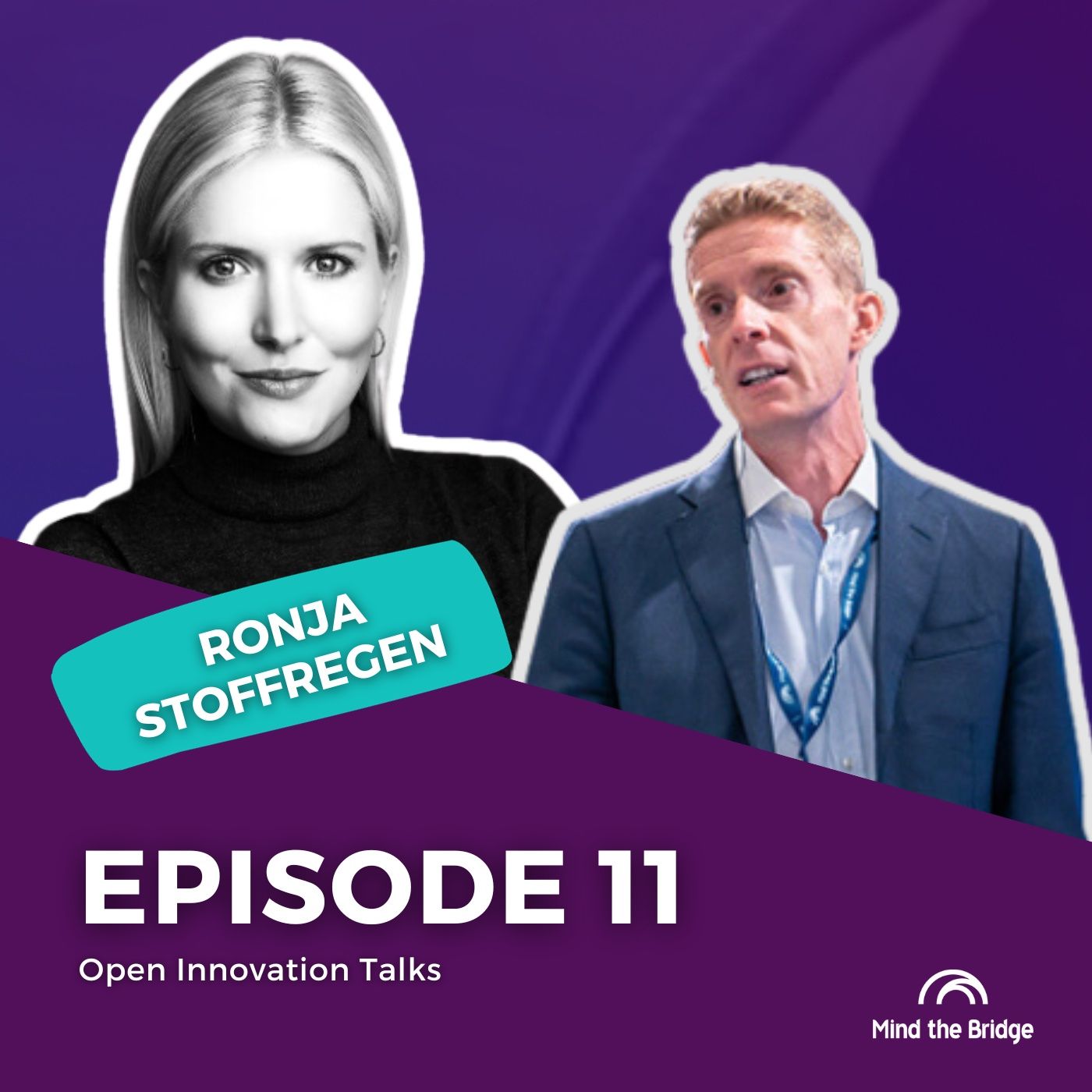
我是阿尔贝托·内蒂,资深企业家、大学教授兼Mind the Bridge主席。欢迎收看新一期的《开放式创新对话》之Mind the Bridge行业领袖访谈。今天的嘉宾是拉妮娅·斯托夫雷根。拉妮娅是Dibi Schenker全球初创企业管理部门负责人。Dibishenko是德国铁路运营商德意志银行旗下专注于物流的子公司,我们将与弗洛妮亚一起重点探讨Dibishenko的冒险客户单元。
I'm Alberto Netti, senior entrepreneur, university professor, and chairman of Mind the Bridge. And this is a new episode of Open Innovation Talks, Mind the Bridge Chats with Industry Leader. Today, my guest is Rania Stofregen. Rania is Head of Global Startup Management at Dibi Schenker. So Dibishenko is a subsidiary of German rail operator Deutsche Bank focused on logistics and together Furonia, we will go through specifically the adventure client unit of Dibishenko.
这无疑是场引人入胜的讨论,我已迫不及待。今天我们将深入剖析德国Dibishenker的经典案例。Dibishenker是德意志银行的子公司,负责该集团的物流业务,约二十年前于2002年2月被收购(如果我没记错的话)。很荣幸能与拉妮娅·斯托夫雷根展开对话。
So definitely an interesting discussion and looking forward to it. Today we will deep dive into a very, very interesting use case from Germany, is Dibishenker. Dibishenker is a subsidiary of Deutsche Bank. The company is the logistics are of Deutsche Bank and has been acquired over than twenty years ago in 02/2002, if I'm not wrong. And we have the opportunity to discuss with Rania Stofregen.
罗妮娅是Dbyschenker全球初创企业管理部门负责人。你好,罗妮娅。
Ronya is the head of global startup management at Dbyschenker. Hi, Ronya.
嗨,阿尔贝托。很高兴见到你,感谢邀请。
Hey, Alberto. Nice to see you. Thank you for having me.
这是我的荣幸。首先,或许该为观众简单介绍下Divischenko的背景。虽然我提到物流,但你们的故事远不止于此。作为一家历史悠久的公司,你们在创新领域留下了非常独特的印记。不过让我们先从公司概况开始吧。
It's a pleasure. So first of all, probably might be good to provide our audience a bit of background of Divischenko. Again, I say logistics, but probably there is a bit more to present, was giving you. I think you have a quite old history as a company and beyond a very, very interesting footprint on innovation. But let's start from the company first.
好的,当然。让我带您了解Bibishenker的供应链与运输故事。我们的总部位于德国埃森,业务遍及全球。就在去年,我们庆祝了公司成立100周年。我们的服务分为四大区域或业务单元,分别是陆运、海运以及合同物流。
Yes, of course. So let me take you on board of the story of supply chain and transport of Bibishenker. So our headquarter is in Essen, Germany, and we're operating on global scale. Just last year, we celebrated our 100 birthday. And what we do in our services are in four regions or in four business units, which are land transport and ocean, and then we have contract logistics.
和所有大型企业一样,我们有许多职能部门支持这些业务活动。
And as every big corporations, there are a lot of functional units supporting these activities.
你们是否有一个非常非常——可以说是有趣的,考虑到公司规模——创新部门?如果我没记错的话,应该叫全球创投与创新部,由Patrick Hoffmann领导。作为创新部门,Dibichenko目前覆盖哪些领域?
And do you have a very, very, let's say, interesting, you know, also the size of the company Innovation Unit, if I'm not wrong, is called Global Ventures and Innovation. It's led by Patrick Hoffmann. What are the areas that currently, as Innovation Unit, Dibichenko is covering?
是的,我很高兴分享更多细节,因为我也为能成为全球创投与创新部的一员感到自豪,我们推行的是如此全面的创新策略。让我为您详细说明:首先我们从洞察与情报开始,通过战略前瞻来理解趋势——区分哪些是需要关注的一般趋势,哪些是必须重视并采取行动的关键趋势。我的同事Jatsek很乐意与您分享相关趋势报告,如果您对未来发展感兴趣的话。
Yes. I'm excited to share more about this because I'm also very proud being part of the global ventures and innovation unit because we strive such a holistic innovation approach. So let me guide you through it. So first of all, we start with insights and intelligence intelligence where we do strategic foresights where we want to understand trends, understand which is just, let's say, a trend we need to be aware of and which of those trends that really need to be we need to be aware of and take our own actions. Him, my colleague, Jatsek, is always happy to also share with you some trend reports if you're interested in the in the future.
接下来是企业实验室环节。我的同事Nouri正与弗劳恩霍夫研究所合作开展'未来终端'项目,我们致力于研究尚未投入实际应用场景的技术,真正判断这些技术是会落地还是无法满足日常运营需求。然后是我的分管领域——风险客户部门。
And then we go on with the enterprise lab. Him, my colleague, Nouri, is together with the Fraunhofer Institute working on, yeah, projects called terminal of the future. So we're aiming for technologies that are not yet embedded in in real life scenarios. Yet we want to truly understand if those technologies are coming or if they're just not applicable for operational terms on a daily basis. And then we go over to my stream, which would be the venture client arm.
在这里,我和Sebastian Schumann的目标是与初创企业合作并成为他们的客户。这意味着我们不寻求控股,而是通过试点项目验证这些技术是否适合我们的日常运营。业务单元是重点合作对象,但我们也会与职能部门对接新技术。稍后我会深入讲解,现在先继续介绍全球创投与创新部的其他分支。
So here, together with Sebastian Schumann, it is our aim to collaborate with startups and become their customer. So what that means is we don't want to have any ownership of those companies, but, really, we want to, yeah, start pilots, see if those technologies make any sense for our daily operations. And here, the focus would be on the business units. So we always try to have new technologies coming into our organization, but it can also be in the functional units. And I will deep dive into that probably in a minute, but let me go on with a wheel of all the streams of global ventures and innovation.
接下来的板块是Schenker创投世界,包含风险构建与风险工作室。Tobias正在开展新业务构建,既包括内部创业,也包括与柏林机构合作的驻场企业家计划。还有两项——风险投资部门由Paulina负责,她对初创企业进行财务投资,很乐意提供更多相关信息。
And then the next arm would be going into the Schenker venture world, where we have venture building and venture studio, where Tobias is starting new building activities where either we do it entrepreneurship or we do it entrepreneurship with entrepreneurs and residents with a agency in Berlin. And lastly no. Two more. So then we have venture capital where Paulina is start ups where we're going into financial investments. So she's happy to give you more insights about that.
最后同样重要的是,我们有供应链先锋团队。这基本上构建了一个贯穿所有流程的客户中心化全景视角,因为它能帮助我们验证假设,同时也能获取市场的真实痛点,从而更好地理解客户面临的挑战,进而基于客户中心化方法调整我们所有其他活动。
And then last but not least, we have the supply chain pioneers. This basically builds a holistic overview into the customer centricity in all of our processes because it helps us to validate some hypotheses, but it would also get a, like, true pain points from the market to better understand, yeah, what are the challenges for our customers and so we can adjust all of our other activities based on customer centric approach.
非常好。这就是Dibi Shanker在创新前沿开展的整体活动全貌。你负责风险客户业务,具体来说(为不了解的人解释)就是与初创企业合作,共同开发解决方案,引入创新并将创新服务于公司。这样公司成为初创企业的客户,双方开始共同创新。这就是你的工作领域。
Very good. So this is the whole picture in terms of the overall activity that's been run on the innovation front by Dibi Shanker. You are in charge of the venture client, in the venture client, meaning for the people who don't know it, partnering with startups in order to co develop a solution onboard innovation and put innovation of the service of the company. So the company become the client of the startups and they start innovating together. So that's your field of action.
如果我没记错的话,Schenker的风险客户业务始于2016年,而你加入的时间相对较晚。在讨论这点之前,我想先了解一下你的背景,这相当有趣。你在2020年加入Shankar之前
If I'm not wrong, the venture client in Schenker started back in 2016 and you come on board a bit more recently. Before discussing that, I would like to dive a bit into your background. It's quite interesting. So what you've done before joining Shankar in twenty
二零二一年,是的,没错,
twenty twenty twenty one, yes. Yes,
但你在此之前的生活——加入Schenker之前,以及与Schenker共事的岁月。
But you've done before Your life before Schenker and then your after living with Schenker.
百分之百是这样。首先,我非常庆幸在荷兰和丹麦求学期间遇到了许多激励人心的人。我本科读的是国际商务专业,抱歉,硕士则主修金融与战略管理。
100%. So first of all, I am quite happy that within my studies in The Netherlands and in Denmark, I got to meet so many inspiring people along the way. I did my bachelor's in business international business. I'm sorry. And then my master's in finance and strategic management.
在此期间我还参加了大量左右逢源的交换学期。要向所有正在开拓自己道路的人致敬,看到大家都在各自的领域汲取灵感实在令人振奋。我对这段求学经历感到无比欣喜。毕业后你通常面临黑白两道选择:要么进入咨询行业,要么投身投行领域。
And along the way, I got to be quite got to attend to quite a lot of exchange semesters left and right. So shout out to everybody, yeah, prospering their trajectories themselves. It's really exciting to see everybody doing their own turf and left and right getting impulses. So I'm really, really happy about my study period. And then after that, you would either go on the white on the black side, meaning you would either go on the consultancy side or you would go into investment banking.
当时我选择了白色阵营,在斯图加特从事技术咨询工作。在那里我参与过多个项目,比如建立创新中心,或是为卡车行业开发数字化产品。这已经是个不错的开端。但很快,我和两位同事莉娜与米卡就意识到市场需要企业孵化器。
And I had chosen the white side where I went into a technical consult in Stuttgart. And there I did projects such as building up an innovation hub or helping with the digital product for a yeah. For in the in the in the trucking industry. So it was it was already a good start. However, very fast, we realized together with two colleagues, Lena and Mika, that there's a need for a company builder.
那时风险架构师的职位还相当新颖。长话短说,我们三人于2018年共同创立了企业孵化器Akita Flux,专注于医疗保健、运输物流及移动出行领域。我在职三年期间,主要工作包括建立创新中心、组建风险投资部门、为企业和中小企业合作伙伴开发数字化产品,同时我们自己还运营了些有趣项目——比如在斯图加特市中心建立加速器或创新中心。这些故事或许更适合边喝啤酒边聊。
And back then, the the position of venture architect was quite newly. And, yeah, long story short, the three of us founded in 2018 the company builder Akita Flux, which had a focus on health care, transport and logistics and mobility. So what we did while I was there for three years was building innovation hubs, building venture capital arms, building new digital products for our corporate and SMEs partners, and also having some some interesting ventures left and right ourselves where we would build an accelerator or we would build an innovation hub in the heart of Stuttgart. So there's a lot more to tell, maybe at a at a beer or two. And then yeah.
后来我申请了世界卫生组织下属法兰德大学的优秀博士职位,并结识了我的导师里斯·费姆斯。2021年,我开始了博士研究,重点探讨初创企业如何调整商业模式。补充说明一下,我本人恰好经历过所有三种相关角色。
And then later, I realized or I applied for the the WHO, WHO, University in Fallander for a PhD, for an excellent PhD position. And I got to know Rhys Fames as my supervisor. And then in 2021, I started my PhD trajectory with a research focus on where and how startups pivot their business model. Because just to give you a little bit more color on this, everybody like, I've been in all three positions. Right?
作为创始人时,我常讨论需要做出哪些改变;在企业任职时,我们会评估产品是否需要调整商业模式;作为投资者时,我们也总强调要重新审视衡量标准和关键指标。虽然人人都在说要转型商业模式——
I've been talking as a founder, talking about, okay. What do we need to change? I've been in the corporate position where we think, this is a nice product, but maybe we need to change the business model. And I've been on the investor side where we also said, hey, guys, we need to look at our measurements and KPIs. And everybody always talks about, yeah, we have to pivot our business model.
甚至有人以此自夸,但没人真正说清楚转型的本质。自2015年进入创业圈以来,'我们必须转型商业模式'这句话总在耳边响起。我不禁思考:这真是好事吗?因此我决定将研究方向聚焦于初创企业转型的时机、方式、定义及其对绩效指标的影响。
And even sometimes people brag about it, but yet nobody really says, what is the pivot? And so when I came here so since 2015, since I'm in the start up world, it would always come around like, okay. We have to pivot our business model. And I'm like, is this a good thing? Like and so I made my own job to focus my research topic about when and how startups pivot, the definitions of pivots, and also what what are the impacts on performance factors.
目前研究仍在进行中,我把这称为'周末特权爱好'。正是在这个阶段,我意识到自己更想深入参与商业模式的落地与规模化。当外部博士研究、自主创业和各类项目形成循环时,我知道是时候——
So I'm I'm still in the middle of it, but it's a it's a I call it, it's my privileged hobby for some weekends. And so this was also the time where I realized that I wanted to go further into the implementation and scaling of business models and startups. And that basically led to one another that I said, okay. Doing an external PhD, having your own company, and focusing, left and right on projects, that are having a, you know, reoccurring circle is for me the time to move on to
对我而言确实如此。
much for me. Yes.
确实如此。而且我得说,这有点过头了。但好处是我的日子不止24小时。我不太愿意跟所有人分享这点,但幸运的是,我的时间比你充裕些,所以我能完成很多事。
Exact yeah. And it's a little bit much, I must say. But the good thing is my day has more than twenty four hours. I'm I'm not happy to share that with everybody, but, luckily, my day is a little longer than yours. So I get done, quite a lot of my day.
不,开个玩笑。但那正是我决定转向企业端的契机,从那里起步。我认为申克在创新实践方面原本就处于领先位置。我之前和埃里克·维尔辛聊过,他在创新理念、组织锚点以及全球创新活动的愿景上都给了我很大启发。
No. Just kidding. But this was the time where I then decided to, move over to the corporate side and, yeah, go from there. And, I think, Schenka was already at a really good spot in terms of how they did innovation before. I had a I talked to Erik Wirsing before, and he inspired me in terms of how he sees innovation, what is the anchor he has in the organization, and also his vision for all the global innovation activities.
对我而言,这就像是顺理成章的下一步。于是我在2021年加入了。
And for me, this was like the next right thing to do. And so I joined in 2021.
2021年啊。我想你当时带着咨询背景的积淀和充沛精力投入了这项新事业。能聊聊迪比尚科公司是如何开展风险客户业务的吗?或许还能分享些可比较的指标数据?具体运作机制是怎样的?
So 2021. And then I think you you brought your consulting background and your energy into into this new venture clienting. Can you share a bit how company like Dibi Shanker approaches venture clienting? And for maybe also give us some some numbers, some KPIs that we can use to compare. So how does it work?
你们的实施策略是什么?你个人的经验贡献如何推动了调整?毕竟我们讨论的是开放式创新模式,但最终存在持续演变的背景因素,无法固化在特定框架里。今天我们谈风险客户,但讨论的方式和模式本身仍在进化,我们以此为业服务众多企业,每六个月就会迭代——发现有效的方法,淘汰失效的,这就是个动态发展的概念和模型。
How do you guys approach it? And then what has been your contribution of your experience to reshuffle a bit? Because, again, we're talking about open innovation models, but at the end, there are constantly evolving context that cannot be crystallized in a specific way. Yes, today we talk about venture client, but the way we are talking, the model is still evolving, it's changing, so we do that for a living supporting many companies and every six months there are changes every six months. We modify the approach because we see things that work, things that do no longer work and so is is a an evolving concept and model.
那么DB申克作为风险客户,从过去到现在,你们独特的实践路径是什么?哪些有效、哪些需要改进?你有哪些经验可以分享?
So how how it was and how it is today, DB Schenker, a venture client, what is your unique approach, what you're doing that works, what you're doing that doesn't work, needs to be changed, what's your experience here?
没错,正如你所说这是套高度动态的方法。我们不仅要根据能力和资源,更要根据实际效果不断调整。不过或许我该从更早说起——早在2016年就有大批初创企业接触D...
Yes. As you say, it's a really, really dynamic approach, and we also always have to adjust it depending on not only the capabilities, the resources, but also, let's call it, what works and what doesn't work. Right? But maybe I'm taking a step three before one. So back in 2016, there was a lot of startups approaching D.
B. Schenker涉及多个业务单元和国家。当时的情况是Eric意识到需要集中管理这些活动。在我加入之前,团队已经出色地建立了流程,集中了活动,进行了基准测试并探索了方法。这要归功于之前担任我职位的Daria。
B. Schenker on multiple, you know, business units, but also countries. And so what happened back then was that Eric realized that there's a need for centralizing these activities. And so the team beforehand, before I came also along, did a fabulous job in, like, building a process, centralizing the activities, also benchmarking, searching ways. So by with my former former Daria who had my position before me.
她在建立全球初创企业管理流程方面做得非常出色。这里需要说明的是,'风险客户管理'这个术语最近才变得热门。我甚至在LinkedIn上都不使用这个词,因为它只在我们的小圈子里流行。如果我对DB Schenker的同事说我做风险客户管理,可能得花半场会议来解释这个词。
She she did a really good job in setting up a a global central process for start up management. And then here also in brackets, the term venture clienting has just very recently become very attractive. And even I still don't use it on my, for instance, LinkedIn approach because it's just known in our bubble. And, if I want to talk to colleagues at DB Schenker and I tell them I'm doing venture clienting, half of the meeting will be done because I I kinda need to ask and explain. So that's why
确实如此。这是个好观点。虽然这个术语正在普及,但我觉得这是我们内部发展过程的一部分,因为大多数人会问'你的客户做什么的?'
I Exactly. It's a good point. Again, the terms is becoming more widespread, but I think it's part of our internal journey because most of the people say, want your client in what? So that is
我
the I
意思是,开放式创新固然重要,但我们常常沉浸在自己的环境中,忘记了其他人过着普通生活、有着常规认知。他们根本不在乎我们如何定义事物。我们把事情微观解析得连他们都不理解了。抱歉...
mean, if you open innovation, So again, but most of the time, we are so immersed in our own environment that we forget that other people have regular lives, regular understanding. They don't give a shit about all the way we define things. We are micro parsing things that actually are broader and they do not understand. Sorry for
不,不,我很赞同。关键是我们必须始终与运营部门保持联系。
my No. No. No. I I love it. And it's important that we don't that we are always connected to our operation and and operation side.
因此命名必须直击要点,所以我的职位是'全球初创企业管理负责人',这样更直观。总之,2016年开始我们加强了合作,集中管理更多主动联系Shankar的初创企业,他们总是说'我们有这项技术,我们有这个解决方案'等等。
And so that's why it has to be somewhat straight to the point. So that's also why it's called head of global startup management because it's a little bit more straightforward. Anyway, so then in 2016, we started collaborating and centralizing more of those startups that approached Shankar and said, hey. We have this technology. We have this solution, yada yada.
于是我们开始识别组织中那些热衷于探索创新、同时具备适当资源、能力、思维模式,并渴望将创新置于日常运营优先位置的人员。随后几年里,我们建立了所谓的'推动式'机制,让初创企业能够主动融入组织。这样,原先的团队——即初创企业管理团队——总能发现解决方案,确认其相关性,并在组织内找到相关利益方来推动技术落地。这套机制运行得非常成功,其最大成就是营造了创新意识。
And so we started to identify people in the organization that are keen to look into innovations, but also have, let's call it, the right resources, capabilities, mindset, and also eagerness to put this on top of their daily operations. And so what started was for a couple of years, a setup of, we call it push approach, so that startups would come and move into or push themselves into the organization. So then, the the previous team would always, so the startup management team would always, find see the solution, identify it as relevant, and then find relevant stakeholders in the organization to push that technology into the organization. And that worked really, really well. And what it has achieved is that it's created awareness.
这建立了一个大使网络,培养了一批不仅深信初创企业管理和合作价值,更能推动实质影响(而非表面创新)的人才。你刚才问及关键绩效指标,我稍后会详细说明。但这一切的起点是我们证明了这些活动不仅是年轻人从事的酷工作,而是真正为组织创造价值。随着时间推移,这项工作变得越来越专业化,我们也尝试了黑客马拉松等多种形式。
It created an ambassador network. It created people that truly not only believe in startup management and startup collaborations, but it would also foster, that it's not just, you know, innovation theater, but that we actually create impact. And you also asked me about some KPIs, and I'm gonna deep dive into that in a minute. But, you know, this was the beginning where we were able to prove that our activities is not just, some youngsters having a cool job, but really creating impact for the organization. And so, it got more and more professionalized throughout the years, and, and then, you know, things have been tried out like hackathons or you know?
这个体系也自我进化,促使我们意识到需要建立类似风险投资部门的机制——在与德国铁路公司完成首批联合投资后,我们明确应当建立自己的风投机构和创业项目。这最终推动了申克创投(Schenker Ventures)的诞生,由帕特里克·霍夫曼创立,他现在领导着全球创投与创新部门。
It was also present itself. It presented the idea that we need something like a venture capital arm because we also did the first investments together with Deutsche Bahn and then realized, okay, we should have our own venture capital arm. We should build our own ventures. And so this was basically also pushing the idea of then Schenker Ventures, which was then started by Patrick Hoffmann and who's now leading the entire Global Ventures and Innovation unit. Okay.
但当我加入时——阿尔贝托你刚才也提到——我此前有五年的咨询顾问经历。虽然这有时会带来困扰,但一旦当过顾问,你就无法停止审视流程和产品的习惯:要么想创造更多收益,要么想节省成本。这或许是商学院和咨询行业培养的思维定式。现在无论走到哪里,哪怕只是买咖啡时遇到服务不畅,我都会立刻产生优化冲动。
So but then when I when I came and you kinda mentioned it before, Alberto, the fact that I been consultant for good five years before. And I think it's it's a little bit of a pain sometimes, but you can't let go once you've ever been a consultant to look at processes and products. And either you wanna make some more money or you wanna save some money. So maybe this is just what what you learn after a lot of business schools and consultancies. It's just wherever I go, even if I just buy a coffee at a store and it's, like, not working well, I'm already like, oh, okay.
这种思维也体现在申克的工作中。必须承认,和我共事可能很费神——我总想透彻理解每件事,但发现改进机会时,又必定要确保为申克创造最大价值。幸运的是,埃里克是位完美搭档,他不仅能理解这种理念,还帮助我将这些潜力转化为现实成果。过去几年最重要的转变,就是我们确立了'拉动式'工作方法。
I need to change something. So that basically also happened at Schenker. And I must admit, I think it can also be quite exhausting working with me because I I mean, obviously, I wanna understand everything, but then when I see there's potential for changing things, then I also want to make sure that we create the biggest impact for Schenker. And together with Erik, I had a perfect companion who understands and sees it and also helped me to, yeah, get those things as far as those potentials to realize them in real world. And the biggest thing I think now in the past few years, what we've changed is, for instance, we identified with a pull approach.
这意味着我们不再单向推送初创方案,而是采用拉动策略:从组织战略出发,基于数字化战略定义重点领域,识别可通过初创方案实现数字化和自动化的产品与流程环节,以此支撑申克的整体数字化战略。我们持续举办跨部门研讨会来定位痛点——这里需要说明的是,真正的痛点既不是搭建新云基础设施,也不是连接显示器这类基础问题,而是要找到两者间的精准平衡点。
So meaning that not just pushing start up solutions into the organization, we now, try to focus on a pull approach, meaning we start at the organization defining strategic scouting fields, defining like, coming from the digital strategy and then understanding where are the fields and products and processes that we can digitize and automize with the help of start up solutions. So how can we pay into the digital strategy of dbSchenker? And then so we have, ongoing workshops with business and functional units to identify pain points. I mean, here, another whole session could be about what is a pain point, because it's it's not about, building a new cloud infrastructure, and it's also also not about how to connect your monitor to your computer. So, you know, you have to kind of find the right balance, within those two.
我们还建立了新的治理架构,设立创新委员会。这套体系确保我们开展初创合作试点时,不是为试点而试点,而是要实现我最看重的目标:当试点验证价值(无论是节省成本还是创造收益)后,就将其转化为标准运营流程。
And then also, we set up a new governance structure. So we have implemented innovation boards. And this in combination helps us to not just do pilots for the sake of doing pilots with startups, but to actually, like, what's for me most important is once the pilot is implemented and the organization sees the value, again, either by saving or making money. And and then we go on and say, okay. Now this pilot is gonna be implemented into our standard operations.
我认为这正是我们成功的关键——我们精准地找到了真正重要的初创企业,并建立了大规模记录机制。这基本上就是我们过去两年的工作重点:团队扩张、构建风险客户社区以便从中广泛学习。当然,还包括强化申克公司的市场定位,不仅对内也对外。不过这里还有即将宣布的重要事项,敬请期待。
And that is the point where I think this has been a success because we hit the nail upon finding startups that really matter and that we've done a mass logger. And so this is basically what we've done in the last two years, growing the team, also building the venture client community so we can learn left and right from it. And, yes, strengthening the positioning of Schenker, not only internally of Schenker, but also externally, but here's also something to be announced soon, so stay tuned.
现在请用具体数据帮助我们理解规模。目前有多少人在运营这个风险客户工厂项目?你们每年通常与多少家初创企业合作?开展多少次侦察冲刺或基于挑战的战略侦察?有多少试点项目最终实现了工业化?请用数字让我们理解像Dvishenko这样的公司活动流程。
Now give us some numbers again also to help you understand the size. How many people are currently ranking me running this venture client factory practice whatever you like. How many startups per year do you typically engage with? How many scouting sprints or how many challenge based strategic scouting field originated scouting UU URANA, how many pilots how many pilots turn into industrialization? Give us some numbers to understand what the flow of activities for a company like Dvishenko Both parties.
当然可以。所有初创企业相关活动(包括创新项目)中,我们有7名全职员工,还有3-4名年轻人协助我们完成核心工作,他们可能是实习生或在读学生。
Yes. Absolutely. So for all the startup activities, so this also includes the innovation projects. We are full time employees. We are seven people, and then we have three to four youngsters that help us with either the masterpieces or interns or working students.
这就是我们全球创新团队的基本构成,主要分为创新项目和互惠客户单元两个方向。每月接触的初创企业数量会有波动,但通常保持在10到20家之间——有些是我们主动联系,有些通过领英等渠道接洽。目前我们的创新平台已收录超过4,200家初创企业。
So this is basically the team out of global innovation, and then we have the two streams innovation projects and mutual client unit. And then number of startups that approach us, let's say let's say it in a month because it ebbs and flows. But we typically have between ten and twenty startups in a a month that somehow either get to us or we get a link or they approach us via LinkedIn. So there's also, like, looking at total numbers. So right now, we have more than 4,200 startups in our innovation platform.
我们与Itonix合作搭建了这个创新平台,完整展示了我们的创新流程。在这4,200家初创企业中,我们启动了150多个试点项目,其中130个已实际执行——有些因客观原因未能推进。在这130个已执行项目中,超过45个现已进入标准运营阶段。
Here, we work with Itonix as our solution provider, where we also have, yeah, displayed our entire innovation process. And out of those 4,200 start ups that are in our innovation platform, we have started more than a 150 pilots. Out of those, more than a 130 has been actually executed because I mean, obviously, because of us or because of the setup. Some pilots never made it to execution. And out of those a 130 pilots we conducted, more than 45 are actually in standard operations.
这个数据表明,那些进入标准运营的初创企业确实产生了日常影响力。现在越来越多的分支机构和国家可以直接采购它们的服务,因为这些企业已作为白标供应商入驻。这对初创企业而言非常有利——一旦试点成功且达成KPI,就能在全球120多个国家快速扩展业务规模。你刚才还问到了侦察方面...
And I think this is an indicator that we can say those startups that are now in standard operations truly make a day to day impact. And more and more branches and countries can just purchase their services because they're white labeled as suppliers now. So this is pretty cool because also for a startup, once you made it to a pilot and the KPIs we set are successful, then you can also scale your services on a global level really, really fast because then, again, we have more 120 countries where you can scale your solution to. And then you just asked us about scouting. You
你提出了关键观点。从覆盖六年活动的数据来看,你们接触了4,200家初创企业,最终测试150家,实现工业化45-50家,转化率约1%。也就是说,每100家接触的初创企业中,有1家最终能成为像DPShanker这样的企业的创新供应商,在组织内部产生影响力并创造收益——这正是游戏的目标。这个比例与典型风险投资单位的筛选率其实相差不大。
made an important point, so substantially. Looking at your numbers that are probably covering six year of activities, so you say we are 4,200 staff that in certain way we got in contact with and at the end we tested 150 and we ended up with 40 five-fifty industrialization. So we're talking about 1%. So 1% of the startup that you get in contact with at the end become a potential supplier of innovation for a company like DPShanker and start producing the impact inside the organization and making a revenue because that's the goal of the game. Just to give you the ratio, that are not that far from the typical ratio of venture capital investment units.
我们讨论的是你所接触企业中的一小部分,那些最终能做出成果并可能被我们规模化应用的案例。这就是创新经济的比例,对个体企业至关重要。特别需要理解的是那1%企业的命运。比如这45%与Gibbyshank公司展开合作的企业,它们创造了怎样的价值和影响?合作后规模能扩大多少?你手头是否有具体案例或范例?
So we're talking about a few percent of the one that you get in contact with, the one that the end will make something that probably at the end we're able to scale up. So that's how the ratio of the innovation economy and that's important to to single. What is super important to understand is that what happens to the 1%. So this 45% that started a collaboration journey with company Gibbyshank, what is the impact, the value that you produce it and how much they how larger they will become afterwards. Do you have some some some cases, some example?
是的,我很乐意分享。关键是在我们共同开展试点前,会与初创企业及业务部门协商制定统一的KPI指标。如果这些指标在试点中期和结束时都能达成,我们会全力将其纳入标准运营流程。以实际帮助过我们的初创企业为例,Avatore就是个典型案例——它本质上是套虚拟仓储系统,在疫情期间旅行禁令实施、客户因安全原因无法进入仓库时发挥了重要作用。
Yes, I'm happy to share some. So what's important to know is that before we all agree on conducting a pilot, we set KPIs that are aligned with the startup and also our business or functional units. And so if all of those KPIs are met in mid term and by the end of the pilot, then we try our hardest to also implement it into standard operation. And so now looking at those startups that has really helped us, one really nice example is Avatore, which is, at the end of the day, a virtual warehousing gadget because it helped us, especially when we had COVID hitting us and we had travel bans. And, yeah, our customers weren't allowed to go into the warehouse anymore due to safety reasons.
该方案让我们能快速向客户展示仓库实况,他们通过VR眼镜就能自主导航。这不仅完美满足了我们的报告要求和考核指标,更让客户能实时掌握现状。短短一年内,这个方案已在29个国家落地。当然,这种仓库附加设备比较容易实施,但要嵌入现有软件系统就复杂得多。
It helped us really, really quickly to go ahead and show our customers still the warehouses, and they were able to navigate themselves through the virtual reality glasses. So this was, not only made a really nice, impact in terms of, we were able to fulfill our, reporting guidelines and measurements, but also it's helped the customers to see, yeah, what's the status quo. And within just one year, this solution has been implemented in more than 29 countries. So, I mean, obviously, this is rather easy to implement, Gedget, because it's just an add on in a warehouse. It's becoming more more complicated when you have to implement and embed it in existing software.
但可以说,所有仓库适用的方案都是附加组件。如此短时间内实现规模化,充分证明只要业务端存在需求,全球化就没有边界。
But let's just say here, everything that we can use in a warehouse is an add on. Having the scaling in such a short time definitely can prove that if the demand and the want is there from the from the business side, then there are no limits for globalization.
嗯,很有意思。我认为你的观点非常准确,因为我们与Justin等多家公司讨论时都在探讨:典型的实施周期是多久?
Yeah. Oh, that's interesting. And I think you say something that is very accurate because at the end, we we we are discussing with many companies like Justin to say, okay, what are the typical time for implementation?
这正是我们的成功案例之一。说实话我希望能...
And that's the this is one of our success stories. Right? So I wish I could
但具有强力数字化组件的方案——回到经济本质来说——数字化初创方案通常扩展更快,因为实施简单。若是深科技解决方案,需要更深地融入生产、工厂和物流体系,耗时就更长。最近与韩国大厂讨论时,他们表示不涉及首尔工厂的试点实施很快,但涉及实际生产制造问题的方案可能需要数年。这并非没有价值,也不意味着应该放弃,但我们必须明白:有些项目的推进周期天然较短,有些则较长。
And but the one that is a strong digital component, Again, going back to the start of the economy, digital start up solution typically scale up fast because they are easy. If you go to the deep tech solution, that's something that requires a bit more to be more ingrained with production, factories, logistics, it takes longer. Again, I was discussing with a big Korean player and say, okay, any pilots that is not attaching the factory in Seoul takes short time to be implemented but when we start doing things that impact the real factory manufacturing issues takes long, it may takes years. Doesn't mean that it's not worthwhile And doesn't mean that it's worth work to to to be contained. But again, we need also to be get ready that something has definitely shorter navigation cycle and some things takes longer.
而且你的业务组合可能需要同时包含这两方面。
And probably your portfolio needs to have that both.
完全正确。从我们角度来看,关键是要理解当我们进行试点时——这些试点针对业务部门,比如运输、海运或合同物流——通常还需要有客户参与。因为我们的所有服务都是面向企业的,对吧?所以当我们想在一条线路上试用不同轮胎(因为这是最新技术),或者想在卡车上安装太阳能板时,都必须确保可行性。
Absolutely. And what's important to understand on our end, when we do a pilot, which is for business units, so then transport and ocean freight or contract logistics, we usually have to have a customer on board too. I mean, because all our services are for a company. Right? So we have to ensure that we can try out when we want to have different tires on a route because that's that's the latest technologies or when we want to have solar panels on a truck.
首先,Schenker正在推行轻资产战略。这意味着我们甚至需要请求我们的承运商(也就是供应商)配合,问他们'能否在你们的卡车上试用太阳能板?'这样一来,实际上我们不再是客户,而承运商反而成了客户。同理,当我们想在仓库测试自主导航车(AGV)时,为了能在仓库进行测试,我们必须向运营仓库的客户提出请求:'我们能进行这个试点吗?'
I mean, first of all, Schenker is also pursuing an asset light strategy. So this would even mean we would have to ask our carrier, which is our supplier, to ask, hey, can we try out the solar panels on your truck? And so then, actually, we are not even the customer anymore, but our carrier would be the customer. The same is true when we want to try out, let's say, autonomous AGVs in the warehouses, then we're not I mean, in order to try it out in a warehouse, we would have to ask our customers for whom we operate this warehouse to ask, hey. Can we try out this pilot?
这应该能提升效率。你可以向他们解释为什么这对他们也有好处。但显然很多公司会说'先找别人试试吧,如果有效再来找我们',对吧?
It should be increased efficiency. It could, you know, like and and tell them why it would be beneficial for them too. But, obviously, lots of, companies would also say, well, just try it out with somebody else. And if it works, come back to us. Right?
正因如此,我们必须始终扮演协调者的角色,努力寻找那些愿意尝试和试点新配置方案的企业。
And so that's why we always have to be this mediator trying to also find companies that are interested in trying and piloting new setup solutions.
让我们快速转向KPI方面的讨论。你们如何衡量这些活动?
Moving the discussion quickly to the KPI side. How do you measure your activity?
是的。说到底,一切都归结为
Yes. So at the end of the day, it all comes down
我正在整合前顾问们。你如何衡量自己?你会说,好吧。今年表现不错。这是一次很好的表现。
to I'm accumulating the the former consultants. How do you measure yourself? You say, okay. This has been a good year. This has been a good a good performance.
你们如何内部衡量风险客户部门的效率和生产力?
How do you measure internally the efficiency and the productivity of a venture client unit?
是的。归根结底,最终归结为一个数字——你节省的欧元或创造的欧元。阿尔贝托,我知道你也在写关于如何衡量创新单元成功的论文,对吧?
Yes. Bottom line, it goes down to one number. It's the euros you save or the euros you generate. And I know, Alberto, you're also writing on a paper how to measure the success of innovation units. Right?
所以等论文发表后,我很期待阅读。但说到底,我们虽然是成本中心,但也希望为公司息税前利润做贡献。这是肯定的。不过那是最底线指标,在此之前显然还有各个层面的关键绩效指标。
So once that's published, I'm curious to read that. But, yeah, I mean, ultimately, we're a cost center, but we also want to contribute to the the to the EBIT of the company. That's for sure. But that's the bottom bottom line. Before that line, obviously, there are KPIs on various levels.
就试点运营而言,我认为这是第二重要的指标。不仅限于试点内部。比如能节省多少资金?如何提升客户满意度?如何增强雇主品牌?如何缩短技术上市时间?
On the operations of our pilots, this is, I would say, the the the second most important number. This not only inside of the pilot. So, like, again, how much money can be saved? How can we increase customer satisfaction? How can we increase employer branding, how can we increase time to market in terms of technology.
所有这些KPI都很重要。但对我们风险客户部门而言,关键还要评估是否推动了正确项目——我们只想推进那些真正能产生影响力的项目。如果我们只选择容易但影响甚微的项目,那就是在错误配置资源。所以这始终需要权衡。
Like, all these KPIs come into place. But then also, it's important for us to like, for us as a venture client unit to measure whether or not we push the right projects because we only want to push those projects that actually create an impact. Right? If we only follow those that are easy, however, have little or no impact, then we also dedicate our resources for for the wrong. And so it's it's always an act of balancing.
或许这也是给那些考虑进入风险客户和创新领域的人提个醒:你必须能接受主题切换——不是每天,但时不时会发生。当你为一个项目付出巨大努力后,可能因为新机遇出现或发现实际效果不如预期,就必须果断放弃并寻找下一个重点。这对团队(当然也包括我)来说有时很有挑战性。
And maybe this is also a shout out to those thinking about going into venture client and going into innovation innovation. You have to be fine with changing your topics, not every day, but every now and then. So you've been working hardly on a topic, and then just just because something else comes around the corner or just because you realize it actually doesn't bring the impact you initially thought, You just have to kill it and find the next, you know, big thing, which is sometimes challenging for for the team, but also, obviously, including me. So
你提到了一些我认为很重要的事情。比如说,我们是一个成本中心,和所有成本中心一样,你需要高层的支持,因为显然会有人反对,你在做有价值的事情。但同时,如果你能创造价值,你当然可以,比如说,为自己制定一种内部保险策略以求生存。因为治理可能会变,战略方向可能会变,短期或困难时期可能会来临。所以,你知道,人们可能会改变主意,但如果你身处大型组织中。
You you you mentioned something that I believe is important. Say we are a cost center and like all the cost center you require top level buy in because obviously someone say no, you're doing something that is valuable. But at the same time, if you're able to produce value, you definitely can, let's say, create a sort of internal insurance policy for your own survival. Because again, governance might change, strategic direction might change, short term or bad times might happen. So, you know, people might change their mind, but if you're in large organization.
这就是为什么能够展示你所创造的价值很重要。我们刚才讨论的KPI问题也很重要,需要再次强调,这就是你正在创造的价值。问题在于,正如我们讨论的,有些项目,你知道,那些快速推进的试点项目,你可以展示一些价值,但有些项目确实需要更长的消化时间,因为越接近核心就越困难,而这些项目可能非常相关,影响巨大,但最终很难在过程中衡量。你需要走到终点,而那个终点可能遥遥无期。你如何管理这些不同的时间跨度?
And so that is why important to be able to show the value that you created. And then the KPI discussion we just said is important to showcase again, that's the value that you're creating. The problem is that as we discussed, there are some projects, you know, the projects and POCs that go into Serra fast and furious and quickly and you can show some value, but that's something that's required definitely more longer digestion time because definitely more close to the core is more difficult and those one are super relevant, maybe super impactful, but at the end it's very difficult to measure what during the navigation. You need to come to the end and that end might be far far away. And how do you how do you manage these different horizons?
你如何在展示价值的同时创造长期价值以求生存。因为如果你是一个企业风险投资基金,假设你的结构是一个基金,顺便说一下,这只是众多企业风投基金中的少数情况,你会说,好吧,我们有五年的资金。我们完成了。给我钱。我会在八年后回来告诉你成果。
How you can try to survive showing value but also producing long term value. Because again, if you are a corporate venture capital fund, assuming that your structure is a fund that is, by the way, just a minority of the corporate venture capital fund that are all around, You say, okay, we have money for five years. We are done. Give me the money. I will come back in eight years to tell you what you've done.
但如果你有部分资金需要每年与年度预算竞争,这就成了一个复杂的讨论,因为你总是需要在最后展示一些成果来培育下一个重大项目。你如何应对?这是个难题。
But if you have some of that does again, you are competing with the annual budgeting over on an annual basis. That's something that is a complicated discussion to have because you need to always to show something at the end to nurturing the next big things. How do you manage that? Difficult question.
这确实是个难题。而且我认为,根据你需要汇报的对象不同,你必须准备不同的论据。也许这么说太直白了,但归根结底,我觉得这就是我们都在玩的游戏规则,对吧?所以我理解,并且认为在创新领域,当你能用数据证明观点时,每个人都会得到更好的指引。
Is it is a difficult question. And I would also say depending on who you have to report to, you need to have different argumentations at hand. And, I mean, maybe this is way too honest, but, ultimately, I think that's just how we all play this game. Right? And so I understand, and I think, ultimately, everybody in innovation is well guided when you have some numbers to prove your point.
当你能说明——我的意思是,你当然不会把功劳都算在自己部门头上——但当你能够证明过去完成的项目确实创造了实际价值(这就是我们自2016年积累的优势),并且这些价值已被量化体现为实际影响力时,关键是要让高层管理者相信我们的判断力,相信我们把时间投入了正确的项目。同时也要接受:有些项目起初很好,但后来可能就不再值得继续了。
And when you can also say that you're basically I mean, you would never calculate it towards your own units. But when you can say that the projects you have done in the past and here the beauty of us is being already around for since 2016. But the point is that we already are able to prove and demonstrate that we created real value and we captured it and now it's an impact. But definitely, we need to have people in the top management level trusting us that we believe and that we, you know, put our time into the right projects. And, it must also be okay that maybe sometimes, it was a good project, until it was not a good project anymore.
这就是每个推动创新的人都必须面对的混乱局面。我认为我的职责之一就是尽可能为团队和初创公司创造自由运作的空间,充当调解人。当项目出问题时,要站出来承担责任并据理力争,无论是继续推进还是终止项目。这本身就是工作的一部分。所以很难说我们具体如何证明价值,因为方式总是取决于对象——但核心永远是展示我们能创造的潜在价值。
And, so this is a little bit of the chaos everybody who is pushing innovation has to deal with. And I think it's also part of my job to make it as freely as possible for the team and the startups to operate, be the mediator. So if things go wrong, be there and, you know, take it and fight for it, that we can either continue or also cancel certain projects. But I think that's just part of the job. So I can't really say how we demonstrate it because it really depends of who I think the best way is always to demonstrate the value we can create.
问题往往取决于管理层,他们只做六、十二或二十四个月的规划。创新很难在如此短的时间内被量化体现。正因如此,我们必须保持耐心。
And the issue is always depending on the management level that they only plan in six, twelve, or twenty four months. So and innovation cannot be captured and put down a number in in this short period of time. And that's why, yeah, we have to have a long breath.
说得很对。顺便提一下,归根结底关键在于沟通——无论是内部沟通还是外部沟通。因为尽管你的工作本质更核心,但最终人们如何认知它至关重要。而你在组织内部长期工作的经验,能让你触达更多人,展示价值与进展。
That's a good point. Yes. And by the way, at the end, one of the the common point is working on communication, internal communication, external communication, because despite your job is definitely more more core at the end of the way people perceive it is super important. But the fact that you have been working inside organizations since so while, you'll be able to to reach many people. You are able to show value, to show progress.
这无疑会让你的人生收获良多。结束对话前,你在DBS Shanker风险客户部门掌舵这些年,最大的心得是什么?最想给同事的一条建议又是什么?
That's also definitely make your life a big teacher. To ending our conversation, what is your number one learning after the these years at the helm of the venture client unit of DBS Shanker? And what is your number one tips for your colleagues?
首要心得。我确实有很多收获。哇,首要心得嘛...虽然听起来老套,但就是相信过程。因为有时候我也会感到迷茫。
Number one learning. I have a bunch of learnings for sure. Wow. Number one learning, I would say, it sounds cheesy, but trust the process. So simply because sometimes I was like, okay.
要知道运营中会遇到无数障碍,我经常没有明确目标,但始终坚持朝同一个方向推进。无数小事累积起来,通过相信过程——尽管在大企业里耗时更长——如今工作近两年后,我确实看到我们取得了相当成果。这很酷,因为有时进展不够快,我会想'天啊这不对吧,为什么又要延期一个月?'
You know, there were so many ops obstacles, and then I would just always not have, like, one defined goal, but always push in the right in the same direction. And because so many little things then added up and then, you know, by trusting the process, even though it takes longer in a corporate, I can see that now being there for almost two years, I can see that we actually achieved quite a lot. So that's that's just cool because sometimes it's not fast enough and sometimes I'm like, oh my god. This can't be right. Why does it why do we just push a deadline for another month?
对吧?其实延期两天就行,但不行。因为我们是个节奏缓慢的大企业,有时进展确实很慢。但你知道吗?
Right? We could just push it for two days, but no. Because we are we are a a slow paced big corporation. Sometimes things are going really slow. But you know what?
一旦到达某个临界点,你就会获得巨大能量——因为你驾驭着这艘大船。当它开始滚动时,你会得到众多同事的帮助。突然间事情会变得比你最初设想的更好,因为有这么多参与其中充满热情的人提供支持。所以虽然老套,但我还是要说:相信过程。
Once they are at the point where you start, you have such tremendous power because you have this big ship. And once it's rolling, you get all the help from so many colleagues. And then all of a sudden, it actually became way better than you initially thought because you get all this help from from different people involved and excited about it. And that's why I'm saying it's cheesy, but I like it. Trust the process.
嗯,还因为你是咨询顾问出身,并且参与了设计工作。所以
Well, also because you're coming from consultants and you contributed to design. So
这就是原因,是的。
that's why Yeah.
没错。对这个流程确实感觉更自在了。
Yeah. Definitely more comfortable about the process.
是的。第二个问题是关于我想与业内同事分享什么。行业方面我本可以说‘信任流程’,但让我们换个角度。这里我想说,我确实可以每天醒来都告诉自己:凭借现在的工作,我能为Schenker创造价值。
Yes. And the thing the second question was about what do I want to share with colleagues in the in the field. The industry would be I could also say trust process, but let's let's something else. Here, I would say I sure can say that I wake up and say, okay. With the job I currently have, I can contribute to the value creation of Schenker.
我能为初创企业(包括社会层面)创造价值,同时也能影响部分投资经济格局。因此我认为这份工作对三方利益相关者都很有意义,能创造持久价值。如果你还在犹豫公司是否该设立风险客户部门,我希望——没错,加入风险客户社区吧,我们很乐意帮你融入。
I can contribute to the value creation of startups, brackets, society, and then also to some investment economy landscape. And so I think this is a really good job for all three stakeholders and it creates value that can last. And so if you're still in doubt if your company should have a venture client unit or not, then I was I'm hoping yeah. Join the venture client community and we're happy to get you onboarded.
噢,毫无疑问。是的,我认为像你这样的人确实在帮助公司应对最重要的事——生存,因为创新即生存,而这正是大多数公司试图忽视的。将初创企业的价值引入你们规模的企业,助其从初创阶段成长到规模扩张阶段,你正在为新增国内生产总值、就业岗位和社会价值做贡献。所以你的工作极其重要。
Oh, definitely. Yes. I believe that people like you are definitely helping the company you work for to do with the most important thing that is surviving because innovation meaning survival and it's something most of the company try to forget. And bringing startups to bring value into corporate of your size, are bringing them startup to the scale up phase and you are contributing to new gross domestic product generation, headcount, employment and societal value. So I think your job is super important.
与开放创新相关的一切都如此难以衡量、难以感知,但有时确实需要有人给予肯定——让你确信自己正在推动变革,创造着有价值的事物。恭喜你一直以来的工作,我们一定要保持联系跟进进展。祝你博士研究一切顺利。
I everything that relates to open innovation is so difficult to measure, so difficult to perceive, but sometimes it's good to be reassured by someone is actually is doing that. You have the perception that you are moving the dent, you're making something that has a values. So congratulations for the work you have been doing. We definitely stay in touch to monitor progress. All the best for your PhD research.
因为再次强调,我们所有人都在不断调整方向,可以说几乎每天,如果不是每天的话,至少每周都在调整。所以我认为这个话题绝对值得深入探讨,我们尽快详谈。谢谢。
Because again, all of us is pivoting, I would say almost every day or if not all every day, every week. So I think this is an important topic to definitely to be deep dive and let's talk soon. Thank you.
好的,感谢邀请。祝您有愉快的一天。
Yes, thank you for having me. Have a good day.
感谢大家收听这次富有洞见的对话。在下一期《开放创新对话》中,我的搭档Marco Marinucci将与Ashfontana探讨人工智能领域的最新动态。如果您喜欢本播客,请访问Mind the Bridge的LinkedIn页面分享您的想法,我们非常期待听到您的反馈。
Thanks everybody for listening to this insightful chat. In the next episode of Open Innovation Talks, my partner in crime, Marco Marinucci, will talk with Ashfontana about what is shaking in the world of artificial intelligence. If you like this podcast, please go to the Mind the Bridge LinkedIn page and tell us what you make of it. We'd love to hear from you.
感谢您今天的参与,我们下期《开放创新对话:Mind the Bridge与行业领袖对话》再见。
Thank you for being with us today and see you in the next episode of Open Innovation Talks Mind the Bridge Chat with Industry Leaders.
关于 Bayt 播客
Bayt 提供中文+原文双语音频和字幕,帮助你打破语言障碍,轻松听懂全球优质播客。