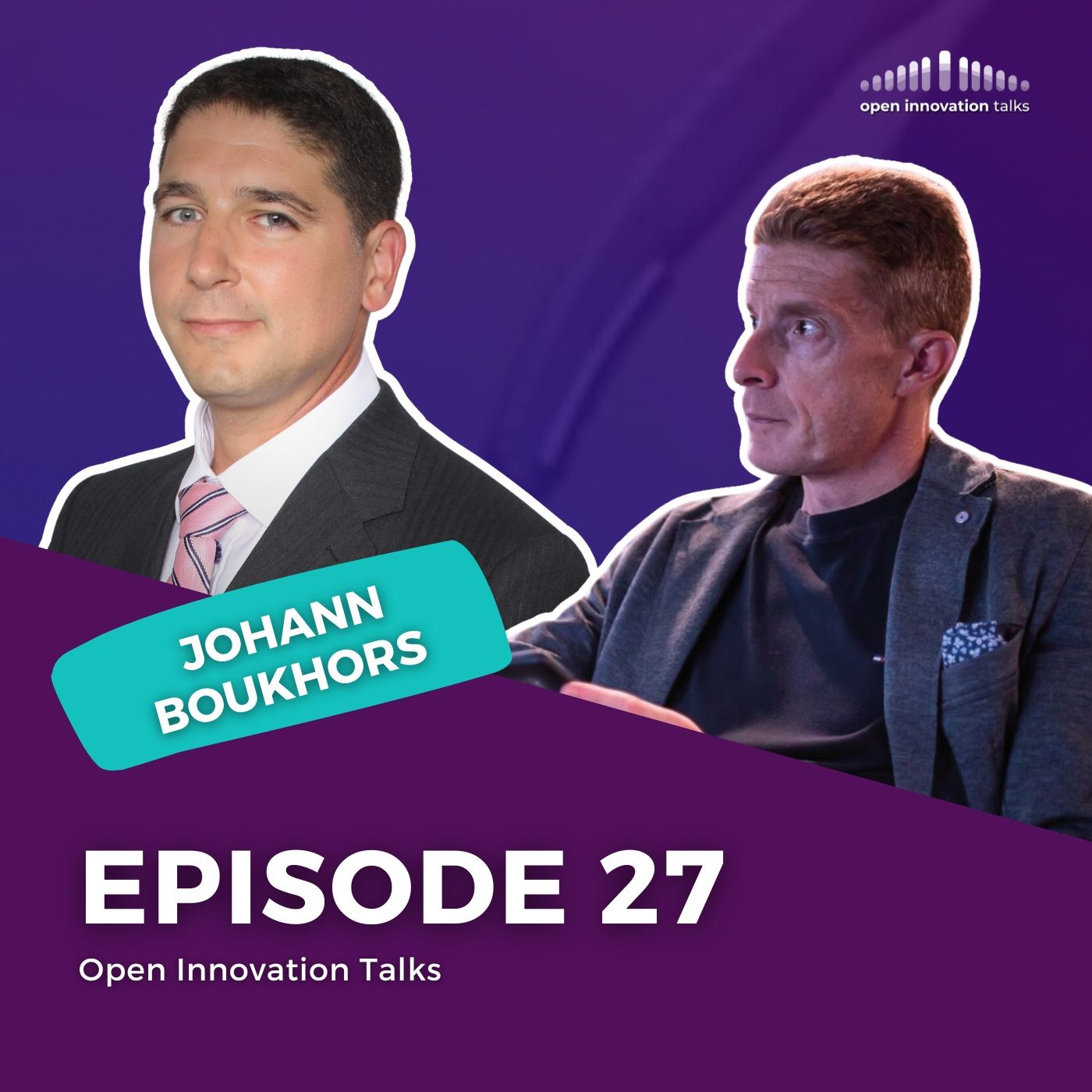
本集简介
双语字幕
仅展示文本字幕,不包含中文音频;想边听边看,请使用 Bayt 播客 App。
时机效应至关重要。有时你有一个好主意,恰好符合良好的前景。但如果时机不对,它就毫无价值。因此关键在于能否在行业中立足,这样才能理解何时是关键时机,以便为集团、客户或初创企业撬动各项业务活动。
Timing effect is key. Sometimes you have a good idea that fits with a good prospect. But if it doesn't happen at the right time, it's useless. So that's key to be able to be in the business so that you understand what is a key moment to to leverage the activities, for the corporate or the customer and for the startup.
深度访谈科技领域最具影响力的创新高管,独家数据与全球主要及新兴生态系统的洞见,全球范围内最热门的科技与开放式创新资讯,以上内容及更多精彩尽在每期新节目中。欢迎收听《开放式创新对话》。Mind the bridge,与行业领袖畅谈。
In-depth interviews with the most influential innovation executives of the tech arena. Exclusive data and insights on major and emerging ecosystems all around the world, the hottest news on technology and open innovation at a global level, this and much more in every new episode. Welcome to Open Innovation Talks. Mind the bridge, chat with industry leaders.
今天,我们继续全球开放式创新之旅。我们来到了法国。ENGIE是法国主要的能源企业之一。此刻与我同行的是Johan Bucour先生。
Today, we continue our open innovation journey across the globe. We are in France. We are one of the main energy player in France. The company is called ENGIE. And I have with me, Johan Bucour.
Johan是ENGIE Ventures的董事总经理,该机构也被自豪地称为ENGIE New Ventures。因为如果我没记错的话,Jorn,您作为ENGIE的CBC部门负责人已有近十年经验。同样地,十年前被称为新创投的业务,如今或许已成为常规业务了,对吧?
Johan is the managing director of ENGIE Ventures, also proudly named ENGIE New Ventures. Because again, if I'm not wrong, Jorn, your experience as the CBC arm of ENGIE is almost close to ten years. Again, what some ten years ago might be called as new ventures, probably today is more regular ventures, right?
确实如此。你好,Alberto。是的,ZOWI基金成立于大约十年前,确切地说是2014年,现在已近十年了。我想是在夏季。
Indeed, indeed. Hello, Alberto. Yes. And ZOWI, the fund was funded about ten years ago in 2014 now, almost ten years ago, actually. So I think summertime.
当时我还没加入。过去五年一直由我负责运营。
I wasn't there by the time. I've been running it for the past five years now.
好的。我将首先简要介绍ENGIE集团概况,为不熟悉贵公司的听众做个铺垫。然后请您带我们了解ENGIE当前涉及的各个开放式创新领域。根据先前与您及团队成员的交流,我记得ENGIE实际上是最早真正投身创业领域的企业之一。我记得创新奖倡议项目,其历史可能超过三十年,已成为该领域的标杆模式。
Yes. So I will start our conversation providing quick overview on ENGIE as a company, as a group, for part of the audience that do not know you. And then I will ask you to walk us through the different open innovation areas that ENGIE is currently involved. From our prior conversation with you and other people of your team, remember that ENGIE has been one of the first player actually to be really involved in entrepreneurship. I remember the innovation trophies initiative that has actually come back probably even more than thirty years and has been one of the benchmarks also for the model.
我记得除了企业风投部门外,你们还有创业孵化器以及明显的创投客户合作网络。我也想了解并相信这些年来发生了什么变化。让我们先从ENGIE开始说起。
I remember that you beyond the CVC arm, you also have a venture builder and then obviously, venture client partnership networks. So I will be good also to understand, trust the time, what has changed. So let's start from ENGIE first.
是的,ENGIE是全球能源领域的参与者和领导者。我们成立于几十年前,实际上是多次并购的结果。如今我们在30多个国家开展业务,并专注于推动能源转型——我们称之为能源转型。我们的目标是到2045年实现二氧化碳净零排放,因此能源转型是我们的核心口号。
Yes, so ENGIE is a worldwide energy player, energy leader. We've been created decades ago, and actually this is a result of different M and As. We're active today in more than 30 countries, and quite focused on delivering the energy transition, what we call the energy transition. And we have in our purpose the objective to be net zero in terms of CO2 by 2045. So energy transition is quite a motto.
简单来说,我们有四大主营业务板块。首先是可再生能源,包括太阳能、陆上风电、海上风电以及水力发电。第二块是同样在脱碳领域快速增长的能源解决方案,主要为工业场所提供分散式资产服务。另外两块业务虽然历史较久但仍在增长,分别是灵活发电(即通过天然气和氢能资产进行发电)。
We have just as a rough explanation, we have four main verticals. One is, of course, about renewable energy. So we generate solar, wind, both onshore and offshore, hydro energy power, where we are. Second one, which is growing as well in terms of decarbonization, is about energy solution, which are decentralized asset on industrial sites, mainly on different other things. And two other businesses that are more from the history, but still growing, which is about flexible generation, which is about again power generation, but from gas, natural gas and hydrogen assets.
第四大板块是管网业务,包括天然气输气管网、配送管网以及电力网络。在这之间我们同时拥有上游和下游业务,中间还有中游环节——这是一个以贸易和营销为主的综合模式。这些就是ENGIE目前专注的业务领域。
And the fourth one is networks, so both gas transmission, gas transportation networks and distribution networks, and the power networks. And in between, so we have both upstream and downstream businesses. In between, we have a mid streamer. So this is an integrated model, mainly about trading and marketing. So these are the verticals in which ENGIE is busy with.
重申一下,我们的宗旨是推动自身及客户的业务向能源转型和净零碳目标迈进。在创新方面,我们约十年前就制定了规划并逐年更新调整,每年都会做些微调。我们有多个支柱板块,首先是生态系统——我们有专门部门深入研究生态系统。
And again, our purpose is really to drive our activities and the ones of our customers towards energy transition, towards a net carbon zero. In terms of innovation, we define that about a decade ago and set it up and have reviewed and updated that year after year. And actually every year we some adjustment there. We have different pillars starting with the ecosystem. So we have a deep look at the ecosystem and there's a department focused on that.
他们会为业务单元征集项目提案,举办名为'NG awards'的创新奖项评选(即众所周知的创新奖杯)。我们还设有孵化部门(本质上是创业孵化器),并在约十年前成立了企业风投基金——现在名为NG Ventures,目前由我负责运营。
They do some call for projects for business units. They do some, run some what we call NG awards, which is known generally speaking as innovation trophies. We also have an incubation department, which is venture building, basically. And we had set up about a decade ago, a venture fund, so CVC named now NG Ventures, which is the ones that I run.
是的,让我们重点聊聊最后这部分。这部分实际上是由你主导的,可能从最初就由你领导。据我所知,一直以来都是和你对接的。
Yeah. Let's focus on the latter part. That is the part actually you are leading there. You have been leading since probably since the beginning. So as far as I know, I always been talking to you.
再次强调,你确实是自早期以来一直推动CBC部门发展的关键人物,且保持着高质量运营。首先我认为,获取一些具体数据和数字来评估这一工具会很有帮助。尽管由于技术层面你们是表外投资,很难将CBC视为传统风投基金,因此缺乏技术性或规范的资金配置。但我们仍需要了解年均投资额——即典型的单笔投资规模,以及常规条款条件。
So again, you are really the person that drove the the CBC arm since the the early days and this quality running. I think it's it's first of all, it would be good to have some some some figures, some numbers also to to benchmark the instrument. And again, despite it's difficult to consider CBC as VC funds because technically you are investing off balance, and so they don't have a technical or proper capital allocation. But we're good to have some some some numbers, some figures to understand how much we invest on average per year, which is typically the ticket size. What are the typical condition?
据我所知,NG Ventures或NGU Ventures始终是与业务单元紧密关联的、具有高度战略性的投资工具。因此,了解你们的投资运作模式及典型投资方法将很有价值。之后希望能深入探讨过去近十年间发生的主要变化。
Again, as far as I remember, NG ventures or NGU ventures has always been a very, very strategic focus investment vehicle with a strong link with the business units. So, again, it would be good to understand how do you guys work and do the investment. Investment. This is and then your your average typical approach. And then after, would like also to to deep dive a bit more in terms what has been changed in the past almost ten years.
这确实很关键。我并未参与NG Ventures十年前创立时的阶段——我是五年前加入的,但那是个重要转折点。当时我们启动了一些项目,部分投资和策略取得了成功,也有些遭遇失败。那是个需要总结过去、明确战略愿景、优化组织架构和流程以实现平稳运作的阶段——过去五年我主要致力于这些工作。
This is this is key. So no, I was not here at the inception of NG Ventures, that was ten years ago. I just arrived five years ago, but that was a key moment because this was a time when we had started a few things, succeeded in a few investments, few strategies, but also failed in others. And there was a time to learn from from the past, to have a proper look back and and define a strategy, a vision, a strategy, an organization, and some processes to be able to run smoothly. So I've been busy with that over the past five years now.
用数字粗略说明:我们已向不同领域的初创企业和业务投资约2.5亿欧元,涉及60家外部初创公司和15支外部基金。早期我们曾采用母基金策略投资其他基金,后因多种原因停止了这类投资——这点稍后会详细说明。
In terms of figures, to give a rough idea, we've invested so far about €250,000,000 in different sectors, different startups and businesses, which means about 60 startups, external startups, and about 15 external funds. Because at the beginning, we also had the strategy to invest in other funds. So as a fund of fund activity, we stopped this latter. So we don't do such kind of investment any longer for different reasons. I will come back on that later.
关于现状:我们已经启动投资组合轮换,退出了部分初创企业,也有些项目因自身原因失败,这些都不再属于我们的投资组合。
What else today? So we've already started our portfolio rotation. So we've already exited some startups. Some others have also failed on their own. So they're not part of our portfolio any longer.
目前我们活跃的投资组合中有25家初创企业,分布在欧洲、北美、拉美、中美洲、亚洲和以色列等主要创新区域——与我们业务所在地重合以便发挥协同效应。我们是个约12人组成的小团队。回到你的问题:是的,我们是支战略基金。
And now we have 25 startups active, being active in our portfolio on different geographies, some in Europe, some in North America, others in Latin And Central America, in Asia, in Israel. So in the main areas where which are innovative and where we are activities, so that we're able to leverage this. We are a small team. We are about a dozen of us located in these areas. What so to come back on your question, yes, we are a strategic fund.
这点我也需补充:随着时间推移,我们意识到既无法成为最佳财务基金,也无法成为最佳战略基金,必须做出选择。核心原因在于资源配置——除非拥有庞大团队并能面面俱到(这从来不是企业的主要目标),否则难以兼顾所有方向。
I may come back on that as well. Because we realized over time that it's not possible to be the best financial fund, neither the best strategic fund. And we have to make a choice. In particular, for reasons, the main reason being the allocation of resources. You can't do everything unless you have a very large workforce and then attention everywhere, which is never the objective and the main purpose of a corporate.
企业的目标是发展自身业务而非专门管理基金。因此我们选择真正具有战略意义并逐步深化战略方向。这就是我们停止投资那些基金的原因——我们认为它们与我们战略目标的最佳契合度不足,因为我们与外部创新仅有间接联系。当时我们被认为不足以实现既定目标。随着时间的推移,我们主要经历了两大变化,特别是
A corporate has the objective to develop its own activity and not funds specifically. So we made the choice to be really strategic and to become more and more strategic over time. So this is the reason why we have stopped investing in those funds as well, because we deemed that it did not really comply at the best with our objective, our strategic objective, because we had an indirect link with the external innovation. As I was not deemed enough to reach the objectives we had defined. We had two main changes over time, and in particular
在此之前,我认为你触及了一个非常关键的问题,因为这确实是个常见难题:CBC应该直接还是间接投资?我们常问CBC的这个问题没有标准答案。但根据我们实践A方案和B方案的经验,某些阶段A方案是好的选择,但之后可能就不再适用。我个人认为,在初期学习阶段,通过第三方基金投资能帮助你建立人脉网络,理解专业机构的运作方式,拓展项目来源渠道,但后期可能就不再需要这种方式了。
Before doing that, I think you touched a very, very relevant point, because this is a big and frequently asked question. CBC should invest directly or indirectly? And I call the question that we typically ask CBC, there is not the right answer. But there is the experience where we've done A and B and probably for some period of time A is a good solution at some point you find out that it's no longer a good solution. And I think probably the, again, my 2¢ is that in the initial phases when you're still in your learning curve, investing in for party funds give you the ability to create your network, understand how the game is played by professionals, expand the deal flow and down the way this is no longer probably required.
那么你们是如何做出停止基金投资决定的?当初又是为何开始这种投资方式的?
So how how did you come up to the decision to to stop do investment in front of funds? And why you you started doing that?
正如你刚才所说,主要是我们已经从这类投资中积累了足够经验。我们已建立了自己的人脉网络、业务体系和组织架构。直接投资本质上能让我们进行优选,因为作为那些基金里非常次要的有限合伙人,我们对投资决策没有控制权。
For the reasons you've just said, mainly we had learned enough from from this investment. So we had our networks. We had our activities, our organization already. Basically, investing directly allows to do some cherry picking. Because we were a very minor LP, a limited partner in those funds, You don't have control on what's happening.
经过五到十年后,我们意识到这些基金投资的初创企业里只有极小部分符合我们的兴趣。因此我们认为,如果能自主选择所有项目会更高效。当然这过程中会犯错,也需要自学新知识。但从战略回报来看——这始终是我们的核心目标——收益会更高。当然同时也要兼顾财务方面的考量。
And in the end, after five or ten years, we had realized that we had interest in a very small part of the startups invested by these funds. So basically, we thought that it could be more optimal if we could choose it all. Of course, doing some mistakes, of course, having to learn on our own other things. But the reward would be be higher in terms of, again, strategic return, which was the the which is still as the main the main objective. With an eye, of course, of the on the on the financial side, Yeah.
在慈善领域,我们需要证明这种方式的效率和优越性。但重点在于,我并非说投资其他基金毫无价值,请别误解我的意思。
And philanthropy, we need to show to demonstrate that it's efficient and optimal. But that's point. Yeah. I'm not saying that it's it's useless to invest in other funds. Don't take me wrong.
这不是我的观点。在某些情况下这种方式非常有用,比如开拓新市场。如果我们要投资中国或印度这些我们尚未涉足的地区,很可能会通过外部基金与更了解当地情况的机构合作。不过目前这不是我们的非政府组织目标,在我们已有广泛布局的领域则另当别论。
That that's not my point. And it can be very useful in some instances, for example, entering into new geographies. If we had to invest in China, for example, where we are not, or in India, we would probably do so through an external fund, together with those who are more local and more acquainted with the regions. This is not our NGS objective today. So basically, where we are, we already have a large footprint.
我们有人手在现场,清楚当前情况,因此具备运营能力。
We have people on the ground, and we know what's happening. So we have the means to operate.
是的,这个观点很好。回到直接投资的问题上,另一个关键问题——这个价值百万美元的问题——我会让你继续你之前的思路,因为实际上是我打断了你。但回到主要问题上:战略性与财务性投资,尽管从技术层面说你两者兼具,因为你不会认为既然是战略性投资就可以完全不考虑财务回报。你是在同时追求这两个目标,但依然...
Yeah. That's good point. And going back to direct investment, other big question, a million dollar question, then I will go will let you go back to your train of thought because I stopped you, actually. But going back to the main question, strategic versus financial, despite, technically you are both because again you don't think okay, it's strategic, so I don't care about the financial. You are pursuing both objectives, but still.
关于战略投资的核心问题是:何时算战略性?是更贴近核心业务时算战略,还是更接近所谓'第一地平线'时算战略?又或者战略投资不是为了今天的公司,而是为了明天的公司——即主要针对第二、第三地平线?这才是真正的辩论点,因为你们都在谈战略投资,但究竟是对谁的战略?今天的公司?明天的公司?还是后天的公司?这才是关键问题。
The big question about strategic is strategic when? Is strategic with more on closeness to the core business or more to what is called horizon one or is strategic not for the company of today but the company of tomorrow, so most Horizon two and Horizon three. Because this is the real debate, because all of you are strategic, but strategic to what? The company of today or the company of tomorrow, the company of the day after tomorrow? So that is the big question.
确实,某种程度上它涵盖了所有这些。我们讨论的是面向未来的公司,因为这里谈的是创新。这些创新目前尚未成熟,还未成型。不过我们已经确定了要重点发展的不同垂直领域。
Yeah. It's it's so it's a bit of all, actually. It's a company of tomorrow because we speak here about innovation. So these innovations are not ready today, are not in the sheds. However, we have defined the different verticals we want to work on.
这不仅体现在具体业务层面,也体现在集团层面。我们在两年多前重新定义了战略方向,并决定与过去不同,要更专注、更深入地深耕垂直领域,停止广撒网式的探索。这并不意味着我们不再关注其他领域,我们当然会保持关注。
And this is not only adventures level, at specific level, but also at the group level. So we have redefined that a bit more than two years ago. And we have decided, unlike in the past, to focus and to go much deeper verticals into and to stop investigating. It does not mean that we don't have a look. Of course, we have a look and we keep our eyes open.
但真正要投资并建立影响力的,是我刚才提到的五个垂直领域——那些我们已经具备优势、希望优化运营、并要定义未来商业模式和技术的领域。这不是时间问题,而是活动类型的问题。比如十年前我们刚开始时,就把投资能帮助集团进入新领域设为目标,这些领域当时与集团主业相距甚远。我们取得了一定成功,但也带来了弊端——导致精力过于分散。
But to really invest and have a footprint in the sectors, in the verticals, so the five ones I've just given earlier, where we have a strong footprint, where we want to optimise our activities, operations, and define the future business models and technologies that will lead to reaching these objectives. So that's and it's not really a question of time, or I would not distinguish it by time, but really by kind of activities. For example, when we started ten years ago, we saw that, or we are defined as an objective, that investment could lead the group to enter into new businesses, new verticals that were remote, that were not part of the group by the time. We have succeeded to some extent. But it has also led, and this is a drawback, it has also led to some kind of going a bit everywhere and lack of focus.
正因为如此,NG集团在两年半前制定了更聚焦的战略,不仅限于业务领域,还包括地域范围。我们认为不可能在所有领域、所有地区都全面铺开,所以停止了这种模式。例如我们过去曾投资物联网,这或许是个好方向,但我们最终认定物联网不属于ONG的核心业务领域。
And because the group, NG Group, two years and a half ago has defined a more focused strategy, not only in terms of businesses, but also in terms of geographies, We deemed that it could not be achievable to extend everywhere, in everything. So we stopped that. So for example, we had invested in IoT in the past. That was probably a good trend. But we have defined that IoT is not a sector of ONG.
我们确实应该信任一些合作伙伴来替我们完成这些工作,而不是自己在这个领域单打独斗。所以我们停止了自主开发。这些业务已不再是我们的投资重点。这是一个关键趋势。我们与集团共同确定了需要聚焦的核心业务。
And we would really be better off trusting some partners to do that for us, to do that, not to develop ourselves on our own in this sector. So we stopped. We don't consider these as investment priorities any longer. So that's a key trend. Together with the group, have defined that we need to focus on these businesses.
这并不意味着我们要停止对所有业务的调研,而是需要对我们已涉足的领域进行更深入的研究。因此要更聚焦ENGIE的垂直领域。当然,这也引导我们更多关注硬件技术。最初我们以为软件技术、SaaS技术可能更容易、更有前景、也更具扩展性。但最终我们现在更多投资于拥有专利、知识产权,并能整合进我们或客户资产的硬件技术。
It also means that it's not that we stop investigating all the businesses, but we need to go deeper into businesses we are in. So deeper focus on ENGIE's verticals. And of course, it leads or it leads us to more hardware technologies. In the past when we started, we had thought that software technology, software as a service technology were probably easier, more promising, more scalable as well. The end, we now invest much more in hardware technologies, which have patents, intellectual properties, and are able to be included into our assets or the ones owned by our customers.
可以说这是第二个变革成果。另一个变化是我们与研发部门的融合更加深入。早期我们更多是把集团研发部门和业务单元作为协助者,用于简化对新科技、新商业模式和初创企业商业层面的尽职调查。而现在我们已远超尽职调查阶段,更关注这些技术、服务和产品未来是否真的有用?
So that's the second, I would say, result of these changes. And another change has also been that we have integrated much more with our research and development departments. I would say that in the past when we started, we were more using these R and D departments and business units in general of the group as people to help and to ease the due diligence on new technology, on the new business model, on commercial aspects as well for the startups. Now we tend to go much further than the due diligence. Is the technology, is the service, is the product useful for them in in the future?
不仅是评估,本质上是要问:你会与这家公司签约吗?你会将其产品整合到你的业务中吗?虽然它们尚未成熟,但你是否相信它们能在合理的时间范围内成熟起来?
Not only an assessment, but basically, would you contract with this company? Would you integrate its product into your activities? Although these are not mature yet, but do you believe they are going to become mature on a realistic time horizon?
这很有趣。这就引出了下一个问题:你们投资解决方案的成熟度。因为投资越早期,解决方案就越不具可部署性,从技术角度来说是个漫长的过程。虽然像你们这样规模的公司能提供的支持潜力很大,但实际上会更困难,因为整合未成型的东西很复杂。就像自封为主厨一样。
That's interesting. And that pop ups the next question is the level of maturity of the solution you are investing into. Because again, the earlier you invest, the less ready deployable the solution is and technically speaking, it's a long journey. And also the contribution that a company of your sites can put on the table is potentially large, but is pragmatically is more because it's complicated to integrate something that is not ready. Mean, you define yourself a chef.
你正在准备一道尚未完成的菜肴,但距离真正烹饪应该有多远?这个平衡点在哪里?
So you're prepping up something that's not yet ready, but how far from the cooking time should be? So which is the right balance?
是的,你说得对。这是个关键问题。感谢指出,我在回答第一个问题时确实没有谈到这一点。
Yeah. No. You're you're right. It's a key question. And thanks because I have not I have not addressed it in your first question.
我们最青睐的投资阶段是A轮。基本上,当项目已有概念验证时,一般来说A轮融资时机正合适,这时已具备一定基础。我们不会投资仅停留在PPT阶段的项目。比如我们从不参与种子前轮投资。而后期投资在估值方面也存在一些挑战。
So what so we like to in the sweet spot is service a. So basically, when there's already a proof of concept, in general, the series a is up to be fine, but there's already something. We don't invest on slides. And only so we are not we never go pre seed, for example. Investing later, there are some challenges as well in terms of valuation.
你强调了这一点。这是一方面。但更重要的是,当我们较晚进入时,这家初创公司的未来格局已经定型。我们无法再对其产生任何积极影响,无论好坏。这才是关键所在。
You underline that point. That's one thing. But also, we deem that when we enter later, the future of the company, the startup is already defined, is already set. And we cannot have any impact, positive impact on this future any longer, for good or not. But that's the point.
因此最佳投资阶段确实是A轮。我们的初始投资金额通常在100万至500万欧元之间。之后会根据需要追加投资。我们很少投资低于100万欧元,因为交易成本过高,且持股比例会太小,几乎可以忽略不计。所以我们倾向于在董事会获得席位,至少在初期阶段,以便更好地了解初创公司的业务模式。
So the sweet spot is really series A. What we invest in a wage is between 1,000,000 and €5,000,000 the initial ticket. And then we follow on when we deem it necessary. We rarely go less than €1,000,000, because the transaction costs are too high, and the stake we would have is too small, not is marginal. So we love to have a seat at the board, at least at the beginning, to understand better what the startup does, how it works.
同时也帮助初创公司建立真正的能源行业人脉网络。通常由我或团队成员来推动这些资源对接。我们都是能源领域的专家,深谙行业运作规律和人脉资源。这一点非常有价值。
But also to help the startup to get some real network with energy, within the energy business in general. So these are people, either myself or people from my team, who take this rollover. We are all experts in the energy sector. We know how it works, and we know the people of that. So that's very interesting.
初创企业往往随时间推移而发展。时机效应至关重要。有时你有个好创意且前景不错,但如果时机不对就毫无意义。因此必须深入行业,才能把握住为企业和初创公司创造价值的关键时刻。
A startup develops often with time. The timing effect is key. Sometimes you have a good idea that fits with a good prospect. But if it doesn't happen at the right time, it's useless. So that's key to be able to be in the business so that you understand what is a key moment to leverage the activities, both for the corporate or the customer and for the startup.
你最后提到的观点很关键。初创企业成败往往取决于时机——有时候成功与失败的区别就在于能否幸运地在正确时机抓住浪潮。可能技术完美、条件俱备,但太早或太晚都会导致失败。正如你所说,通过董事会席位来准确把握商业解决方案的推出时机和场景很重要。因为从外部视角来看,这确实是最大的障碍。
And again, the last point that you made is relevant. So again, startups are all about timing because sometimes the difference between being successful and failing is mostly the ability on the luck to pick up the wave at the right time because sometimes perfect technology, perfect situation, but it's too early or it's too late, and you're done. I think what you say, and also with the importance to be seated in the board is to be able to understand what is the right time to bring the solution to the business. Yes, and where. Because have the Because again, from an external perspective, that's something that I believe is the biggest hurdle.
相比大企业与初创公司打交道时。从外部看,大企业就像个黑洞,其运作机制难以理解且难以触及。有时候我...我总是这样开场:'哦,我有安吉的名片,所以算是有个联系人'。
Than corporates ever dealing with startups. That from outside, corporates are sort of a black hole. They are so complicated to be understood and so difficult to be reached. Sometime I I I always start. I say, oh, I have a business card of of Angie, so I have a contact.
哪张名片?谁?因为,再次强调,你只是可能拿到了一张重复使用的厕所入场券。那边有很多东西,但不一定都是为你准备的。所以拥有这个内部翻译器非常重要。
Which business card? Who? And that's because, again, you have just a a potentially entry ticket to to the loo over again. There is a lot of stuff over there, and not necessarily is is there for you. And so having this internal translator is so important.
还有就是能够不因为过早而错失商业机会。它正在燃烧。当他们说某件事还没准备好时,他们不想再看到它。所以也要明白现在才是正确时机。然后再回到
Also for be able not to to burn the opportunity with the business because it's too early. It's it's burning. When they say something is not ready, they don't want to see it again. And so also to understand that this is the right time. And then going back
到
to to
我们最初提出的关于投资策略和直接投资的第一点,就是要有一定的控制权。你说过一句话,我想我未来几个月还会引用——我们投资的是那些未来已被确定的公司。再次强调,这些公司足够成熟,清楚自己在做什么。我们可能会提供帮助或参与部分业务,但不会改变他们的故事。这意味着主要是从你方学习,有时是在过程中发掘,而非试图施加影响。
the first point that we made also for the investing strategy and investing directly is the ability to have a bit of control. You say, a sentence that I think I will quote you also in next months is we invest in companies whose future is already being set. Again, they are mature enough that they know what they are doing. We might help or we might intersect with some of the activities, but we're not changing their story. And that means that it's mostly learning from your side and sometimes exploiting down the way rather than trying to influencing.
这种学习让你有机会在电影制作完成后观看。尽管你并不在导演席上,但你能看到电影是如何制作的。通过已做出的制作选择,你能理解故事可能如何发展,这才是你带来的真正洞见——但你必须亲临现场。如果通过第三方中介,就像面对Netflix一样,虽然内容很多,但你并不真正清楚自己看的是什么。
And this learning is something that you have a real opportunity to see the movie when the movie is made. Despite you, you are not on the chair of the people that actually is driving the movie, you can see how the movie is made. You can understand by the production choice that has been made, how the story might evolve, and that is the real insight that you're bringing on board, but you need to be seated there. If you are intermediated to a third party, again, it's like to be in front of Netflix. Again, you have so many things, but you don't really know what you're really looking at.
所以你只是在滑动屏幕。请帮我们理解,你如何收集那些对工作至关重要的战略信息?又如何将这些信息反馈给公司和高层管理层?具体如何运作?
And so you're just scrolling. So help us a bit to understand how you really can gather the strategic information that I think are so vital for the job that you're doing. And how you convey this kind of this kind of information back to the company and back to the top management. How does it work?
好的。让我稍微回溯一下。我们为活动设定了两个主要目标,现在这一点非常清晰——虽然五年前并非如此。
Yeah. So there are so let me maybe go a bit a bit backward. We have defined two main objectives in our activity. And now this is really crystal clear. It was not five years ago, but now it is.
第一个是你提到的战略市场情报,即了解市场双方动态。当然,正如你所说,我认为即使在内部,正确的人脉也在不断变化。因此,即便对NG内部人员而言,要在正确时间掌握所有人脉也极具挑战性。
The first one is the one you called, so strategic market intelligence, knowing what's happening on the market on both side. And of course, as as you say, I think the right contact is changing even even when you're in. So even for somebody within NG, knowing all the right contact at the right time, even for us, it's challenging.
极具挑战性。
Very challenging.
对于外部多方参与者而言,这当然不可能实现,至少非常耗时。这是确定无疑的。这是第一个关键目标。第二个更具体的目标,是促成初创企业与NG某些实体间的具体合作。这需要掌握人脉并把握时机。
From elsewhere, from an external party with multiple other other activities, it's, of course, impossible and at least time consuming. So that's for sure. This is one key objective. Second key objective, and is even more concrete, to be able to get concrete partnership between the startup and some entities of NG. For this, you need to have the contact, you need to be at the right time.
但你需要具备——我不确定是否该用'影响力'这个词——至少要有一定影响。当我们作为持有5%、10%、15%股权的少数股东时,我们虽有一定影响但非常有限。我们不参与决策,没有控制权,但至少能提供市场观察等信息。
But you need to be able to I'm not sure I would use the word influence, but at least to have an impact. Our purpose when we are minority shareholders, we have 5%, 10%, 15% equity share. We can't have we have an influence, but it's really minor. We don't make decisions, we don't have control. But at least we're able to bring some information, for example, from what we see on the market.
我们的业务开发人员和销售团队在日常工作中获取的市场情报,因为我们参与这些行业论坛。我们了解行业动态,都是该领域专家。这对初创企业是个积极信号。最后我想强调一点。
What our business developers, what our sales forces see on the market on a day to day basis, because we are part of these of these forums. We understand what's happening. We are all experts in this sector. So that's a good signal for the startup. Let me end with one point.
我认为这很关键:如果我们投资意味着要投入专门的人力财力、承担风险和努力,那么若目标不是产生影响,我们为何要这样做?重点在于我们并非要掌控初创企业。
And I think it is key. Why would we invest, which mean put some dedicate some resources, our human and financial resources, efforts and risk? Why would you would we do that if the objective is not to have an impact? This is really the point. The objective is not to take control of the startup.
事实上我们始终拒绝这样做。我们既不寻求独占关系,但至少要产生影响。如果我们投资方式过于间接,或没有实质贡献,那就是在浪费时间和资源。
We always refuse that, actually. Neither have an exclusive relationship, but at least to have an impact. If we invest either indirectly or too indirectly, sometimes this is more direct than what we think are even outside. So either indirectly or without a real thing to bring, then we waste our time. We waste our resources.
关键在于,举例来说,如果我们投资过晚,战略已经确定,联系已经建立等等,面对不同的群体。我们能产生什么影响?这就是我们不迟到的原因。这是主要原因。不要强行施加影响,毕竟我们也无法强求。
The point is, so for example, if we invest too late, strategy is already defined, contact are already made, etcetera, with different different groups. What is impact we can we can drive there? That's the reason why we don't enter too late. This is the main reason. Not to force an influence, that we cannot force anyway.
我们无法掌控全局。但希望能有所贡献。如果我们采取行动,就是为了产生影响,帮助初创企业发展,并可能将其产品和服务整合到我们的业务和运营中。
We don't have control. But to be able to bring something. So if we do something, this is to have an impact, to help the startup develop, and possibly to integrate its product and services into our offerings, into our operations.
再问一次,过去九年你们完成了多少笔投资?我记得大约有六笔Tissue投资。25家仍在运营,有些已经倒闭,有些已退出。ENGIE收购了多少家你们投资的公司?
How many, again, you have made, I can't remember about six Tissue investment in the past nine years. 25 are still active. Some of them went down. Some have been exited. How many of the company you invested has been acquired by ENGIE?
一家。就一家。能透露下具体应用场景吗?
One. One. And what was the use case, if you can tell?
是的。嗯,我不能透露太多细节,因为这属于机密。但没错。应用场景是NG多年来一直是这家初创企业的客户。双方早已熟识,最终发展成了共同开发关系。
Yeah. Well, I can't give many many details because that's that's confidential. But the Yes. So so use case was that NG was has been a customer for for of this startup for for years. It's been known and and really, it it became co development.
最终,我们发现如果能掌握控制权会更好。某种程度上,长期保持少数股权或共享控制权并不合理。但必须明确一点:我们非常清楚,获取控制权从来不是目标。
In the end, we saw that it would be better if we could have control. And basically, keeping such kind of minority control or shared control did not make sense to to some extent after some time. But let's be clear about that. We are very clear. We started that taking control is never the objective.
从来不是
It's never
不。因为60分之一也谈不上什么。这不是收购的记录。而且说实话,这非常典型。我问博世同样的问题,他们也说不。
No. Because also one out of 60 is not exactly something. It's not a track record of an acquire. And by the way, it's it's it's very typical. I ask the same question to to Bosch, and they say no.
归根结底,这不是重点。
At the end, this is not the point.
这不是重点。重点是要共同发展,比如合资企业。大多数时候,你不会收购合资企业,而是与他人共同发展。等它足够成熟后,就能独立运作。
This is not the point. The point is to develop together, such as the joint venture, for example. So most of the time, you don't acquire a joint venture. You have it developed together with somebody else. And when it's grown enough, it goes on its own.
它能在没有你的情况下独立运作。当然,这取决于业务发展情况。但有时业务会与你紧密到彼此过度依赖,这时真正合并会更好。这既有好处也有弊端。
It's able to work alone without you. Sometimes, and that really depends on how the business develops. But sometimes the activity becomes so close to you that you deem that you're too dependent upon each other. And therefore, it's better to really be together. It does it goes with some upside, but some downside as well.
大企业整合小实体确实是个挑战。往往伴随着困难,要么人员流失,要么失去发展势头。这就是我们从不优先考虑收购的原因之一。不如先合作几年,五到七年,等关系成熟后再独立发展。
It's a real challenge for large corporates to integrate small entities. It goes often with difficulties, either people leaving or some kind of traction being lost. So that's a key challenge, and that's the reason, or one of the reasons why we never privilege that. So let's do a bit of work together for some time, five years, seven years. And then when you're warm enough, you live on your own.
这样双方都能从中受益,通过共同创造价值。
And you'd be able to. So in in between, we have both benefited from the same from the same work and and be able to create value together.
最后一个问题。你提到的战略市场情报——你们是如何将通过在投资组合公司中'坐在副驾驶位而非驾驶位'所获得的街头洞察进行知识转移的?通过观察这家公司的运营方向和发展轨迹。
Final question. How do you again, you're talking about the strategic market intelligence that you get there. Are you transfer the the knowledge that you get on the street through your portfolio companies by sitting in a not in the driving seat, but in the in the back seat, but looking the way ahead and looking how this company has been driven.
那么,
So how
你如何将这些市场情报传回公司?
do you transfer this market intelligence back to the company?
是的,这是个棘手的问题,因为我们每天都要面对。我们并非唯一面临此问题的。但基本上,一方面你要考虑对公司保密甚至承担某些责任。由于我们是这家公司的员工,我们能接触到特权信息。
Yeah. It's a tricky question because we have to face that every day. We are not the only one. But basically, on one side, you have confidentiality and even some liability towards the corporate. And because we are employees of this of this corporate, we have access to privileged information.
另一方面,作为董事会成员,你对初创企业也负有责任。本质上,我们必须把控所给的建议。我们能看到市场动态,虽然不能透露细节,但能观察到趋势。这些信息对初创企业很有价值——比如以能源解决方案为例,分散式能源、氢能等绿色气体。
And on the other end, you have some liabilities towards startups where you you sit as a board member. And basically, we have to manage advice we give. We see things on the market. We can't give details, but we see the trends. And this may be useful for the startup to see if I take energy solutions, for example, decentralized energy, green gases such as hydrogen.
所有这些业务都在发展。以氢能为例,它每天都在变化。十年前还没有绿色氢能的概念,如今已有一些运营项目,明年这个数字还会成倍增长,诸如此类。
All these businesses, they evolve. If we take hydrogen, for example, it evolves every day. I mean, ten years ago, there was nothing about green hydrogen. Today, there's a bit some project in operation. Next year, this will be multiplied by a by a certain number, etcetera, etcetera.
因此我们能够观察并协助建议初创企业做出正确决策。重申一下,我们在三五人董事会中只占一席,所以这并非受控状态。但这些要素能帮助初创企业比别处更好地找到方向——本质上算是免费咨询。
So we are able to see and to help advising what's happening for the start up to take the right decisions. Again, we have one seat out of three to five. So this is not this is not controlled. But these are elements that can help the startup find its way better than than elsewhere. That's that's kind of a a free advice, basically.
所以这很关键。我想反过来也同样成立:当我们看到某些初创企业面临市场困境或基于市场信号开发新方案新创意时,这些对公司同样有价值。这些信息虽不能透露细节,但非常有用——例如通过AI预测能源价格的服务正在市场获得关注。
So that's that's key. I would like to say that the other way around is also true. When we see some startups either facing some difficulties on the market or developing new solutions, new ideas because they see signals from the market, this is also useful for the corporate. This is also information showing that, of course, we cannot disclose any details there. But this is also very useful to see that this service, for example, forecast through AI in terms of energy prices, is meeting some traction in the market.
或许我们应该更仔细地审视一下。也许我们需要深入质疑当前使用的一些流程。同样地,我是说,这里有很多例子。比如,你们怎么称呼来着,可再生气体就是个例子。我们看到在这些尚未见效的业务领域有相当多的创新。
Maybe we should have a closer look. Maybe we should get in and question some of the processes we're using currently. Same thing for, I mean, there's a number of examples there. Thing for, how do you call that, renewable gases, for example. We see that there's quite a lot of innovation in these businesses that have not worked so far.
很可能还有更多工作要做。所以我们深入探讨吧。数字孪生是另一个例子,诸如此类。
Probably, there's much more to do. So let's dig in. Digital twins is another example, etcetera, etcetera.
那么最后,最后的问题。如果你必须比较CPC和BCs,因为看起来你们在做同样的工作,但实际上并非如此。你们确实有相似之处,但也存在重大差异。两者之间的主要区别是什么?再次强调,抛开战略角度不谈,与常规标准VC相比,这让你们的工作既更困难又稍微轻松些的点是什么?
So final, final question. If you have to compare CPC versus BCs, because it looks like you're doing the same job, but you're not. And actually, you have similarities, but there are also big dissimilarities. What is the main difference between the two of them? Again, beyond the strategic angle again, what this makes your life so more difficult and a bit easier compared to a regular standard VC?
所以我们做的是同样的工作。我们不追求相同的目标,但有相同的最终目的。这个最终目的就是初创企业必须成功,必须可持续发展并最终以更好的价格出售。这就是现在介于这些线条之间的意思,当然各自有相当不同的附加价值。这很明显。
So we are doing the same job. We don't chase the same objectives, but we have the same final goal. The same final goal, which is the startup has to succeed, has to be sustainable and in the end be sold at a better price. That's that's so this is now in between these lines, there are of course quite different added values of each. That's obvious.
有很多不同的,我应该说,怎么说呢,不同的目标或追求的小目标。例如,如果我以CVC为例,至少在NG的运作方式下,我认为我们在这里找到了一个相当好的平衡点,就是说我们需要这些合作发生,而且不仅仅是发生。这不是说我们要在初创企业实体之间签订合同。我们讨论的是标准化这种关系,并像往常一样使用它,让它成为一个常规流程。比如我们合作的,我不知道,我可以举些例子,一家美国初创企业Wabt Maps,我们18个月前刚投资了他们,他们通过无人机对全球大型光伏电站进行评估。
A lot of different, I would say, how should I say, different goals or small goals that are pursued. For example, if I take the CVC, for example, at least the way it works at NG, and we found, I believe, quite a nice balance here, is to say we need these collaborations to happen, and not only to happen actually. This is not we don't speak about having a contract between the entity of the startup. We speak about standardizing the relationship and using it as as usual, as it becomes a usual process. So when we work with, I don't know, I can give some examples, one startup in The US who just invested, that was eighteen months ago, named Wabt Maps, they are doing some assessment of PV, so photovoltaic plants, large scale plants the world, thanks to drones.
基本上,我们的目标不仅是与他们签订合同,而是将他们的服务标准化地整合到我们的平台中,这样ENGIE的大部分资产都能通过这项设施进行监控。这可能就是与VC的不同之处。这对VC来说是好事,因为它能带来回报。它能产生成果。它为初创企业带来营业额。
Basically, our objective is not only to have contract with them, but to standardize the usage of their service into our platforms, so that, I mean, a very large portion of all assets of ENGIE are monitored through this facility. This is probably where there is a difference with the VC. This is good for a VC because it provides return. It it provides outcome. It provides turnover for the for the startup.
但关键在于,对我来说,他们与任何人做生意是不够的。他们需要与NG做生意。所以我认为这可能是个区别。当然,我的意思是,这不可能没有成本。重点不是要更便宜,否则会产生冲突,对初创企业也没有帮助。
But the point is that for me, this is not sufficient that they do business with anybody. They need to do business with NG. So that's I think there's probably a difference. Of course, it'd be as a I mean, it cannot go without the cost. The point is not to have a cheaper because otherwise it would be conflicted and it would not help the startups.
因此,我的损益表。但战略目标非常非常重要。大多数情况下,若非总是如此,我们不仅能找到平衡点,还能找到最优解。与初创企业合作不仅是一项业务,而且比其他方式更有利可图。因为我们找到了一种方法,可以说,实现了透明的、更具信任感的各方谈判。
Therefore, my p and l. But the strategic objective is is very is very important. And most of the time, if not always, we are able to find not only a balance, but an optimal there. Not only is it a business with NG, but it is also more profitable than doing for the startups and doing that otherwise. Because we find we find a way to get, I would say, transparent negotiation, more trustful as well, negotiation between parties.
我们知道我们的利益——我认为这个词很关键——我们的利益是一致的。这远比单纯的买卖关系更为一致,在买卖关系中总有一方会获利更多或节省更多。因此利益一致是关键。共享网络同样关键,这样大家才能相互了解并建立信任合作。长期来看,你知道商业合同随时可以终止。
We know that our interest, and I think this word is very important, our interest are aligned. Much more aligned between just a buyer and seller relationship, where one or the other is going to win more to save more than the other. So aligning the interest is key. Sharing networks is also key so that everybody knows each other and work with trust. On the on the long run, you know that when you have a commercial contract, you can stop the contract.
会有诉讼,会有提前终止条款,但合同总是可以终止的。而投资初创企业则不同,你需要与之共处一段时间。无论商业合作是否成功,短期内都不会结束。所以你们需要共同生活一段时间,这就必须做好规划——这正是我们学会的。
You have litigation, you have early termination clauses, but you can stop always the contract. When you invest in a startup, well, you're there for some time. And anyway, whether you you succeed the commercial collaboration or not, I mean, it's not going to stop anytime soon. So you live together for for some time. So you need to plan, and this is what we have learned to do.
投资时,我们会调动业务部门、赞助方等资源。不仅评估初创企业的表现,还主动与其开展业务,为其提供市场入口——这对初创企业往往很有价值。我们还专门预留了后续预算,比如研发部门就有专项资金用于产品测试和支持开发——当然前提是确有需要且受认可。
When we invest, we have the the business units, the sponsorship, the ones that table. And not only saying, not only assessing that the startup is doing good, but also willing to do some business with startup, which provide an access to the market. And for the startup, it's often appreciated. We also dedicate some budget for the follow-up. For example, our R and D department developed some budget so that they can test and support the development of the product, if that's necessary, and if that's appreciated, of course.
否则我们不会投入。我们必须证明投资对合作是必要的——这可能是与风投的另一个不同点。若非必要,我们不会投资,没有硬性出资要求。我每年只有最高投资预算额度。
Otherwise, we don't. And we need to demonstrate that doing the investment, and that's probably also another difference with the VC, Doing an investment is necessary for the collaboration. If it's not, then we don't. We don't have to deploy money. I have a maximum budget every year to spend as as as investment.
但没有最低预算要求。我不必动用基金募集的资金。我们只在确信对企业和初创企业都有积极影响时才会投资。
I don't have a minimum budget. I don't have to deploy money that has been raised by the fund. So we only invest if we deem that the impact is positive for NG and for the startup.
总结来说,CVC和MVC本质工作相同,最终目标一致——让被投企业成功。差异可能在于中间里程碑的选择,由于时间因素会走不同路径,但最终工作几乎相同,终极目标完全一致。感谢约翰的分享,我们过段时间再沟通,看看未来几个月或几年这个不断演变的领域还会有什么新变化。
So just to summarize is so CVC, MVC, they are doing the same job. At the end, the ultimate goal is the same, making the invested companies successful. Probably what is different are the intermediate milestones that you follow. And because again, you have probably some time you also take different routes, but at the end, the job is almost the same and the ultimate goal is definitely the same. So thank you, Johan, for for this conversation, and let's touch base in in a while to to see what else will be will be changed in in a in a few months and years because again, this is an evolving game.
再次强调,情况依然不会改变。通常来说,输家总是那个倒霉蛋。
Again, it will remain the same. Typically, it's the loser.
是啊,每天都在变化。实际上这是好事。不然的话,我们可能会觉得无聊吧。确实如此。
Yeah. It changes every day. And and actually, that's good. And otherwise, we we get bored, I guess. Exactly.
感谢大家今天的参与,我们下期《开放创新对话:Mind the Bridge与行业领袖访谈》再见。
Thank you for being with us today and see you in the next episode of Open Innovation Talks Mind the Bridge Chat with Industry Leaders.
关于 Bayt 播客
Bayt 提供中文+原文双语音频和字幕,帮助你打破语言障碍,轻松听懂全球优质播客。