本集简介
双语字幕
仅展示文本字幕,不包含中文音频;想边听边看,请使用 Bayt 播客 App。
这是NPR的星球金钱节目。
This is Planet Money from NPR.
好的,杰夫。
Alright, Jeff.
你今天召我来,是因为我知道你有关于经济的问题要问我。
You have summoned me here today because I understand you have a question for me about the economy.
是的。
Yes.
这现在是百万美元级的问题。
It's the million dollar question right now.
嗯。
Uh-huh.
你有什么想法?
What do you got?
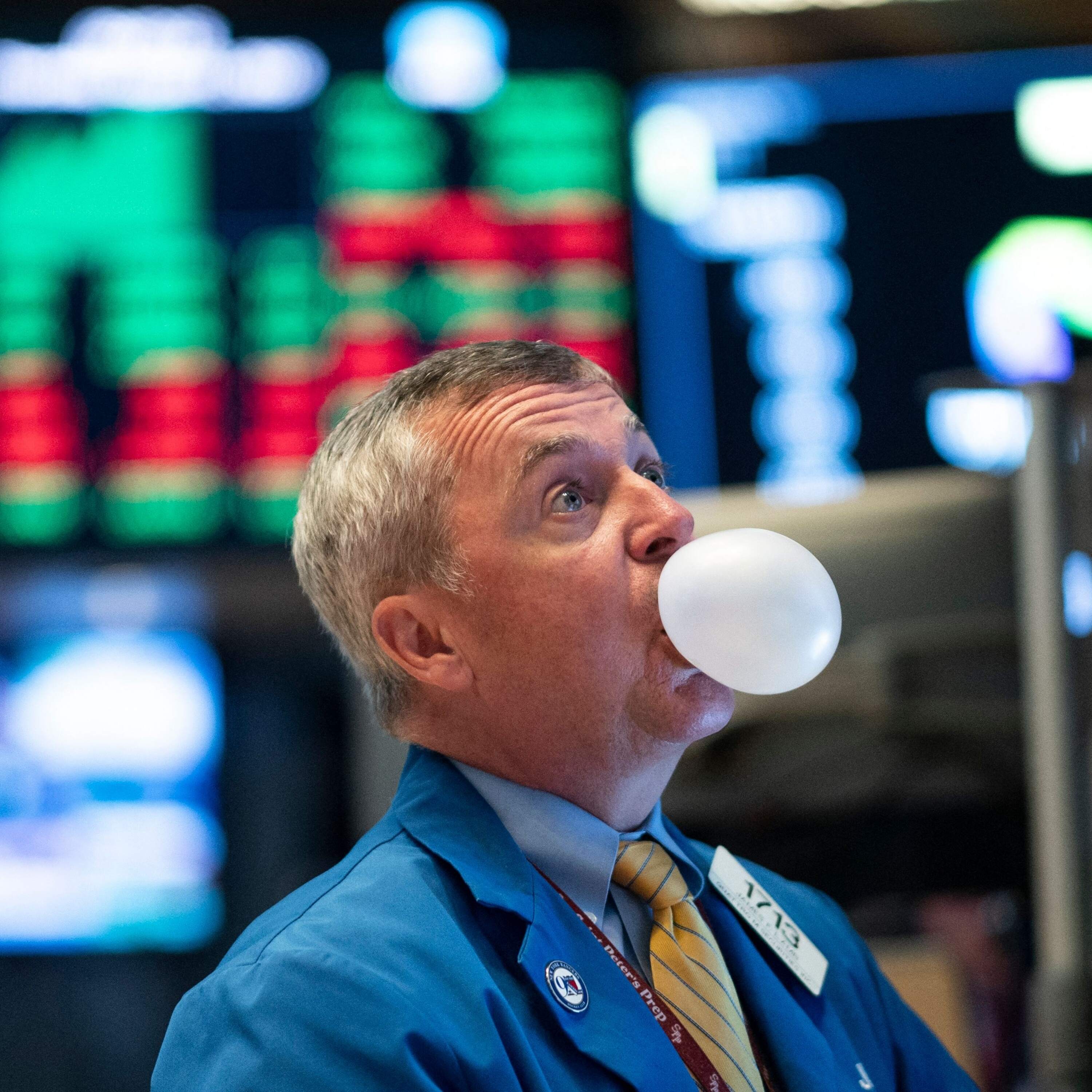
我们处于泡沫中吗?
Are we in a bubble?
我觉得这像是一个数万亿美元的问题。
That's like a several trillion dollar question, I think.
好吧。
Okay.
但看看现在的股市。
But look at the stock market right now.
标普500指数在过去两年里上涨了近50%。
The S and P five hundred is up almost 50% over the last two years.
是的。
Yes.
这简直疯狂至极。
It is absolutely bonkers.
疯狂。
Bonkers.
更疯狂的是,如果你看看推动这一增长的主要公司,其实只有寥寥几家。
And what is even more wild is that if you look at what companies are mostly responsible for that growth, it's just a handful of them.
就是那些做人工智能的公司。
It's the companies doing AI stuff.
人工智能。
AI.
是的。
Yes.
所有这些人工智能相关的东西,比如微软、亚马逊和Meta。
All this AI stuff like Microsoft and Amazon and Meta.
人们称它们为七巨头。
People are calling them the magnificent seven.
是的。
Yes.
如果我们不提英伟达,那就疏忽了。
And we would be remiss if we did not mention NVIDIA.
英伟达,当然是这样。
NVIDIA, of course, is the Mhmm.
这家芯片公司正在为所有这些技术提供动力,其股价在过去两年里几乎涨了四倍。
Microchip company that's powering all this stuff, and its stock price, I think it has almost, like, quadrupled over the past two years.
太疯狂了。
That's wild.
疯狂。
Wild.
真是太疯狂了。
It's so wild.
世界上最有价值的公司。
The most valuable company in the world.
是的。
Yeah.
而所有这些,确实让人感到不安。
And all of that, it kinda makes you nervous.
对吧?
Right?
因为如果这个AI热潮最终被证明是一场泡沫,那将是多年来我们经济见过的最大泡沫。
Because if this AI stuff turns out to be a bubble, it's like the biggest bubble our economy has seen in years.
当然。
Sure.
我们都知道泡沫最终会怎样,还是说我们并不知道?
And we all know what happens eventually to bubbles, or do we?
哦,有意思。
Oh, intriguing.
大家好,欢迎收听《星球金钱》。
Hello, and welcome to Planet Money.
我是尼克·福滕。
I'm Nick Fountain.
我是杰夫·郭。
And I'm Jeff Guo.
今天在节目中,我们现在是否正处于一场泡沫之中?
Today on the show, are we in a bubble right now?
你能判断自己是否身处泡沫中吗?
Is it even possible to tell if you're in a bubble?
如果你身处泡沫中,这对整个经济意味着什么?
And if you are in a bubble, what does that mean for the rest of the economy?
没错。
Right.
我们将探讨一些关于泡沫检测的前沿研究,同时也会讨论一个颇具争议的理论:也许某些泡沫并没有看起来那么可怕。
We're gonna look at some cutting edge research on bubble detection, and we're also gonna talk about this provocative theory, which says that maybe some bubbles are not as scary as they seem.
好的。
Alright.
在讨论我们是否处于一个大型AI泡沫之前,我们得先从一些定义开始。
Before we can talk about whether we're in a big AI bubble or not, we gotta start with some definitions.
什么是泡沫?
What is a bubble?
泡沫就是试图在不使用‘资产’这个词的情况下回答你的问题,而这个词可能是我金融领域最喜爱的词。
Bubble is trying to answer your question without using the word asset, which is probably my favorite word in finance.
罗宾·格林伍德是哈佛商学院的金融学教授,多年来他一直研究泡沫,特别是泡沫指标,比如如何判断某物是否是泡沫。
Robin Greenwood is a professor of finance at Harvard Business School, where for years he has been studying bubbles, especially bubble indicators, like how you tell if something is a bubble.
比如,在哈佛商学院的健身房里,有句说法。
Like, at the gym at Harvard Business School, there's the saying.
我们的健身房叫Chad,以前有个玩笑说,如果你在Chad听到很多人谈论某个行业,那这就是一个不错的泡沫指标。
Our gym is called Chad, and there used to be a running joke that if you'd hear lots of talk about an industry in Chad in the gym, you know, that's a good bubble indicator.
现在,教科书对泡沫的定义是,当人们开始以远高于其实际价值的价格买卖某物时,就形成了泡沫。
Now the textbook definition of a bubble is that it's when people start buying and selling something at prices way above what it's actually worth.
当价格高到完全不合理时,就是泡沫。
When the price is so high, it just doesn't make any sense at all.
所以,泡沫就是我们能指出其估值相对于实际价值而言非理性的现象。
So a bubble is something that we can point to as being irrationally valued relative to the value that it delivers.
这是一种让人疑惑的现象:为什么人们愿意为这东西花这么多钱?
It's something where you're like, why are people paying so much money for this thing?
这就是泡沫。
That's a bubble.
这就是泡沫。
That's a bubble.
而泡沫中,价格会不断上涨,一直涨到某一天突然破裂。
And with a bubble, that price just keeps going up and up and up until one day it pops.
价格会暴跌回现实,许多人会损失金钱或失去工作。
The price comes crashing down to reality and a lot of people lose their money or lose their jobs.
泡沫一直让经济学家感到困惑,因为人们怎么会如此妄想呢?
Now bubbles have always kinda puzzled economists because how could people be so delusional?
但泡沫的特点通常是涉及某种新事物、令人兴奋或未知的东西。
But the thing about bubbles is that they usually involve something new, something exciting or unknown.
就是那种在哈佛商学院健身房里让人热议的话题。
The kind of thing that gets people buzzing about at the gym at Harvard Business School.
你几乎从没见过泡沫在无聊或熟悉的行业中形成。
You almost never see bubbles forming in boring or familiar industries.
你永远不会看到泡沫出现在‘踝袜’这种东西上。
You're never gonna see bubbles and say, ankle socks?
是的。
Yeah.
很难对袜子产生非理性的狂热。
It's pretty hard to get irrationally exuberant about ankle socks.
而人工智能不同,它是新的、令人兴奋的,没人真正知道它会有多大影响。
Whereas AI, on the other hand, AI is new and exciting, and no one really knows how big of a deal it's gonna be.
存在大量的不确定性。
There's all this uncertainty.
这正是为泡沫的形成提供了肥沃的土壤。
That is what creates this fertile ground for the formation of a bubble.
这种不确定性也使得我们很难判断是否真的处于泡沫之中。
And that uncertainty also makes it genuinely hard to tell if we're in a bubble or not.
目前,投资者认为英伟达的价值高达4.6万亿美元。
Right now, investors think NVIDIA is worth $4,600,000,000,000.
这相当于22个迪士尼,或五个摩根大通。
That is 22 Disneys or five JPMorgan Chases.
但这是泡沫的迹象吗?
But is that a sign of a bubble?
像英伟达这样的公司是不是被严重高估了?
Is a company like NVIDIA ridiculously overvalued?
很难说这家公司应该值多少钱。
Well, it's hard to say what the company should be worth.
这取决于你相信什么样的故事,即英伟达的AI芯片是否会改变世界。
Kinda depends on what story you believe about whether NVIDIA's AI chips will change the world or not.
正因为很难确定英伟达的价值,市场上才能同时存在多种关于英伟达潜在前景的叙事。
Precisely because it is hard to figure out what the value of NVIDIA is, many different narratives about what NVIDIA could be can survive in the market.
经济学家称,当荒谬的叙事主导市场时,这就形成了泡沫。
Economists call it a bubble when the delusional narratives have taken over the market.
经济学家提出了各种理论,解释投资者为何可能有些妄想或过度乐观,但当你身处其中时,真的很难判断市场是否正在妄想。
And economists have come up with all kinds of theories about why investors might be a little delusional or overoptimistic, but it's really hard to tell when the market is being delusional when you're in the moment.
是的。
Yeah.
这是经济学中的一个重大挑战。
This is one of the big challenges in economics.
你如何在为时已晚之前发现泡沫?
How do you detect a bubble before it's too late?
这个挑战如此巨大,以至于世界上最有名的经济学家之一都怀疑泡沫是否真的存在。
And this challenge is so humongous that one of the most famous economists in the world is skeptical about whether bubbles even exist.
他的名字叫尤金·法玛。
His name is Eugene Fama.
他是个大人物。
He's kind of a big deal.
他因提出市场大多有效的理论而获得了诺贝尔奖。
He won a Nobel Prize for his theory that markets are mostly efficient.
在《星球金钱》节目中,我们早在2013年就邀请过尤金·法玛,当时他告诉我们,在有效市场中,价格通常是正确的。
Here at Planet Money, we actually had Eugene Fama on the show way back in 2013 where he told us that in an efficient market, the price is usually right.
那么,泡沫又怎么可能存在呢?
So how could bubbles exist?
我相信市场是有效的。
I believe markets work.
如果市场有效,这些现象就不应该是可预测的。
And if markets work, those things shouldn't be predictable.
如果我
If I
法玛说:当然。
Fama was like, sure.
在事情已经破裂之后,再称其为‘泡沫’很容易。
It's easy to call something a, quote, unquote, bubble after the thing has already popped.
事后诸葛亮。
Hindsight's 2020.
但如果你真的认为泡沫是真实存在的,你就应该能在泡沫破裂之前就识别出来。
But if you really think bubbles are real, you should be able to call a bubble before it pops.
说实话,‘泡沫’这个词让我很烦。
The word bubble drives me nuts, frankly.
你听到了吗?
You hear that?
嗯。
Yep.
我们扮演了来自哈佛商学院的罗宾。
We played Robin from Harvard Business School.
那是前《Planet Money》主持人大卫·凯斯特鲍姆和尤金·法玛之间的一些对话。
Some of that conversation between former Planet Money host David Kestenbaum and Eugene Fama.
我不相信。
I'm not a believer.
我是个经验主义者。
I'm I'm an empiricist.
什么样的证据能让你相信
What would prove
你认为存在泡沫吗?
it to you that there were bumps?
实证证据。
Empirical evidence.
比如?
Such as?
比如,你能向我展示你能以某种可靠的方式预测这些转折点何时发生。
Well, that you could show me that you can predict when these things turn in some reliable way.
我们询问了罗宾对法玛的激进观点的看法。
We asked Robin for his take on Fama's hot take.
那么,你熟悉法玛的这种观点吗?
So are you familiar with that view that Fama's
了解这种观点吗?
talking about?
了解这种观点。
Familiar with that view.
这种观点,事实上,也许正是这个引述最初激励了我们,因为我们希望应对制药业的挑战,尝试统计性地识别泡沫。
That view, and in fact, maybe it's that quote, originally motivated us because we wanted to rise to the pharma challenge of trying to statistically identify bubbles.
所以这是可能的。
So it's possible.
这个《Planet Money》节目和《Exactly》之间是有联系的。
There's a connection between this Planet Money episode and Exactly.
没错。
Exactly.
是你激发了这个想法。
You you motivated this.
罗宾和他的哈佛同事们说:挑战接受。
Robin and his colleagues at Harvard said, game on.
挑战已接受。
Challenge accepted.
他们着手证明法玛是错的,试图找到一种方法,在泡沫破裂、为时已晚之前检测到它们。
And they set out to prove Fama wrong, to find a way to detect bubbles before they pop, before it's too late.
他们首先翻阅了历史记录,
They started by digging through history,
寻找美国股市中所有看起来异常泡沫化的现象。
looking for everything that seemed suspiciously bubbly in The US stock market.
他们研究了近一个世纪的数据,找到了所有特定行业股价在两年内突然翻倍或更多的情况。
They looked at almost a century's worth of data and found all the times where stock prices in a particular industry suddenly doubled or more within two years.
例如,二十世纪二十年代,电力公司股票曾大幅上涨。
For instance, there was this big run up in electricity company stocks in the nineteen twenties.
七十年代,医疗保健股票也出现了一次大幅上涨。
There's also a big run up in health care stocks in the seventies.
他们发现了40个类似的例子。
It found 40 examples like this.
因此,我们想研究每一个可能的情况,看看接下来会发生什么。
So we wanted to look at every situation that was maybe available and to say what happens next.
那么,在接下来的24个月里会发生什么?
So what happens over the next twenty four months?
大约有一半的情况下,并没有发生崩盘。
And about half the time, there was no crash.
投资者确实极度乐观,但他们的乐观情绪最终被证明是正确的。
Investors were wildly optimistic, sure, but they turned out to be correct about their optimism.
那些高股价一直在持续上涨、上涨、再上涨。
Those high stock prices, they just kept going up and up and up.
但另一半情况下,这些股价在几年内急剧崩盘。
But the other half of the time, those stock prices ended up crashing dramatically within a couple years.
这些就是经济学家会指出并称之为泡沫的情况。
Those were the situations that economists would point to and say that was a bubble.
是的。
Yeah.
罗宾和他的同事们想弄清楚的是,这些破裂的泡沫通常有什么共同点?
What Robin and his colleagues wanted to figure out was, what did these popped bubbles, what did they tend to have in common?
有没有什么线索能告诉你泡沫正在发生?
Were there any clues that could tell you when a bubble situation was happening?
我们原本希望能找到某种神奇的泡沫标志。
We were hoping that there was going to be some amazing marker of a bubble.
我们并没有找到那种一锤定音的单一标志。
We did not find, like, that one thing where it is a slam dunk.
我们发现的是,在泡沫出现前后,有一系列现象共同作用,使得泡沫在某种程度上可以预测。
What we did find was that there's a constellation of things happening around bubbles that does make them somewhat predictable.
哦,所以有一些线索。
Oh, so there are some clues.
他们把这些线索写进了一篇论文,论文的名字我特别喜欢,叫《给法玛的泡沫》。
They laid out those clues in a paper they called, and I love this, they called it bubbles for Fama.
这有点调皮。
It's kinda cheeky.
对吧?
Right?
嗯。
Yeah.
所以他们在2019年发表了这篇论文,立刻引起了巨大轰动,因为他们用一些证据挑战了伟大的尤金·法玛,表明泡沫或许在某些情况下是可以预测的。
So they published this paper in 2019, and it immediately made a huge splash because here they were challenging the great Eugene Fama with some evidence that bubbles can maybe sometimes sort of be predicted.
好吧。
And okay.
这是他们提出的四个主要线索。
Here were four of the main clues that they came up with.
请鼓掌。
Drum roll, please.
杰夫,把它们展示出来吧。
Let's have them, Jeff.
好的。
Okay.
线索一:高估值。
Clue number one, high valuations.
当你看到一些公司股价很高,但目前实际上并没有赚多少钱时,就是这种情况。
That's when you see companies with really high stock prices that aren't actually making that much money right now.
对。
Right.
这是经典的市盈率。
This is the classic price to earnings ratio.
你看看公司的价值,再与它目前赚的钱做比较,判断这是否合理。
You look at the value of the company and compare it to how much money it's making right now and say, does this make sense?
是的。
Yeah.
极高的市盈率是对未来持乐观态度的信号。
A really high price earnings ratio is a sign of optimism about the future.
第二个线索是波动性。
Clue number two is volatility.
当你看到某个行业的个股价格大幅上下波动时,就是这种情况。
That's when you see individual stock prices in an industry just jumping around a lot.
是的。
Yeah.
第三个线索是发行。
Clue number three is issuance.
当有很多新公司上市,或者许多现有公司发行新股时,就是这种情况。
That's when you have a lot of new companies going public or a lot of existing companies issuing new shares of stock.
所以它们正在从公众投资者那里获取更多资金。
So they're taking more money from public investors, from the public.
对。
Right.
最后,第四个信号是所谓的加速。
And finally, clue number four is what they call acceleration.
当你看到股价不仅上涨,而且上涨速度越来越快时,就是这种情况。
That's when you see stock prices not just go up, but go up faster and faster.
所以它们的价格看起来更像是在攀升,而不是稳步上升。
So their price kinda looks like it's ramping up rather than sort of going up steadily.
哦,所以,如果你看股价,它并不是一条直线。
Oh, so, like, if you look at the stock price, it's not like a straight line.
而更像是呈指数级飙升。
It's more of like a exponential whoosh.
没错。
Exactly.
没错。
Exactly.
看起来就像一阵呼啸。
It looks like a like a whoosh.
没错。
Exactly.
我们称之为加速,结果发现这实际上是其中最强的预测指标之一。
We called that acceleration, and we found that actually turned out to be one of the strongest predictors.
因此,我们自然请罗宾将他的泡沫检测工具应用于当前股市和人工智能热潮的情况。
So, of course, we asked Robin to turn his bubble detection tools on what's going on right now with the stock market and the AI boom.
罗宾说,好的。
And Robin was like, okay.
一方面,我们确实有一些公司估值很高。
On one hand, we do have some companies with high valuations.
例如,英伟达当前的市盈率在四十左右,处于较高水平。
For instance, NVIDIA's price earnings ratio right now is in the forties, which is elevated.
标普500指数中公司的平均市盈率大约在二十左右。
The average for companies in the S and P 500 is more like in the twenties.
此外,我们还观察到股价每日波动的幅度有所增加。
Also, we are seeing some increased volatility in how the prices are fluctuating from day to day.
所以,检查一下,有点儿核实一下。
So check and kinda check.
对。
Right.
但另一方面,罗宾表示,新股票的发行量并没有那么多。
But on the other hand, Robin says, there hasn't been that much new stock issuance.
像Meta、微软和谷歌这样的AI领域大公司,并没有通过向投资者增发股票来为新的数据中心融资。
The big companies involved in AI like Meta and Microsoft and Google, they aren't funding their new data centers by selling more shares to investors.
它们是通过其他方式获得资金的。
They're getting their money in other ways.
而且,目前也没有多少私人AI公司正在上市。
And also, there aren't that many private AI companies that are going public right now.
好的。
Alright.
对于在家计算的观众来说,有两个迹象指向泡沫,一个则不是。
For those counting at home, two clues pointing towards a bubble, one not.
至于第四个,他称之为泡沫最强预测指标的加速现象,像Meta和亚马逊这样的公司股价确实在上涨,但最近并没有呈现出越来越快的上涨趋势。
And as for the fourth, what he called the strongest predictor of a bubble, acceleration, stock prices for companies like Meta and Amazon, they are going up, but recently, they have not been going up faster and faster.
所以,我们不知道,这基本上就是答案。
So we don't know is basically the answer.
是的。
Yeah.
差不多就是Robin所说的那样。
Pretty that's pretty much what Robin said.
因此,我们具备了判断当前AI现象是否为泡沫的许多条件,但并非全部。
So we have many, but not all of the things that you would look for to call the current AI phenomena a bubble.
我们确实就这个问题追问了罗宾,他说,尽管并非所有预警信号目前都在闪烁,但他仍然认真对待我们所看到的预警信号,尤其是高估值。
Now we did press Robin on this a little, and he says even though not all the warning signs are flashing right now, he still takes the warning signs we are seeing, especially the high valuations, takes them seriously.
如果非要我说出我的看法,我会说我们现在正处于早期泡沫阶段。
If I had to say what I think it is, I would say we're early bubble.
是的。
Yes.
好的。
Okay.
但这里有一些注意事项。
But here are the caveats.
罗宾说,你知道,尽管这些迹象是真实的,可以帮助你预测泡沫,但它们也并不那么可靠。
Robin says, you know, even though these clues, they are real, they can help you predict a bubble, they aren't that great either.
罗宾告诉我们,如果你回顾过去一个世纪股市中所有那些价格飙升的情况,这些迹象或许能帮你识别出大约60%的泡沫。
What Robin told us is that if you look back at all those price spikes in the stock market over the past century, these clues could help you pick out the bubbles, like, maybe 60% of the time.
换句话说,比抛硬币的准确率略高一点。
So in other words, a little better than a coin flip.
是的。
Yeah.
而且,说来有趣。
And, actually, funny story here.
罗宾的一位合著者曾去芝加哥展示这篇论文,记得他们把这篇论文命名为‘法玛的泡沫’,而芝加哥大学正是法玛的大本营。
One of Robin's coauthors did go to Chicago at one point to present this paper, which remember, they called it bubbles for Fama, and the University of Chicago is Fama's home turf.
他是那里的大人物。
He's the big man on campus there.
法玛去听了这场演讲。
And Fama went to this talk.
他实际上就坐在前排。
He was actually sitting right there in the front row.
是的。
Yep.
我的意思是,法玛是个数据驱动的人,他对事实感兴趣,但会对我们的观察得出不同的看法。
I mean, Fama is a data driven person, so was interested in the facts but would have taken a different take on on our observations.
所以,我们最终就到了这个地步。
So that was sort of where we ended up.
让我们说,我们达成了停火协议。
Let's I'd say we called a truce.
对。
Right.
停火协议。
A truce.
因为罗宾的论文并没有确切地证明我错了。
Because Robin's paper, it doesn't exactly prove I'm a wrong.
要检测泡沫仍然非常困难。
It is still really hard to detect bubbles.
现在还有另一个我们还没谈到的问题。
Now there is another question that we haven't even talked about yet.
即使我们能预见到泡沫的出现,我们该不该采取行动呢?
Even if we could see a bubble coming, should we try to do something about it?
作为社会,我们对泡沫应该有多担心?
As a society, how worried should we be about bubbles?
这将在广告后揭晓。
That is after the break.
谈到泡沫,基本上有两种人会对此着迷。
When it comes to bubbles, there are basically two types of people who obsess about them.
当然,有一类人是投资者,他们担心自己会在潜在的泡沫中损失钱财。
There are, of course, investors who are worried about losing their money in a potential bubble.
但如今,政府中一些重要人物也开始担忧泡沫对整个国家经济意味着什么。
But these days, there's also big important people in the government who are worried about what bubbles mean for, you know, the whole national economy.
对于这些人来说,一个主要问题是:政策制定者应对泡沫做些什么,如果有的话?
And for these folks, one of the main questions is what, if anything, should policymakers do about bubbles?
戈蒂·巴列维是芝加哥联邦储备银行的高级经济学家。
Gotti Barlevi is a senior economist at the Chicago Fed.
但需要明确的是,戈蒂并不代表美联储发言。
Though just to be clear, Gotti does not speak for the Fed.
这些是他个人的想法。
These are his own thoughts.
他对此类泡沫问题思考了很多。
And he has thought a lot about the question about bubbles.
你是该顺势而为,还是等泡沫破裂后再收拾残局?
Do you lean into a bubble, or do you wait until it collapses and then you clean up after the fact?
这就是所谓的‘顺势’与‘清理’之争的核心。
That was the nature of the lean versus clean debate.
等一下。
Hold on.
这说法是谁提出来的?
Who came up with this?
真的叫‘顺势’与‘清理’吗?
Is was it really called lean versus clean?
哦,是的。
Oh, yes.
这就是所谓的倾向型与清理型。
It's lean versus clean.
我不知道是谁提出了这个术语。
I don't know who came up with the terminology.
这说法挺吸引人的。
It's pretty catchy.
我想明确表示,我觉得这个比喻令人困惑。
I just wanna be on the record in saying I think this metaphor is confusing.
我的意思是,你可能是对的。
I mean, you're probably right.
不过,这说法确实很吸引人。
It is catchy, though.
但基本问题是:政府应该主动干预,抵制疑似泡沫并试图缩小它,还是应该袖手旁观,只在泡沫破裂后进行清理?
But the basic idea is should the government lean against, like push back against a suspected bubble and try to shrink it, or should the government just stand by and get ready to clean up after a bubble pops?
整个倾向型与清理型的争论,是最近才出现的。
And this whole lean versus clean debate, this is a recent thing.
当戈蒂在九十年代读研究生时,没人认为泡沫是严肃宏观经济学家需要研究的问题,尤其是那些专注于美国经济的宏观经济学家。
When Gotti was in grad school in the nineties, nobody thought bubbles were something that serious macroeconomists needed to be studying, especially not macroeconomists who were focused on The US.
人们觉得经济泡沫是过去的事,是新兴金融市场特有的现象,那时人们还不清楚自己在做什么,容易被冲昏头脑。
It felt like economic bubbles is a thing of the past, that this was a feature of newly emerging financial markets where people didn't know exactly what they were doing and you could get carried away.
但在像美国这样成熟且深度发展的金融市场中,这根本不会被视为一个问题。
But this is not an issue that would really be seen in well developed and deep financial markets like The US.
但这一切在2000年互联网泡沫破裂后改变了。
That is until 2000 when the .com bubble burst.
所有这些新兴的互联网公司都破产了。
All these new Internet companies went bankrupt.
整个纳斯达克指数暴跌了78%,使整个美国经济陷入衰退。
The entire Nasdaq index plunged 78%, and that threw the whole US economy into recession.
几年后,又出现了另一个泡沫——美国房地产市场。
Several years later, there was another bubble, The US housing market.
美国房价持续上涨,涨到了荒谬的水平。
The price of houses in The US kept going up and up and up to ridiculous levels.
当这个泡沫破裂时,你知道接下来发生了什么,这引发了全球金融危机。
And when that bubble popped, well, you know what happened next that kinda triggered the global financial crisis.
是的。
Yeah.
突然间,宏观经济学家们对泡沫产生了浓厚兴趣。
So all of a sudden, macroeconomists, they became very interested in bubbles.
有些人认为,如果我们能发现泡沫——这本身是个大前提——但如果我们能发现,难道不应该介入并修复它吗?
Some argued that if we can spot a bubble, which is a big if, but if we can, shouldn't we go in and fix it?
但辩论的另一方认为,我们根本无法准确预测泡沫,而且如果我们介入,很可能只会造成更大的伤害。
But the clean side of the debate was like, we are horrible at predicting bubbles, and there's a good chance that if we step in, we'll just do more harm than good.
所以,我们不如静观其变,事后再来清理烂摊子。
So let's just wait it out and we'll clean it up afterward.
如今,戈蒂表示,我们真正需要理解的是,泡沫对经济的破坏能有多严重。
Nowadays, Gotti says, what we really need to understand is just how bad can bubbles be for the economy.
宏观经济学家认为,泡沫对经济的伤害基本上有两种方式。
And macro economists think there are basically two ways bubbles can hurt the economy.
我们现在就来逐一讲解。
We're gonna run through them right now.
对。
Right.
第一,泡沫破裂时当然会对经济造成伤害。
Number one, bubbles hurt the economy, of course, when they pop.
但并非所有泡沫破裂时都会造成同等程度的经济损害。
But not all bubbles cause the same amount of economic damage when they pop.
这取决于该泡沫与经济其他部分的关联程度。
It depends on how that bubble is connected to the rest of the economy.
比如,是谁在投资这个泡沫?
Like, who is investing in this bubble?
有多少人在这个泡沫行业就业?
How many people are employed in the bubbly industry?
戈蒂说,另一个主要风险因素是:人们是否借了大量资金来推动泡沫?
Gotti says another major risk factor is, are people borrowing a lot of money to fuel the bubble?
如果借贷规模很大,许多借款人最终会违约。
If there is a lot of borrowing, a lot of the people who borrowed end up defaulting on their loans.
现在,遭受这些损失的银行会更不愿意,或者可能更无力发放贷款,从而导致更严重的经济衰退。
Now banks that have all these losses are more reluctant or perhaps less able to make loans, then you will have a more severe recession.
房地产泡沫破裂时就是这种情况。
That's what happened during the housing bubble.
人们从银行贷款来购买这些价格虚高的房屋。
People were taking out mortgages from the bank to buy these overpriced homes.
因此,当房价崩盘时,受损的不仅是房主,还有他们的银行。
So when housing prices collapsed, it wasn't just the homeowners that got hurt, it was also their banks.
当银行陷入困境时,会给社会上更多的人带来巨大痛苦。
And when banks get into trouble, that causes a lot of pain for a lot more people in society.
所以这就是第一点。
So that's number one.
但即使在泡沫破裂之前,它们还有一种更微妙的方式会对经济造成伤害。
But even before bubbles pop, there is another more subtle way that they can hurt the economy.
当出现泡沫时,意味着许多公司把钱花在了错误的地方。
When there's a bubble, that means a lot of companies are spending money on the wrong thing.
比如,泡沫会导致大量投资浪费。
Like bubbles can lead to a lot of wasted investment.
是的。
Yeah.
杰夫,你跟戈蒂谈过一个你目前非常关注的潜在泡沫。
And Jeff, you talked to Gotti about a potential bubble that has been very much on your mind right now.
是的,尼克。
Yes, Nick.
拉布布斯。
La boo boos.
你知道,就是那些现在让人疯狂的可怕小玩偶。
You know, those scary little dolls that people are going crazy over right now.
我认为,拉布布斯正在形成一个泡沫。
I would argue that there is a bubble forming in labooboos.
你看到这些收藏家了。
You see these collectors.
对吧?
Right?
他们为这些稀有的Lububus支付了数千美元。
They are paying thousands of dollars for these rare labooboos.
据我了解,Lububus的实际估值是孩子们拥有它们时获得的快乐。
The actual valuation of labooboos, as I understand it, would be the enjoyment that kids get out of having Lububus.
哦,实际上享受Lububus的是成年成年人。
Oh, well, it's adult humans actually who enjoy Lububus.
我
I
我不是消费者,所以我会相信你的话。
have I'm not a consumer, and so I will will take your word for it.
但泡沫的整个概念是,我们生产的数量远远超过了Lububus为社会带来的价值。
But the whole idea of a bubble is we're creating more of these than is justified by the value that libubus bring to society.
好的。
Okay.
让我说明白。
Let me make clear.
经济学家并不关心人们是否把钱花在看似荒谬的琐碎物品上,只要这些人非常珍视这些东西。
Economists do not care if people spend money on frivolous stuff that seems silly as long as those people value that thing a lot.
对吧?
Right?
那就不算估值错误。
Then it's not misvalued.
这也不是泡沫。
It's not a bubble.
问题在于,人们购买拉布布斯并不是因为他们喜欢拉布布斯,而是因为他们认为这些拉布布斯以后会更值钱。
The problem is when people are buying LaBooBoos, not because they love LaBooBoos, but because they think these LaBooBoos are gonna be worth more later on.
也就是说,他们是在把它们当作投资来购买。
Like, they're buying them as an investment.
在这种情况下,当泡沫破裂时,我们会得到什么?
In that case, when the bubble pops, what do we get?
一堆没人想要的LaBooBoo。
A bunch of LaBooBoos that nobody wants.
实际上,杰夫,我认为LaBooBoo泡沫——也就是LaBubble——可能已经破裂了。
Actually, Jeff, I think the LaBooBoo bubble, the LaBubble, it might have already popped.
过去几个月,转售价格大幅下跌。
Resell prices have gone way down in the past few months.
你看吧。
There you go.
对。
Right.
所以,如果你同意的话,让我们先把毛绒玩具放在一边,试着把这些宏观经济学理论应用到当前股市和人工智能热潮中正在发生的事情上。
So if it is okay with you, let's put aside the plushies dolls, and let's try to apply these theories from macroeconomics to what is actually happening now in the stock market, the AI boom.
对。
Right.
好的。
Okay.
所以这里有两个大问题。
So there are two big questions here.
第一个问题,如果人工智能是一个泡沫,它破裂时会有多严重?
Question number one, if AI is a bubble, how bad is it gonna be if it pops?
显然,当经济学家告诉我们的指标朋友,人工智能崩溃可能从全球经济中抹去35万亿美元时,投资者将损失大量资金。
Obviously, investors will lose a lot of money when economists told our friends at the indicator that an AI crash could erase $35,000,000,000,000 from the global economy.
人们会失去工作。
People will lose their jobs.
他们会减少支出,后果将蔓延开来,影响我们所有人。
They'll be spending less money, and the consequences will ripple out and affect all of us.
但也有理由相信,这可能不会像2008年那样糟糕。
But there is also some reason to believe that this might not be as bad as 2008.
因为人工智能公司并没有从银行大量借贷。
Because AI companies aren't really borrowing directly from banks that much.
他们主要从投资者那里借款,比如通过私人信贷。
They're mostly borrowing from investors, like from private credit.
所以至少目前来看,即使这场AI热潮是个泡沫,它对金融体系核心的威胁似乎也较小。
So for the moment at least, even if this AI boom is a bubble, it seems like less of a threat to the backbone of our financial system.
不过,明确地说,我们并不清楚私人信贷从银行借了多少钱。
Though, to be clear, we don't really know how much private credit borrows from the banks.
好的。
Okay.
现在来看第二个问题。
And now for the second question.
如果AI最终被证明是个泡沫,那么我们现在花费巨资训练AI和建设AI数据中心,这会有多糟糕?
If AI turns out to be a bubble, how bad is it that we are spending all this money right now training AI and building these AI data centers?
因为如果这个AI赌注没有回报,这些数十亿美元本可以现在花得更有价值,比如用于药物研究、建造太阳能电站,或者买猫粮。
Because if this AI bet doesn't pay off, all those billions of dollars, they could probably be spent better right now, you know, researching drugs or or building solar farms or buying cat treats.
是的。
Yes.
展开剩余字幕(还有 68 条)
非常杰夫式。
Very Jeff quo.
但这里有一个富有争议的观点。
But here's a provocative idea.
如果人工智能最终令人失望,而我们留下了大量闲置的、装满闲置计算机的数据中心,那会有多糟糕?
If AI turns out to be a disappointment and we're left with all these unused data centers full of unused computers, how bad would that be?
没错。
Right.
我的意思是,计算机又不是什么无用之物。
Like, computers are not labooboos.
它们确实还有其他用途。
They they do have some other uses.
这里有一个有趣的历史例子。
And, there's an interesting example from history here.
在互联网泡沫时期,曾有过大量的互联网炒作。
During the dot com bubble, there was all this Internet hype.
因此,公司花费了数十亿美元铺设光纤,用于传输人们的数据。
So companies spent billions of dollars putting fiber optic cables into the ground, you know, to transfer people's data.
互联网泡沫破灭后,大量光纤就此闲置。
After the dot com bubble popped, a lot of that fiber just sat there unused.
这被称为暗光纤。
It was called dark fiber.
但这并没有成为一笔完全的浪费。
But that didn't turn out to be a total waste of money.
最终,公司确实开始使用这些所谓的暗光纤。
Eventually, companies did start using that so called dark fiber.
这 arguably 推动了我们进入宽带时代。
It arguably catapulted us into the era of broadband.
如今,大量光纤正承载着我们今天观看的所有流媒体视频。
A lot of that fiber is now carrying all the streaming video we're watching these days.
是的。
Yeah.
而这个例子,也就是暗光纤的例子,正是最近一些经济学家开始说的原因:
And that example, the dark fiber example, it's why some economists have recently started saying,
也许
well, maybe
并非所有的泡沫都完全是坏事。
not all bubbles are entirely bad.
也许有些泡沫也有积极的一面。
Maybe some have silver linings.
也许泡沫甚至能推动经济发展。
Maybe bubbles can even boost the economy.
对于这个理论,戈蒂并不完全认同,但觉得挺有意思。
And this theory, Gotti doesn't totally buy it, but it kinda tickles him.
他说,这里的基本逻辑可以追溯到泡沫的定义。
He says the basic logic here goes back to the definition of a bubble.
泡沫是指投资者愿意为某样实际上并不值那么多钱的东西支付大量金钱。
A bubble is when investors are willing to pay a lot of money for something that isn't actually worth that much.
因此,你对这个定义可能会有两种不同的反应。
And so you could have two different reactions to that definition.
一种是你会说:等等。
One is you could say, wait.
价格出错了?
The price is wrong?
这是坏事。
That's bad.
我们需要价格反映真实价值,以向人们传递关于生产多少和购买多少的信号。
We need prices to reflect true worth to send signals to people of how much to produce and how much to buy.
所以,一个疯狂的价格确实是坏事。
And so a price that's crazy, that's that's a bad thing.
但另一种反应是:哦,这太棒了。
But another reaction is, oh, this is awesome.
我找到了一个赚钱的机器。
I just found a money making machine.
是的。
Yeah.
比如,作为社会,我们可以利用泡沫。
Like, maybe as a society, we can take advantage of bubbles.
因为常常存在这样的情况:作为社会,我们对某些事物的投资不足。
Because there are often situations where as a society, we aren't spending enough money on something.
研发就是一个很好的例子。
Research and development is a good example.
公司通常在研发上投资不足,因为研究是一种公共品,而其中一些研究最终可能会帮助到他们的竞争对手。
Companies typically underinvest in r and d because research is a public good, and some of that research can end up helping their competitors.
长期收听《Planet Money》的听众会意识到,这就是典型的外部性问题,在这种情况下,市场未能产生足够的研究。
Long time Planet Money listeners will recognize this as the classic problem of externalities, In this case, causing the markets to not create enough research.
这是一种市场失灵。
It's a market failure.
对。
Right.
但从理论上讲,而且这又是一种有点离谱的理论,如果某个高科技行业出现了泡沫,投资者就会开始向这些公司投入大量资金。
But in theory, and again, this is kind of an out there theory, if somehow there's a bubble in some high-tech industry, investors will start throwing money at those companies.
而论点是,社会最终可能会获得我们所需的更多研发资源。
And the argument is maybe society will end up with more of the r and d that we need.
因此,通过鼓励创造一种从社会角度看本就供给不足的资产,即使这种创造看起来过度了,这实际上可能是一件好事。
And so by encouraging what looks like excessive creation of an asset that as far as society is concerned is under provided to begin with, that might actually be a great thing.
所以这个观点是,好吧,在现实生活中,市场并不完美。
So this is an idea that, okay, in real life, markets are not perfect.
市场存在缺陷和不完善之处,而泡沫通过其幻觉的力量,能够解决其中一些问题。
There are flaws and imperfections, and a bubble, through the power of its delusion, can fix some of these problems.
这就像是两个错误造就了一个正确。
So it's like two wrongs making a right.
没错,正是这样。
That's exactly right.
所以,关于泡沫以及它们如何影响经济,有很多不同的思考方式。
So lots of different ways to think about bubbles and how they affect the economy.
但是,杰夫,我有个问题给你:嗯。
But, Jeff, the question I have for you is Mhmm.
我们能判断出迪拜巧克力是不是一个泡沫吗?
Can we tell if Dubai chocolate is a bubble?
如果是的话,这个泡沫可能带来哪些积极的外部效应?
And if so, what possibly could be the positive externalities from that bubble?
每个人生活中都需要更多的巧克力,尼克。
Everybody needs more chocolate in their life, Nick.
这是在可可供应链中寻找协同效应。
It's finding synergies in the cacao supply chain.
在我胃里寻找协同效应。
Finding synergies in my stomach.
你知道我一直觉得什么是泡沫吗?
You know what I always thought was a bubble?
播客。
Podcasts.
但它还没破裂。
It hasn't popped yet, though.
为了防止它破裂,我们需要你帮助我们增加Planet Money的听众数量。
And to keep it from popping, we need you to help us boost the number of who listen to Planet Money.
你可以通过告诉朋友这个节目来做到这一点。
You can do that by telling a friend about the show.
你可以把这一集发送给他们。
You can send them this episode.
你可以把另一集你最喜欢的节目发送给他们。
You can send them another one of your favorite episodes.
如果你这么做了,我们会非常感激。
If you did it, we would be very grateful.
本集由威尔拉·鲁宾制作,玛丽·安妮·麦库恩剪辑,由西拉·胡亚雷斯校对,由西娜·洛弗雷多和罗伯特·罗德里格斯负责音效。
This episode was produced by Willa Rubin and edited by Mary Anne McCune, It was fact checked by Sierra Juarez and engineered by Sina Lofredo and Robert Rodriguez.
阿尔普斯·戈德马克是我们执行制片人。
Alps Goldmark is our executive producer.
我是郭杰。
I'm Jeff Guo.
我是尼克·福ountain。
And I'm Nick Fountain.
这是美国国家公共电台。
This is NPR.
感谢收听,也感谢你与朋友分享这一期节目。
Thank you for listening, and thank you for sharing this with a friend.
关于 Bayt 播客
Bayt 提供中文+原文双语音频和字幕,帮助你打破语言障碍,轻松听懂全球优质播客。