本集简介
双语字幕
仅展示文本字幕,不包含中文音频;想边听边看,请使用 Bayt 播客 App。
你在本播客中听到的每一个想法,都是更大图景的一部分。
Every idea you hear on this podcast is part of something bigger.
在2025年,TED在全球范围内获得了17亿次观看,召集了超过58万人参加活动,并推出了超过16,000个新想法。
In 2025, Ted reached 1,700,000,000 views worldwide, convened over 580,000 people at events, and launched more than 16,000 new ideas.
这些想法激发了现实世界的变革,赋能基层组织,推动气候解决方案,变革医疗保健,等等。
These ideas spark real world change, empowering grassroots organizations, advancing climate solutions, transforming health care, and so much more.
如果你收听这个播客,谢谢你。
If you listen to this podcast, thank you.
你已经是TED故事的一部分。
You're already part of the TED story.
但你知道吗?通过成为TED会员,你可以直接为我们的非营利使命做出贡献。
But did you know you can directly contribute to our nonprofit mission by becoming a TED member?
我们的TED会员是一个由乐观主义者和变革者组成的全球社区,帮助TED将灵感转化为行动。
Our TED members are a global community of optimists and change makers helping TED turn inspiration into action.
你可以访问ted.com/members了解更多信息。
You can learn more by visiting ted.com/members.
加入我们,将鼓舞人心的时刻转化为行动浪潮。
Join us in turning inspirational moments into movements.
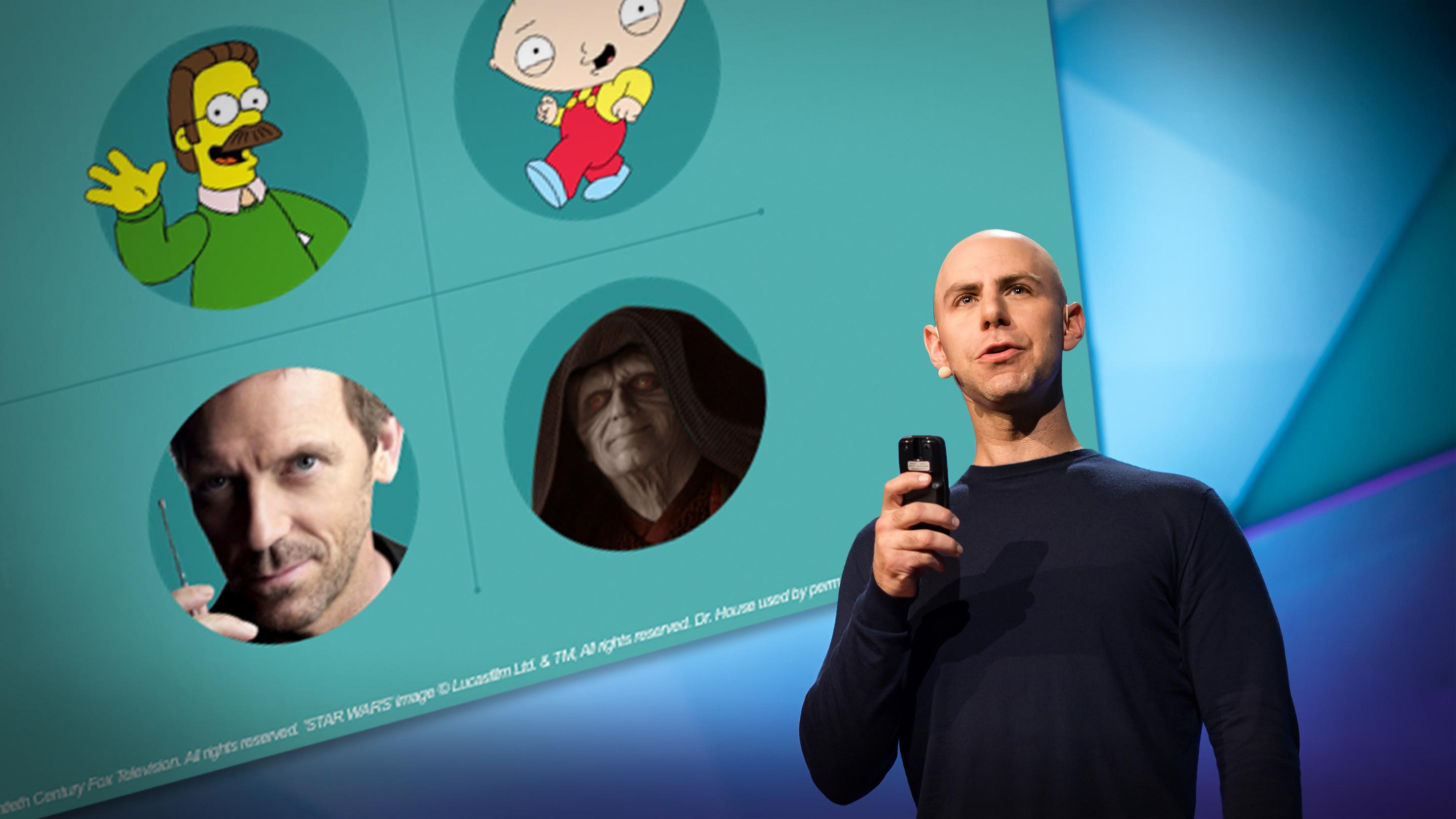
本次TED演讲邀请了组织心理学家亚当·格兰特,录制于2016年TED与IBM联合活动现场。
This TED Talk features organizational psychologist Adam Grant, recorded live at TED at IBM twenty sixteen.
所以,请大家环顾一下房间,试着找出这里最偏执的人,然后为我指出来。
So I want you to look around the room for a minute and try to find the most paranoid person here, and then I want you to point at that person for me.
好的。
Okay.
但别真这么做。
Don't actually do it.
作为一名组织心理学家,我经常在职场中穿梭,发现偏执无处不在。
But as an organizational psychologist, I spend a lot of time in workplaces, and I find paranoia everywhere.
偏执是由那些
Paranoia is caused by people that
我称之为索取者的人引起的。
I call takers.
索取者在互动中以自我为中心。
Takers are self serving in their interactions.
一切都围绕着你能为我做什么。
It's all about what can you do for me.
相反的是给予者。
The opposite is a giver.
给予者在大多数互动中会问:我能为你做什么?
It's somebody who approaches most interactions by asking what can I do for you?
我想给你一个机会,思考一下你自己的风格。
And I wanted to give you a chance to think about your own style.
我们每个人都会有给予和索取的时刻。
We all have moments of giving and taking.
你的风格就是你大多数时候对待大多数人的方式,也就是你的默认模式。
Your style is just how you treat most of the people most of the time, your default.
我有一个简短的测试,可以帮助你判断自己是更倾向于给予者还是索取者,你现在就可以做这个测试。
So I have a short test that you can take to figure out if you're more of a giver or a taker, and you can take it right now.
这是我今天要说的唯一没有数据支持的话,但我坚信,你越晚笑出这个漫画,我们就越应该担心你是个索取者。
This is the only thing I will say today that has no data behind it, but I am convinced the longer it takes you to laugh at this cartoon, the more worried we should be that you're a taker.
当然,并非所有索取者都是自恋者。
Of course, not all takers are narcissists.
有些人只是被伤害了太多次的给予者。
Some are just givers who got burned one too many times.
还有一种我们今天不会讨论的索取者,那就是心理变态者。
And then there's another kind of taker that we won't be addressing today, and that's called a psychopath.
但我很好奇这些极端情况有多普遍,于是我调查了全球不同文化、各个行业的三万多人。
I was curious though about how common these extremes are, and so I surveyed over 30,000 people across industries, around the world's cultures.
我发现,大多数人其实处在给予和索取之间的中间位置。
And I found that most people are right in the middle between giving and taking.
他们选择了一种第三种风格,叫做匹配者。
They choose this third style called matching.
如果你是匹配者,你会努力保持给予与索取的平衡,讲究等价交换。
If you're a matcher, you try to keep an even balance of give and take, quid pro quo.
如果你为我做点什么,我也会为你做点什么。
I'll do something for you if you do something for me.
这看起来像是过生活的安全方式。
That seems like a safe way to live your life.
但这真的是过生活的最有效和最有成效的方式吗?
But is it the most effective and productive way to live your life?
这个问题的答案是一个非常明确的‘可能’。
The answer to that question is a very definitive maybe.
我研究了数十个组织和数千人。
Now, I studied dozens of organizations, thousands of people.
我让工程师们测量他们的生产力。
I had engineers measuring their productivity.
我查看了医学生的成绩,甚至销售人员的收入。
I looked at medical students' grades, even salespeople's revenue.
但出乎意料的是,这些工作中表现最差的正是给予者。
And unexpectedly, the worst performers in each of these jobs were the givers.
工作效率最低的工程师是那些付出的帮助多于回报的人。
The engineers who got the least work done were the ones who did more favors than they got back.
他们太忙于帮别人做事,以至于根本没有足够的时间和精力完成自己的工作。
They were so busy doing other people's jobs, they literally ran out of time and energy to get their own work completed.
在医学院,成绩最低的学生最认同‘我喜欢帮助他人’这样的说法,这暗示着你真正应该信任的医生,是那些上医学院时根本不想帮助任何人的人。
In medical school, the lowest grades belong to the students who agree most strongly with statements like, I love helping others, which suggests the doctor you ought to trust is the one who came to med school with no desire to help anybody.
在销售领域,收入最低的也是最慷慨的销售人员。
And then in sales too, the lowest revenue accrued in the most generous salespeople.
我实际上联系了一位Giver得分很高的销售人员,问他:‘你为什么这么不擅长你的工作?’——当然我没这么直接问,但我问他:‘在销售中,慷慨的代价是什么?’
And I actually reached out to one of those salespeople who had a very high Giver score, and I asked him, why do you suck at your I didn't ask it that way, but what's the cost of generosity in sales?
他回答说:‘我太在乎我的客户了,所以我绝不会把我们那些糟糕的产品卖给他们。’
And he said, well, I just care so deeply about my customers that I would never sell them one of our crappy products.
出于好奇,有多少人自认为是给予者,而不是索取者或匹配者?
So just out of curiosity, how many of you self identify more as givers than takers or matchers?
请举手。
Raise your hands.
好的。
Okay.
在我们讨论这些数据之前,情况会更糟。
Would have been more before we talked about these data.
但事实上,这里有一个转折,因为给予者常常在牺牲自己,但他们让整个组织变得更好。
But actually, it turns out there's a twist here, because givers are often sacrificing themselves, but they make their organizations better.
我们有大量的证据,许多研究都考察了团队或组织中给予行为的发生频率。
We have a huge body of evidence, many, many studies, looking at the frequency of giving behavior that exists in a team or an organization.
当人们更频繁地互相帮助、分享知识和提供指导时,组织在我们能衡量的所有指标上表现得更好,包括更高的利润、客户满意度、员工留存率,甚至更低的运营成本。
And the more often people are helping and sharing their knowledge and providing mentoring, the better organizations do on every metric we can measure, higher profits, customer satisfaction, employee retention, even lower operating expenses.
所以给予者花大量时间帮助他人、改善团队,但不幸的是,他们自己在这过程中受到了损害。
So givers spend a lot of time trying to help other people and improve the team, and then unfortunately, they suffer along the way.
我想谈谈如何建立一种文化,让给予者真正获得成功。
And I wanna talk about what it takes to build cultures where givers actually get to succeed.
于是我很好奇,如果给予者是表现最差的,那么表现最好的是谁呢?
So I wondered then if givers are the worst performers, who are the best performers?
让我先说个好消息。
And let me start with the good news.
不是索取者。
It's not the takers.
索取者在大多数工作中往往迅速崛起,但也迅速跌落,而他们的跌落正是由平衡者造成的。
Takers tend to rise quickly but also fall quickly in most jobs, and they fall at the hands of matchers.
如果你是平衡者,你会相信以眼还眼,世界是公正的。
If you're a matcher, you believe in an eye for an eye, a just world.
所以当你遇到一个索取者时,你会觉得自己的人生使命就是狠狠惩罚这个人。
And so when you meet a taker, you feel like it's your mission in life to just punish the hell out of that person.
这样,正义就得到了伸张。
And that way, justice gets served.
大多数人都是平衡者,这意味着如果你是索取者,迟早会遭到报应。
Well, most people are matchers, and that means if you're a taker, it tends to catch up with you eventually.
因果循环,报应不爽。
What goes around will come around.
因此,逻辑结论应该是匹配者才是表现最出色的人,但事实并非如此。
And so the logical conclusion is it must be the matchers who are the best performers, but they're not.
在我研究过的每一个职业和每一个组织中,表现最好的始终是给予者。
In every job and every organization I've ever studied, the best results belong to the givers again.
来看看我从数百名销售人员那里收集的关于他们收入的数据。
So take a look at some data that I gathered from hundreds of salespeople tracking their revenue.
你可以看到,给予者分布在两个极端。
What you can see is that the givers go to both extremes.
他们既占了收入最低人群的大多数,也占了收入最高人群的大多数。
They make up the majority of the people who bring in the lowest revenue but also the highest revenue.
同样的模式也出现在工程师的生产力和医学生的成绩上。
And the same patterns were true for engineers' productivity and medical students' grades.
在每一个我能追踪的成功指标中,给予者在底部和顶部都过度集中,这就引发了一个问题:我们如何创造一个让更多的给予者能够脱颖而出的世界?
Givers are overrepresented at the bottom and at the top of every success metric that I can track, which raises the question, how do we create a world where more of these givers get to excel?
我想谈谈如何做到这一点,不仅在企业中,也在非营利组织、学校,甚至政府中。
And I wanna talk about how to do that not just in businesses, but also in nonprofits, schools, even governments.
你准备好了吗?
Are you ready?
好吧。
Alright.
我本来就要这么做,但我很感谢你的热情。
I was going do it anyway, but I appreciate the enthusiasm.
最重要的一点是,要认识到给予者是你最有价值的人,但如果他们不谨慎,就会耗尽精力。
The first thing that's really critical is to recognize that givers are your most valuable people, but if they're not careful, they burn out.
因此,你必须保护你身边那些给予者。
So you have to protect the givers in your midst.
我从《财富》杂志评选的最善于社交的人那里学到了一个很好的教训。
And I learned a great lesson about this from Fortune's best networker.
是那个男人,不是那只猫。
It's the guy, not the cat.
他叫亚当·里夫金。
His name is Adam Rifkin.
他是一位非常成功的连续创业者,花大量时间帮助他人。
He's a very successful serial entrepreneur who spends a huge amount of his time helping other people.
他的秘密武器是五分钟善意。
And his secret weapon is the five minute favor.
亚当说,你不必成为特蕾莎修女或甘地才能成为给予者。
Adam said, look, don't have to be Mother Teresa or Gandhi to be a giver.
你只需要找到一些小方法,为他人的生活带来巨大价值。
You just have to find small ways to add large value to other people's lives.
这可能简单到只是为两个可能互相受益的人牵线搭桥。
And that could be as simple as making an introduction between two people who could benefit from knowing each other.
也可能是分享你的知识,或给予一点反馈。
It could be sharing your knowledge or giving a little bit of feedback.
或者甚至只是简单地说:我会试着找出那些默默无闻却值得认可的人。
Or it might be even something as basic as saying, you know, I'm going to try to figure out if I can recognize somebody whose work who has gone unnoticed.
这些五分钟的善意对于帮助给予者设立界限、保护自己至关重要。
And those five minute favors are really critical to helping givers set boundaries and protect themselves.
如果你想建立一个让给予者成功的文化,第二件重要的事是,你需要一种以寻求帮助为常态的文化,让人们经常提出请求。
And the second thing that matters if you want to build a culture where givers succeed is you actually need a culture where help seeking is the norm, where people ask a lot.
这可能对你们中的一些人来说有点太贴近现实了。
This may hit a little too close to home for some of you.
你看到那些成功的给予者时,会发现他们明白,做接受者也是完全可以的。
What you see with successful givers is they recognize that it's okay to be a receiver too.
如果你管理一个组织,我们其实可以让这件事变得更简单。
And if you run an organization, we can actually make this easier.
我们可以让人们更容易地寻求帮助。
We can make it easier for people to ask for help.
我和几位同事研究了医院,发现有些楼层的护士经常寻求帮助,而其他楼层则很少这样做。在那些寻求帮助很普遍、成为常态的楼层,有一个显著的因素:有一位护士的唯一职责就是帮助该科室的其他护士。
A couple of colleagues and I studied hospitals, and we found that on certain floors, nurses did a lot of help seeking, and on other floors, did very little of And the factor that stood out on the floors where help seeking was common, where it was the norm, was there was just one nurse whose sole job it was to help other nurses on the unit.
当这个角色存在时,护士们说:‘寻求帮助并不可耻,也不脆弱,反而是被鼓励的。’
And when that role was available, nurses said, oh, it's not embarrassing, it's not vulnerable to ask for help, it's actually encouraged.
寻求帮助不仅对保护给予者的成功和福祉很重要。
Now help seeking isn't important just for protecting the success and the well-being of givers.
让他人更像给予者也至关重要,因为数据显示,组织中75%到90%的给予行为都始于一次请求。
It's also critical to getting more people to act like givers because the data say that somewhere between 7590% of all giving in organizations starts with a request.
但很多人并不愿意开口求助。
But a lot of people don't ask.
他们不想显得无能。
They don't wanna look incompetent.
他们不知道该向谁求助。
They don't know where to turn.
他们不想给他人添麻烦。
They don't wanna burden others.
然而,如果从来没有人求助,你的组织里就会有很多沮丧的给予者,他们其实非常愿意伸出援手,只是不知道谁需要帮助以及如何提供帮助。
And yet, if nobody ever asked for help, you have a lot of frustrated givers in your organization who would love to step up and contribute if they only knew who could benefit and how.
但我认为,如果你想建立一种成功的给予者文化,最重要的是要慎重选择加入团队的人选。
But I think the most important thing if you wanna build a culture of successful givers is to be thoughtful about who you let on to your team.
如果你希望营造一种富有成效的慷慨文化,就应该招聘大量给予者。
I figured you want a culture of productive generosity, you should hire a bunch of givers.
但我惊讶地发现,实际上这个想法并不正确。
But I was surprised to discover, actually, that that was not right.
索取者对文化产生的负面影响通常是给予者正面影响的两到三倍。
That the negative impact of a taker on a culture is usually double to triple the positive impact of a giver.
可以这样想。
Think about it this way.
一颗老鼠屎会坏了一锅粥,但一颗好鸡蛋并不能凑成一打。
One bad apple can spoil a barrel, but one good egg just does not make a dozen.
我不知道那是什么意思,但我希望你知道。
I don't know what that means, but I hope you do.
不。
No.
哪怕团队里只有一个索取者,你就会发现给予者会停止提供帮助。
Let even one taker into a team, and you will see that the givers will stop helping.
他们会说,我被一群蛇和鲨鱼包围了。
They'll say, I'm surrounded by a bunch of snakes and sharks.
我为什么要贡献呢?
Why should I contribute?
但如果你让一个给予者加入团队,你并不会看到慷慨行为的爆发。
Whereas if you let one giver into a team, you don't get an explosion of of generosity.
更常见的情况是,人们会想:太好了。
More often, are like, great.
这个人能替我们做完所有工作。
That person can do all our work.
因此,有效的招聘、筛选和团队建设,不是关于引进给予者。
So effective hiring and screening and team building is not about bringing in the givers.
而是关于剔除索取者。
It's about weeding out the takers.
如果你能做好这一点,留下的就会是给予者和匹配者。
And if you can do that well, you'll be left with givers and matchers.
给予者会乐于奉献,因为他们不必担心后果。
The givers will be generous because they don't have to worry about the consequences.
而匹配者的美妙之处在于他们遵循规范。
And the beauty of the matchers is that they follow the norm.
那么,你如何在为时已晚之前识别出索取者呢?
So how do you catch a taker before it's too late?
我们其实很不擅长判断谁是索取者,尤其是在第一印象时。
We're actually pretty bad at figuring out who's a taker, especially on first impressions.
有一种人格特质会误导我们。
And there's a personality trait that throws us off.
它叫做宜人性,是跨文化中人格的主要维度之一。
It's called agreeableness, one of the major dimensions of personality across cultures.
宜人的人热情友好,善良有礼。
Agreeable people are warm and friendly, they're nice, they're polite.
你在加拿大会发现很多这样的人,那里曾经举办过一场全国性竞赛,征集新的加拿大标语,填空‘像加拿大人一样____’,我当时以为获胜的会是‘像枫糖浆一样加拿大’或‘像冰球一样加拿大’。
You find a lot of them in Canada, where there was actually a national contest to come up with a new Canadian slogan and fill in the blank as Canadian as and I thought the winning entry was going to be as Canadian as maple syrup or ice hockey.
但结果并非如此,加拿大人投票选出了他们的新国家标语,你别不信,是‘在可能的范围内尽可能加拿大’。
But no, Canadians voted for their new national slogan to be, I kid you not, as Canadian as possible under the circumstances.
对于那些非常随和或有点加拿大人特质的人来说,这一点马上就能明白。
Now for those of you who are highly agreeable or maybe slightly Canadian, you get this right away.
当我不断调整自己以取悦他人时,我怎么可能说自己是某种固定类型的人呢?
How could I ever say I'm any one thing when I'm constantly adapting to try to please other people?
不太随和的人则很少这样做。
Disagreeable people do less of it.
他们更批判、更怀疑、更具挑战性,也更有可能去上法学院。
They're more critical, skeptical, challenging, and far more likely than their peers to go to law school.
这可不是笑话。
That's not a joke.
这实际上是一个实证事实。
That's actually an empirical fact.
所以我一直以为,随和的人是给予者,而不随和的人是索取者。
So I always assumed that agreeable people were givers and disagreeable people were takers.
但当我收集了数据后,惊讶地发现这两者之间没有任何关联。
But then I gathered the data, I was stunned to find no correlation between those traits.
因为事实证明,宜人性与不宜人性只是你的外在表象。
Because it turns out that agreeableness disagreeableness is your outer veneer.
你与人互动时有多令人愉快?
How pleasant is it to interact with you?
而给予与索取则更关乎你的内在动机。
Whereas giving and taking are more of your inner motives.
你的价值观是什么?
What are your values?
你对他人的意图是什么?
What are your intentions toward others?
所以,如果你真的想准确地评判他人,你就必须等到房间里每一位顾问都期待的时刻,画出一个二维矩阵。
So if you really want to judge people accurately, you have to get to the moment that every consultant in the room is waiting for and draw a two by two.
宜人的给予者很容易识别。
The agreeable givers are easy to spot.
他们对一切事情都说好。
They say yes to everything.
不友善的索取者也很容易被识别出来,尽管你可能会用一个稍微不同的名字来称呼他们。
The disagreeable takers are also recognized quickly, although you might call them by a slightly different name.
我们忘记了另外两种组合。
We forget about the other two combinations.
我们的组织中存在着不友善的给予者。
There are disagreeable givers in our organizations.
有些人表面上粗鲁严厉,但内心却真正为他人着想。
There are people who are gruff and tough on the surface, but underneath have others' best interests at heart.
或者像一位工程师所说:不友善的给予者,就像一个用户界面差但操作系统强大的人,如果这样帮你理解的话。
Or as an engineer put it, oh, disagreeable givers, like somebody with a bad user interface but a great operating system, if if that helps you.
不友善的给予者是我们组织中最被低估的人,因为他们提供的批评性反馈虽然没人想听,但却是每个人都需要听的。
Disagreeable givers are the most undervalued people in our organizations because they're the ones who give the critical feedback that no one wants to hear, but everyone needs to hear.
我们需要更好地重视这些人,而不是过早地将他们贴上标签,说‘这人真刺头,肯定是个自私的索取者’。
We need to do a much better job valuing these people as opposed to writing them off early and saying, kind of prickly, must be a selfish taker.
我们忽略的另一种组合是致命的:友善的索取者,也被称为伪装者。
The other combination we forget about is the deadly one, the agreeable taker, also known as the faker.
这种人当面对你和善,背后却会狠狠捅你一刀。
This is the person who's nice to your face and then will stab you right in the back.
我在面试过程中识别这类人的最爱方式是问一个问题:你能说出四个你的帮助从根本上改善了他们职业生涯的人的名字吗?
And my favorite way to catch these people in the interview process is to ask the question, can you give me the names of four people whose careers you have fundamentally improved?
利己者会给你四个名字,而且这些人全都比他们更有影响力,因为利己者擅长巴结上级、打压下属。
And the Takers will give you four names, and they will all be more influential than them because Takers are great at kissing up and then kicking down.
给予者更可能提名那些在层级中地位低于他们、权力较小、对他们毫无助益的人。
Givers are more likely to name people who are below them in a hierarchy, who don't have as much power, who can do them no good.
坦白说,你们都知道,通过观察一个人如何对待餐厅服务员或优步司机,就能看出很多关于其品格的东西。
And let's face it, you all know you can learn a lot about character by watching how someone treats their restaurant server or their Uber driver.
如果我们能做好这一切——把利己者从组织中剔除,让寻求帮助变得安全,保护给予者免于倦怠,并让他们在追求自身目标的同时帮助他人也理直气壮,我们就能真正改变人们定义成功的方式。
So if we do all this well, if we can weed takers out of organizations, if we can make it safe to ask for help, if we can protect givers from burnout and make it okay for them to be ambitious in pursuing their own goals as well as trying to help other people, we can actually change the way that people define success.
人们不再说成功就是赢得竞争,而是会意识到成功其实更关乎贡献。
Instead of saying it's all about winning a a competition, people will realize success is really more about contribution.
我相信,最有意义的成功方式,就是帮助他人取得成功。
I believe that the most meaningful way to succeed is to help other people succeed.
如果我们能传播这种信念,就能真正颠覆这种偏执。
And if we can spread that belief, we can actually turn paranoia upside down.
这有个名字。
There's a name for that.
它叫‘普罗诺亚’。
It's called pronoia.
普罗诺亚是一种妄想,认为别人正在密谋你的幸福。
Pronoia is the delusional belief that other people are plotting your well-being.
他们会在你背后说你极其出色的话。
That they're going around behind your back and saying exceptionally glowing things about you.
而给予者文化了不起的地方在于,这并非妄想,而是现实。
And the great thing about a culture of givers is that's not a delusion, it's reality.
听着,我希望生活在一个给予者能够成功的世界上,我也希望你们能帮助我创造这样的世界。
Look, I wanna live in a world where givers succeed, and I hope you will help me create that world.
谢谢。
Thank you.
如需观看更多TED演讲,请访问ted.com。
For more TED Talks, go to ted.com.
基因组学先驱罗伯特·格林表示,许多父母希望对健康新生儿进行基因筛查,以检测未来可能发病的疾病。
Genomics pioneer Robert Green says many parents want their healthy newborns DNA screened for diseases that may or may not show up later in life.
有人认为知识就是力量,许多家庭希望了解所有信息,无论是否可治疗。
There is an argument that knowledge is power, and many families would like to know everything, whether it's treatable or not.
关于揭示婴儿DNA秘密的争论。
The debate over revealing the secrets in babies' DNA.
敬请期待下一期NPR的TED播客节目。
That's next time on the TED Radio Hour podcast from NPR.
请在您收听播客的平台订阅或收听《TED播客》。
Subscribe or listen to the TED Radio Hour wherever you get your podcasts.
关于 Bayt 播客
Bayt 提供中文+原文双语音频和字幕,帮助你打破语言障碍,轻松听懂全球优质播客。